
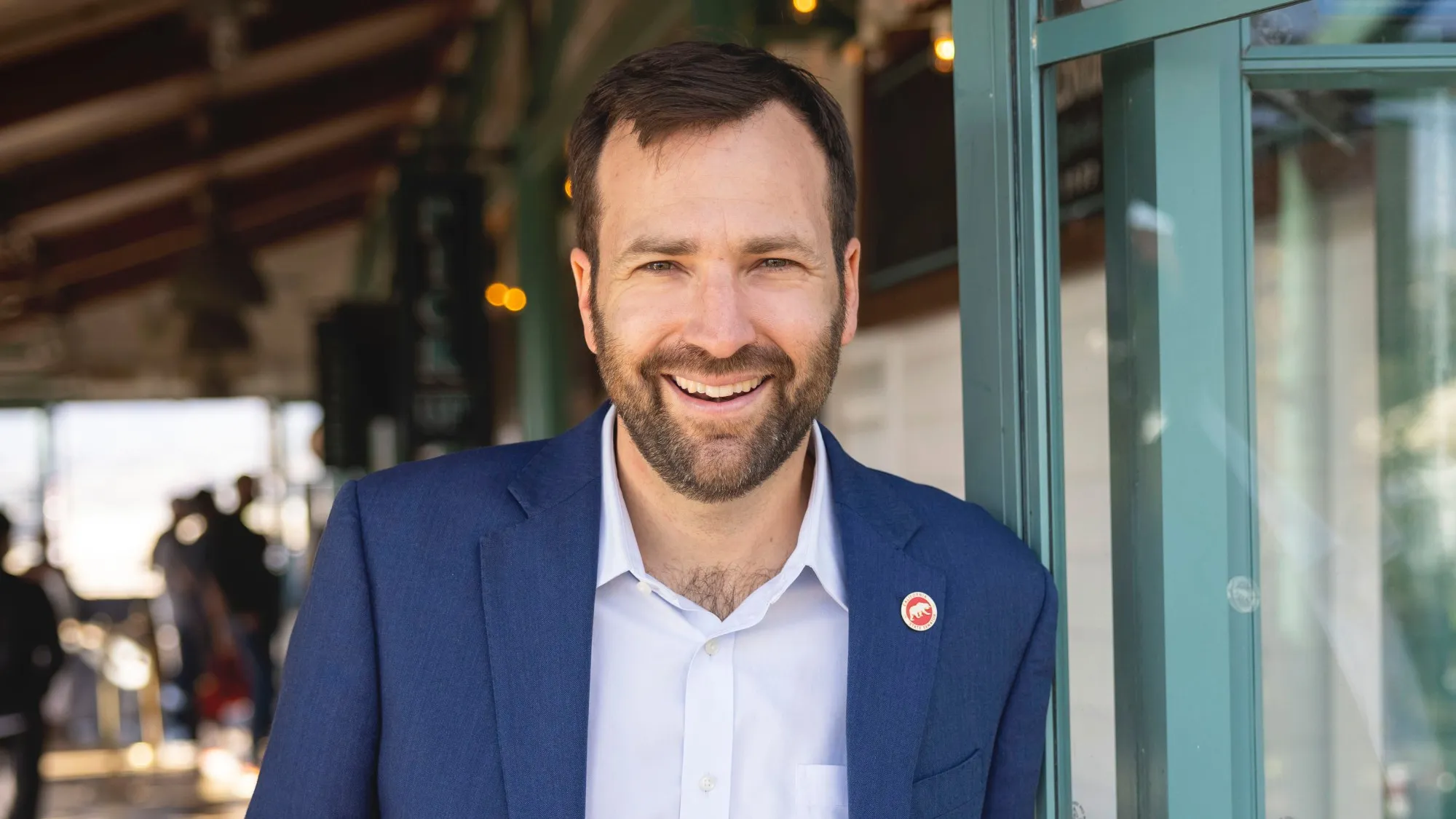
Ahead of the November general election, the Southern California News Group compiled a list of questions to pose to the candidates who wish to represent you. You can find the full questionnaire below.
Read more Jane Kim, California insurance commissioner candidate, 2026 election questionnaire
Name: Ben Allen
Age: 48
Current job title: State Senator
Political party affiliation: Democratic
Incumbent: No
Other political positions held: California State Senator 2014-Present Santa Monica-Malibu School Board Member 2008-2014
City where you reside: Santa Monica
Campaign website or social media: www.benallenca.com
The litigation from across the country is piling up on State Farm. Since the L.A. wildfires, the Illinois insurance giant has claimed that it could become insolvent — which is why it sought double-digit rate increases from homeowners over the past two years. Commissioner Ricardo Lara has found that State Farm must pay millions in fines for failing to pay claims filed after the fires for one reason or the other, and this summer, Oklahoma’s attorney general alleged that State Farm “engaged in a coordinated scheme to wrongfully deny or underpay legitimate hail and wind damage claims” submitted by homeowners there. Some observers say State Farm stands a chance of pulling back in California, or even reorganizing the company under bankruptcy laws because of its financial problems. What can you do to help State Farm stay? (Please answer in 200 words or less.)
State Farm is a private company, but homeowners insurance plays a unique role in our economy. When a major insurer pulls back, families lose choices, prices rise, and more homeowners are pushed onto the FAIR Plan. That is not a healthy market. As insurance commissioner, my goal would be to create a stable, competitive market where responsible insurers want to stay and compete for Californians’ business. That means a clear and predictable regulatory framework, timely rate reviews, responsible use of catastrophe modeling, and aggressive investment in wildfire mitigation and home hardening.
But this has to be a two-way street. If insurers receive greater flexibility to reflect changing risks and costs, Californians need transparency, accountability, and real commitments to continue writing and renewing policies. And financial challenges cannot excuse improper claims practices. Californians who paid their premiums deserve to have legitimate claims handled promptly and fairly. We need both: strong consumer protection and a market that actually works.
Does the FAIR Plan need a legislative fix? How will you reduce wildfire risks and depopulate the insurer of last resort — called the Fair Access to Insurance Requirements Plan? (Please answer in 200 words or less.)
Reducing reliance on the FAIR Plan and restoring a functional private insurance market must be the central goal of the Department of Insurance. I would take four specific steps:
First, California must continue investing in wildfire risk reduction so that communities become safer and more insurable. The department should work with CAL FIRE and local governments to identify communities with high concentrations of FAIR Plan policies and develop targeted roadmaps for reducing risk and restoring access to private coverage. I introduced SB 894 this session to provide low-interest, state-backed loans to help homeowners afford wildfire safety upgrades before another disaster strikes.
Second, homeowners and communities must see clear insurance benefits when they invest in reducing risk. I would prioritize transitioning FAIR Plan policyholders who meet Safer from Wildfire standards back into the private market and ensure insurers recognize and reward specific fire-hardening improvements when underwriting policies.
Third, the FAIR Plan must remain financially sound so it can pay claims when disasters occur. The recent use of IBank bonding authority is an important step. If adjustments to rates are necessary to maintain solvency, they should be carefully evaluated by the department while ensuring affordability and keeping the FAIR Plan as a last-resort safety net, not a permanent substitute for private coverage.
Fourth, communities rebuilding after major disasters should have the support needed to rebuild in ways that reduce future risk. Incorporating fire-resistant construction and community-level mitigation into rebuilding can help ensure that affected areas become safer and more insurable over time.
Jane Kim wants to reduce risk through a “universal disaster insurance for all” plan that would make coverage automatic and universal, with everyone in the same risk pool and premiums based on property cost and risk. Why is this good or bad for individual policyholders? (Please answer in 200 words or less.)
As experts from across the political spectrum see it, her “Disaster for All” insurance plan will ultimately be bad for individual policyholders.
Organizations and experts across the state (including Consumer Watchdog and United Policyholders) have emphasized their real concerns about “Disaster For All” insurance. The reality is that a comprehensive single-payer home insurance plan would not function the way a single-payer health insurance plan could; it would be regressive, forcing taxpayers (including renters) to subsidize homeowners in high-risk areas. The program would let insurance companies off the hook, keeping the surplus of profits they’ve generated from premiums Californians have been paying for decades, and putting all the escalating risk onto the state. In the event of a major climate disaster, this would cost the state tens of billions of dollars, taking away from essential services, as it is already facing a budget crunch.
Moreover, there are concerns about whether or not this proposed public system would accurately price risk; this leaves the state without sufficient reserves to cover losses from big disasters, leading to further costly taxpayer bailouts. There’s a reason why literally no country in the world has adopted something akin to what she has proposed.
Ben Allen says the state needs to encourage policies to reduce risk at its source by investing in wildfire mitigation and making communities more fire-safe — a policy that will eventually depopulate the FAIR Plan. Why is this good or bad for individual policyholders? (Please answer in 200 words or less.)
This is good for individual policyholders because reducing wildfire risk is the most sustainable way to make insurance more available and affordable over time.
We can’t ignore the fact that wildfire risk is increasing, but we also can’t simply keep shifting higher costs onto homeowners. California needs to reduce the underlying risk by investing in wildfire prevention, home hardening, defensible space, vegetation management, and community-level resilience. Homeowners should also see a real insurance benefit when they take steps to make their properties safer. If someone replaces a roof, creates defensible space, or their community makes meaningful investments in wildfire protection, insurers should recognize those improvements when making underwriting and pricing decisions. That is also how we begin to reduce reliance on the FAIR Plan. The FAIR Plan should be a safety net, not the default.
The long-term goal is straightforward: safer communities, fewer catastrophic losses, more insurers willing to compete, and more affordable coverage for Californians.
Where do you stand on AB 1795, the Smoke Damage Recovery Act? The proposal was unveiled earlier this year by the current insurance commissioner and Assemblymember Mike Gipson. The bill would establish California’s first enforceable public health and insurance claims standards for smoke-damaged homes. Does this legislation go far enough to appease victims from the L.A. wildfires who say that insurers haven’t been fair in claims payouts on smoke damage? (Please answer in 200 words or less.)
I voted for AB 1795 because California needs clear, enforceable standards for smoke-damaged homes. The Eaton and Palisades fires exposed a real problem: families whose homes are still standing can face dangerous contamination, complicated testing questions, and disputes with insurers over whether damage is covered and what remediation is necessary. Survivor groups like Eaton Fire Residents United have strongly supported AB 1795 and the companion testing standards in AB 1642 because they create a science-based framework for testing, remediation, and insurance coverage. That is an important step forward. But whether the legislation goes far enough will ultimately depend on how well it is implemented and enforced. As insurance commissioner, I would closely track how insurers handle smoke-damage claims, require transparency around denials and delays, and listen directly to wildfire survivors about where the process is still failing. The test should be simple: are families getting their homes safely restored and legitimate claims paid promptly and fairly?
Do you support Vermont Sen. Bernie Sanders’ views on insurance, to replace the current multi-payer private home insurance market and the FAIR Plan with a centralized, state-managed system to cover wildfire and flood risks? Why, or why not, is this a good approach? (Please answer in 200 words or less.)
I share the concern that too many Californians are struggling to find affordable, reliable insurance, but I do not support replacing the entire private homeowners insurance market and the FAIR Plan with one centralized, state-run system.
Property insurance is different from health insurance because risk can vary dramatically depending on where a home is located, how it is built, and the hazards it faces. A single statewide system could shift enormous wildfire and flood exposure onto taxpayers, including people who do not own homes, while reducing the role and financial responsibility of private insurers.
Read more 21 free fun things to do for Halloween 2026 in Southern California
I believe the better approach is to fix the market we have. That means reducing wildfire risk, helping homeowners harden their properties, restoring competition, maintaining strong consumer protections under Proposition 103, and holding insurers accountable for continuing to serve Californians.
The FAIR Plan should remain a safety net, not the default. Our goal should be a stable market where consumers have choices, insurers compete for their business, and coverage is there when people need it.
Should insurance executive pay be capped? Why or why not? (Please answer in 200 words or less.)
I am concerned when insurance executives receive enormous compensation while policyholders are facing steep rate increases, losing coverage, or struggling to get legitimate claims paid. I do not think an arbitrary salary cap is necessarily the best way to address that problem. My focus would be making sure excessive executive compensation is not being passed on to consumers and that insurers cannot plead financial hardship while rewarding executives at levels that are inconsistent with those claims.
As insurance commissioner, I would push for greater transparency around executive compensation and scrutinize those costs when insurers seek rate increases or other regulatory relief. Compensation structures should also reward responsible, long-term management—not encourage executives to boost short-term profits by reducing service, underpaying claims, or pulling back from communities.
The bottom line is accountability: Californians should not be asked to pay more to support excessive executive compensation.
Does the FAIR Plan need more transparency – like having the governing board be restructured to include consumer advocates, homeowners, labor and elected officials and independent financial experts? Why or why not? (Please answer in 200 words or less.)
Yes. I voted to expand oversight of the FAIR Plan, and I believe there is room to go further. Today, the FAIR Plan’s governing committee is still dominated by insurance companies, with nine voting insurer representatives. Given how much the FAIR Plan has grown and how important it has become to California homeowners and the broader insurance market, consumers deserve a stronger voice in how it is governed. I support greater transparency around the FAIR Plan’s finances, assessments, claims practices, and efforts to move policyholders back into private coverage. I also support broadening representation on the governing board to include consumer advocates, homeowners, labor, and independent financial experts. California has already taken steps to require more public reporting and oversight, and I support building on that progress. The goal should be stronger accountability, sound financial management, and a FAIR Plan that returns to its intended role: a safety net, not the default insurer for Californians
What do you think about the consequences for insurers threatening to leave the state? Should they pay an exit fee? Should insurers be able to cherry-pick which lines of business they keep? (Please answer in 200 words or less.)
Insurers are private businesses, but access to California’s enormous insurance market comes with responsibilities. When a major insurer sharply reduces coverage or leaves a line of business, consumers lose choices, prices can rise, and more homeowners can be pushed onto the FAIR Plan. That is why California needs clear rules governing major withdrawals and enough advance notice to protect policyholders from sudden disruption. I am open to examining whether an exit fee or similar mechanism makes sense, but the larger goal should be preventing destabilizing withdrawals in the first place. That means maintaining a predictable regulatory system, reducing wildfire risk, and making sure insurers have a viable path to continue competing here. I am also concerned about insurers cherry-picking only the most profitable parts of the California market while abandoning harder-to-insure consumers. The department should closely scrutinize affiliated companies and different lines of business to make sure insurers are not structuring around their obligations. The goal should be a competitive market where insurers stay, compete, and serve Californians fairly.
Should insurers be required to regularly report key metrics including the number of claims filed, claims denied or closed without payment, and processing timelines? Why or why not? (Please answer in 200 words or less.)
Yes. Insurers should regularly report meaningful claims data so regulators and the public can see whether policyholders are being treated fairly. As the insurance commissioner, I would use the department’s existing data-call and market-conduct authority to require insurers to report key metrics, including the number of claims filed, claims denied or closed without payment, processing times, and how long claims remain unresolved—especially after major disasters. That would allow the department to identify patterns that individual consumers cannot see.
One delayed or denied claim may be an isolated problem. Thousands of similar cases may point to a broader claims-handling issue that requires investigation or enforcement. I would also make as much of that information public as legally appropriate and present it in a way consumers can actually understand, rather than burying it in technical filings. The department should be using its authority proactively to spot problems early, hold insurers accountable, and give Californians a clearer picture of how companies are performing when people need them most.
Given Commissioner Ricardo Lara’s disdain for Consumer Watchdog, an advocacy group that fights to lower insurance costs, how can the relationship be improved? Critics, like Lara, say that Consumer Watchdog is more interested in profiting as an “intervenor” in rate cases where private insurers are trying to raise premiums. What would you do to improve the relationship — or is it not repairable? (Please answer in 200 words or less.)
I have worked with Consumer Watchdog on many pieces of legislation during my time in the Senate, and I have a working relationship with its leadership. If I become the insurance commissioner, I would certainly maintain a direct relationship with them. The commissioner does not have to agree with Consumer Watchdog — or any other advocacy group — on every issue. But Proposition 103 was built around transparency, public participation, and independent scrutiny of insurance rates, and I strongly support those principles. The idea of compensating qualified intervenors for meaningful participation in complex regulatory proceedings is not unique to insurance. California has long used an intervenor process in utility ratemaking before the Public Utilities Commission so consumer and public-interest voices can participate effectively alongside sophisticated regulated companies. Questions about intervenor compensation should therefore be handled transparently and on the merits. If an intervention provides meaningful value to consumers, the process should recognize that. If it does not, the department should say so based on the facts. My approach would be to keep the door open, listen to all sides, and make independent decisions based on evidence.
Tell us what in your background has best prepared you for this role. (Please answer in 200 words or less.)
I have spent a decade in the state Senate working on consumer protection, insurance industry accountability, political transparency, ethics, and reform, environmental health, and environmental resilience. These are core responsibilities of the insurance commissioner. My experience includes negotiating major environmental legislation, including Proposition 4, which voters approved by a 20% margin to fund clean water, wildfire prevention and climate resilience projects.
I have built a reputation for finding solutions in areas where stakeholders often disagree. I understand how to bring consumer advocates, community organizations, and industry leaders into the same room to reach practical and sustainable outcomes. This collaborative approach is essential for stabilizing the insurance market.
Tell us about a time you’ve changed your mind on a political position. What was it, and what changed your mind? (Please answer in 200 words or less.)
Often, what happens is that I might enter into an issue with a strong set of opinions, but as I may delve in deeper, one gets a better understanding of the variety of perspectives on the issue.
I decided to run a bill from an environmental perspective to regulate off-road vehicles in the State Vehicular Recreation Areas because of my deep concern about how the vehicles were tearing up the landscape and spinning up dust and other pollution that was impacting neighboring communities. After many conversations, I didn’t change my mind on this issue so much as I developed a more nuanced sense of the many issues at play. I met with riders and got a better understanding of their culture and the family bonding it brings to those who participate. I also got a better understanding of how the activity could be better regulated in a way that allowed for its continuation as a recreational activity while doing so in a way that was less environmentally impactful. That led to important compromise legislation that was highlighted by the Sacramento Bee’s editorial page in its end of the year sum up of key work of the legislature that year: “Sen. Ben Allen, D-Santa Monica, brokered a deal that won near unanimous support to allow off-road aficionados to continue to pursue their hobby in California. If only Congress could work out such compromises.”
Bonus question: What is the best book you’ve read this year? Explain why you found it compelling.
This campaign experience has definitely cramped my reading style, as I have had less leisure and reading time, as has having two little ones! So in addition to the amusing, well-written poetry of “Llama Llama Red Pajama,” my best book experience of this year that I will highlight is Kim Stanley Robinson’s “The High Sierra: A Love Story” that I popped open during a conference I attended with the family in Yosemite. I found the section on John Muir particularly compelling as it went through how he ended up in Yosemite and his famous jaunt with Theodore Roosevelt, escaping the cameras to get out into nature with the sitting president of the United States — Robinson’s love for the Sierra and Muir’s love for Yosemite is contagious and very understandable when you’re up in the mountains. I definitely look forward to spending some more time in California’s incredible wildlands after this campaign is over. I have always been inspired by Muir’s doggedness, his spirituality, and how he focused on politics because he thought it necessary to protect the special places that he loved even as it’s clear that he would’ve rather been focusing on connecting and communing with nature.
Read more Russia reports a worker at a Siberian plague institute got pneumonia from an unknown cause and died