
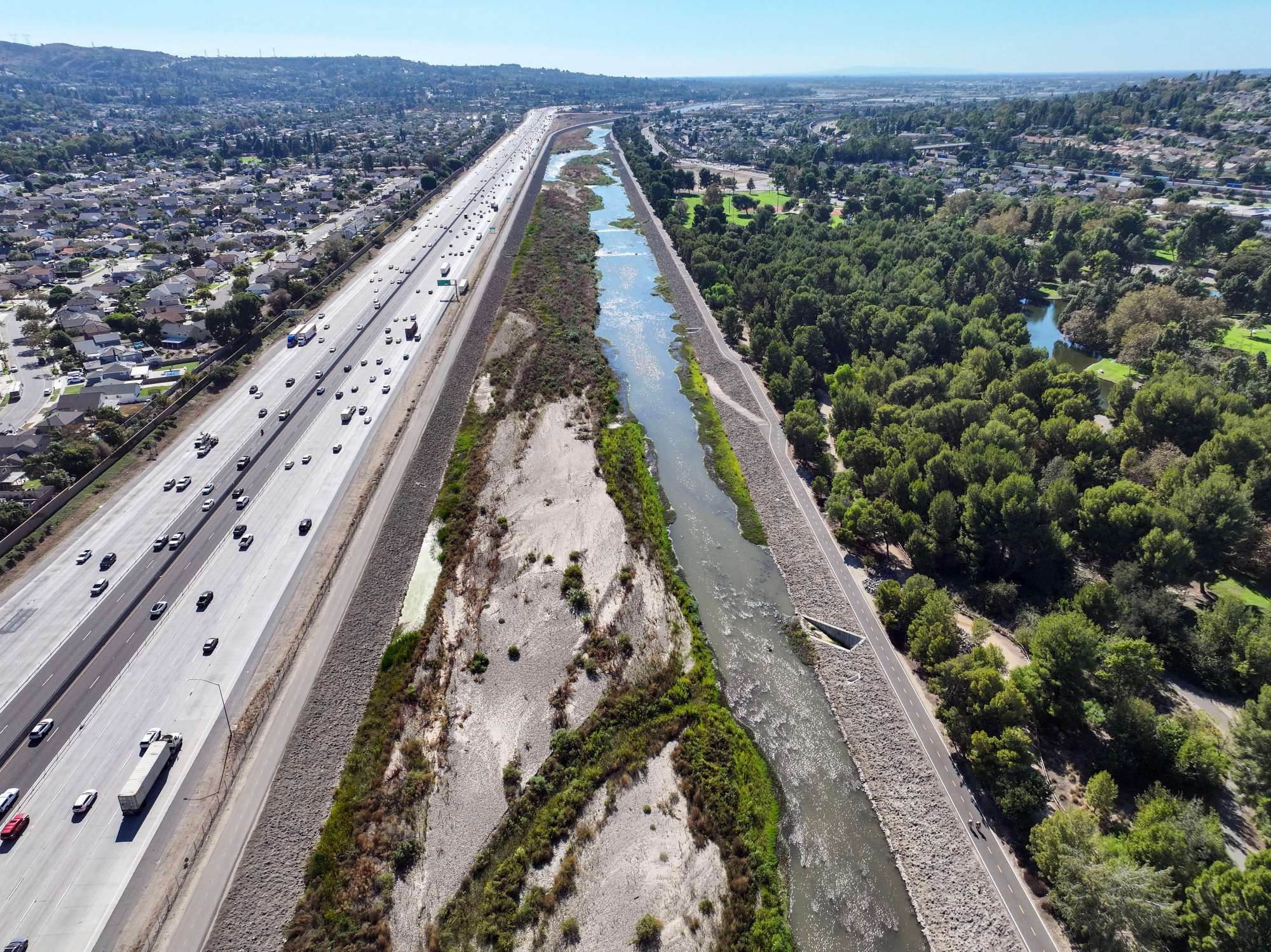
There’s a new push for public access to the fresh waters of inland Orange County, the dozens of miles of river and seasonal creeks that once supported vibrant fishing and hunting and, in wetter years, some swimming.
Read more Dioceses is creating a House of Discernment for men considering priesthood, a first for OC
But in a county with 42 miles of coastline – and a long history of recreating and working in the salty Pacific Ocean – is there much appetite to use what many view as polluted and anything-but-fresh local water?
“There is for us,” said Nathan Banda, tribal chairman of the Juaneño Band of Mission Indians Acjachemen Nation.
“Before the (San Juan Capistrano) Mission era, which started 250 years ago, we had 265 villages in what is now Orange County. And the water was how those villages were all connected. The water was our highway.
“So, we view the (local) waters and the ecosystems they support as critical to our history and culture,” Banda added.
“And, yes, we would like to have access to it.”
He’s not alone.
This week, Orange County Coastkeeper, a Costa Mesa nonprofit that works to keep the ocean and other waterways clean and accessible to the public, sent a letter to the Orange County Board of Supervisors and the Orange County Flood Control District, among others, asking for them to repeal or modify Orange County Ordinance 3-9-35.
That’s a local law – one that’s unique in California, according to Coastkeeper – that prevents the public from having any contact with the Santa Ana River and the Aliso, Los Trancos, San Diego and San Juan creeks. The ordinance, Coastkeeper says, is why everything from kayaking and paddleboarding to fishing is essentially banned in those waters.
On the same day that Coastkeeper delivered its letter to the county, Wednesday, Oct. 7, the city of Anaheim held a groundbreaking ceremony for OC Riverwalk. The plan is to create a 100-acre park near the OCVibe district that will use inflatable dams and reclaimed water to turn a section of the Santa Ana River near Angel Stadium into a spot suitable for hiking and possibly kayaking, though not swimming or fishing. The project, if completed as planned, would be the most extensive renovation of any part of the Santa Ana River in decades.
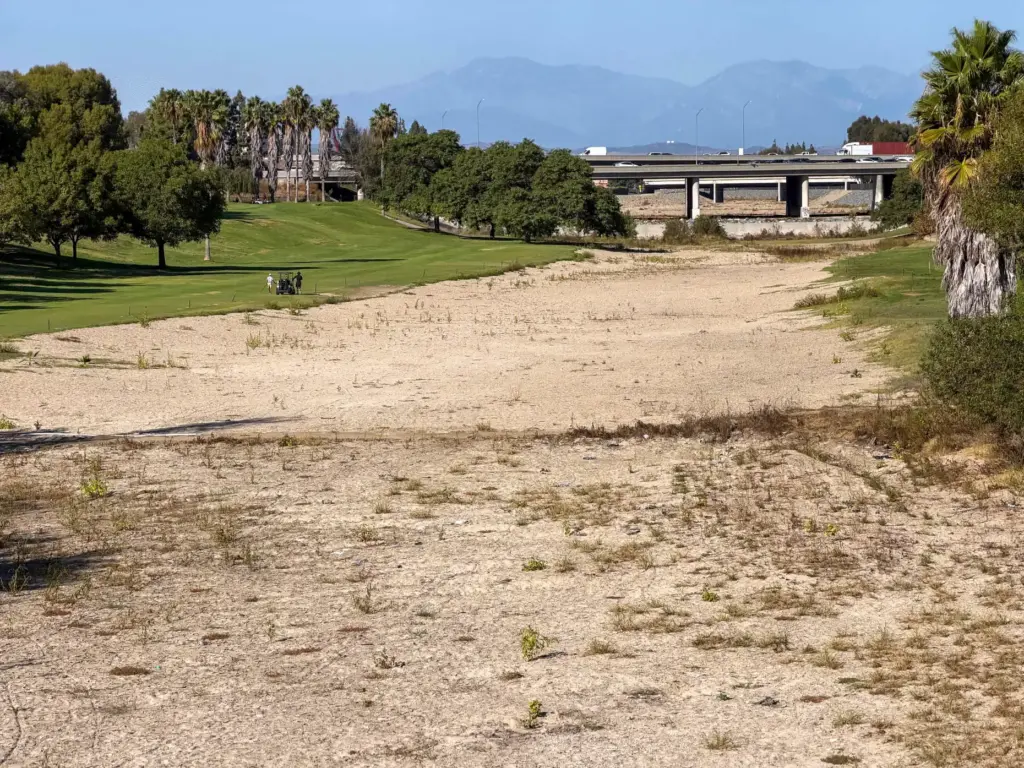 The dry Santa Ana River goes through River View Golf Course in Santa Ana, CA, on Tuesday, October 6, 2026. (Photo by Jeff Gritchen, Orange County Register/SCNG)
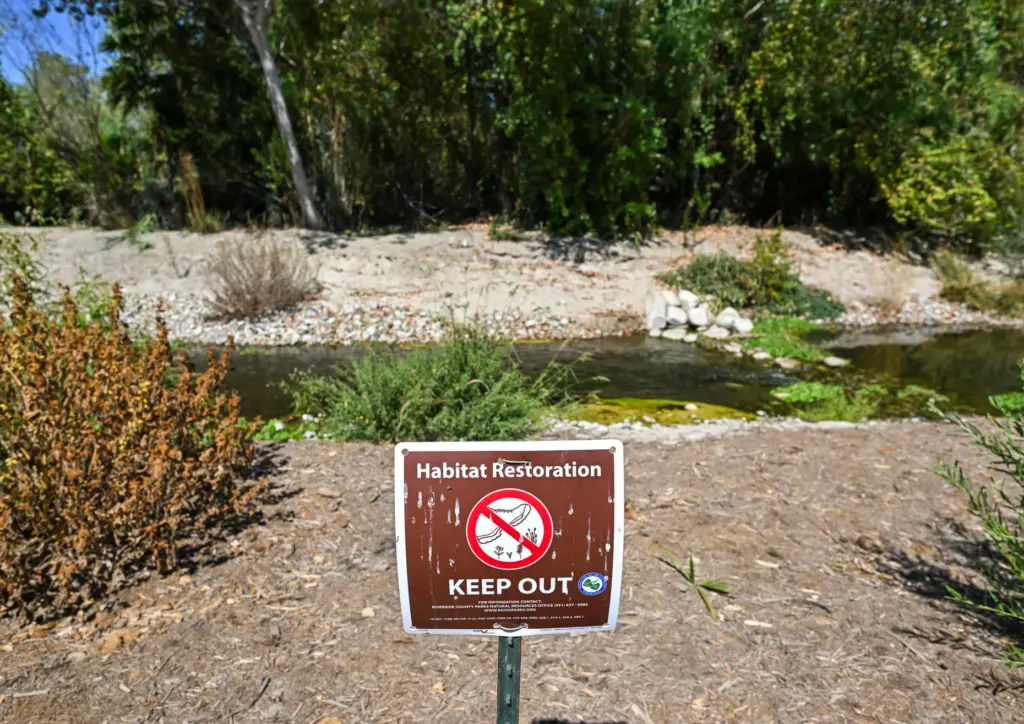 The Santa Ana River flows past Martha McLean/Anza Narrows Regional Park in Riverside, CA, on Tuesday, October 6, 2026. (Photo by Jeff Gritchen, Orange County Register/SCNG)
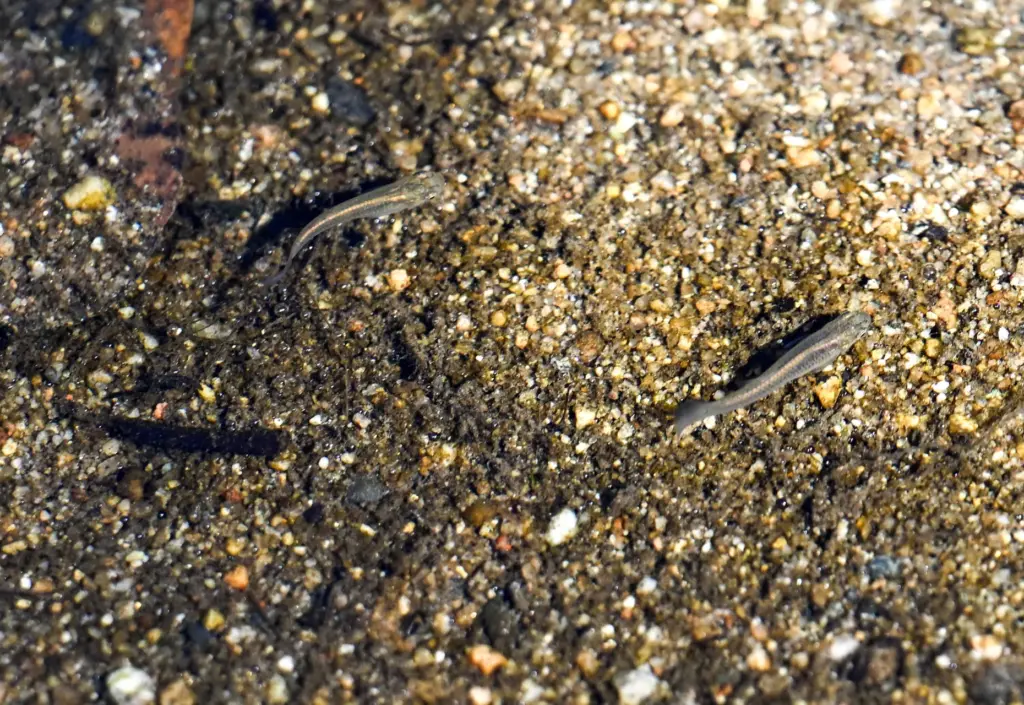 Small fish in the water of the Santa Ana River as it flows past Martha McLean/Anza Narrows Regional Park in Riverside, CA, on Tuesday, October 6, 2026. (Photo by Jeff Gritchen, Orange County Register/SCNG)
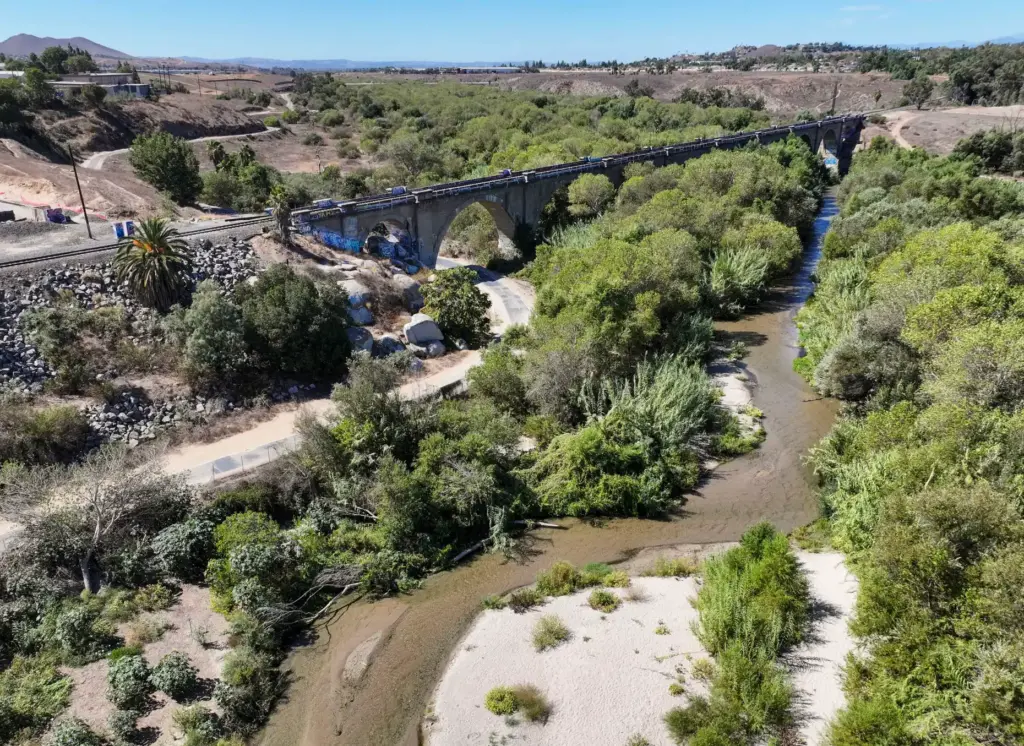 The Santa Ana River flows past Martha McLean/Anza Narrows Regional Park and under the historic Union Pacific Railroad Bridge in Riverside, CA, on Tuesday, October 6, 2026. (Photo by Jeff Gritchen, Orange County Register/SCNG)
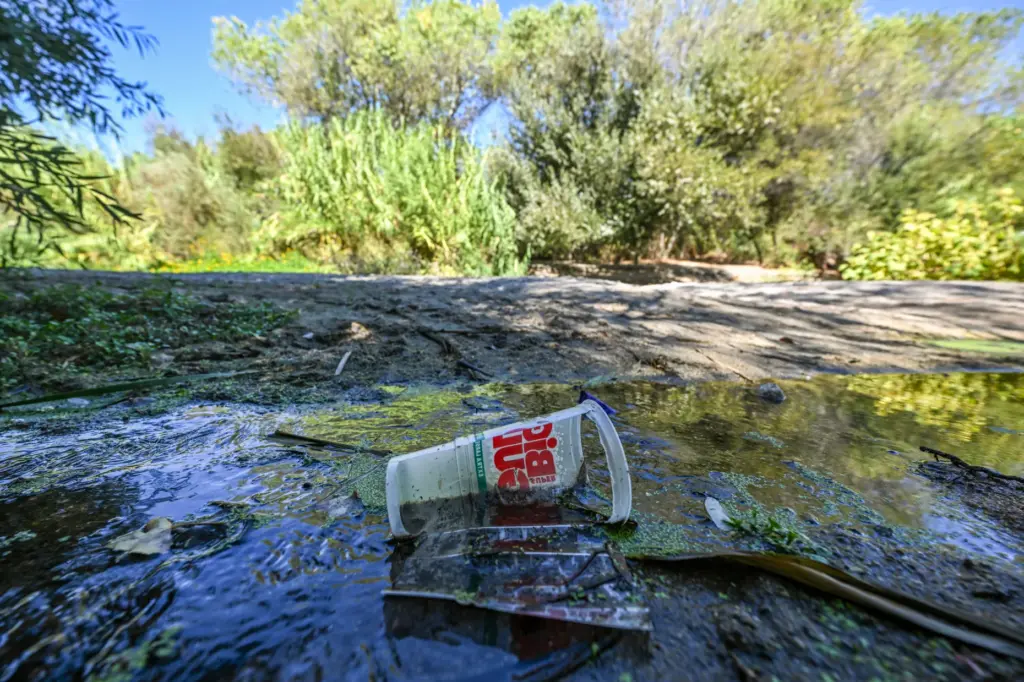 Trash sits in the water as the Santa Ana River flows past Martha McLean/Anza Narrows Regional Park in Riverside, CA, on Tuesday, October 6, 2026. (Photo by Jeff Gritchen, Orange County Register/SCNG)
Though the Coastkeeper letter and the Anaheim river park aren’t connected, they’re both signs of what some say is growing demand to use the county’s public waters and streams.
In recent rainy seasons, after storms, some of Southern California’s few swimming holes – including some in Orange County – have become popular tourist draws. And hiking anyplace where water flows after rains has become more popular, with traditional hikers and others who use the spots as a backdrop for social media posts.
County officials declined to comment on Coastkeeper’s letter or to say why there is a blanket ordinance against public use of fresh public waters.
Banda, among others, believes the ban is about liability, arguing that the county doesn’t want to be financially responsible for what happens if humans get hurt while using creeks or the river. But, in theory, that same risk comes when people surf in or even walk near the ocean, yet government agencies are legally protected from lawsuits.
Others, including some environmentalists, note that the current ban on public access allows the county to treat the inland waters as if they were county property.
Earlier this year, the Orange County Public Works department discontinued a program of spraying herbicides into two local creeks, the San Juan and Trabuco, after local residents learned of the spraying and objected. Since then, the Public Works department has said that it will consider using non-chemical means to keep invasive plants out of the creeks.
Still, county and state documents offer yet another rationale for why there’s a ban on public use of the river and local creeks: to protect those fragile ecosystems from the contamination that comes when the public starts using them.
How dirty?
Environmentally speaking, the Santa Ana River and county’s seasonal creeks are works in progress, according to Coastkeeper and other groups.
There’s no question that the county’s fresh waters have been degraded by a century of upstream farming and ranching, and by decades of military and urban development within the county. Testing often shows unhealthy levels of everything from industrial metals to fertilizers to E. coli.
And during big storms, the 96-mile-long Santa Ana River and the local creeks that flow off Saddleback Mountain send enough pollution into the county’s stretch of the Pacific to prompt health-related bans on swimming in the ocean.
But on drier days, those same county beaches typically grade out as having some of the cleanest water in the state, with less toxic runoff than in any urban stretch of the California coast. That suggests the water in the local river and creeks that feed into the county’s beaches isn’t continually polluted.
And some observers, like Banda – who played in the creeks in south county as a child but wouldn’t let his younger children do the same, today – say in recent years they’ve seen a slight revival.
“There’s more wildlife in the creeks than you’d see a few years ago,” Banda said. “It’s noticeable.”
But is it safe?
Coastkeeper officials – who typically argue that water pollution rules aren’t stringent enough – say it is.
Read more Meet the candidates who want to oversee California’s property tax system
“The (county’s inland) waters are clean enough for some uses,” said Sarah Spinuzzi, the Coastkeeper lawyer who signed the group’s letter to the county.
“Should people drink from it? No. Is the water as clean as it should be? No. But the water is OK, within reason, for limited swimming and kayaking and fishing.”
If true, that might be fine for the humans.
But what about the nature?
Mixed blessings
In at least one spot, the water is clear enough that it’s easy to spot the guppies.
A few dozen of them swim in eerie unison, trading a shady area for a spot in the sun that, on this hot October day, is baking their tiny stretch of the Santa Ana River.
Sure, someone has dumped In-N-Out wrappers and cups on the river’s south-side bank. And, yes, an otherwise regal California sycamore is marred by orange graffiti. Also, it’s clear that people recently have slept here, illegally, their bedrolls leaving an outline that’s still visible in the brush.
But the inch-long, black guppies, which may or may not be federally protected Santa Ana suckerfish, are real and seemingly healthy. Same for the flame skimmer red dragonfly darting above, and the California bullrush bursting out of the moist ground, and the fresh coyote scat on a nearby berm.
The cool-but-not-cold river here is often far from pristine, subject to waves of industrial and agricultural pollution. But on this dry day it’s swimmable, or at least clean enough for wading, according to testing conducted in August by Inland Empire Waterkeeper, a nonprofit that provides, among other things, a Swim Guide for people who like to recreate in rivers and streams and other fresh water resources.
It’s also accessible to the public.
This stretch of the Santa Ana River flows through the Martha McLean-Anza Narrows Park, which is in Riverside County. And in Riverside, as in virtually every other California county, there is no law blocking the public from using freshwater rivers, streams, creeks and lakes.
Coastkeeper – which would like to see similar access to Orange County’s stretch of the Santa Ana River – argues that the county’s “No Trespassing” rules violate a rule in the state constitution (Article X, Section 4) that prohibits counties from creating laws that block public use of public water.
They note that similar county ordinances have been struck down in court, and their letter suggests that a lawsuit might follow if the county’s ordinance isn’t changed to allow public access.
“It’s essentially in our mission statement to open public waters to the public,” Spinuzzi said.
“It’s our belief that people should have access to their water.”
Public access, in theory, also could translate into greater public pressure to clean the water and keep it clean.
Spinozzi wouldn’t say if that’s Coastkeeper’s strategy. But the premise – to let the public regain access to public waterways and, in theory, boost the need to keep those waterways closer to pristine – isn’t new.
The Los Angeles River, like the Santa Ana, has been decimated by urban runoff and military pollution for decades. But unlike the Santa Ana River, the Los Angeles River has been a focus of a well-funded, long-running clean-up campaign that’s gained steam as more people have come in contact with the cleaner parts of the river.
The results have been tangible, if mixed.
Today, you can kayak on a stretch of the Los Angeles River near Dodger Stadium, but you probably should hop out quickly if your vessel tips over. You also can fish in Elysian Valley and the Sepulveda Basin, though most anglers don’t eat what they catch.
And while the revived areas of the Los Angeles River continue to expand, the stretches that run closer to the coast, and through economically challenged South Los Angeles, remain cement-lined flood control channels and, at times, shooting locations for apocalyptic movies and TV shows.
Banda, the tribal leader, said he understands there’s risk of letting people use nature. Still, he said, his tribe wants access to what was once, unquestionably, theirs.
Plants that grow in the local creeks, including tule (California bullrush), were a key resource, used to make Acjachemen baskets and the boats they used when they traveled to and from Catalina Island. The Acjachemen also used creek water to leach harsh tannins out of their wi-wish, an acorn porridge that was a staple of their diet.
The tribe, Banda said, is pushing to teach younger people about its culture and history. Access to the region’s waterways could be part of that effort.
Earlier this year, Banda added, a group from his tribe worked to clean up a stretch of San Juan Creek. They pulled plastic bottles and other garbage, and all manner of debris out of an ecosystem that, in theory, could be lush.
Read more Public executions in the US were once a community spectacle and then they stopped
It wasn’t easy, he said.
“We needed a permit from the county.”