
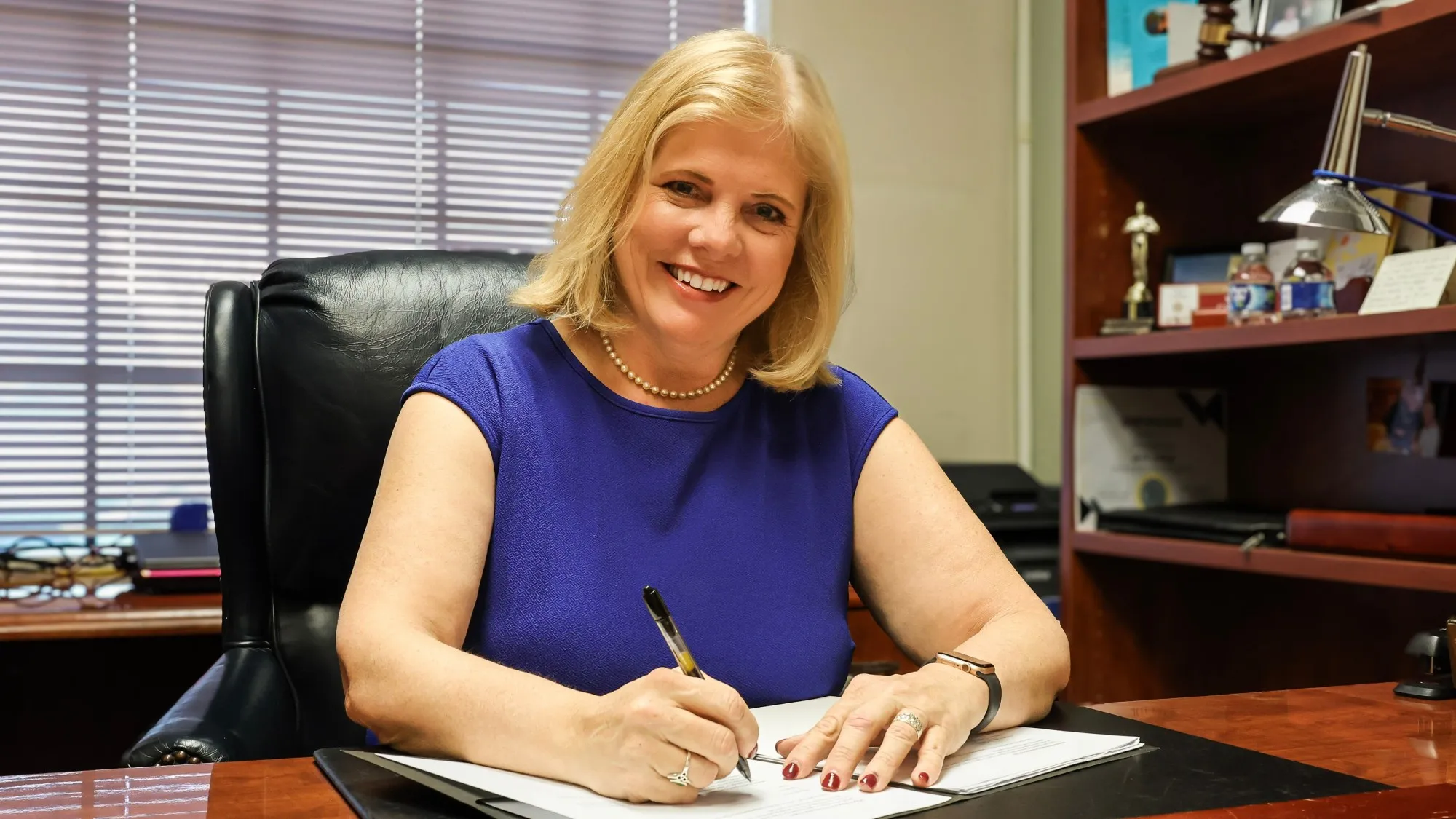
Ahead of the November general election, the Southern California News Group compiled a list of questions to pose to the candidates who wish to represent you. You can find the full questionnaire below.
Read more Pennsylvania’s measles outbreak is the largest in decades in the US
Name: Laura Bassett
Age: 59
Current job title: Small Business Owner
Political party affiliation: Republican
Incumbent: No
Other political positions held: San Diego County Civil Service Commissioner; San Diego Republican Central Committee
City where you reside: Oceanside
Campaign website or social media: bassettforca.com
Fuel costs for Californians are higher than anywhere else in the country. What specific policy would you support to ease the burden drivers feel at the pump? And how would you measure whether that policy was actually successful? (Please answer in 200 words or less.)
California drivers pay the highest fuel prices in the country, and a large share of that comes from state taxes, fees, and regulatory mandates that other states do not impose. I would stop any further increases to the gas tax and push to reassess the regulations and hidden costs built into every gallon, including the low carbon fuel standard adjustments that quietly raise prices at the pump. Families should not be squeezed further just to get to work and take their kids to school.
I would measure success in plain terms. First, the gap between California’s average gas price and the national average. If our policies are working, that gap should shrink rather than grow. Second, whether prices hold steady instead of spiking after refinery and supply decisions. Third, whether real household transportation costs come down for working families in our district.
Relief at the pump is not complicated. It takes the honesty to admit that Sacramento’s own choices are a major driver of what Californians pay, and the discipline to stop adding to that burden.
How can state lawmakers ease barriers for those wishing to become homeowners and unburden renters with high rental costs, or is this an issue beyond the scope of Sacramento? (Please answer in 200 words or less.)
For years, the state has made the problem worse. The core issue is supply. We do not have enough homes for the people who already live here, and that shortage drives up prices for buyers and rents for everyone else.
The fastest way to ease the burden is to make it easier and cheaper to build. That means streamlining permitting, cutting the fees layered onto every new unit, and reducing the regulatory delays that stretch projects out for years and add tens of thousands of dollars to the final cost. Those costs get passed straight to homebuyers and renters.
I trust local governments over top-down state mandates. Cities and counties understand their own infrastructure, traffic, and growth capacity far better than Sacramento does. The state’s role is to remove obstacles and reward communities that build, not to dictate one-size-fits-all rules from the Capitol.
When supply rises to meet demand, prices stabilize. That is how we make homeownership reachable again and give renters relief instead of another program that never reaches them.
Elected officials often talk about the need to prevent people from losing their homes in the first place as part of combating homelessness, but California has more people living on the street than any other state. How would you work with colleagues in Sacramento to get people off the streets and into stable housing situations? (Please answer in 200 words or less.)
Prevention matters, and the surest prevention is more housing, but people already living on the street need a different response. I would work with colleagues to pair accountability with real pathways into treatment and stable housing.
Proposition 36 is central to this. Voters approved it overwhelmingly, and it gives people struggling with addiction a path toward treatment instead of a revolving door on the sidewalk. Sacramento has failed to fund the behavioral health and substance abuse treatment that make the measure work. I would fight to fund it properly and tie that money to clear results, not just spending.
Housing has to come with services for those who need them, including mental health and addiction care. A shelter bed alone does not solve chronic homelessness. I would also insist on accountability for the billions California has already spent with little to show for it, so dollars actually reach people on the street rather than programs that never deliver.
Getting people into stable situations takes both compassion and honesty. We help people recover and rebuild, and we stop accepting street encampments as normal.
California has the highest grocery prices of any mainland state in the U.S. What’s one specific policy Sacramento could support to bring down food prices for individuals and families struggling to make ends meet? (Please answer in 200 words or less.)
Food gets more expensive at every step when the state piles costs onto the people who grow, move, and sell it. The one policy I would push is to bring down the energy and fuel costs that run through the entire food supply chain, starting with stopping further gas tax increases and reassessing the fuel regulations that make diesel and electricity more expensive here than anywhere else.
Every truck that hauls produce, every refrigerated warehouse, and every farm runs on fuel and power. When California drives those costs up, the price shows up on the grocery shelf. Lowering them is direct relief that reaches families through the checkout line.
I would also protect farmers and food producers from new fees and regulatory burdens that get passed straight to consumers, and I would reform the water policies that raise costs for California agriculture. We grow an enormous share of the nation’s food. There is no reason Californians should pay the highest grocery prices on the mainland for food grown in our own state. Lower the input costs, and prices at the store follow.
California’s budget approved by officials this summer included $300 million to offset healthcare costs expected with the expiration of federal subsidies. Do you support this effort by state lawmakers? Also, what would you do to protect Californians’ access to healthcare in light of federal changes that have restricted benefits to various groups? (Please answer in 200 words or less.)
I have serious concerns about committing new money like this while California faces a large and growing budget shortfall. Before the state backfills expiring federal subsidies, we need an honest look at whether existing healthcare dollars are being spent efficiently and whether this commitment is sustainable next year and the year after. Too often Sacramento starts a program without a plan to pay for it, then asks taxpayers to cover the gap.
Protecting access does not have to mean endless new spending. I would push for real pricing transparency so patients know what they are being charged before they receive care, protect patients’ ability to keep their own doctor rather than being forced into narrow networks, and support the community clinics so many families rely on.
Where federal changes leave people without coverage, the answer is to make care more affordable and more competitive, not simply to grow state programs the budget cannot sustain. A patient-centered system built on transparency and choice does more to protect access over the long run than a one-time appropriation that may not be there when the next shortfall hits.
California’s high-speed rail project has been beset by delays, ballooning costs and federal funding cuts. Should the state continue with this project? Why or why not? If you support moving forward with the project, how do you propose the state pay for it? (Please answer in 200 words or less.)
No. California should stop pouring money into high-speed rail. The project has become the clearest example of everything wrong with how Sacramento spends. It is years behind schedule, tens of billions over its original budget, and still nowhere near delivering the statewide system voters were promised in 2008. Now federal funding has been pulled, leaving state taxpayers to shoulder even more.
Read more Republican Sen. Tillis calls his vote for Hegseth the ‘biggest regret of my career’ in a new book
Continuing to fund a project this far off course is not a commitment to progress. It is a refusal to admit failure. The honest step is to stop the bleeding and redirect those dollars to infrastructure Californians actually need and would use, including water storage, road and highway repair, and local transportation projects that deliver results in years rather than decades.
I came into this race saying the state has to reform or end projects that are over budget, delayed, and failing to deliver. High-speed rail fails on all three. Every dollar we keep sending to it is a dollar not spent on the water, roads, and public safety our communities need now.
Increasingly, we’re seeing communities push back on data centers opening in or near their neighborhoods. Environmentalists complain about the amount of water and energy that data centers need to operate. Residents complain about relentless noise pollution. And others worry about losing agricultural land to these centers. On the other hand, the tech industry emphasizes the role of data centers in supporting cloud computing and artificial intelligence. As a policymaker, how would you balance the concerns of critics with desires to ensure that California remains a leader in innovation? (Please answer in 200 words or less.)
California should stay a leader in technology. But the communities who live next to these data centers deserve a real say, and right now they often feel steamrolled. I do not believe Sacramento should hand the tech industry a blank check or override local communities to force these projects through.
Land use decisions like these belong primarily to cities and counties, who know their own water supply, power capacity, and neighborhoods. The state’s role is to set clear standards, not to dictate outcomes. Where a data center wants to locate, it should have to account honestly for its water and energy use, address noise for nearby homes, and avoid taking productive agricultural land off the map. The right balance requires developers to bring real solutions on water, energy, and noise, and it requires the state to respect the communities that have to live with what gets built.
Do you support Proposition 40, the proposed billionaire’s tax that would impose a one-time, 5% tax on individuals and trusts with a net worth of more than $1 billion? Revenues from the tax would primarily go to fund healthcare-related programs, including Medi-Cal, though a small portion would also be used to fund food assistance and education-related programs. Explain why you do or do not support this measure. If you don’t, what alternative solution do you propose so that the state has money to pay for the types of services this tax is intended to fund? (Please answer in 200 words or less.)
I do not support Proposition 40. California does not have a revenue problem; it has a spending problem, and a new tax aimed at a small group today has a way of expanding to everyone tomorrow. Wealthy residents and the businesses they run are already leaving the state, taking jobs and future revenue with them. Chasing more of them out to fund ongoing programs is not a plan; it is a temporary patch on a structural problem.
The services this tax is meant to fund, including Medi-Cal, food assistance, and education, matter. That is exactly why they deserve a stable funding source, not revenue from a one-time levy that could vanish the moment a billionaire changes their address.
The alternative is the harder work Sacramento keeps avoiding. Audit and reform the programs that are over budget or failing to deliver, end projects like high-speed rail that waste billions, and grow the economy so revenue rises naturally as more people work and more businesses succeed. A larger, healthier economy funds Medi-Cal and schools far more reliably than punishing the people we are counting on to invest here.
The state has ambitious goals to transition away from heavy reliance on fossil fuel. Meanwhile, oil refineries in California that shut down in the past year said they did so in part because of the state’s costly regulatory requirements and decreasing consumer demand for traditional gasoline. But the closure of these refineries have drivers concerned about the price of gas going up – especially at a time when affordability remains the No. 1 concern for many Californians. How would you balance the state’s clean energy goals with desires to prevent Californians from further pain at the pump? (Please answer in 200 words or less.)
The refinery closures should be a wake-up call. When facilities that supply a large share of California’s fuel decide it is no longer worth operating here, that is a direct warning that our own regulations and uncertainty are driving supply down and prices up. Blaming the producers, as Sacramento tends to do, will not put a single gallon back on the market.
I support a cleaner energy future, but it cannot be built on the backs of working families who still have to fill their tanks today. The transition has to be honest about timing. As long as Californians depend on gasoline, we need enough in-state refining capacity to keep supply stable and prices from spiking.
That means reassessing the mandates and costs pushing refiners out, giving energy producers enough stability to keep operating, and being truthful about how state policy affects the price at the pump. We can pursue environmental goals and protect affordability at the same time, but only if we stop pretending the two are unrelated. Reliable supply is what protects consumers. Losing it is what leaves them stranded.
Similarly, the Trump administration is aggressively pushing to expand offshore oil drilling and production in California. Explain why you do or do not support this move. If not, do you believe California state leaders have the legal authority to stop or restrict it? (Please answer in 200 words or less.)
I support producing more energy here in California, and not just oil. Technology has advanced to the point where we have more options than ever, from oil to solar and wind, and we should be pursuing all of them. The goal is an abundant, reliable, and affordable supply, and right now California is falling short. Costs are up, families are stretched, and much of that comes from a state that restricts production instead of encouraging it.
We should produce energy where it makes sense and hold it to the highest standards. California is one of the safest places in the world to produce energy, both environmentally and technologically. When we push production out of our state, it does not disappear. It moves somewhere with weaker protections, and Californians end up paying more while the environment gains nothing.
I would rather we lead. That means using our workforce, our standards, and new technology to produce more of our own energy, bring costs down for working families, and keep the strong environmental protections that come with doing it right here at home.
A law signed in 2024 establishes statewide standards for new, large warehouses in California, including distance buffers separating warehouses from schools, homes and other so-called “sensitive receptors.” Do you support Sacramento having a role in local land-use decisions when it comes to logistics? Why or why not? Is there anything else state government should do when it comes to regulating warehouses? (Please answer in 200 words or less.)
I am cautious about Sacramento inserting itself into local land use decisions, and logistics is no exception. Cities and counties understand their own roads, neighborhoods, and where warehouses do and do not belong far better than the Capitol does. My instinct is to keep those decisions local and accountable to the people who actually live with the results.
That said, protecting children at school and families at home from concentrated truck traffic and pollution is a legitimate concern, and I understand why the 2024 buffer standards were written. The problem with statewide rules is that they rarely fit every community. A buffer that makes sense in a dense urban corridor may make no sense in a rural area, and one-size-fits-all mandates can block responsible projects a community actually wants.
I would rather the state set broad guardrails on genuine health and safety, then trust local governments to apply them in ways that fit their communities. Where the state does act on warehouses, the focus should be on real impacts like air quality and truck routing near homes and schools, not micromanaging local zoning from Sacramento.
Tell us about a time you’ve changed your mind on a political position. What was it, and what changed your mind? (Please answer in 200 words or less.)
Not necessarily one particular issue, but an overall shift in what good governance looks like. I used to be pretty dogmatic on most issues, but have learned to stop and listen to both sides and appreciate common-sense input before making a decision.
Bonus question: What is the best book you’ve read this year? Explain why you found it compelling.
“How To Listen So People Will Talk” by Becky Harling. This book is compelling because it causes one to take an honest look at their relationships through the lens of listening. It emphasizes the need for us to listen more and try to understand the needs of others versus feeling the need to always explain our motivations despite what serves others.
Read more ICC unseals arrest warrants for 4 Taliban leaders wanted on gender persecution charges