
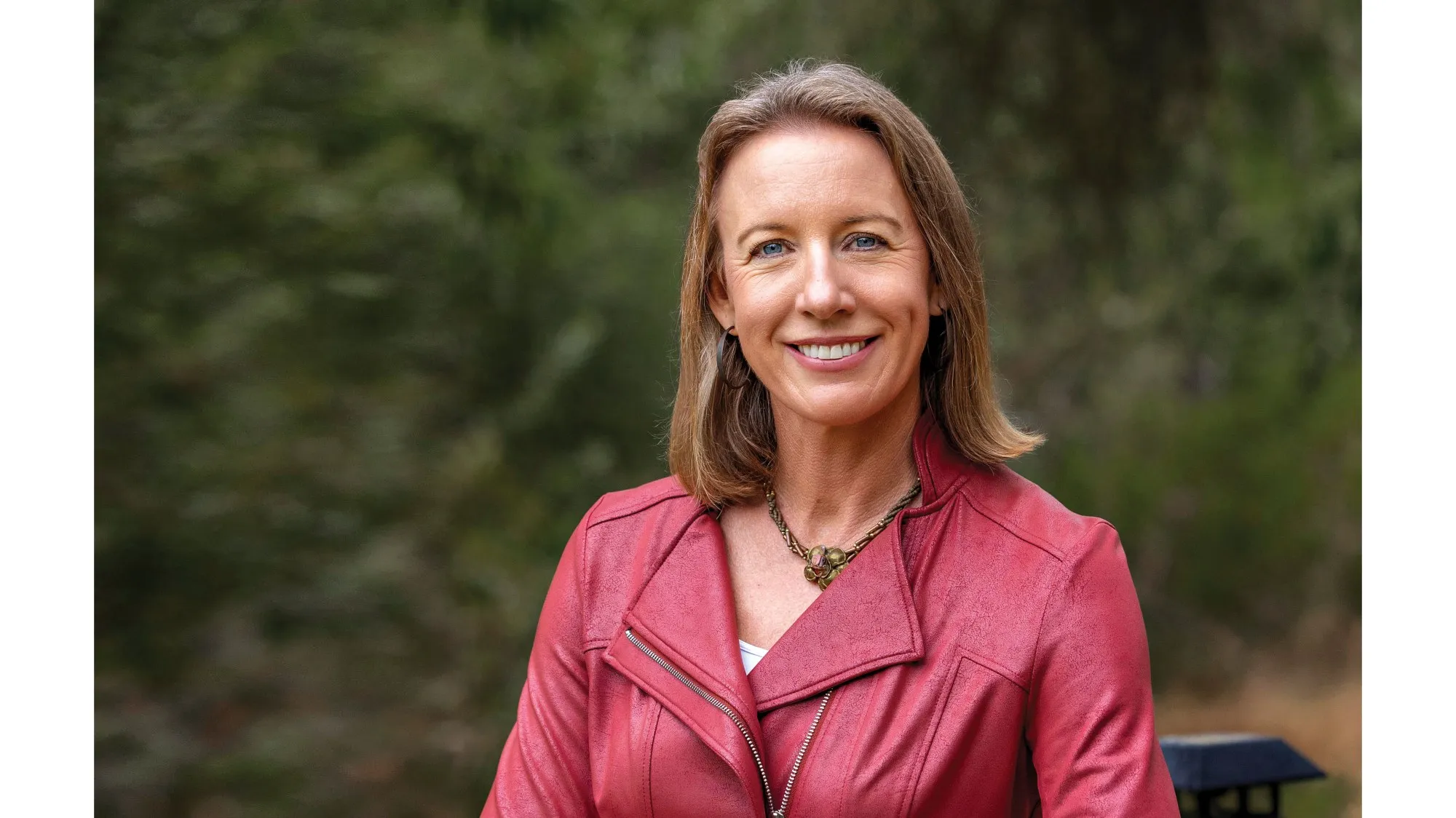
Ahead of the November general election, the Southern California News Group compiled a list of questions to pose to the candidates who wish to represent you. You can find the full questionnaire below.
Read more Laura Bassett, Senate District 38 candidate, 2026 election questionnaire
Name: Catherine Blakespear
Age: 50
Current job title: California State Senator, 38th District
Political party affiliation: Democratic
Incumbent: Yes
Other political positions held: Mayor of Encinitas (2016-2022); Encinitas City Council (2014-2016); Chair, SANDAG Board of Directors; Board Member, North County Transit District
City where you reside: Encinitas
Campaign website or social media: catherineblakespear.com
Fuel costs for Californians are higher than anywhere else in the country. What specific policy would you support to ease the burden drivers feel at the pump? And how would you measure whether that policy was actually successful? (Please answer in 200 words or less.)
California drivers pay more than a dollar a gallon above the national average. Some of that is global, like this year’s oil shock. Some of it is ours.
The most direct pressure on price right now is supply. Two refineries closed in the past year, taking roughly 17% of in-state refining capacity with them, and California’s unique fuel blend makes it hard to replace that gasoline from out of state. The Energy Commission needs better tools to keep supply steady through outages and closures, and the state needs real advance notice before a refinery shuts down so we are planning ahead instead of reacting. I held a hearing on exactly that this year and authored legislation to require it, because taxpayers should not be surprised by either a supply gap or a cleanup bill.
I also passed a law protecting homeowners with rooftop solar from higher property taxes, and I chair the subcommittee working to make our coastal rail line a real alternative to driving.
Measure it by the gap between our price and the national average. If it narrows while our air stays clean, it is working. If it widens, change course.
How can state lawmakers ease barriers for those wishing to become homeowners and unburden renters with high rental costs, or is this an issue beyond the scope of Sacramento? (Please answer in 200 words or less.)
Yes, this is Sacramento’s job, and I have been doing it. But the answer is not one bill. It is building more homes, cutting red tape, and being honest about what actually lowers costs.
I authored SB 1077 so coastal homeowners can build an ADU without a second round of permits, which adds unnecessary cost to much-needed housing that can help a family cover the mortgage. I authored SB 482 so housing for people with the greatest needs can actually get financed and built. And I closed a loophole developers were using to build oversized commercial projects under the density bonus law (SB 92), because more housing should not mean a blank check.
I also voted against SB 79, which lets the state override local zoning to allow six- and seven-story buildings near transit stops. I support building more housing. I do not think Sacramento should decide the shape of every neighborhood. Cities need to plan for growth and the state should hold them to it, but how they meet those goals should be decided locally.
For renters, the fastest relief is supply. Every home we add takes pressure off rents.
Elected officials often talk about the need to prevent people from losing their homes in the first place as part of combating homelessness, but California has more people living on the street than any other state. How would you work with colleagues in Sacramento to get people off the streets and into stable housing situations? (Please answer in 200 words or less.)
Start with accountability. California has spent more than $24 billion on homelessness over five years and still has more people on the street than any state. I want to know what worked and what did not, and move money away from programs that are not producing results.
It is not compassionate to leave people with severe mental illness and addiction to deteriorate on our sidewalks. We need shelter beds, interim housing, treatment, and enforcement working together, not permanent housing alone.
My record reflects that. I authored SB 1361 so homeless shelters cannot be tied up in CEQA lawsuits. My legislation pushing Caltrans to work with cities on freeway encampments prompted a model agreement between Caltrans and the city of San Diego that other cities have since used. This year, my bill SB 989 passed unanimously to let first responders connect people in psychiatric crisis to CARE Court. I secured $5 million for a navigation center in Vista, hosted three Ending Homelessness Summits, and pushed my own party to fund Proposition 36 so the treatment voters approved actually happens.
That is how I work with colleagues: bring data, bring cities to the table, and set goals we can be held to.
California has the highest grocery prices of any mainland state in the U.S. What’s one specific policy Sacramento could support to bring down food prices for individuals and families struggling to make ends meet? (Please answer in 200 words or less.)
Retail theft. When stores are hit repeatedly, they lock up shelves, cut hours, raise prices, or close. Every family pays for that at the register. Voters in all 58 counties passed Proposition 36 to hold repeat offenders accountable and get people into treatment. When the governor’s budget left it unfunded, I joined Sens. Rubio and Umberg in calling for $400 million to implement it. Fully funding Prop. 36 is the most direct thing Sacramento can do to stop theft from being passed on to shoppers.
There is also money families are owed and cannot collect. Californians pay a CRV deposit on every bottle and can, but many neighborhoods have nowhere to redeem it. My bill SB 955 requires more redemption locations so people can actually get their money back.
Beyond that, the state should be careful about adding costs to the food supply chain that have nothing to do with safety, and keep investing in the freight and rail infrastructure that moves goods cheaply. And I will not support new taxes on groceries or on the families buying them.
California’s budget approved by officials this summer included $300 million to offset healthcare costs expected with the expiration of federal subsidies. Do you support this effort by state lawmakers? Also, what would you do to protect Californians’ access to healthcare in light of federal changes that have restricted benefits to various groups? (Please answer in 200 words or less.)
Yes. When the enhanced federal premium subsidies expired at the end of last year, premiums jumped for the nearly 1.8 million Californians who buy coverage through Covered California. The $300 million keeps zero-dollar plans available for lower-income families and softens the increase for middle-class households. That is a reasonable use of state dollars.
Protecting access more broadly means three things. First, make sure people do not lose Medi-Cal because of paperwork. New federal work requirements and more frequent eligibility checks will push eligible people off coverage if counties are not staffed to handle them, and this budget funds that work. Second, hold large corporations accountable when they keep workers part-time to avoid offering insurance and push them onto taxpayer-funded Medi-Cal. The budget directs the state to develop options for that by next year, and I support it. Third, keep improving how care is delivered locally. I authored SB 1257 to modernize San Diego County’s Medi-Cal advisory board to improve outcomes and reduce costs.
We cannot replace every federal dollar. We can make sure Californians who play by the rules do not lose their coverage.
California’s high-speed rail project has been beset by delays, ballooning costs and federal funding cuts. Should the state continue with this project? Why or why not? If you support moving forward with the project, how do you propose the state pay for it? (Please answer in 200 words or less.)
I want high-speed rail to succeed, and I have been one of its sharper critics in the legislature. When the Authority proposed moving stations and revising costs this spring without a transparent process, I said in committee that it looked like a disaster and that we were proceeding on a wing and a prayer. I stand by that.
Voters approved this project, and the state has spent billions. Walking away would waste that investment. But writing more checks without accountability is not an option either. Before the state commits additional money, the Authority needs a credible plan with real cost estimates, firm milestones for the Central Valley segment, and a transparent process for any changes.
With federal funding gone, California has to be honest that the gap is large and that cap-and-trade proceeds alone will not close it. I will not support new taxes on families to fill it.
I chair the Senate subcommittee on the coastal rail corridor between San Diego and Los Angeles. There we set clear goals, commissioned independent research, passed bipartisan legislation, and secured more than $500 million tied to specific projects. High-speed rail should be held to the same standard.
Increasingly, we’re seeing communities push back on data centers opening in or near their neighborhoods. Environmentalists complain about the amount of water and energy that data centers need to operate. Residents complain about relentless noise pollution. And others worry about losing agricultural land to these centers. On the other hand, the tech industry emphasizes the role of data centers in supporting cloud computing and artificial intelligence. As a policymaker, how would you balance the concerns of critics with desires to ensure that California remains a leader in innovation? (Please answer in 200 words or less.)
Read more Pennsylvania’s measles outbreak is the largest in decades in the US
Data centers are coming, and California should want the jobs and investment. But no community should have to absorb the water use, energy demand, and noise without a say, and ratepayers should not subsidize a data center’s electric bill.
As chair of the Senate Environmental Quality Committee, my approach is standards and transparency, not bans. Large data centers should disclose projected water and energy use before permits are issued, meet efficiency benchmarks, and pay their own way on grid upgrades so residential customers do not pick up the cost. Cities and counties should keep authority over siting, including setbacks from homes and farmland. And environmental review should happen before construction, not after.
This year I authored SB 954 to add safeguards to the state’s recent CEQA reforms so that fast-tracked manufacturing projects still protect habitat, workers, and neighboring communities. That is the balance: speed up approvals where standards are met, not waive the standards.
The industry can do this. Closed-loop cooling and on-site renewable power already exist. If a company wants to build here, it should be willing to be a good neighbor.
Do you support Proposition 40, the proposed billionaire’s tax that would impose a one-time, 5% tax on individuals and trusts with a net worth of more than $1 billion? Revenues from the tax would primarily go to fund healthcare-related programs, including Medi-Cal, though a small portion would also be used to fund food assistance and education-related programs. Explain why you do or do not support this measure. If you don’t, what alternative solution do you propose so that the state has money to pay for the types of services this tax is intended to fund? (Please answer in 200 words or less.)
No. We need a federal billionaire wealth tax, not a state one. If California taxes net worth and no other state does, we disproportionately disadvantage ourselves. Our highest net worth individuals move out of state and pay no taxes here at all, and we lose revenue we are already collecting rather than gaining any.
I understand what drives the measure. Wealth here is deeply concentrated, and the programs it would fund, including Medi-Cal and food assistance, matter enormously to the people who rely on them. But a one-time tax is also a poor foundation for permanent healthcare programs. The money runs out, and the obligations do not.
What I support instead: the $300 million the state committed this year to offset the expired federal subsidies, which keeps zero-dollar plans available for lower-income families. Requiring large corporations that keep workers part-time to avoid offering insurance to help cover the Medi-Cal costs they push onto taxpayers, which this year’s budget directs the state to develop by 2027. And setting annual performance goals so we stop funding what does not work.
I sit on the Budget Committee. New taxes on working families and small businesses are off the table for me.
The state has ambitious goals to transition away from heavy reliance on fossil fuel. Meanwhile, oil refineries in California that shut down in the past year said they did so in part because of the state’s costly regulatory requirements and decreasing consumer demand for traditional gasoline. But the closure of these refineries have drivers concerned about the price of gas going up – especially at a time when affordability remains the No. 1 concern for many Californians. How would you balance the state’s clean energy goals with desires to prevent Californians from further pain at the pump? (Please answer in 200 words or less.)
The clean energy transition is not only necessary, but underway. We must manage this transition to avoid adding a cost burden to prices that are determined by factors outside the state’s control.
Gas prices are the result of global market conditions, including Trump’s war with Iran and supply constraints exacerbated by uncertainty at the Strait of Hormuz. The fact that prices went up all across the country, not just in California, when the Iran war was started is evidence of this. As refineries inevitably close due to market conditions, we need to be prepared. I authored SB 1259 to require advance notice and a cleanup plan before a refinery shuts down.
We need to pursue clean energy options to give people real alternatives so they need the pump less. I passed a law protecting homeowners with rooftop solar from higher property taxes. I chair the subcommittee working to make the coastal rail line reliable. We need more charging, especially for renters and apartment dwellers, and we need to make sure fuel supply does not fall faster than demand.
Clean air and affordable driving are not opposites. Getting both takes planning.
Similarly, the Trump administration is aggressively pushing to expand offshore oil drilling and production in California. Explain why you do or do not support this move. If not, do you believe California state leaders have the legal authority to stop or restrict it? (Please answer in 200 words or less.)
I oppose it. When we drill, we spill. I represent 60 miles of coastline in San Diego and Orange counties. Our beaches drive tourism, property values, and quality of life, and a single spill can wreck all three for years. Drilling off our coast will not lower gas prices. Oil is priced globally, and a few offshore platforms will not change what Californians pay at the pump.
The federal government’s current push goes beyond new leases. It is using emergency powers to force the restart of a pipeline shut since the 2015 Refugio spill, and it is reviewing whether to strip California’s authority under the Coastal Zone Management Act. If that authority is weakened, the public’s health and our coastline are at risk.
California does have tools. State law bars new oil and gas infrastructure in state waters that would serve new federal leases, which makes it very hard to bring offshore oil ashore. The Coastal Commission has jurisdiction over coastal projects. The state has already sued to block the pipeline restart, and I support that. This is a fight worth having, and one Californians of both parties have agreed on for decades.
A law signed in 2024 establishes statewide standards for new, large warehouses in California, including distance buffers separating warehouses from schools, homes and other so-called “sensitive receptors.” Do you support Sacramento having a role in local land-use decisions when it comes to logistics? Why or why not? Is there anything else state government should do when it comes to regulating warehouses? (Please answer in 200 words or less.)
Yes, the state has a role, and I support the 2024 law setting buffers between new large warehouses and homes and schools. Local land-use authority is important, but when diesel trucks, noise, and air pollution from one facility affect families across city lines, a statewide floor is appropriate. We already set state standards for air and water quality, and warehouses should not be treated differently.
That floor should not become a ceiling. Cities should be able to adopt stronger protections if their residents want them. And warehouse operators should pay for the costs they create, including road repair, traffic mitigation, and air filtration for nearby schools, rather than passing those costs to local taxpayers.
The distinction I draw is simple. Density and zoning are local decisions, and I have voted that way. Pollution that crosses city lines is a state responsibility, because the family breathing it did not get a vote on where the warehouse went.
As chair of the Senate Environmental Quality Committee, that is the standard I apply.
Tell us about a time you’ve changed your mind on a political position. What was it, and what changed your mind? (Please answer in 200 words or less.)
Homelessness. Earlier in my career, I believed the answer was mostly housing: build enough permanent supportive housing, connect people to services, and the problem would shrink over time.
Eight years in local government and three annual Ending Homelessness Summits changed that. What I saw is that for people with severe mental illness and addiction, waiting years for a permanent unit while they deteriorate on the street is not compassion. It is neglect. Housing alone was never going to reach them.
I now believe we need a much wider toolkit: interim housing like modular units and tiny homes that bring people inside now, CARE Court and conservatorships for people who cannot make decisions for themselves, enforcement against encampments in public spaces, and permanent housing as the long-term goal, not the only tool. My CARE Court legislation and my push to fund Proposition 36 came out of that shift.
The change was not ideological. It came from listening to the police officers, outreach workers, and families doing this work every day, and from being honest about what the data showed.
Bonus question: What is the best book you’ve read this year? Explain why you found it compelling.
“Empire of AI” by Karen Hao. It’s important to understand the personalities behind the AI arms race, which is having such a societally transformative effect.
Read more Republican Sen. Tillis calls his vote for Hegseth the ‘biggest regret of my career’ in a new book