
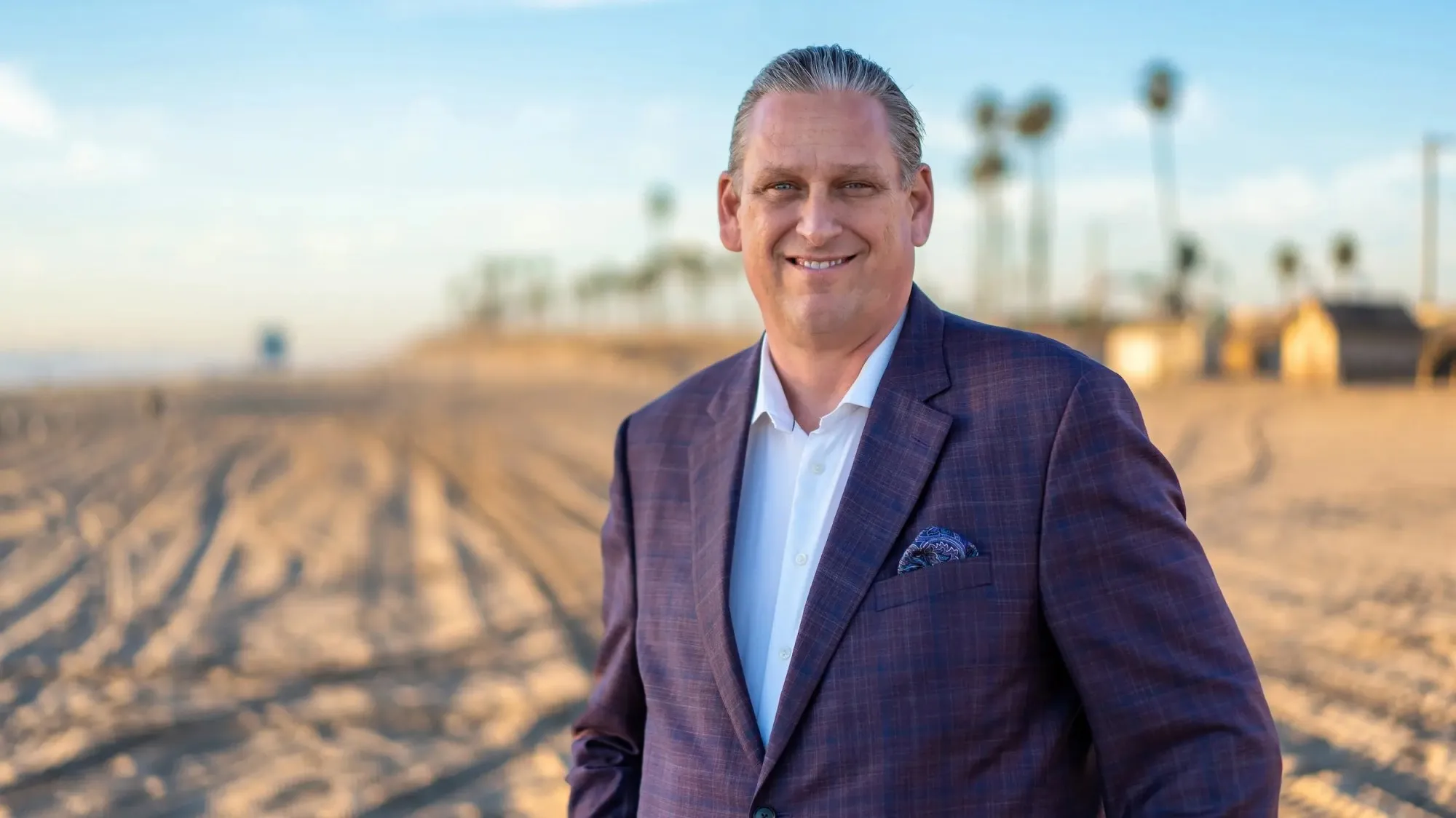
Ahead of the November general election, the Southern California News Group compiled a list of questions to pose to the candidates who wish to represent you. You can find the full questionnaire below.
Read more Catherine Blakespear, Senate District 38 candidate, 2026 election questionnaire
Name: Tony Strickland
Age: 56
Current job title: State Senator
Political party affiliation: Republican
Incumbent: Yes
Other political positions held: California State Assembly: 1998-2004 California State Senate: 2008-2012 Huntington Beach City Council: 2022-2025
City where you reside: Huntington Beach
Campaign website or social media: stricklandforsenate.com
Fuel costs for Californians are higher than anywhere else in the country. What specific policy would you support to ease the burden drivers feel at the pump? And how would you measure whether that policy was actually successful? (Please answer in 200 words or less.)
I am the author of SB 1035, The Gas Tax Relief Act, which would suspend the state’s gas tax bringing gas prices down by over $1 per gallon, saving California families up to $1,100 per year. The quickest relief we can provide to skyrocketing costs is cutting the gas tax and providing Californians with some much needed relief. If elected, I will finish the work I started in my first term and cut the gas tax.
How can state lawmakers ease barriers for those wishing to become homeowners and unburden renters with high rental costs, or is this an issue beyond the scope of Sacramento? (Please answer in 200 words or less.)
In the 1980s, the average age of a first-time homebuyer was 26; today, that age has jumped to 40. According to the State’s Legislative Analyst’s Office, the average cost of a mid-tier home in California is $776,000, making it difficult for homebuyers to afford the 20% down payment. This is why I am not only a big supporter of Proposition 37, but am also proud to have worked with former Democratic Speaker Robert Hertzberg in spearheading this initiative. Proposition 37 would establish a non-taxpayer-funded middle-class homebuyer down payment assistance program. The program would use private funding to provide up to 17% of the down payment, leaving the homebuyer to cover the remaining 3%. The program is structured to be self-sustaining, as participating homebuyers, not taxpayers, repay the bonds through their mortgage. By making the upfront costs of purchasing a home less of a burden, homeownership will once again become an attainable goal for middle-class Californians, and home developers will be even more motivated to build.
Elected officials often talk about the need to prevent people from losing their homes in the first place as part of combating homelessness, but California has more people living on the street than any other state. How would you work with colleagues in Sacramento to get people off the streets and into stable housing situations? (Please answer in 200 words or less.)
During my time as mayor of Huntington Beach, we cut homelessness exponentially by providing our law enforcement and city staff with the tools and authority needed to address the issue. By utilizing the city’s temporary housing facility (Navigation Center), our police could enforce anti-camping laws and get homeless individuals not only a bed, but the services they needed to get back on their feet. Additionally, we worked with our officers and the city attorney to modify existing municipal codes to further support our citywide efforts.
In 2024, nearly 70% of voters across all 58 counties passed Proposition 36, the anti-crime measure. Proposition 36 would aid in combating homelessness by offering those suffering from addiction court-mandated treatment. It is critical that Prop. 36 is fully funded, which is why I introduced SB 926, which would establish a framework to distribute funding for Proposition 36, directing resources toward behavioral health and community-based intervention programs. While this legislature has not committed to the will of the voters to fund it entirely, I am leading the push to ensure ongoing and sufficient funding for Prop. 36.
California has the highest grocery prices of any mainland state in the U.S. What’s one specific policy Sacramento could support to bring down food prices for individuals and families struggling to make ends meet? (Please answer in 200 words or less.)
The No. 1 way that we can save money for families and businesses is by cutting gas prices. The cost of gasoline directly relates to all aspects of food production and transportation. Grocers have seen a significant rise in overhead costs as a result of the increased cost to transport food from farms and distribution centers. Farms are grappling with surging costs as they rely on gasoline to operate heavy equipment and machinery. By cutting the gas tax and bringing down the cost of fuel, we can provide relief not only to consumers but to the hardworking folks who ensure our grocery stores remain stocked.
California’s budget approved by officials this summer included $300 million to offset healthcare costs expected with the expiration of federal subsidies. Do you support this effort by state lawmakers? Also, what would you do to protect Californians’ access to healthcare in light of federal changes that have restricted benefits to various groups? (Please answer in 200 words or less.)
Everyone deserves access to the care they need when they need it. However, our system is already stretched thin with a shortage of essential healthcare workers, crowded emergency rooms, and lengthy wait times; we are already struggling to meet our existing demand. When we extend taxpayer-funded coverage beyond that, we’re asking working families to absorb a cost while the care they’re paying for gets harder to access. My priority is making sure citizens and legal residents have the means to see a doctor when they need one. Until we’ve solved that, we shouldn’t be expanding.
California’s high-speed rail project has been beset by delays, ballooning costs and federal funding cuts. Should the state continue with this project? Why or why not? If you support moving forward with the project, how do you propose the state pay for it? (Please answer in 200 words or less.)
Gavin Newsom’s bullet train to nowhere, or the high-speed fail as I refer to it, is a complete and utter failure. This is no longer the project voters approved in 2008, but a dramatically scaled-down version, demanding unlimited funding. Not only is the project over budget by $93 billion, it still has not yet laid a single piece of track. They have missed deadline after deadline. This is a project that was supposed to be complete in 2020, connecting San Francisco to Los Angeles for $33 billion. Taxpayers shouldn’t be covering the cost of a project that has no feasible plan to get done. It’s time to pull the plug on the high-speed fail and redirect those funds to shovel-ready infrastructure projects across California that would deliver real results for families and businesses.
Read more Laura Bassett, Senate District 38 candidate, 2026 election questionnaire
Increasingly, we’re seeing communities push back on data centers opening in or near their neighborhoods. Environmentalists complain about the amount of water and energy that data centers need to operate. Residents complain about relentless noise pollution. And others worry about losing agricultural land to these centers. On the other hand, the tech industry emphasizes the role of data centers in supporting cloud computing and artificial intelligence. As a policymaker, how would you balance the concerns of critics with desires to ensure that California remains a leader in innovation? (Please answer in 200 words or less.)
There are many communities throughout the state that have the resources and land to welcome these data centers. Data centers can bring significant economic opportunity to a region, including increased tax revenue, job creation, and overall increased property demand within the area. I believe it is up to each community to determine what is best for them. While it is important that California remains a leader in technology and innovation, cities shouldn’t be forced to support data centers in their backyard if it isn’t in their best interest.
Do you support Proposition 40, the proposed billionaire’s tax that would impose a one-time, 5% tax on individuals and trusts with a net worth of more than $1 billion? Revenues from the tax would primarily go to fund healthcare-related programs, including Medi-Cal, though a small portion would also be used to fund food assistance and education-related programs. Explain why you do or do not support this measure. If you don’t, what alternative solution do you propose so that the state has money to pay for the types of services this tax is intended to fund? (Please answer in 200 words or less.)
I do not support Proposition 40, and estimates show that our state has already lost billions of dollars and countless jobs due to businesses fleeing our state — just at the proposal of this. While Prop. 40 is being sold to Californians as a tax on billionaires, the fine print allows for expansion of the increased tax to everyone, regardless of income level, without another vote of the public. I will always fight against tax increases, and because of that, I am proud to be endorsed by and have a lifetime A rating with the Howard Jarvis Taxpayers Association. California doesn’t have a revenue problem; it has a wasteful spending problem. The consequences of Sacramento’s ongoing reckless spending problem is coming to fruition, and taxpayers shouldn’t be on the hook for fixing it.
The state has ambitious goals to transition away from heavy reliance on fossil fuel. Meanwhile, oil refineries in California that shut down in the past year said they did so in part because of the state’s costly regulatory requirements and decreasing consumer demand for traditional gasoline. But the closure of these refineries have drivers concerned about the price of gas going up – especially at a time when affordability remains the No. 1 concern for many Californians. How would you balance the state’s clean energy goals with desires to prevent Californians from further pain at the pump? (Please answer in 200 words or less.)
It’s well-known that California has the highest gas prices in the nation, which not only drives up costs at the pump but also the cost of all goods and services, making everyday life more expensive. Refineries are leaving California due to extreme regulatory requirements that have resulted in 26-37% higher operating costs in California than the national average. California is now forced to import refined gasoline from other countries, causing port congestion, increased emissions, and exposing California to greater geopolitical risk. We can push for renewable energy while acknowledging that our state remains heavily reliant upon fossil fuels. At a time when we see rolling blackouts year after year, we must admit that California does not yet have the infrastructure or resources available to cut fossil fuels. I strongly support furthering renewable energy goals. However, it should be done responsibly when the framework is in place.
Similarly, the Trump administration is aggressively pushing to expand offshore oil drilling and production in California. Explain why you do or do not support this move. If not, do you believe California state leaders have the legal authority to stop or restrict it? (Please answer in 200 words or less.)
We don’t need to drill offshore. California has enough oil in Kern County alone to be energy independent. The problem isn’t the availability of oil; the problem is the excessive regulatory requirements that are limiting supply throughout the state. Sacramento needs to accept the reality that this state is dependent on oil. By cutting back on regulations that limit oil production within the state, we can produce more in areas that are better suited for such activities and meet the demand of Californians.
A law signed in 2024 establishes statewide standards for new, large warehouses in California, including distance buffers separating warehouses from schools, homes and other so-called “sensitive receptors.” Do you support Sacramento having a role in local land-use decisions when it comes to logistics? Why or why not? Is there anything else state government should do when it comes to regulating warehouses? (Please answer in 200 words or less.)
I am a strong supporter of local control. California is a diverse state, made up of many different landscapes, cultures, and dynamics. There is no one-size-fits-all model in California, and as a former mayor, I know firsthand how difficult it can be to meet unfunded mandates from Sacramento that do not fit the zoning and culture of a city. We should empower our local municipalities to make decisions that are best for themselves. No one knows a community better than those who live there, and that is who should have a voice.
Tell us about a time you’ve changed your mind on a political position. What was it, and what changed your mind? (Please answer in 200 words or less.)
When California passed legislation in 2008 requiring restaurants to publish nutritional information, such as calorie counts, on their menus, I didn’t agree and believed it to be an economic burden. Since then, I have come to better understand the importance of displaying this information and enabling consumers to make better-informed nutritional decisions. Having lost a close childhood friend at 50 due to the health choices he made was a heartbreaking reminder that nutritional habits can have a lasting impact on our health and longevity. Going through that loss and learning that more than 40% of school-aged children and 76% of U.S. adults have at least one preventable chronic health condition is what inspired me to draft SB 1133, The Ready to Learn, Ready for Health Act. SB 1133, which has since been signed into law, works through California’s existing curriculum review process and gives students practical information to make healthier choices in their everyday lives.
Bonus question: What is the best book you’ve read this year? Explain why you found it compelling.
Every year I prioritize reading “Awaken the Giant Within” by Tony Robbins. This annual read has become a way to reframe my thinking and keep myself in a positive state of mind. Throughout the book, it reiterates CANI, which stands for Constant and Never-ending Improvement, which resonates with me and helps me stay optimistic and focused on ongoing self-improvement, both personally and professionally. The reminder to stay true to my long-term goals and myself is a consistent motivator and helps drive my day-to-day actions.
Read more Pennsylvania’s measles outbreak is the largest in decades in the US