
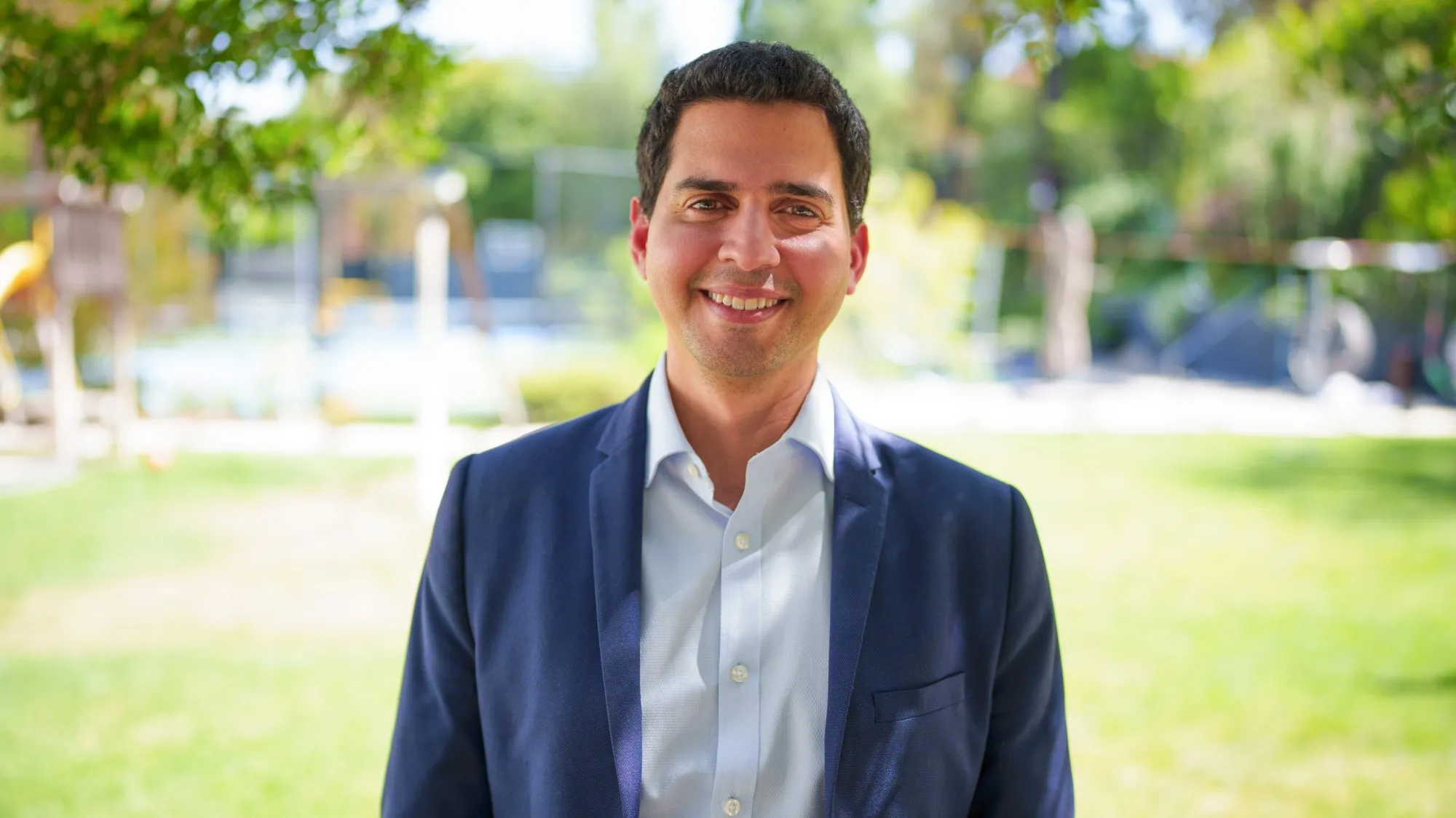
Ahead of the November general election, the Southern California News Group compiled a list of questions to pose to the candidates who wish to represent you. You can find the full questionnaire below.
Read more Rafael Marquez in search of first win as Mexico national team faces Chile
Name: JJ Galvez
Age: 34
Current job title: Strategy & Operations Manager
Political party affiliation: Democrat
Incumbent: No
Other political positions held: Treasurer, Silverado-Modjeska Recreation & Park District (current)
City where you reside: Silverado
Campaign website or social media: jjgalvez.com
Fuel costs for Californians are higher than anywhere else in the country. What specific policy would you support to ease the burden drivers feel at the pump? And how would you measure whether that policy was actually successful? (Please answer in 200 words or less.)
Multiple factors drive California’s high fuel costs including overseas conflicts, taxes, and price gouging. We need to protect our residents and economy from excessive costs and explore other solutions.
For example, some people blame reduced refining capacity, but Arizona has no refineries and still has lower gas prices than California. We need to find and fix root causes.
I would support a temporary roll back on gas taxes and a freeze on inflation-adjusted increases to provide some immediate relief. Then, I would support an investigation into the exact causes of high fuel prices to see where we could make the biggest impact without sacrificing previous action to protect our communities from health hazards. A long-term answer is further balancing our energy and transportation portfolio to protect against foreign influence or price shocks. Incentivizing EV infrastructure development and providing charging access in working-class communities would deliver the greatest relief from burdensome fuel costs.
Measuring success would be straightforward. I can check the price at the pump when I fill up my Jeep. For the longer term, gauging success would involve tracking consumer price indexes and assessing whether we’re providing viable alternatives for our communities alongside fuel price reductions.
How can state lawmakers ease barriers for those wishing to become homeowners and unburden renters with high rental costs, or is this an issue beyond the scope of Sacramento? (Please answer in 200 words or less.)
By reducing housing costs, which can be achieved by increasing new housing supply and unlocking existing supply.
On new supply, I’ve proposed CalBuild. It would be a state bulk-purchasing cooperative that negotiates master price agreements on construction materials, so small builders and nonprofits get the same volume discounts the biggest developers already get. That lowers what a home costs to build without touching construction wages. If we include fire-resistant materials, the same program supports home hardening, which is one of the few things that brings insurance premiums down. That helps renters too, because landlords pass insurance costs into rent.
On existing supply, the capital gains exclusion on a home sale is $250,000 single and $500,000 married, and it hasn’t changed since 1997. My district includes Temecula. A couple who bought there in the 1990s clears that easily, and California taxes every dollar above it as ordinary income. So they stay put, and a house a young family could buy never reaches the market. We should raise the state exclusion for people who have owned and lived in their home a long time.
Elected officials often talk about the need to prevent people from losing their homes in the first place as part of combating homelessness, but California has more people living on the street than any other state. How would you work with colleagues in Sacramento to get people off the streets and into stable housing situations? (Please answer in 200 words or less.)
Step one is the answer to the last question, which is more housing so that fewer people fall out of it.
For people already homeless, we need humane care paired with a real path back to a home. That means mental health support and substance abuse recovery in settings that keep a person’s dignity intact. It also means somewhere to go now, not in several years. Converting aging motels and empty commercial buildings into transitional housing can speed up the availability of shelter, and I would work with colleagues to make that funding easier for cities to win.
Work requirements have to make sense. People need time to recover before they’re put on rules that push them out prematurely. One approach is to count community service. For someone not yet ready for a job schedule, service work can meet the requirement, rebuild confidence, and lead back to steady work.
California has the highest grocery prices of any mainland state in the U.S. What’s one specific policy Sacramento could support to bring down food prices for individuals and families struggling to make ends meet? (Please answer in 200 words or less.)
What we pay at the register isn’t only the cost of the groceries themselves. It’s the cost of moving food and keeping it cold. I already mentioned gas taxes, so here I will expand on electricity.
A grocery store runs refrigeration, freezers, and lighting around the clock. Cold storage and food processing do the same. California has some of the highest commercial electricity rates in the country, and those costs end up in the price of milk.
So the specific policy I’d push is expanding power supply closer to where it’s used, with an emphasis on distributed energy resources. That means rooftop solar and batteries on existing commercial buildings, including the stores and warehouses themselves. This is generation we can add in months rather than the decade it takes to permit and build new transmission, and it takes pressure off everyone’s rates.
I’d also want the Public Utilities Commission held to a harder standard before approving rate increases that get passed straight through to consumers.
California’s budget approved by officials this summer included $300 million to offset healthcare costs expected with the expiration of federal subsidies. Do you support this effort by state lawmakers? Also, what would you do to protect Californians’ access to healthcare in light of federal changes that have restricted benefits to various groups? (Please answer in 200 words or less.)
Yes, I support it.
Not only because it’s the right thing to do, but because it blunts the cost increase for everyone else. When people lose coverage, preventive care gets traded for emergency room care, which is the most expensive care there is, and the rest of us pay for that in premiums.
Beyond backfilling the federal gap, we have to go at what actually drives cost.
On drug pricing, California capped insulin and cut hidden pharmacy middleman markups. We should extend those caps to other essentials like inhalers and EpiPens, and expand CalRx so the state can manufacture and distribute low-cost generics.
On prior authorization, which is how insurers approve or deny care, the delays drive both cost and worse outcomes. I would require firm decision deadlines, public reporting of denial rates, and penalties for insurers that keep missing them.
On workforce, labor is the largest expense in a hospital, and when hospitals can’t hire staff nurses, they fill shifts with contract labor that costs far more. Last year nursing schools turned away over 93,000 qualified applicants, a record, mostly for lack of clinical training slots and instructors. California should fund that training capacity.
California’s high-speed rail project has been beset by delays, ballooning costs and federal funding cuts. Should the state continue with this project? Why or why not? If you support moving forward with the project, how do you propose the state pay for it? (Please answer in 200 words or less.)
I support high-speed rail, and I believe we have to build it. Voters approved it, and a state of 40 million people needs a way to move between its cities that doesn’t depend entirely on freeways and airports.
What this project has is a delivery problem, not a vision problem. Washington pulled about $4 billion in 2025, and Congress rescinded another $929 million this year. Service between San Francisco and Los Angeles is now projected past 2038. Those delays didn’t come from the engineering. They came from land acquisition that dragged for years, utility relocation that stalled, and a missed deadline to pick a trainset vendor.
On paying for it, the legislature already committed $1 billion a year from cap-and-invest through 2045, and that requires no new tax. The Authority says this covers about a fifth of full build-out. The rest has to come from private investment and from commercial use of the land the state already owns around stations.
Before I vote for another dollar, I want the Authority to publish what is holding up each segment and what it is doing to clear it. We should fix the process breakdowns first.
Increasingly, we’re seeing communities push back on data centers opening in or near their neighborhoods. Environmentalists complain about the amount of water and energy that data centers need to operate. Residents complain about relentless noise pollution. And others worry about losing agricultural land to these centers. On the other hand, the tech industry emphasizes the role of data centers in supporting cloud computing and artificial intelligence. As a policymaker, how would you balance the concerns of critics with desires to ensure that California remains a leader in innovation? (Please answer in 200 words or less.)
My career has been in tech. I appreciate the world-changing potential that AI has. I am also deeply concerned about its risks.
Read more Tony Strickland, Senate District 36 candidate, 2026 election questionnaire
That is why I support slowing down the development of new models. When whistleblowers are sounding the alarm about our inability to control these models, we need to pay attention. In early September, the CEOs of Anthropic and OpenAI both said the same thing, and that should carry weight.
On data centers, they should get built, and the companies should pay for what they cost.
For water, new facilities should use closed-loop or air-cooled systems rather than evaporative cooling, which uses large volumes of water in a region that runs dry.
For power, if a facility needs hundreds of megawatts, the grid upgrades should be paid for by the company and not spread across everyone’s utility bill. Local families shouldn’t pay more so a server farm can plug in.
And the community that hosts one should get something out of it. Enforceable noise limits, local hiring, and real investment back into the town. If a company won’t sit down with the neighbors and earn their buy-in, it shouldn’t expect a fast permit.
Do you support Proposition 40, the proposed billionaire’s tax that would impose a one-time, 5% tax on individuals and trusts with a net worth of more than $1 billion? Revenues from the tax would primarily go to fund healthcare-related programs, including Medi-Cal, though a small portion would also be used to fund food assistance and education-related programs. Explain why you do or do not support this measure. If you don’t, what alternative solution do you propose so that the state has money to pay for the types of services this tax is intended to fund? (Please answer in 200 words or less.)
Yes, and this is one I feel strongly about.
We have a serious wealth inequality problem in this country. The cost of living has risen faster than wages for decades, and that is the machinery behind the feeling that the American Dream is slipping away. I came here on a student visa, built a career, and bought a home. I want that to still be possible for the people coming up behind me, and right now it is getting harder rather than easier.
At the same time, federal cuts are pulling tens of billions a year out of California healthcare. Roughly 1.3 million Californians are projected to lose Medi-Cal coverage. Hospitals and clinics in districts like mine absorb that.
Prop. 40 asks about 200 billionaires for a single payment of 5%. That is less than their wealth typically grows in one year. It isn’t a punishment for success, and it isn’t permanent policy.
I’ll be honest that this is a stopgap. Real reform of how wealth concentrates has to come from the federal level. But California shouldn’t let people lose their care while we wait for Washington to act.
The state has ambitious goals to transition away from heavy reliance on fossil fuel. Meanwhile, oil refineries in California that shut down in the past year said they did so in part because of the state’s costly regulatory requirements and decreasing consumer demand for traditional gasoline. But the closure of these refineries have drivers concerned about the price of gas going up – especially at a time when affordability remains the No. 1 concern for many Californians. How would you balance the state’s clean energy goals with desires to prevent Californians from further pain at the pump? (Please answer in 200 words or less.)
While petroleum companies worry about shareholders’ bottom line, California worries about the health and future of our communities. The truth is, meeting California’s rules, designed to protect our citizens from an industry notorious for exposure to harmful chemicals, would have increased costs, so petroleum companies chose to close refineries instead. These are some of the most profitable companies to ever exist.
California is still one of the largest oil and gas markets in the U.S., yet oil companies are simultaneously blaming weak demand for closing refineries and high demand for surging prices. Unfortunately, there are no easy answers as we make this critical transition, but legislators need to do the best they can to help constituents navigate the change.
As a legislator, I will make decisions that balance protecting the health and safety of our communities, including clean air to breathe, oil-free beaches, and neighborhoods that are free from contamination, protecting our health, tourism economy, and property values, with the need to ensure Californians can afford to live. I will also seek to balance the push toward a carbon-reduced future with the realities families are facing today, including finding ways to decrease costs for traditional and carbon-free options.
Similarly, the Trump administration is aggressively pushing to expand offshore oil drilling and production in California. Explain why you do or do not support this move. If not, do you believe California state leaders have the legal authority to stop or restrict it? (Please answer in 200 words or less.)
I oppose it. Our coast isn’t a drilling platform; it’s an economy. Orange County beaches support tourism, small businesses, property values, and a good part of the reason people moved here. One spill takes years of that away. We saw it in Santa Barbara in 1969 and again off Huntington Beach in 2021, when a broken pipeline closed beaches across our county.
On the legal question, the answer is partly. Washington controls leasing past three miles offshore, and California can’t cancel a federal lease sale. But a rig doesn’t work without support on land. The pipelines, piers, and processing that connect a platform to a refinery have to cross state tidelands and the coastal zone, and the state controls both of those. California law already blocks the State Lands Commission from approving new leases for infrastructure that serves new federal offshore drilling, and the Coastal Commission gets to review federal projects for consistency with our coastal rules. Those are real points of leverage, and I would defend them.
I’d rather spend this decade arguing about how fast we build the next generation of energy here than about how we clean up the last one.
A law signed in 2024 establishes statewide standards for new, large warehouses in California, including distance buffers separating warehouses from schools, homes and other so-called “sensitive receptors.” Do you support Sacramento having a role in local land-use decisions when it comes to logistics? Why or why not? Is there anything else state government should do when it comes to regulating warehouses? (Please answer in 200 words or less.)
Yes, within limits. My default is local control, but warehouse traffic doesn’t respect city lines. One city can approve a million square feet, keep the sales tax revenue, and send the diesel traffic down a residential street in the next city over. When the benefit is local, and the cost lands next door, a statewide floor is the right tool. That’s why the buffer standards make sense to me.
What I’d add is enforcement. A buffer nobody measures, and a truck route nobody checks, doesn’t protect anyone. The state should fund real inspection and give air districts and cities the ability to act when the conditions attached to a project approval get ignored.
I’d also connect this to the grid. If we want electric trucks and zero-emission yard equipment, the charging capacity has to show up when the building does, not ten years later.
And I’ll be straight about who I answer to. My campaign takes no money from warehouse developers, oil and gas companies, or utilities. If I’m going to ask the state to set standards on an industry, I shouldn’t be funded by it.
Tell us about a time you’ve changed your mind on a political position. What was it, and what changed your mind? (Please answer in 200 words or less.)
Health insurance. I used to think we could fix it with regulation, more competition, and price transparency. I don’t think that anymore. I’ve come to believe health insurance shouldn’t be a for-profit industry.
I say that as a capitalist. I think capitalism is the best system we’ve built for rewarding hard work and producing innovation. But over the past few decades, a lot of that innovation has gone into finding new ways to make money rather than into making better products and services.
Health insurance is where that shows up worst. A for-profit insurer answers to shareholders, and the money it doesn’t spend on your care is money it keeps. So the incentives run against paying claims, through denials and long approval delays. I know that from my own experience with my own coverage.
That’s why I now support universal healthcare. But California can’t fund that alone. What the state can do is build the framework, which is what the CalCare bill attempted. I will support those efforts if elected.
Bonus question: What is the best book you’ve read this year? Explain why you found it compelling.
“Abundance,” by Ezra Klein and Derek Thompson.
It’s a self-critique of how liberal policymakers built so much process that government can no longer deliver the things we say we believe in. It offers real ideas for speeding up housing, energy, infrastructure, and scientific research. I found it compelling because one of our problems as Democrats is that our default answer to a problem has been to spend more money on it. Sometimes that’s right. But often we need to look at the structure of the problem and go after the root cause instead. Abundance lays out a supply-side roadmap for doing that.
Read more Catherine Blakespear, Senate District 38 candidate, 2026 election questionnaire