
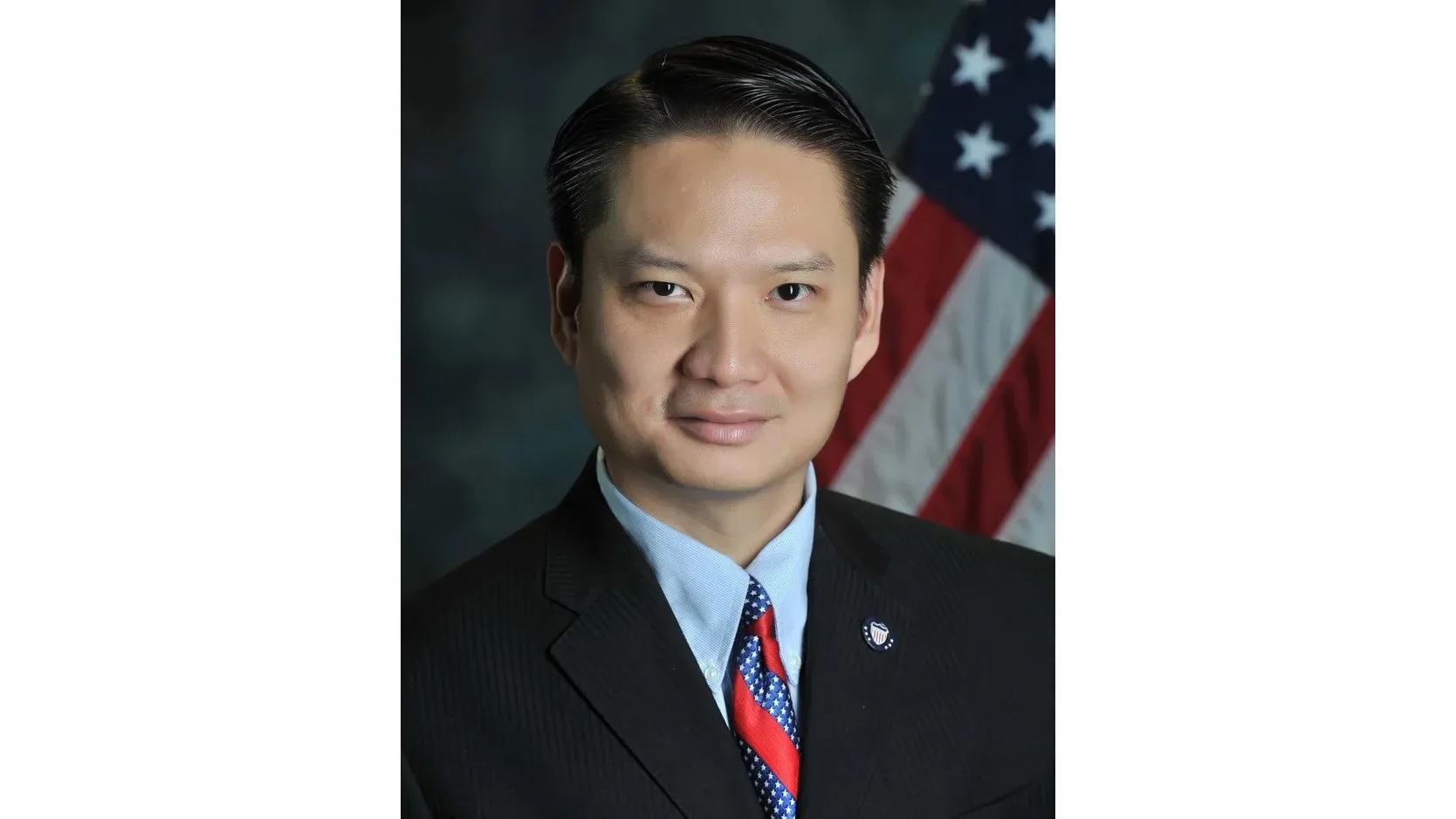
Ahead of the November general election, the Southern California News Group compiled a list of questions to pose to the candidates who wish to represent you. You can find the full questionnaire below.
Read more JJ Galvez, Assembly District 71 candidate, 2026 election questionnaire
Name: Tri Ta
Age: 53
Current job title: State Assemblyman
Political party affiliation: Republican
Incumbent: Yes
Other political positions held: N/A
City where you reside: Westminster
Campaign website or social media: trita4assembly.com
Fuel costs for Californians are higher than anywhere else in the country. What specific policy would you support to ease the burden drivers feel at the pump? And how would you measure whether that policy was actually successful? (Please answer in 200 words or less.)
I co-authored legislation to suspend and repeal California’s largest-in-the-nation gas tax. Californians already pay the highest fuel taxes and fees in the country; those Sacramento-imposed costs are the main reason prices at the pump are so high. Working families should come first. Success would be measured by a sustained drop in California gasoline prices relative to the national average, lower monthly fuel bills for commuters, and evidence that the tax relief is not immediately replaced by new fees.
How can state lawmakers ease barriers for those wishing to become homeowners and unburden renters with high rental costs, or is this an issue beyond the scope of Sacramento? (Please answer in 200 words or less.)
The root cause of unaffordable homes and rents is decades of overregulation that has strangled supply. CEQA lawsuits, density limits, and multi-year permitting have driven median home prices to roughly double the national average and rents 50-98% higher than in most states. I support streamlining and limiting abusive CEQA litigation, cutting permit timelines from years to months, removing unnecessary cost-inflating mandates, offering targeted tax and fee relief for projects that meet deadlines, and creating fast-track approvals. The state should reward builders who put shovels in the ground rather than issue more command-and-control rules. Success is more housing starts, shorter approval times, and measurable declines in prices and rents
Elected officials often talk about the need to prevent people from losing their homes in the first place as part of combating homelessness, but California has more people living on the street than any other state. How would you work with colleagues in Sacramento to get people off the streets and into stable housing situations? (Please answer in 200 words or less.)
California has spent more than $24 billion on homelessness in five years; spending more is not the answer. I work in a bipartisan way to empower cities with local solutions. I authored and passed AB 1782 so Fountain Valley, Garden Grove, and Westminster could better coordinate and fund a homeless navigation center. We must put treatment first and address the mental-health and addiction problems that often underlie street homelessness. Success is fewer people living on the street, more people in treatment and stable housing, and results delivered by local governments rather than another statewide spending surge.
California has the highest grocery prices of any mainland state in the U.S. What’s one specific policy Sacramento could support to bring down food prices for individuals and families struggling to make ends meet? (Please answer in 200 words or less.)
We must bring down the cost of energy that is passed on to consumers.
Bring down the cost of energy and the cost of doing business. Costly state mandates are passed through to consumers as higher food prices. Reducing those input costs is the most direct way Sacramento can ease the burden on families
California’s budget approved by officials this summer included $300 million to offset healthcare costs expected with the expiration of federal subsidies. Do you support this effort by state lawmakers? Also, what would you do to protect Californians’ access to healthcare in light of federal changes that have restricted benefits to various groups? (Please answer in 200 words or less.)
I oppose using state dollars for free healthcare for people in the country illegally. Obamacare has driven up costs nationwide; California seniors and middle-class families are already struggling. We should prioritize making coverage affordable for everyday Californians rather than expanding eligibility. Any state offset of federal subsidy changes should be targeted at legal residents and paired with reforms that actually lower premiums and deductibles.
California’s high-speed rail project has been beset by delays, ballooning costs and federal funding cuts. Should the state continue with this project? Why or why not? If you support moving forward with the project, how do you propose the state pay for it? (Please answer in 200 words or less.)
The original cost estimates were unrealistic; Californians were sold a bill of goods to pass the bonds. The project should be stopped and the remaining funds redirected to regional transportation projects that deliver results now. Even if a line is ever finished, it will require endless operating subsidies, crowding out road, bridge, and local transit maintenance.
Increasingly, we’re seeing communities push back on data centers opening in or near their neighborhoods. Environmentalists complain about the amount of water and energy that data centers need to operate. Residents complain about relentless noise pollution. And others worry about losing agricultural land to these centers. On the other hand, the tech industry emphasizes the role of data centers in supporting cloud computing and artificial intelligence. As a policymaker, how would you balance the concerns of critics with desires to ensure that California remains a leader in innovation? (Please answer in 200 words or less.)
Californians already pay the highest energy prices in the nation and should not subsidize data-center electricity and water for the rest of the country. Policy should require the companies that own and profit from the facilities to cover their full energy, water, and infrastructure costs so ratepayers are not left with the bill. Local concerns about noise, water, and farmland can be addressed with those cost-causer rules rather than a blanket ban that cedes the industry to other states.
Read more Rafael Marquez in search of first win as Mexico national team faces Chile
Do you support Proposition 40, the proposed billionaire’s tax that would impose a one-time, 5% tax on individuals and trusts with a net worth of more than $1 billion? Revenues from the tax would primarily go to fund healthcare-related programs, including Medi-Cal, though a small portion would also be used to fund food assistance and education-related programs. Explain why you do or do not support this measure. If you don’t, what alternative solution do you propose so that the state has money to pay for the types of services this tax is intended to fund? (Please answer in 200 words or less.)
I oppose it. The mere prospect of a wealth tax has already driven people and capital out of California, costing the state billions. Worse, the measure contains language that could later let the legislature apply similar taxes to savings, small businesses, and homes of ordinary Californians. The alternative is fiscal discipline: stop the spending growth that created the hole, cut waste, and grow the tax base by making the state livable and affordable again.
The state has ambitious goals to transition away from heavy reliance on fossil fuel. Meanwhile, oil refineries in California that shut down in the past year said they did so in part because of the state’s costly regulatory requirements and decreasing consumer demand for traditional gasoline. But the closure of these refineries have drivers concerned about the price of gas going up – especially at a time when affordability remains the No. 1 concern for many Californians. How would you balance the state’s clean energy goals with desires to prevent Californians from further pain at the pump? (Please answer in 200 words or less.)
I voted against and strongly opposed the legislation that closed our refineries. It was obvious that targeting oil companies with punitive penalties would drive up gas prices and hurt working California families.Gov. Newsom’s insistence on punishing refiners has backfired. It has accelerated refinery closures, forced California to rely more heavily on expensive imported gasoline, and made our supply even more vulnerable.
The result is higher prices at the pump and, ironically, greater environmental harm from increased tanker shipments and less efficient out-of-state refining.
Similarly, the Trump administration is aggressively pushing to expand offshore oil drilling and production in California. Explain why you do or do not support this move. If not, do you believe California state leaders have the legal authority to stop or restrict it? (Please answer in 200 words or less.)
The United States needs to be energy independent, so we are not drawn into conflicts over foreign oil. There are better places to increase production than off the California coast — onshore fields, the Gulf of Mexico, and Alaska have existing infrastructure and lower environmental and seismic risk. California’s coast should not become the default site when other regions can meet national needs.
A law signed in 2024 establishes statewide standards for new, large warehouses in California, including distance buffers separating warehouses from schools, homes and other so-called “sensitive receptors.” Do you support Sacramento having a role in local land-use decisions when it comes to logistics? Why or why not? Is there anything else state government should do when it comes to regulating warehouses? (Please answer in 200 words or less.)
Statewide guidelines on buffers from schools and homes can be useful. Broad Sacramento control of local land-use decisions is not. Cities and neighborhoods know their own traffic, noise, and quality-of-life trade-offs better than the Capitol. Locals should retain meaningful flexibility to decide what fits their communities.
Tell us about a time you’ve changed your mind on a political position. What was it, and what changed your mind? (Please answer in 200 words or less.)
I meet regularly with constituents and community leaders. On more than one occasion, those conversations supplied facts I did not have and led me to revise my view on the practical effects of a bill or regulation. Good policy requires updating when new information from the people who live with the consequences becomes clear.
Bonus question: What is the best book you’ve read this year? Explain why you found it compelling.
I recently read “Genghis Khan and the Making of the Modern World.” The book takes a more nuanced look at Genghis Khan’s life. He unified the tribes by promoting talent over bloodlines, then built an empire that stretched across Eurasia. The point is that he was more than just a barbarian. After the conquests, the Mongols protected trade, moved people and ideas quickly, tolerated religions, and connected East and West in a way that helped create the modern world.
Read more Tony Strickland, Senate District 36 candidate, 2026 election questionnaire