
California, the most populous state in the nation, is home to more than 39 million residents, has a budget of roughly $352 billion and enjoys bragging rights as the world’s fourth-largest economy.
Read more California lieutenant governor candidates talk college affordability and workforce development
It’s also known for having some of the highest housing, gasoline and electricity prices in the nation and must frequently battle wildfires.
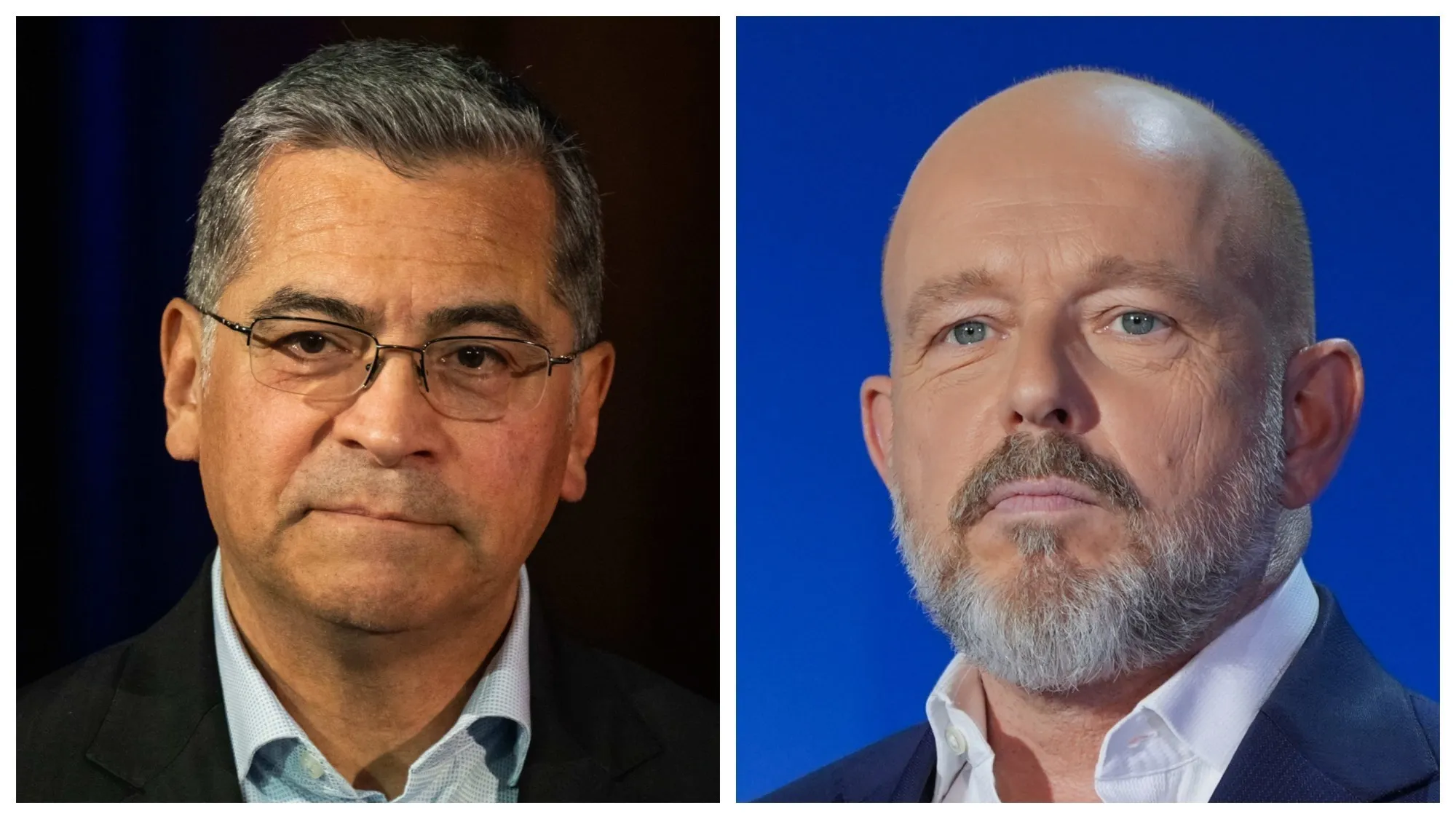
Running such a large and complex state — one with multiple competing interests — is a tall order. But both Democrat Xavier Becerra and Republican Steve Hilton believe they’re the best person for the task.
Both want to become California’s 41st governor and are vying to succeed termed-out Gov. Gavin Newsom.
They disagree on a number of issues, including when it comes to Medi-Cal coverage for undocumented immigrants, how much large businesses should be responsible for funding their employees’ healthcare and whether the state should press forward with its ambitious but controversial high-speed rail project.
But there is at least one thing they agree on: Both candidates oppose Proposition 40, the so-called billionaires tax on the 2026 general election ballot.
Keep reading for a breakdown of their positions on various policy matters, based on their responses to the Southern California News Group’s questionnaire sent to both candidates.
Healthcare
Undocumented immigrants ages 19 to 59 who are currently on the state’s health insurance plan, known as Medi-Cal, are expected to pay at least $30 a month starting in July to remain fully covered. Newsom, in his final year in office, wanted to increase that amount to $50, but the legislature decided to leave the decision up to his successor.
Asked if undocumented immigrants should receive state health insurance and, if so, how much an undocumented adult should pay in monthly premium, if anything, Becerra said all state residents should have access to insurance. He did not specify whether undocumented people should pay for that coverage.
“Every Californian should have access to health coverage – and that includes undocumented Californians who work, contribute to our communities, and pay an estimated $8.5 billion a year in state and local taxes,” said Becerra.
He noted that hospitals must, by federal law, treat all patients who show up to emergency rooms, regardless of immigration status, and said that providing access to a primary care doctor will cost the state less than paying for emergency room visits.
“We pay either way,” he said. “The most effective way to lower healthcare costs is to keep people healthy in the first place.”
The former U.S. health secretary under the Biden administration also said he supports charging large companies that don’t offer health insurance to employees who earn so little that they qualify for Medi-Cal to ensure corporations pay “their fair share.”
“Profitable companies should not get to pass their obligations onto working families,” Becerra said.
Hilton, on the other hand, said charging companies more in a state that he described as already suffering from an unfriendly business climate would further drive companies out of California.
“I do not support yet another tax increase to shovel more cash into Sacramento’s bottomless money pit,” Hilton said.
“Large employers already pay taxes,” he added. “This new tax would show up in higher prices, lower wages and fewer jobs. If a company violates labor law, enforce the law. But do not punish companies for employing Californians who qualify for Medi-Cal.”
On whether undocumented immigrants should receive healthcare coverage, Hilton said they should receive emergency care but not full-scope Medi-Cal coverage if here illegally.
“California cannot afford it when citizens and legal residents are already struggling to get appointments and the program is putting enormous pressure on the state budget,” he said, adding that a monthly premium of $30 to $50 wouldn’t come close to covering the cost of coverage.
“California should continue to provide emergency care and protect public health as required by federal law. But full ongoing benefits must be reserved for people who are legally eligible for them,” he said.
Transition from fossil fuels
The state has ambitious goals to transition away from fossil fuels, but oil refineries have cited California’s costly regulatory requirements in part for why they’ve shut down operations in the Garden State. This, in turn, has drivers concerned about gas prices going up.
Read more Time for term limits? Dems in majority could have familiar faces in key roles
The candidates were asked how they would balance the state’s clean energy goals with preventing drivers from paying more at the pump.
Hilton proposed ending policies that drive refineries out of California, expanding in-state oil production, reducing the state’s reliance on imported oil and gasoline and pausing the gas tax while the state makes permanent reforms. He also advocated for other energy sources, such as nuclear, natural gas and geothermal.
“We can have cleaner air and affordable energy at the same time. The answer is innovation and energy abundance, not mandates that shut down local facilities, export jobs and force us to import more fuel from overseas,” he said.
Becerra, in addition to blaming President Donald Trump for the current war in Iran – which he called the “biggest culprit” for the current spike in gas prices – said he would protect Californians from price shocks while the state builds out its clean energy economy
“I will use the state’s oversight authority to make sure no refinery goes offline unless we have a plan to replace its supply – working to keep facilities open where possible and securing affordable fuel where we cannot,” he said.
High-speed rail
California’s high-speed rail project has been plagued by years of delays, massive cost overruns and federal funding cuts.
But rather than throw in the towel completely, Becerra wants to amend the game plan. That starts with “being honest that the current approach has failed taxpayers,” he said.
He proposed reviewing where the money went, areas of the project that can be cut and how to build faster and leaner. He said he’d use the $1 billion annual state commitment through 2045 to secure financing, bring in private capital and fight to restore federal funding that “Trump ripped away from a project Californians voted for.”
“California is the world leader in innovation. We can make this work – with sunlight on every dollar and a plan measured in real results,” Becerra said.
On the other hand, Hilton said he would stop state payments on the project his first day in office.
“High-speed rail has broken every promise voters were given on cost, timing, travel time and private funding. … There is no credible plan to finish the current system without taking billions more from taxpayers. Continuing to spend money just because politicians refuse to admit failure is exactly how California ended up in this mess,” Hilton said.
He proposed looking into whether any of the work already done can be put to good use and to redirect money into projects that “people can use now.” This would include work on safer roads, faster repairs and improving local transit reliability.
Billionaires tax
Although there are plenty of areas where the two candidates differ, Hilton and Becerra both believe Proposition 40 – the one-time, 5% tax on individuals and trusts with a net worth of over $1 billion to mainly pay for healthcare-related programs in the state, with a portion also going toward food assistance and education-related programs – is a bad idea.
“California does not have a revenue problem. It has a spending problem,” said Hilton. He called the wealth tax “probably the most self-destructive proposal ever put before California voters,” saying it would drive entrepreneurs, jobs and investments out of the state.
Hilton said the state has money to provide services to Californians but that billions of dollars are “wasted through cronyism and special-interest protection.”
“We can improve healthcare, food assistance and education by cutting waste, fraud, failed projects and bureaucracy instead of imposing another tax,” he said.
Becerra, meanwhile, said the wealthiest Californians must pay their fair share, but a one-time tax won’t provide the ongoing revenue needed to fund Medi-Cal, schools and food assistance programs year after year.
Good tax policy, he said, simplifies the rules for the taxpayers, closes tax loopholes and generates revenues to provide needed services.
“Reliable services require reliable funding, and as governor I will fight for both,” he said.
To read more about the candidates’ position on these and other issues, check out their full responses to our questionnaire in our online voter guide.
Read more The midterms stakes are high for these 2028 presidential prospects