
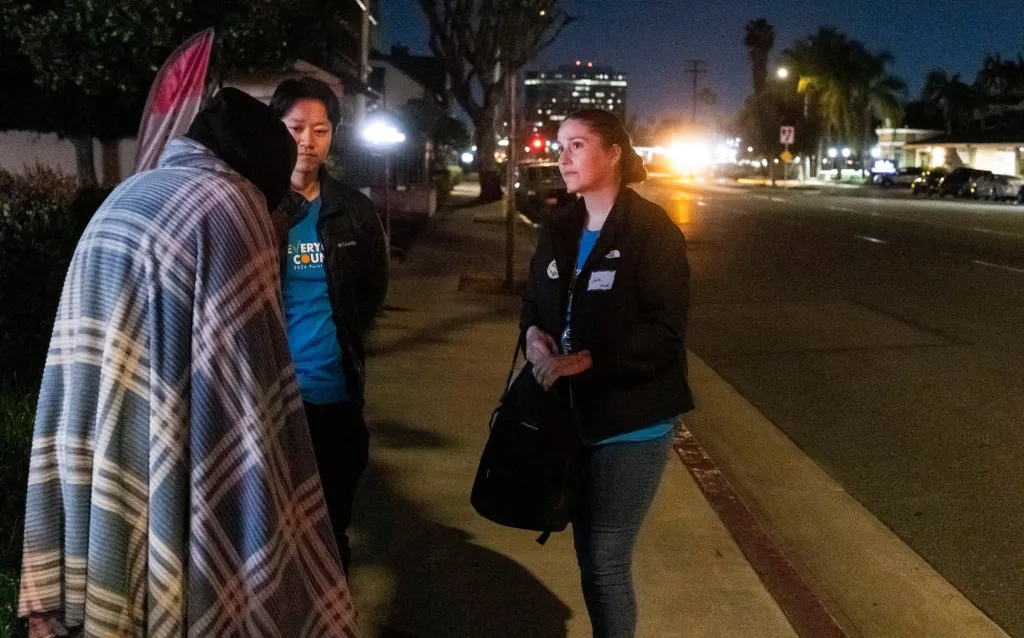
We don’t mean to be Debbie Downer. And we’re as pleased as punch (and as pleased as local officialdom, apparently) that the total number of homeless folks in Orange County declined between 2024 and 2026.
But … reality check. There were still more unhoused people here in January than there were in 2022.
This could well be the work of pandemic-era eviction bans that were in place in 2022 and gone in 2024, when homelessness in O.C. jumped to new heights.
While it’s truly swell that the number of unhoused folks (that volunteers could find to count) is down since 2024, it’s bracing that there were still 6,321 people in shelters and on the streets here in January when hundreds of volunteers fanned out with clipboards and questions.
This is even as Orange County spent more than a half-billion dollars on homelessness over the past three years alone.
In 2022, Orange County spent $112.3 million on housing, health care, assistance, shelters and outreach for homeless folks. That more than doubled, to $236.8 million, in 2024. Then it dove to $169.8 in 2025 (as state and federal funding dwindled). It’s expected to total about $190 million in 2026.
That $190 million — and we apologize here for the admittedly obnoxious math — averages out to about $30,000 per homeless person. We could rent apartments for each and every one for that much money.
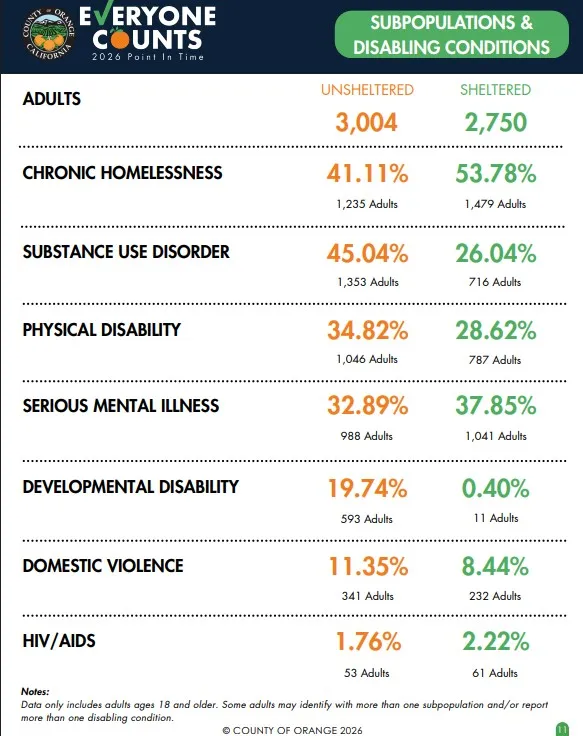
These folks need much more intensive care, the kind you get with “supportive housing” overseen by professionals, but there’s clearly not enough of that.
Back in 2018, Some 900 units have been brought online as of late — we’re awaiting a grand total — but the cost has exceeded a half-million dollars per unit.
Read more 2026 Point In Time Count: Orange County’s homeless population down 14% in two years
There must be a thriftier way to do this (see, perhaps, San Jose’s “tiny home” initiative?), but building and staffing these facilities should be first on everyone’s to-do list.
We must acknowledge an uncomfortable truth here: Some unhoused folks who use drugs aren’t stopping, and won’t accept shelter if sobriety is required and/or drug use is verboten.
That’s where “harm reduction” comes in — providing users a safe place to do what they think they need to do, hopefully under the watchful eye of professionals who can steer them toward help if and when they’re ready, and keep them alive until that day comes. “Meet them where they are, work like hell to get them somewhere better,” is how one doctor put it.
Yes, California does stress housing first, and the governor has rejected attempts to dedicate some homeless funding to sober-only housing. But he also vetoed a pilot program that would have allowed “safe consumption” sites in Los Angeles, San Francisco and Oakland — an approach that research has found provides a bridge to housing, services and addiction treatment. That sort of harm reduction should be high on our to-do list as well (even if it might play poorly to a national audience weighing presidential hopefuls).
Some experts credit easier-to-access Narcan (which can reverse opioid overdoses), but a paper published in January in the journal Science suggests that the answer is China. Crackdowns on the chemicals used to manufacture street fentanyl closed hundreds of suppliers in 2023 and Chinese authorities arrested hundreds of people. That may have resulted in the substitution of less-lethal drugs, like xylazine, to the drug mix, researchers said.
Officials are happy that, for the first time, more of Orange County’s unhoused folks were living in shelters (3,256) rather than living on the streets “or places not meant for human habitation” (3,065). That is good news.
But, for all this effort and expense, we still have 6,321 people without homes.
We must do better. We must do something different. Civilized societies do not allow people to live and die on the streets.