
If you’ve ever wanted to get up close and personal with sea jellies, the Aquarium of the Pacific is the place for you.
Read more SpaceX reveals plans for what could be the biggest-ever initial public offering
The Long Beach institution is set to open a new exhibit on Saturday, May 23, that is dubbed “Jelly Dreamscapes” and features one of the most diverse collections of the ancient, gelatinous creatures in North America.
Sea jellies have lived on Earth for more than 500 million years, predating even dinosaurs, and occupy every ocean on the planet. Though often misidentified as jelly fish, the creatures aren’t fish at all. Rather, they’re invertebrates with no heart, brains or lungs, and there are more than 2,000 species of them across the world, according to the aquarium.
Jelly species boast incredible diversity. They come in myriad colors and vary vastly in size. While some jellies measure no more than the size of a pencil eraser, some, like the lion’s mane jellyfish, grow longer than blue whales — the largest animals on Earth.
At “Jelly Dreamscapes,” Aquarium of the Pacific visitors will be able to see more than 40 sea jelly species, thanks to the efforts of the facility’s staffers, who have spent the past 2.5 years propagating, raising and caring for the collection of jellies in preparation for the exhibit’s opening.
“(Exhibit) construction has been going on for about a half a year,” Jeff Flocken, the aquarium’s CEO and president, said in a Wednesday, May 20, interview. “(But) it’s been in the works for almost two years — planning it and preparing, raising the jellyfish, making sure that they have the right food sources, making sure we have the right animal welfare to care for them.”
Sea jellies, given their extremely delicate forms, have specific needs, including the right water flow, temperature and salinity, alongside other factors like lighting and PH balance. Aquarium staffers monitor the jellies’ health daily, cultivate and grow the food they need to thrive, and ensure their habitats are up to snuff every day.
“Sea jellies have a kind of unique life cycle,” Nate Jaros, the aquarium’s vice president of animal care for fish and invertebrates, said on Wednesday. “They have an adult medusa stage, male and female, and then they have the polyp stage, which is kind of like a little sea anemone, and those sea anemones can persist for extended periods.
“The medusa will really only live a short time,” Jaros added. “Their purpose is to reproduce and produce more of these polyps.”
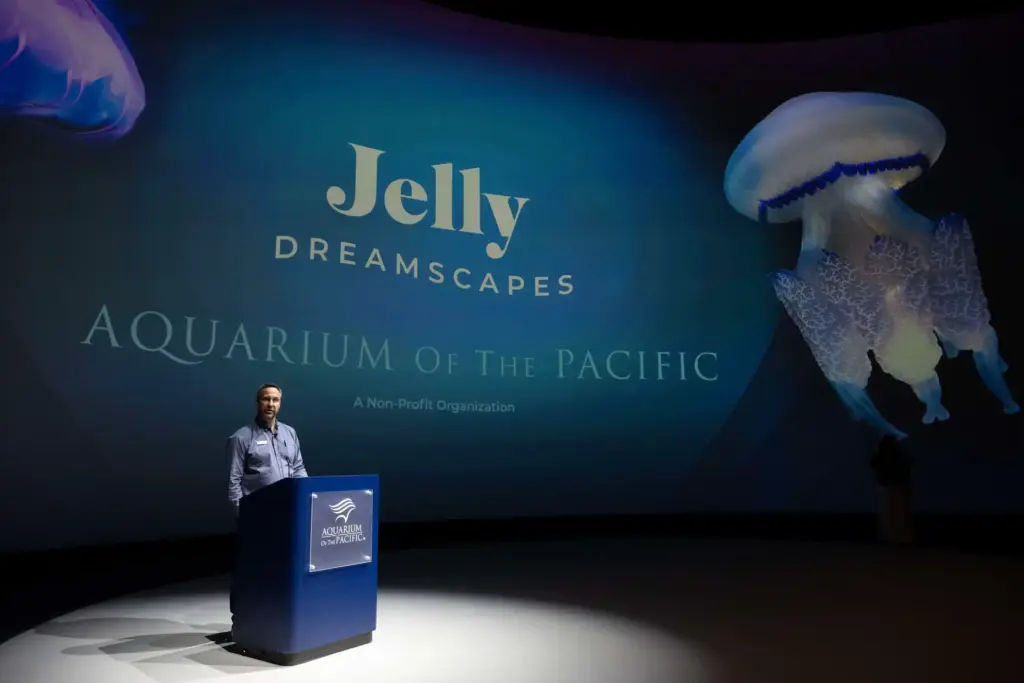 Vice president of animal care, fish and invertebrates Nate Jaros speaks during a press preview of the new Jelly Dreamscapes exhibit at the Aquarium of the Pacific in Long Beach on Wednesday, May 20, 2026. The exhibit opens to the public on Saturday, May 23, 2026. (Photo by Drew A. Kelley, Press-Telegram/SCNG)
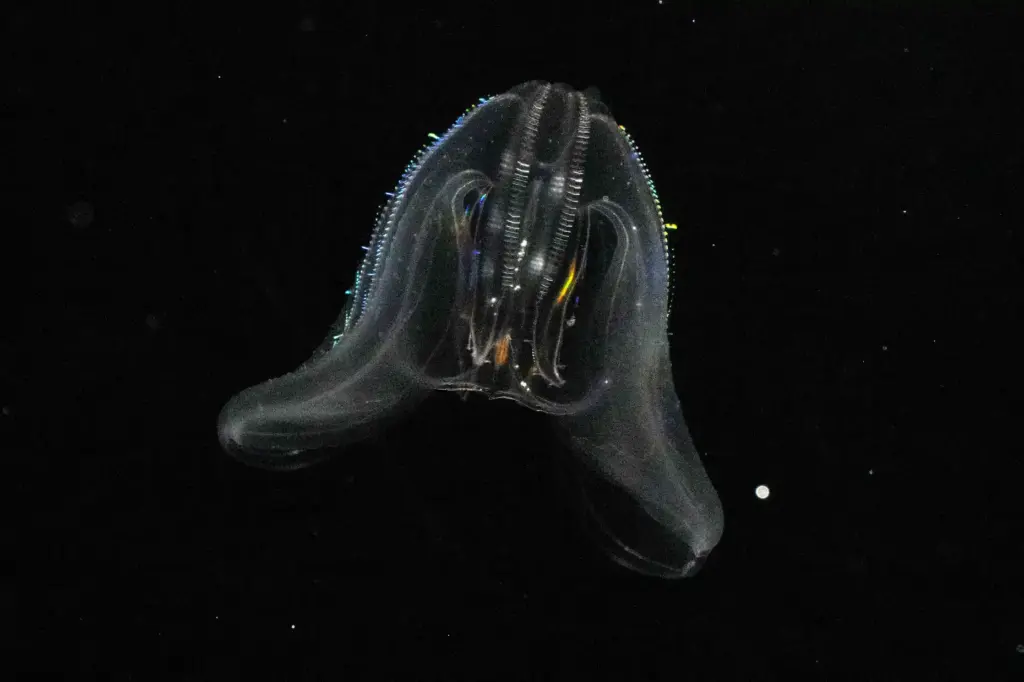 Comb jelly on display inside the Jelly Dreamscapes exhibit at the Aquarium of the Pacific in Long Beach on Wednesday, May 20, 2026. The new exhibit opens to the public on Saturday, May 23, 2026. (Photo by Drew A. Kelley, Press-Telegram/SCNG)
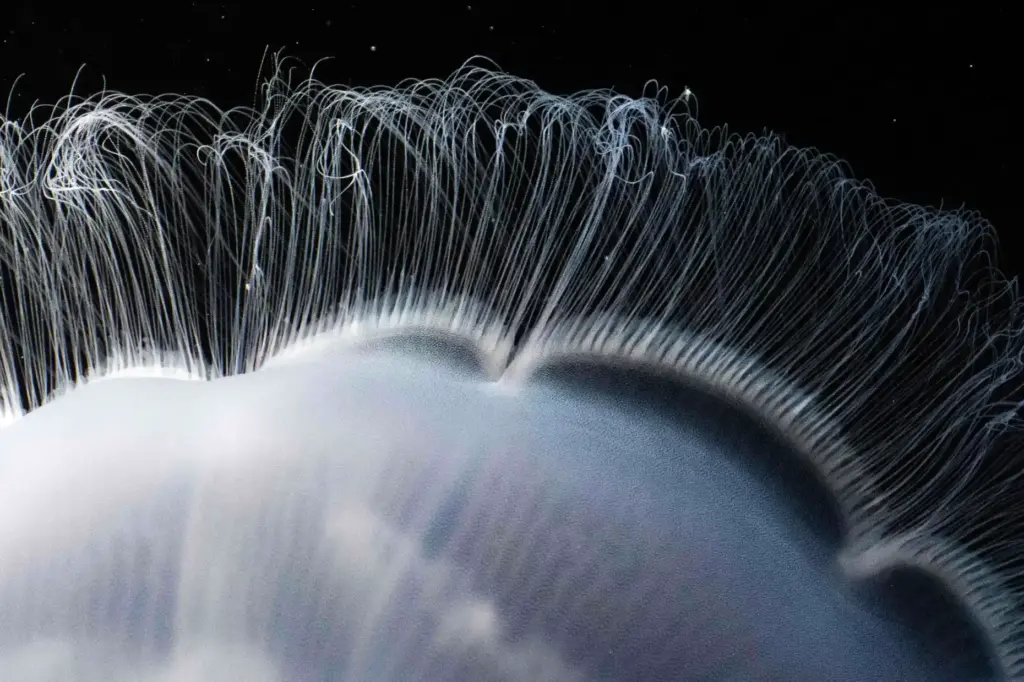 Moon jelly on display inside the Jelly Dreamscapes exhibit at the Aquarium of the Pacific in Long Beach on Wednesday, May 20, 2026. The new exhibit opens to the public on Saturday, May 23, 2026. (Photo by Drew A. Kelley, Press-Telegram/SCNG)
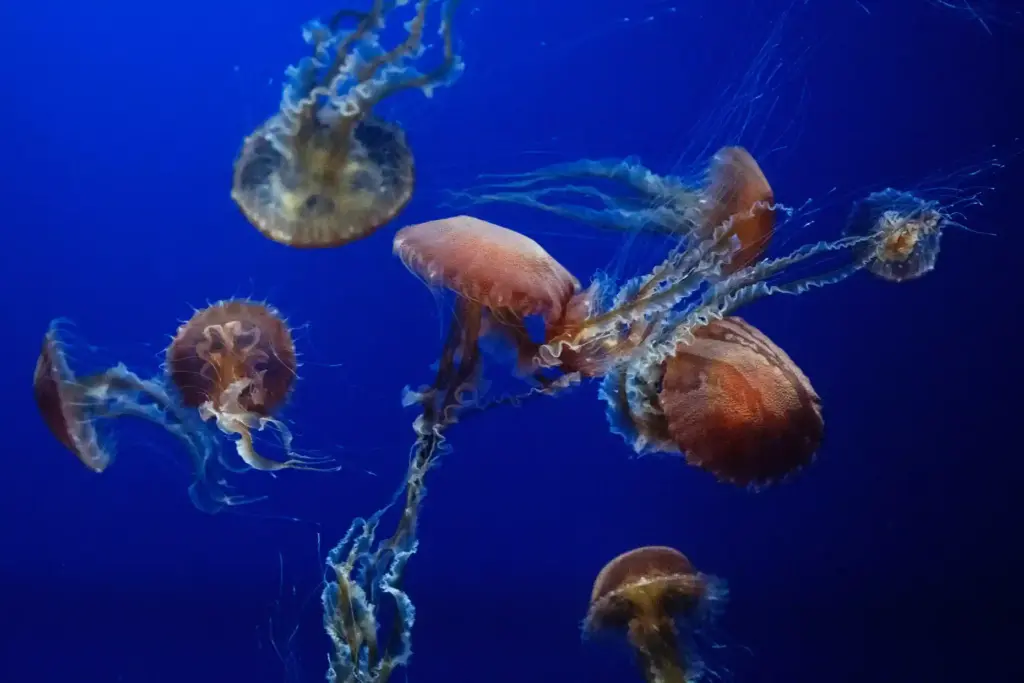 The Jelly Dreamscapes exhibit at the Aquarium of the Pacific in Long Beach on Wednesday, May 20, 2026. The new exhibit featuring one of the most diverse collections of sea jellies in the United States opens to the public on Saturday, May 23, 2026. (Photo by Drew A. Kelley, Press-Telegram/SCNG)
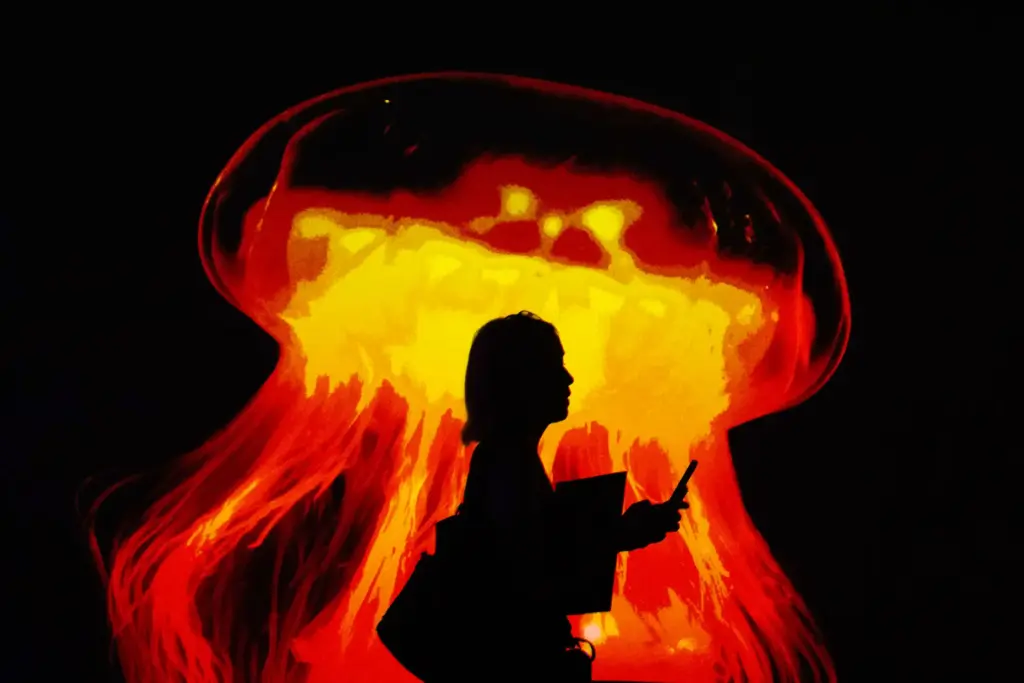 The Jelly Dreamscapes exhibit at the Aquarium of the Pacific in Long Beach on Wednesday, May 20, 2026. The new exhibit opens to the public on Saturday, May 23, 2026. (Photo by Drew A. Kelley, Press-Telegram/SCNG)
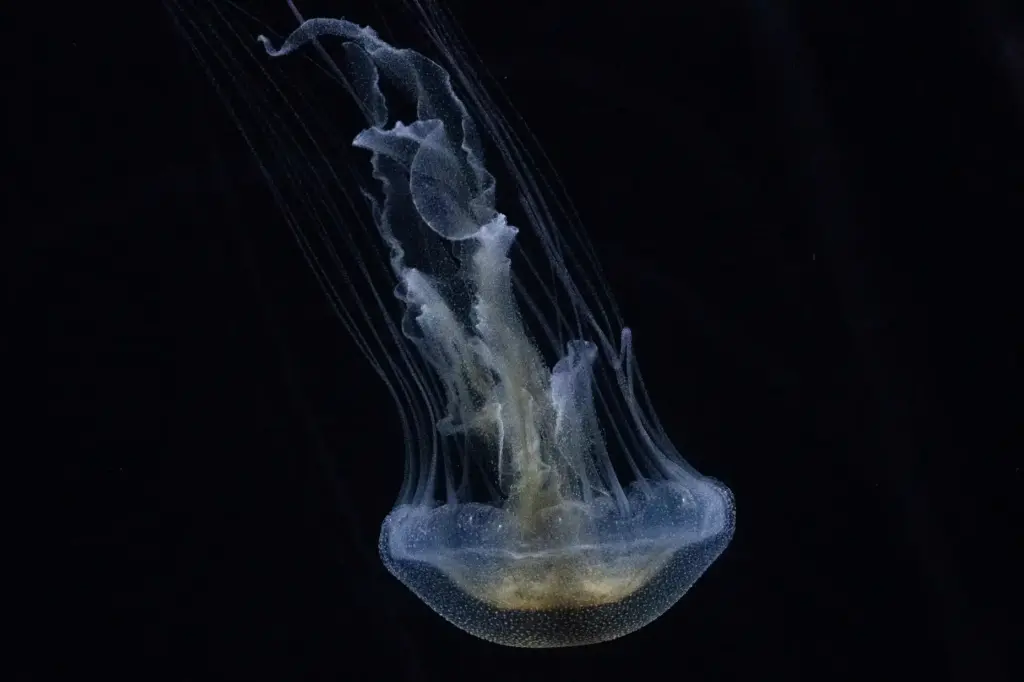 An unclassified jelly on display inside the Jelly Dreamscapes exhibit at the Aquarium of the Pacific in Long Beach on Wednesday, May 20, 2026. The new exhibit opens to the public on Saturday, May 23, 2026. (Photo by Drew A. Kelley, Press-Telegram/SCNG)
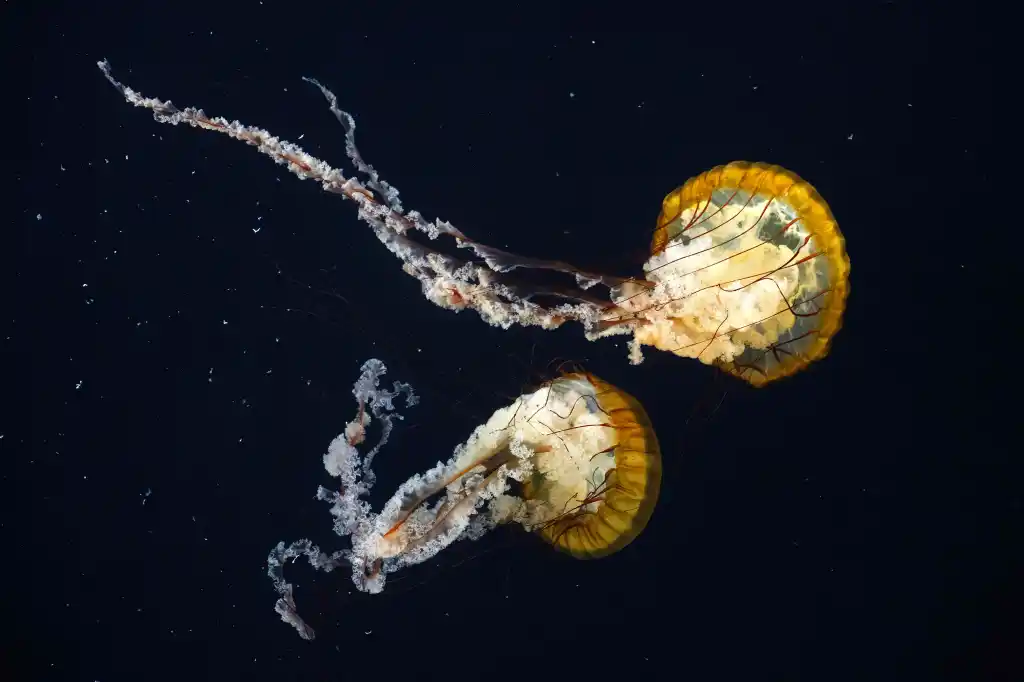
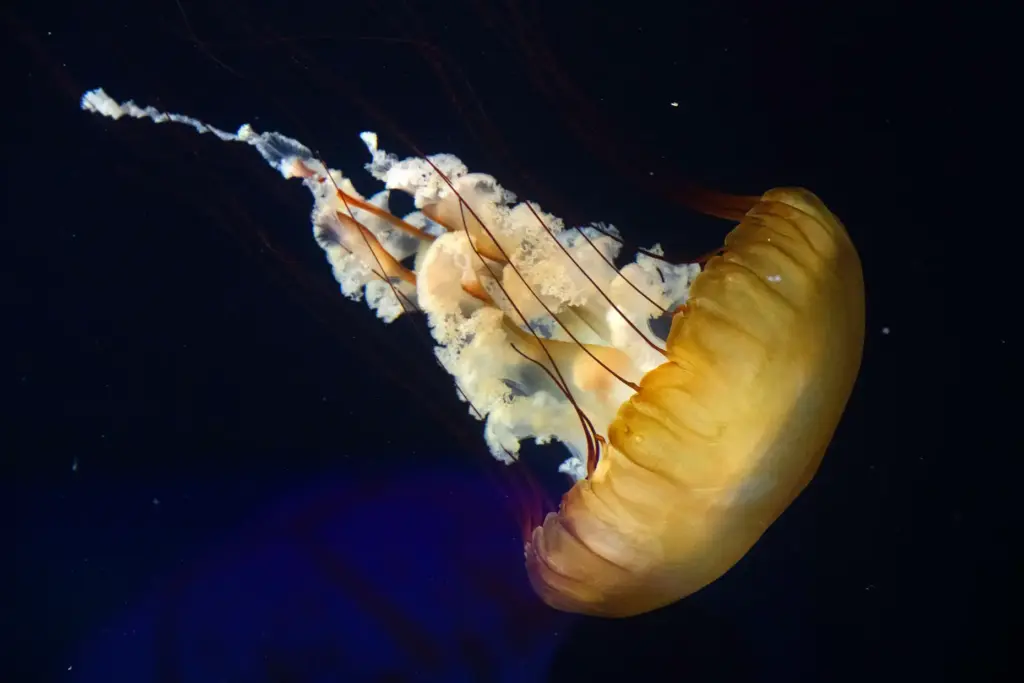 Pacific sea nettle on display inside the Jelly Dreamscapes exhibit at the Aquarium of the Pacific in Long Beach on Wednesday, May 20, 2026. The new exhibit opens to the public on Saturday, May 23, 2026. (Photo by Drew A. Kelley, Press-Telegram/SCNG)
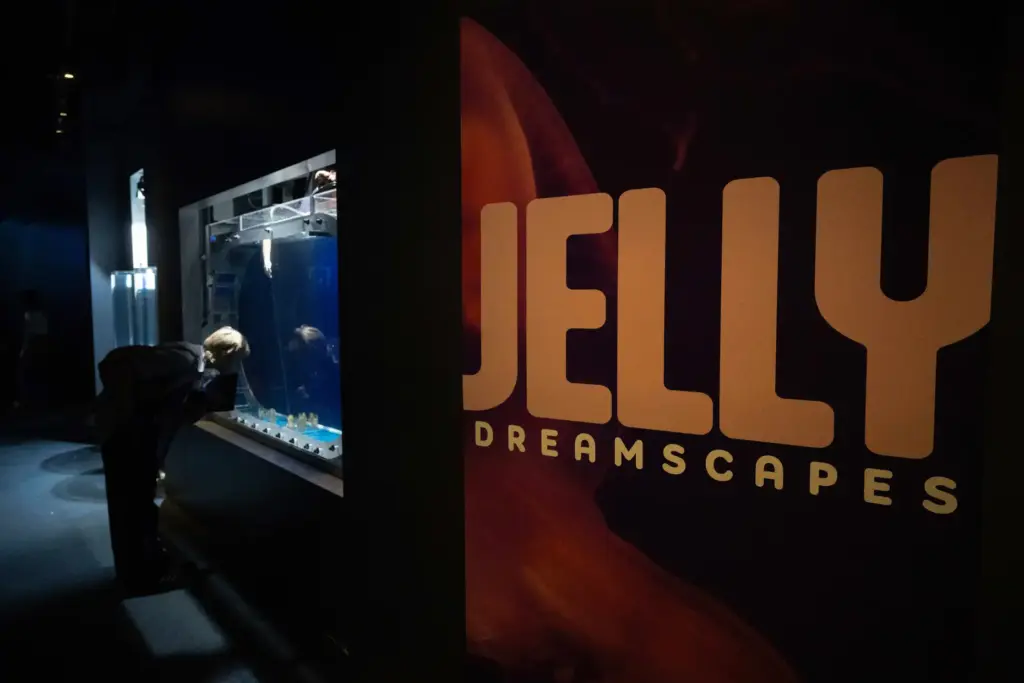 The Jelly Dreamscapes exhibit at the Aquarium of the Pacific in Long Beach on Wednesday, May 20, 2026. The new exhibit opens to the public on Saturday, May 23, 2026. (Photo by Drew A. Kelley, Press-Telegram/SCNG)
So a key factor in the aquarium’s work with the sea jellies, Jaros said, is caring for and cultivating those polyps.
“We cultivate those; we can set up the environmental conditions where they can actually release medusa,” Jaros added. “So caring for the jellies is making sure that the polyps are well fed, and then have the right environmental conditions to produce medusa. And once we have the medusa there, they go through different-size, little aquariums or beakers, or whatever the case may be. Our staff pipette them in some cases from one to another until they get larger and larger, and then they are large enough to go into our habitats.”
And the work, Jaros said, is pretty much always ongoing — since most sea jellies have a relatively short lifespan. The average lifespan of a sea jelly is just about one year, according to the aquarium.
“Very few live longer than that,” Jaros said. “So, in order for us to maintain an exhibit like this, it means that we’re constantly working behind the scenes, growing different life stages of different jellies, so that we can keep all 25 of these exhibits stocked with animals.”
Among the species of sea jellies housed in the aquarium’s new exhibit is the blue lion’s mane jellies, which become a grey, blue or purple color as they develop. They have up to 800 stinging tentacles, the aquarium said, which they use to prey on phytoplankton, zooplankton — and, sometimes, even other jellies.
Those jellies, which are often observed off the coastal waters of the British Isles, can grow up to nearly a foot in a diameter with oral arms — tentacle-like appendages that some sea jellies use to transport and digest their food — reaching around the same length.
The aquarium’s exhibit also boasts Pacific sea nettle jellies, which can grow as long as 15 feet long and around 18 inches across. While these jellies can’t see images, the aquarium said, they are able to tell the difference between light and dark using small structures on their bells or tentacles, which are called “eye spots.”
Read more Pomona moves to curb ICE activity, ban new detention centers in the city
Pacific sea nettles are also on good terms with other ocean creatures, including slender crabs and butterfish, which sometimes ride on the jellies, the aquarium said.
“Pacific sea nettles have a symbiotic relationship with juvenile cancer crabs that hide in the inside surface of the jellies’ bells,” the aquarium’s website said. “It is believed that the tattered appearance of some jellies is caused by the crabs nibbling on the jelly.”
Flocken, the aquarium’s president and CEO, said the Pacific sea nettle is among his preferred species of jelly.
“I really love the Pacific sea nettles, which have these beautiful, frilly oral arms on the inner side underneath their bell,” Flocken said, “and on the outside they have the thin white tendrils, which are the tentacles.
“And it’s gorgeous.”
For Jaros, it’s difficult to pick a favorite jelly species at the aquarium.
“We’ve been bringing in a lot of new species,” Jaros said. “We trade with other aquariums, so we’ve been out collecting in the ocean, and it’s been almost like the new jelly flavor of the month.”
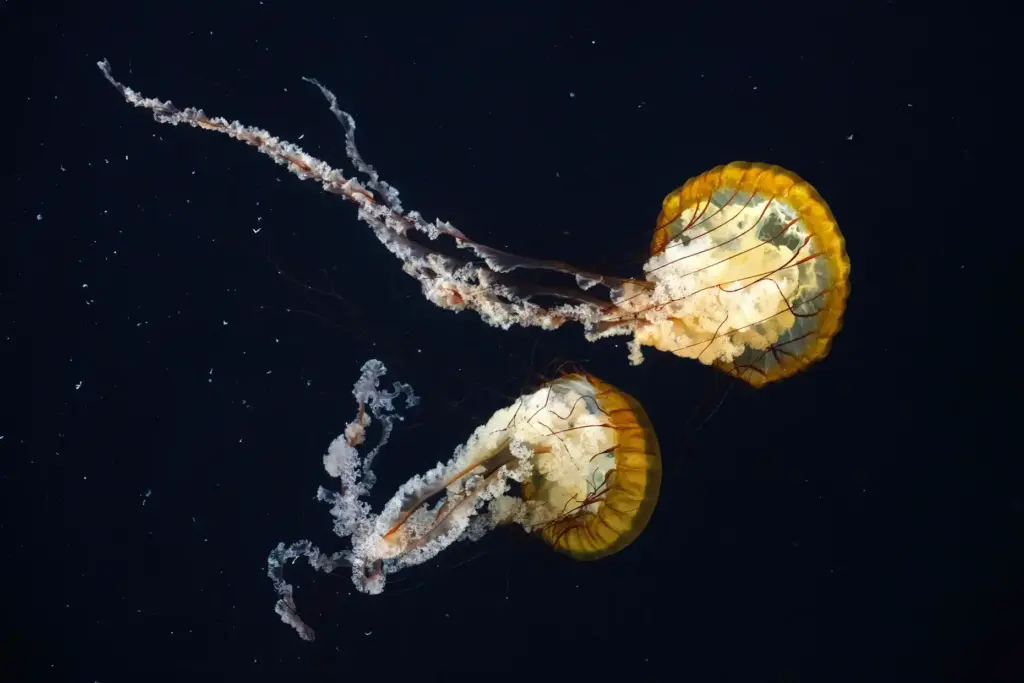 Pacific sea nettle on display inside the Jelly Dreamscapes exhibit at the Aquarium of the Pacific in Long Beach on Wednesday, May 20, 2026. The new exhibit opens to the public on Saturday, May 23, 2026. (Photo by Drew A. Kelley, Press-Telegram/SCNG)
- An unclassified jelly on display inside the Jelly Dreamscapes exhibit at the Aquarium of the Pacific in Long Beach on Wednesday, May 20, 2026. The new exhibit opens to the public on Saturday, May 23, 2026. (Photo by Drew A. Kelley, Press-Telegram/SCNG)
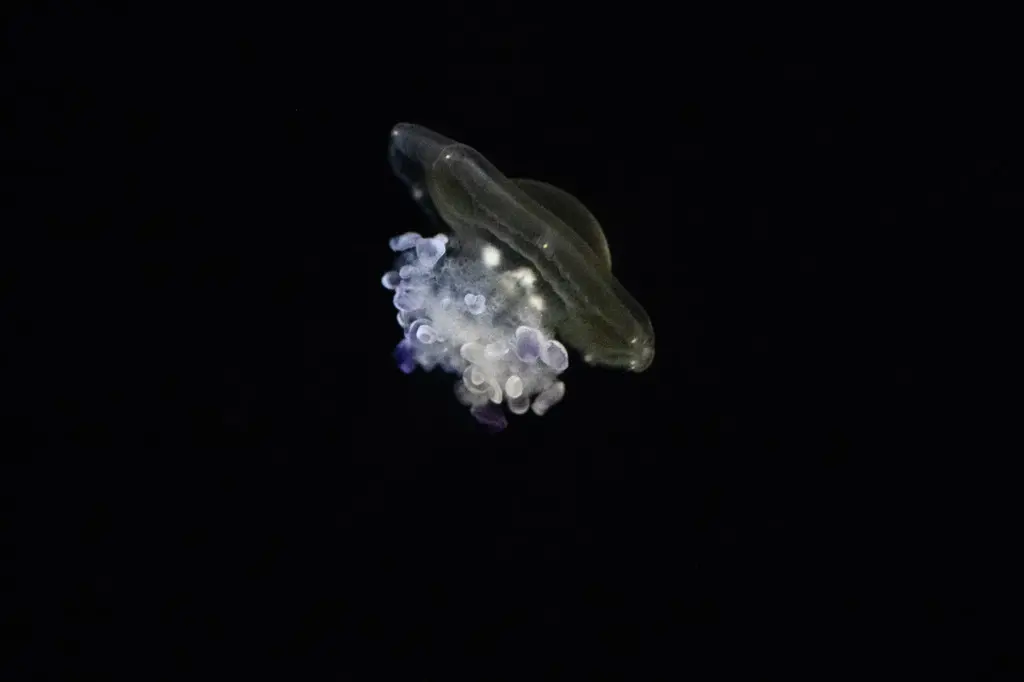 Fried egg jelly on display inside the Jelly Dreamscapes exhibit at the Aquarium of the Pacific in Long Beach on Wednesday, May 20, 2026. The new exhibit opens to the public on Saturday, May 23, 2026. (Photo by Drew A. Kelley, Press-Telegram/SCNG)
- Pacific sea nettle on display inside the Jelly Dreamscapes exhibit at the Aquarium of the Pacific in Long Beach on Wednesday, May 20, 2026. The new exhibit opens to the public on Saturday, May 23, 2026. (Photo by Drew A. Kelley, Press-Telegram/SCNG)
But, Jaros added, it’s difficult not to love the aquarium’s juvenile fried egg jellies. And yes, these jellies look exactly how their name sounds — like little floating fried eggs.
“The shape of their bell looks like an egg and a saucer and a frying pan,” Jaros said, “and those are kind of my favorite.”
The aquarium even has a species of jelly on display that hasn’t even been formally named yet — because it was so recently discovered.
“These jellyfish are found off the coast of California, and we call them ‘undescribed’ because they’re still being reviewed by the scientific community,” Flocken said. “But it’s going through the process, which takes a while, (of) an actual full scientific naming and common name.”
There are plenty more sea jellies to discover in the aquarium’s new exhibit, which has been designed — as the name suggests — to offer a dreamy, relaxing and deep water-reminiscent experience for attendees.
Besides the exhibit’s dark and moody lighting, meant to help spotlight the jellies themselves, it will be accompanied by relaxing and melodic soundscapes intended to mimic the sounds of the ocean.
“We hope everyone loves the jellies as much as we do. We’ve been so excited to unveil this,” Flocken said.
“We’ve been breeding the species for over a year,” Flocken added. “And now it’s time to debut them with the public.”
“Jelly Dreamscapes” will open to the public on Saturday and will be on display through April 30, 2027. Reservations will be required, and tickets can be purchased online at aquariumofpacific.org.
Read more House committee discusses modernizing the TSA as Trump seeks to privatize airport screening