
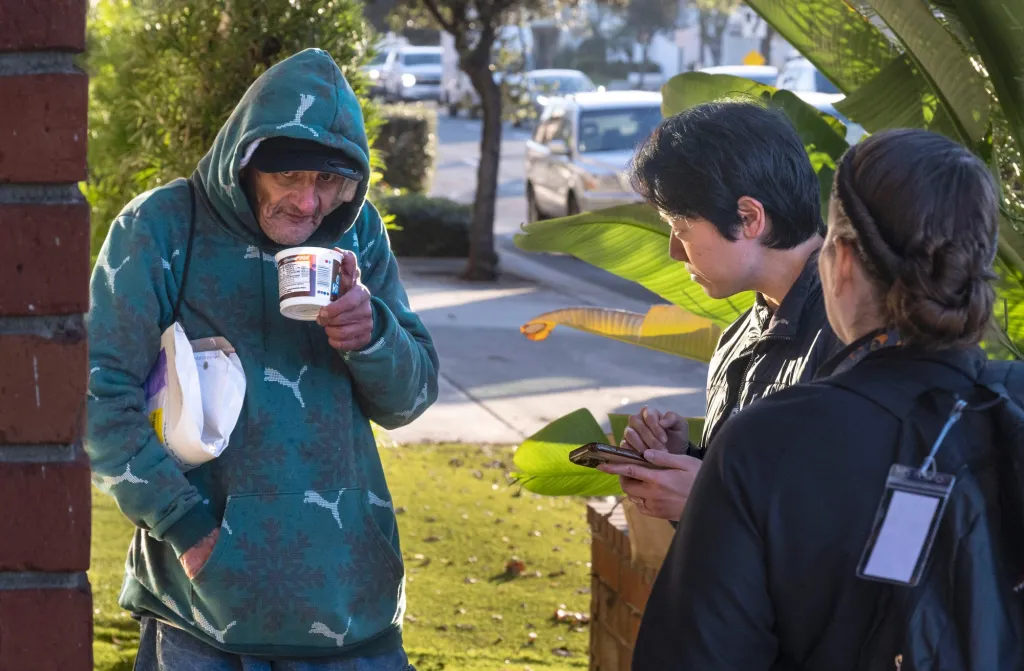
California should free up another $500 million for a grant program that helps cities and counties prevent and end homelessness, Gov. Gavin Newsom‘s latest budget proposal said — but that money comes with some strings.
Read more SEC chief Atkins pumps the brakes on prediction-market funds
Newsom released — called the “May revise” — last week, and it was without a deficit, attributed to the artificial intelligence boom. The governor’s office and the state legislature will continue to hammer out details in order to get the budget passed by mid-June.
But Newsom is in his final year in office. And the issue of homelessness, broadly, has dominated the race to replace him. The main contenders for governor have all said more housing is needed to prevent more people from becoming homeless in the first place.
Related: 2026 Point In Time Count: Orange County’s homeless population down 14% in two years
In the meantime, Newsom has included, among the myriad spending projects in the $350 billion budget, a seventh round of Homeless Housing, Assistance and Prevention funding to the tune of $500 million. Called HHAP, this grant program provides funds to cities, counties and continuums of care to prevent and end homelessness in their regions. The for street outreach programs or interim housing projects, among other things.
But the $500 million is “contingent on enhanced accountability and performance requirements,” .
“Because local housing policies directly shape the availability and affordability of housing, aligning these policies with state investments is critical to preventing homelessness, supporting exits from homelessness and increasing placements in permanent housing,” the proposal said. “These enhanced conditions of HHAP funding are designed to reinforce the connection between local funding and housing policies, as well as regional homelessness outcomes, with the overall goal of maximizing the impact of state resources and outcomes.”
“I want accountability,” Newsom said last week. “I want results that are visible.”
Organizations aimed at ending homelessness have stressed the importance of HHAP funding throughout the budget process.
Last month, the National Alliance to End Homelessness in the Santa Ana and Anaheim areas could increase by 6% if the funding was cut in half, or by 13% if it was eliminated altogether. Those figures were nearly identical for Los Angeles city and county.
The nonpartisan group also advocated for upping the funding to $1 billion, as it was in previous rounds. As did the California Budget & Policy Center.
“While encouraging local governments to become partners in addressing homelessness has merit, tying service provider funding to decisions outside of their control — such as a local government having a pro-housing designation or a compliant housing element — is problematic,” the Budget & Policy Center said. “A matching fund requirement may also be insurmountable for many localities currently facing budget deficits, and in more financially constrained rural areas where HHAP is often the primary homelessness funding source.”
Asking the next chief executive
This time next year, someone new will be in charge of California’s budget — so we asked the candidates for governor to weigh in on what they believe the state could best prevent people from becoming unhoused in the first place.
The top contenders for the job all largely agreed: The state needs more housing.
Riverside County Sheriff Chad Bianco put it simply: “Build more housing. Cut regulations, reform CEQA abuse, and speed up approvals. Give cities incentives to approve projects and hold them accountable if they block growth.”
Housing, said former Rep. Katie Porter, needs to be built faster. Her plan includes “speeding up permitting and construction timelines, innovating in the materials and design standards we use for housing and having the government put some of its own land into play.”
But Steve Hilton — who, like Bianco, is a Republican — encouraged more building, but only in places where it “makes sense.”
“We don’t build enough housing, prices go up and working families get pushed out. If we want affordability, we have to make it possible to build again,” Hilton, a former Fox News host, said, also calling for reforms to CEQA, California’s landmark law that is meant to consider environmental impacts to proposed projects.
“We also need to end the war on single-family homes and allow communities to build the kind of housing families actually want,” said Hilton.
Read more Home buyers hammered as war-fueled bond rout drives rates higher
CEQA reforms are also at the heart of former Los Angeles Mayor Antonio Villaraigosa‘s plan, he said.
“The approval process adds months to years and adds tens of thousands to the final price of new homes,” said Villaraigosa, who also proposed exempting infill housing from CEQA, referring to building on unused or underutilized land, typically in an urban area.
Meanwhile, former California Attorney General Xavier Becerra touted his work suing Huntington Beach after city leaders attempted to bypass affordable housing mandates. And Tony Thurmond, the state superintendent of public instruction, also said he supports efforts to restrict local governments from denying housing proposals.
But aside from more housing, Becerra, a Democrat, suggested expanding down payment assistance programs for first-time homebuyers and strengthening just-cause eviction protections for renters could also prevent people from becoming homeless in the first place.
“This has two sides,” said Becerra, “protect people in their homes and build more housing.”
Porter, too, said she would look to “prevention tools like emergency rental assistance, rapid re-housing and building more interim housing” that would keep people from becoming unsheltered in the first place.
Public dollars, said billionaire environmentalist Tom Steyer, should bring more investments.
“Housing finance in California is too fragmented, burdensome and restrictive, and adds time, costs and complications that disincentivize the private investments that are vital for affordable housing,” said Steyer. “We need to cut the red tape that slows development, use publicly controlled land and give cities and developers real incentives to build affordable and mixed-income housing while confronting NIMBYism that too often blocks progress.”
Villaraigosa also said he would like to block massive investment companies from buying up single-family homes.
“Homes should be for people to live in, not for billionaires to park cash,” he said. “This will lower demand by a modest but measurable degree, putting downward pressure on the price of homes.”
Thurmond’s plan includes helping school districts build housing on surplus land that would help teachers and classified staff secure affordable housing. He said this plan would also include others in the workforce, too, including nurses and first responders.
San Jose Mayor Matt Mahan said he would “condition state housing funds on cities approving projects within firm timelines.” He would also like to expand a Santa Clara County program that he said has worked to reduce the number of unhoused people in his city.
“By pairing short-term rental assistance with intensive case management, the program helps vulnerable people navigate difficult life events (e.g. illness and medical bills, job loss, divorce, domestic violence, addiction, etc.) to establish secure housing without ongoing public assistance,” Mahan, a Democrat, said. “The program has a high rate of success and has seen very low recidivism, indicating it is both a more humane and cost-effective solution than allowing people to become homeless.”
Like Hilton, Porter was critical of past policy choices when it comes to what she called the state’s “housing crisis.”
“California’s housing crisis is the direct result of political choices that have made it too difficult and too expensive to build,” Hilton said. “For years, Sacramento has layered on regulations, empowered unions to drive up construction costs and allowed trial lawyers to weaponize laws like CEQA to block projects.”
But Porter, a Democrat, blamed “policy choices that have put corporations before families and left government officials pointing their fingers and refusing to take ownership.”
“This is a leadership issue,” Porter said.
Check out more about what these candidates — and the dozens of others on the primary ballot — had to say about housing, artificial intelligence, immigration and more in our Voter Guide.
Read more Texas board faults Camp Mystic leader for inaction during deadly flood