
Arlington Estate was established by George Washington’s step-grandson, George Washington Parke Custis, to be a living memorial to the first president. Custis’s daughter, Mary, married U.S. Army 1st Lt. Robert E. Lee in 1831. When he died, Custis left the estate to his daughter Mary Custis Lee for the duration of her life, and upon her death, her eldest son would inherit the property. Robert E. Lee served as the executor of his father-in-law’s will and never owned the property.
Read more Galaxy host Dynamo in final game before World Cup break
After the Lees abandoned the property at the start of the Civil War, the U.S. Army seized Arlington Estate on the morning of May 24, 1861 to defend Washington, D.C. From the property’s heights, rifled artillery could range every federal building in the nation’s capital. The estate was seized not to punish the Custis-Lee family, but rather for its strategic value. Three forts were built on the property during the Civil War
Initially, being buried at a national cemetery was not considered an honor, but it ensured that service members whose families could not afford to bring them home for a funeral were given a proper burial. The first official “Decoration Day,” later renamed Memorial Day, was held at Arlington National Cemetery on May 30, 1868.
The original cemetery was 200 acres and has grown since to 639 acres.
Throughout the 639 acres of Arlington National Cemetery, several dozen monuments and memorials commemorate individuals, military units, wars and battles. These commemorative works, many of which were placed in the late 19th and early 20th centuries, both reflected and furthered Arlington’s transformation from a “pauper’s cemetery” to a national shrine.
Only two U.S. presidents, William Howard Taft and John F. Kennedy, are buried at Arlington National Cemetery. (Most presidents have chosen to be buried in their home states.)
Dedicated on June 2, 2022, the Apollo 1 Monument commemorates the crew of the first Apollo mission. Command pilot Virgil “Gus” Grissom, senior pilot Edward H. White II and pilot Roger B. Chaffee died on Jan. 27, 1967, when a fire swept through the command module during a prelaunch test.
Initially, being buried at a national cemetery was not considered an honor, but it ensured that service members whose families could not afford to bring them home for a funeral were given a proper burial. The first official “Decoration Day,” later renamed Memorial Day, was held at Arlington National Cemetery on May 30, 1868.
Memorial Day history
In 1866, Henry Welles of Waterloo, New York, suggested the town’s shops should close May 5 to commemorate the soldiers who had died during the Civil War.
Two years later in Waterloo, Gen. John Logan issued a declaration that Decoration Day should be observed nationwide. The declaration said that May 30 would be designated as a day to decorate the graves of fallen soldiers.
In 1882, the name of the holiday was changed from Decoration Day to Memorial Day. After World War I, the holiday was expanded to remember soldiers from all American wars.
Read more Pato O’Ward has sights set on Indianapolis 500 victory
In 1971, Richard Nixon made Memorial Day a national holiday that was to be celebrated on the last Monday in May.When the Army constructed the first memorial amphitheater at the cemetery in 1873 (now called the Tanner Amphitheater), an average of 25,000 individuals participated in Decoration Day commemorations.
Today, nearly 430,000 veterans and their eligible dependents are buried at Arlington National Cemetery. Service members from every one of America’s major wars, from the Revolutionary War to today’s conflicts, are interred at ANC.
Some of the monuments and memorials
Apollo 1
Argonne Cross (World War I)
Battle of the Bulge Memorial
Beirut Barracks Memorial
Canadian Cross of Sacrifice
Chaplains Hill Monuments
Coast Guard Memorial
Sir John Dill Memorial Grave
Group Burials
Iran Rescue Mission Memorial
Maj. Gen. Philip Kearny Memorial Grave
President John F. Kennedy Memorial Grave
Robert F. Kennedy Grave
Korean War Memorial
McClellan Gate
Memorial Amphitheater
Memorial Avenue
Nurses Memorial
Office of Strategic Services Memorial
Pan Am Flight 103 Memorial Cairn
Pentagon Group Burial Marker (9/11)
Rough Riders Memorial
General Philip H. Sheridan Memorial Grave
Space Shuttle Challenger Memorial
Space Shuttle Columbia Memorial
Spanish-American War Memorial
Spanish-American War Nurses Memorial
President William Howard Taft Memorial Grave
Tanner Amphitheater
Third Infantry Division Memorial
Tomb of the Civil War Unknowns
Tomb of the Unknown Soldier (below)
USS Maine Memorial
USS Serpens Memorial
Vietnam Helicopter Pilot and Crew Monument
Woodhull Memorial Flagstaff
You can learn more about all the memorials here.
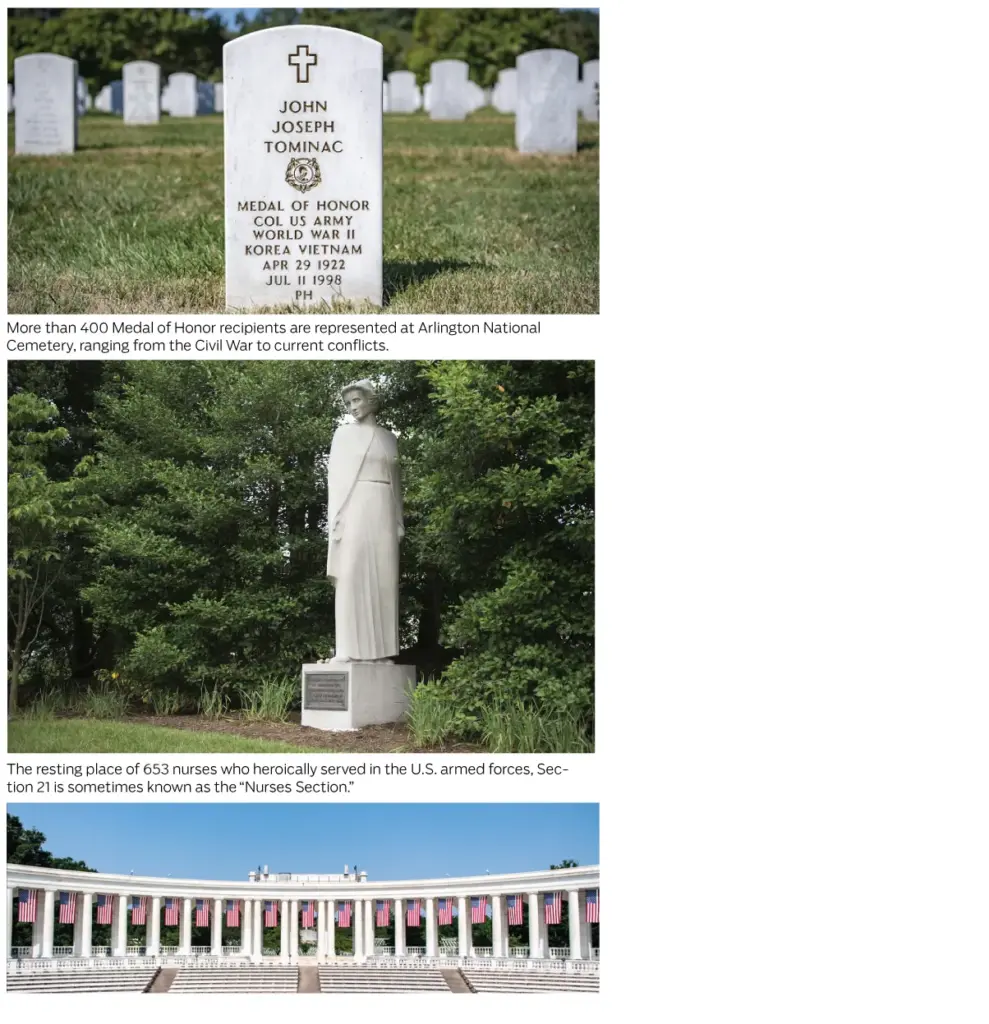
The image above shows flags hung in the Memorial Amphitheater. The amphitheater turned 150 years old last year. The amphitheater is named in honor of James R. Tanner. Tanner was a corporal in the 87th New York Volunteer Infantry during the Civil War, who suffered a gruesome wound from Confederate cannon fire at the Second Battle of Bull Run in August 1862. It resulted in the loss of both legs below the knees.
He learned to walk on artificial limbs and after the war, Tanner became a stenographer and was present both at Abraham Lincoln’s deathbed and during the trial of the Lincoln conspirators. He was an advocate for veterans’ rights and served for a time as the Commissioner of Pensions, and later became the commander in chief of the Grand Army of the Republic. Tanner is now buried a few yards from the structure that bears his name.
Two annual remembrance ceremonies take place at Arlington National Cemetery’s Memorial Amphitheater, on Memorial Day (last Monday of May) and Veterans Day (November 11). Some 5,000 visitors attend each of these national ceremonies, which are sponsored by the U.S. Army Military District of Washington.
The president of the United States typically delivers an address at the Memorial Day ceremony.
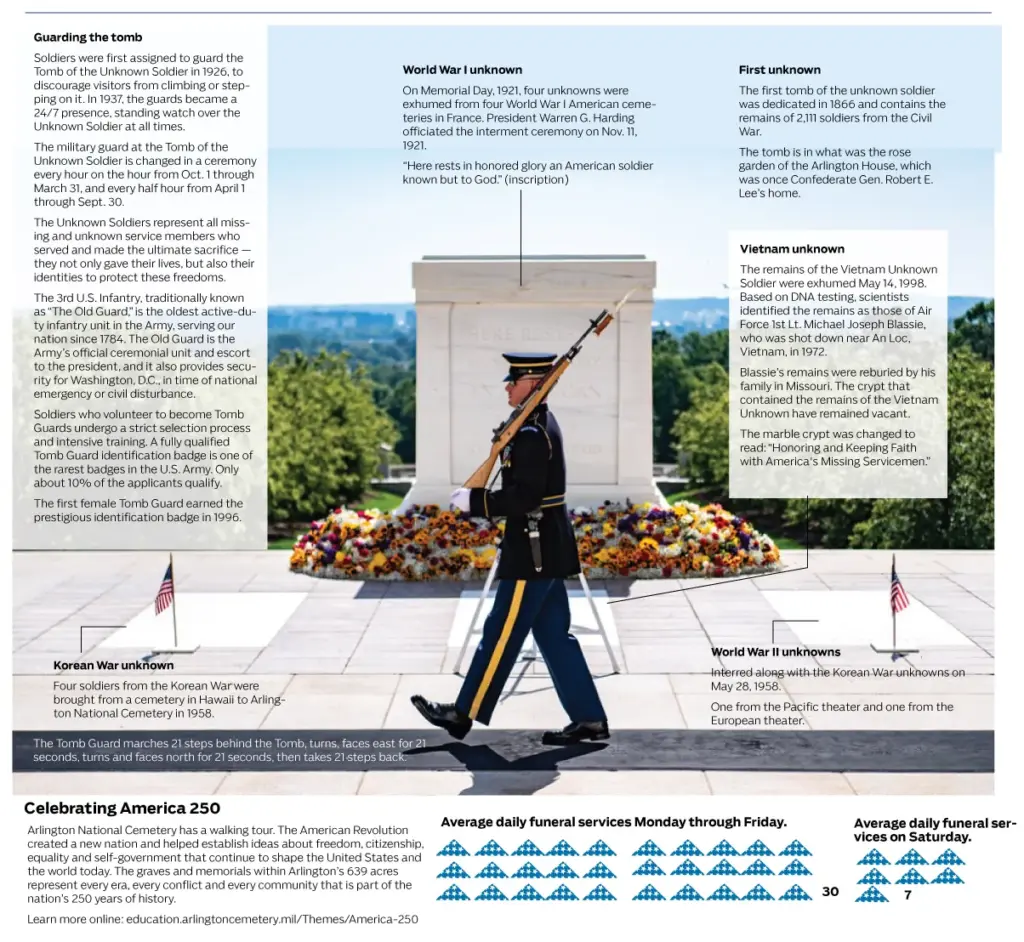
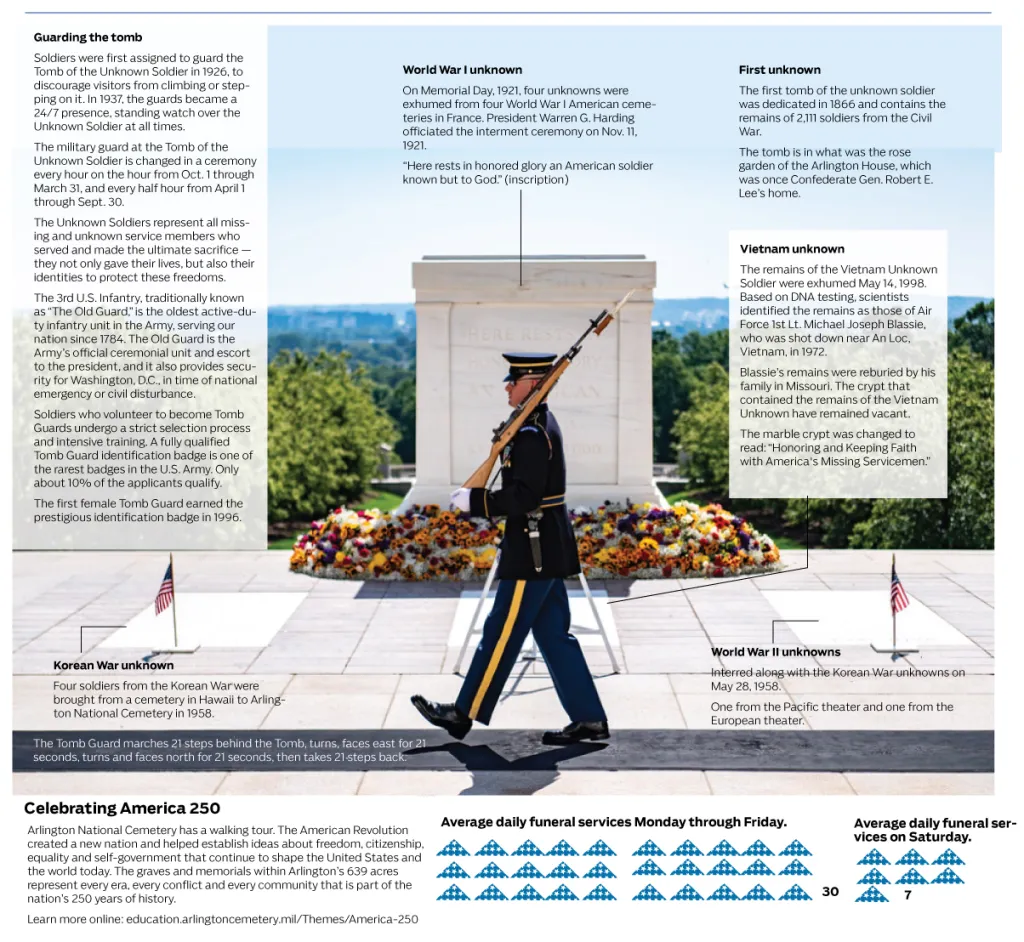
You can learn more about the cemetery here.
Celebrating America 250
Arlington National Cemetery has a walking tour. The American Revolution created a new nation and helped establish ideas about freedom, citizenship, equality and self-government that continue to shape the United States and the world today. The graves and memorials within Arlington’s 639 acres represent every era, every conflict and every community that is part of the nation’s 250 years of history.
Learn more online: education.arlingtoncemetery.mil/Themes/America-250
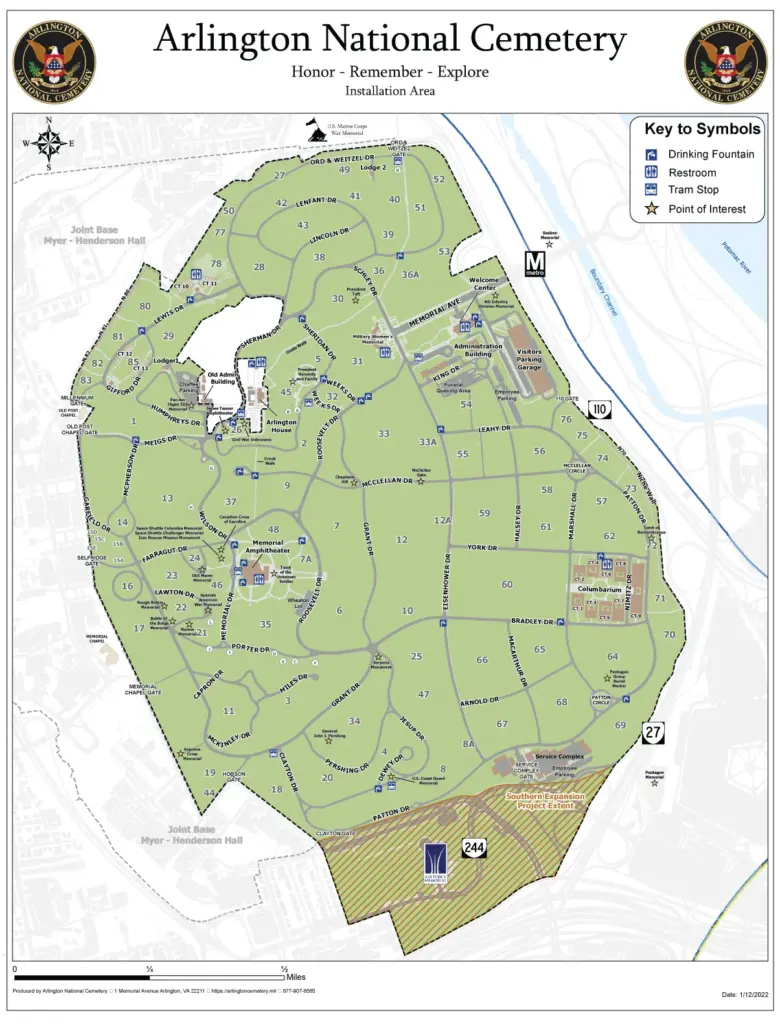
Sources: The Memorial Day Foundation, Congressional Medal of Honor Society, Department of Defense, Center for Military Readiness, National Park Service, Arlington National Cemetery Photos from the Department of Defense and National Park Service
Read more USC baseball opens Big Ten Tournament by blanking Michigan State