
This is the final installment of a four-part series.
Sherry Lynn James fished out the dime bag of opiates she bought on a whim outside a Costa Mesa methadone clinic.
Read more Russian drones batter Ukraine’s Kyiv region, hitting apartments and warehouses for a second day
It was March 2024. She and her son Lee had just returned to his Huntington Beach home. She had stuffed it into her purse while waiting outside the clinic for Lee to get his “observed daily dose.” Anyone sitting in that parking lot might have been a mark: Dealers often prowl the perimeters around methadone clinics, hunting for the wavering, the vulnerable, the revelers.
On that day, they found James.
A long-ago user, James had been living opioid-free for years. But she was on vacation, and had had a few drinks. James opened the mystery bag, took a single hit and collapsed.
When her son, Lee, found her, James wasn’t breathing. Horrified, he started CPR and called his wife at work, frantically beseeching her to call 911.
Paramedics arrived within minutes. They tried to revive James for nearly a half hour, but pronounced her dead at 1:11 p.m. on March 22, 2024.
“CAUSE OF DEATH: Acute polydrug intoxication,” her autopsy said, listing the combined effects of fentanyl and ethanol. She was 77.
Lee blamed himself. Why had he taken her along that morning? Why had he let her stay outside in the car alone? Jamie, Lee’s wife, worried that he’d be next, attempting to dull his grief, pain and guilt.
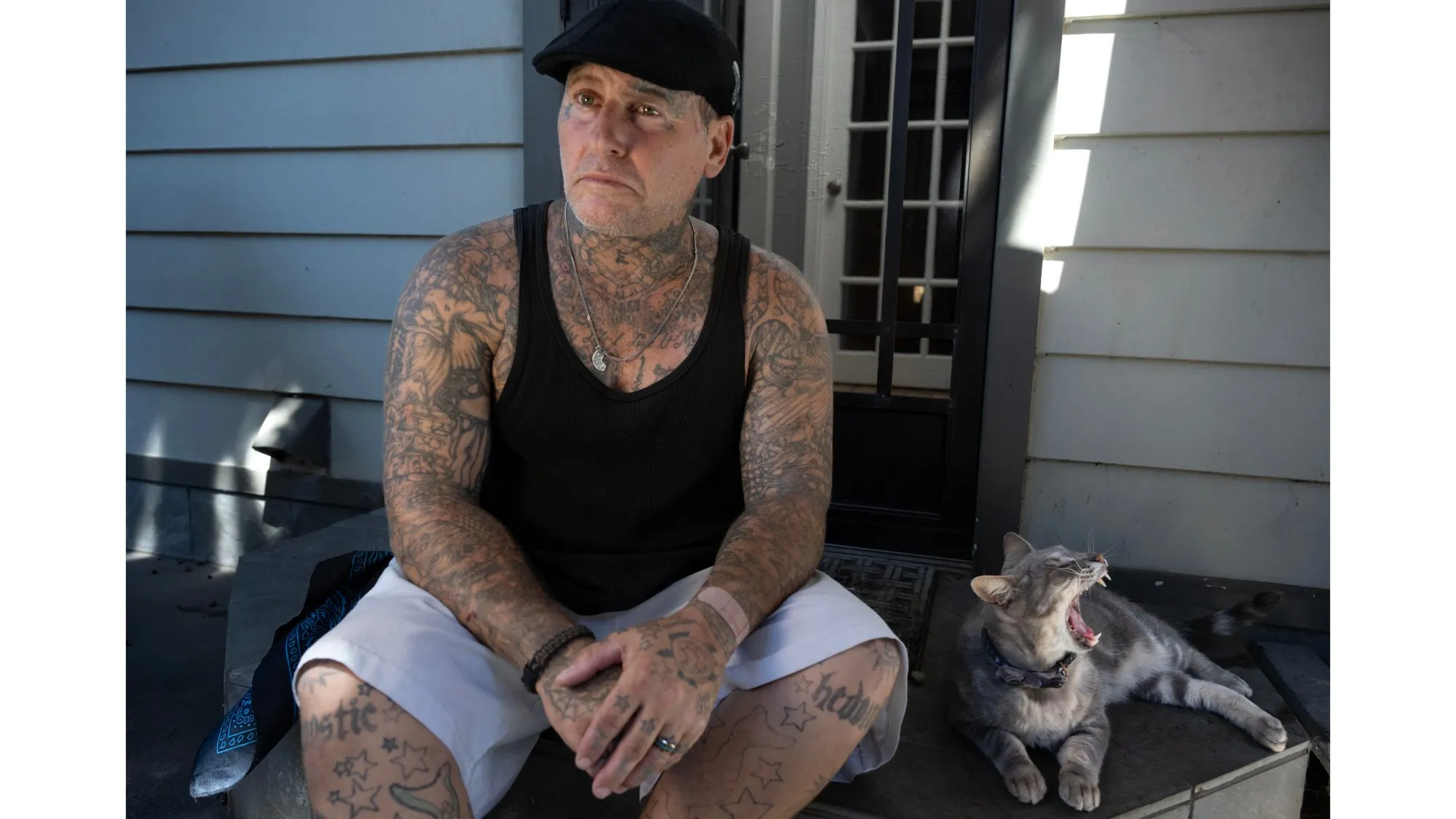
But committed to sobriety, Lee returned to the clinic the very next day for his observed daily dose. He went extra early to avoid people, to avoid trouble. But as he walked inside, he was cat-called anyway, by a guy hawking killer fentanyl.
Lee ignored him and took his observed daily dose. Then he went home and cried.
Jamie, for her part, was furious. Where were the police? Where were the security guards? Why wasn’t the area more secure? Why wasn’t anyone trying to track down the mystery dealer? The Costa Mesa methadone clinic might be Disneyland compared to many others — in a pretty building in a tidy neighborhood — but dealers know where the vulnerable gather, even in the gentler stretches of Orange County.
“The methadone clinic parking lots are horrendous cesspools of drug use, sales and crimes,” Jamie said, likening the idea of dealing drugs in such an area to selling donuts outside a Weight Watchers meeting.
“Please, understand the powerful disease of addiction,” she said. “An addict will always find their drugs, no doubt. But please, for the love of God, keep the methadone clinic lot a safe place.”
If a bipartisan bill by Sens. Ed Markey (D-Mass.) and Rand Paul (R-Ky.) had made it through Washington, D.C.’s legislative sausage grinder, Lee might not have had to be at the clinic that day at all.
Under the Markey/Paul proposal, Lee could have gone to a doctor’s private office, not the clinic. And that doctor, not a methadone clinic employee, could have written him a prescription for the drug-fighting drug. Lee also could have picked up his methadone at a neighborhood pharmacy, and the outside world wouldn’t have a clue. Lee might have had a measure more privacy and dignity.
It’s how healthcare exists for most other conditions.
Reform!
At that point, methadone patients had condemned the nation’s 2,100-clinic system as a federally sanctioned monopoly, controlled by companies far more interested in protecting profits than in helping people. They were furious that no other legal path existed for accessing the most tried-and-true treatment for opioid dependence in America. They demanded the system’s destruction.
The Markey/Paul bill aimed to do just that. The clinics responded with a powerful messaging campaign called “Program, Not a Pill,” which argued that putting methadone in the hands of non-clinic doctors, and letting patients take methadone without supervision, would lead to a disastrous, OxyContin-esque calamity. Methadone clinics offered a support system that doctors simply could not match, they argued, and that system – not just the methadone itself – is what leads to sustained recovery.
In 2024, the Markey/Rand reform bill had 70 co-sponsors in the U.S. House of Representatives and a dozen co-sponsors in the U.S. Senate. Yet it failed to advance. The status quo prevailed.
And after Donald Trump began a second term as president, in 2025, it appeared the clock on methadone regulation might run in reverse.
In September, U.S. Rep. Erin Houchin, R-Ind., introduced a bill to end pandemic-era liberalizations, including letting methadone clinics use telehealth and methadone patients, in their first or second month of treatment, get take-home doses. Houchin’s proposal would end those policies and push patients back to the physical clinics for more of the oft-despised observed daily dosing. It also would mean more billables for methadone clinics.
In October, the Trump administration appointed a former West Virginia lawmaker who had co-sponsored a bill to outlaw methadone programs in that state entirely, as the top attorney for U.S. Health and Human Services, the agency that oversees addiction treatment policy in America.
And in April, the Trump administration issued a warning that spooked methadone reform advocates:
While the federal government “remains committed to expanding access to comprehensive, evidence-based treatment, including the use of medications, and recovery support services as keys to our collective success,” its letter said, … “we are equally committed to ensuring that medications are part of the pathway to long-term recovery and sobriety, self-sufficiency, and thriving, not as a default sentence to lifelong medication use.”
The letter’s reference to “lifelong” methadone use drew concern. No one wants patients to stay on methadone forever if that’s not necessary. But synthetic opioid addiction is more powerful than anything doctors have ever seen, and reform advocates argue that, for some patients, lifelong use might be necessary. Who cares if patients need a drug for life – not unlike, say, blood thinners or insulin – if it keeps them sober, productive and alive, they argued.
Did bureaucrats intend to dictate medical treatment for patients?
In June, Sens. Markey and Paul decided to try again. They unveiled the bipartisan Modernizing Opioid Treatment Access Act 2.0, which would empower board-certified addiction medicine physicians to prescribe methadone and corner pharmacies to dispense it, for opioid use disorder.
Again
Language in the bill specifically addresses objections raised by the methadone industry in its recent “Program, Not a Pill” campaign:
• The new bill would require prescribing doctors to be subject to a separate DEA registration system.
• Only doctors who are board-certified in addiction medicine, or who work for a traditional methadone treatment program, could register with the DEA to prescribe methadone.
• Those doctors could prescribe the drug for supervised — or unsupervised — dosing.
• Pharmacies could only dispense methadone as a liquid, or as dissolvable tablets.
• States could set their own dispensing limits, stricter than federal limits if desired.
• Pharmacies could report methadone prescriptions to state prescription drug monitoring programs, something that, right now, isn’t typically done. That would give doctors more information to tailor a patient’s overall care.
“This was always a safe and responsible approach to expanding access, and that has been accelerated in this version (of the Markey/Paul bill) to emphasize even greater safety and responsibility and care,” said Dr. Stephen M. Taylor, president of the American Society of Addiction Medicine, which is championing the bill.
For far too long, methadone treatment has been siloed away from mainstream healthcare, Taylor said. The new bill would reduce fragmentation and expand patient access to the most effective and life-saving treatment.
”And, it’s bipartisan,” Taylor added.
“Fentanyl doesn’t care whether you’re a Democrat or a Republican when it kills you.”
Getting out front, early
Read more Democrats and Republicans draw battle lines for November’s general election with primaries ending
“We must knock down barriers to treatment for people at risk of opioid overdoses – not build them up.”
Paul, as he did in earlier methadone reform proposals, stressed his background as a physician (he’s an ophthalmologist) and the importance of the doctor-patient relationship. “This bipartisan legislation will return treatment decisions to health care providers, who know their patients best,” he said in a prepared statement.
Markey and Paul, in their statement, also rattled off some statistics: Some 5 million people in the United States have opioid use disorder, but fewer than 20% get treatment. Access to methadone stinks: On average, patients need to drive 4.5 times farther to get to a methadone clinic than to a pharmacy.
Canada, the United Kingdom and Australia are among the nations that allow doctors to prescribe methadone, without much drama, and there’s no reason things would be different here, Markey and Paul said.
Supporters of methadone reform — and more than 125 are behind the new bill — argue that the current rules, which restrict access to a life-saving treatment, has cost lives.
“By keeping methadone locked behind specialized clinics, we force individuals in recovery to face daily transportation burdens and institutional stigma just to stay alive,” said Zoe Grover, executive director of the Police Assisted Addiction and Recovery Initiative (PAARI), in a statement backing the bill.
This “is a common-sense, bipartisan breakthrough that will finally allow trusted local doctors to prescribe and neighborhood pharmacies to dispense this critical medication,” Grover continued. “Meeting people where they are in their community is how we break the cycle of overdose, and PAARI is proud to support Senator Markey’s vital legislation to make recovery more accessible than the illicit drug supply.”
And what of the clinics’ assertion that doctors would write methadone prescriptions without always dealing with underlying behavioral issues?
“We are addiction medicine specialist physicians,” ASAM’s Taylor said. “We partner and work day in and day out with people in a number of different disciplines. We are not technically called ‘counselors’ — and we have a whole cadre of counselors in our organization — but every single one of us talks with patients about how to protect their recovery, or how to get into it, about issues like avoiding certain people, places and things, about making sure they take care of their general health.
“We’re also the ones most likely to have counselors and professionals for our patients who will be working with an entire program. … This is what you want if you’re looking to make sure it’s a full program and not just a pill.”
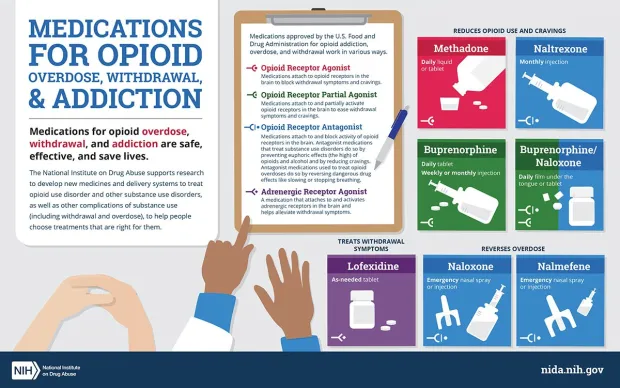
Methadone has been prescribed for more than half a century, Taylor added. It cuts the risk of death from a drug overdose by half. It’s the only full “opioid agonist” treatment out there — meaning it binds fully to opioid receptors, curbing cravings and withdrawal symptoms so that addicted people can function, without getting them high.
“It’s uniquely useful for patients accustomed to high-potency synthetic opioids like fentanyl,” Taylor said of methadone. “It’s the best weapon we have.”
Fight: On
Clinic owners are not impressed.
“This proposed legislation opens a number of doors which are dangerous,” said Mark Parrino, president of the American Association for the Treatment of Opioid Dependence, which represents methadone clinics.
“There are responsible ways to expand access to treatment, especially in the age of fentanyl. This is not a good way to do it.”
Overprescribing by doctors was the root of the methadone overdose death spike in decades past, he said, and he fears a repeat.
“This legislation opens the door to not just addiction specialists, but to a number of physicians who don’t necessarily have the specialized training, which is the primary reason people were dying,” he said.
“If you don’t know what you’re doing, it’s an unforgiving medication. You have to know what you’re doing. You really do need to have structured treatment.”
Expect millions of dollars to be spent to champion that view, and to crush the new bill.
On the methadone clinics’ side, the American Association for Treatment of Opioid Dependence spent some $300,000 lobbying in Washington over the past four years, according to data from OpenSecrets.org. Embattled Acadia Healthcare, which operates America’s largest chain of methadone clinics and has paid millions to resolve allegations of Medicaid fraud, falsified medical records and billing for counseling sessions that never happened, spent more than $1.7 million.
On the reformers’ side, the American Society of Addiction Medicine spent $655,000 between 2022 and this year. The American Academy of Addiction Psychiatry spent $460,000. The American Medical Association — which lobbies on myriad bills — spent $24.3 million.
“The reality is, we’re still in an epidemic, and it’s not over,” ASAM’s Taylor said.
“We’ve had a couple of years of decreased overdose deaths, which is great, but we are not close to being out of the woods. We need to step up. There are increased safeguards in this bill, and there’s no intelligent reason, in our view, why we shouldn’t be moving ahead with it.”
Burial at sea
On a cloudy, overcast day in April 2024, the people who loved Sherry Lynn James boarded a boat in Long Beach.
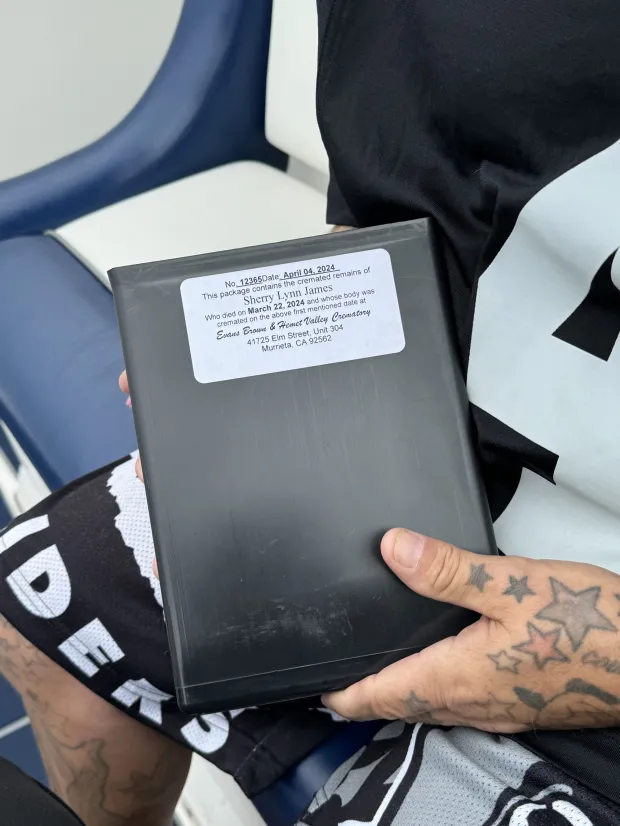
They carried bouquets of red roses and a small metal box. “This package contains the cremated remains of Sherry Lynn James, who died on March 22, 2024,” the box said.

James’ son, Lee, and his sister were there. So was Lee’s wife Jamie, and some friends. James was remembered as the life of the party — warm, friendly, not quick to judge, but quite quick to say exactly what was on her mind. She had been a nurse, loved horror movies and the beach, and going on cruises.
“Rest in peace, Sherry Lynn,” Jamie said in a tribute. “You were the brightest of lights, and I loved you so much and miss you dearly. Your son is in good hands.”
The boat slid over the waves. On the vast gray expanse of ocean, it slowed. They opened the box, freed James from the last vestiges of this mortal coil, showered the sea with rose petals and wept.
Two years have passed since then. Lee has maintained his sobriety and earned take-home doses from the methadone clinic. Jamie has celebrated more than a quarter-century “clean.” The grief over James’ death never goes away. Police didn’t even try to find the dealer who sold her the deadly dose. They’d need more details, more description, things that died with James, police said.
It’s a common scenario. Police often are unable to effectively investigate overdose deaths, even in state-licensed addiction treatment centers. The only witness is dead.
This infuriates those who’ve lost loved ones this way. They hear, “Who cares? They were just junkies.”
The reforms in the Markey/Paul bill could arrive at a time when synthetic opioids, some far more powerful than fentanyl, are hitting the streets.
Will the methadone bill survive? Will patients have simpler, more discreet access to a life-saving medication?
“That would be amazing,” Jamie said. “It would be a much safer environment.”
Since James’ death, Jamie has gotten two tattoos that remind her, always, to work for change. “Your silence will not protect you,” one says. “Nevertheless, she persisted,” says the other.
Read more 2 wildfires burn along California’s scenic Big Sur coast