
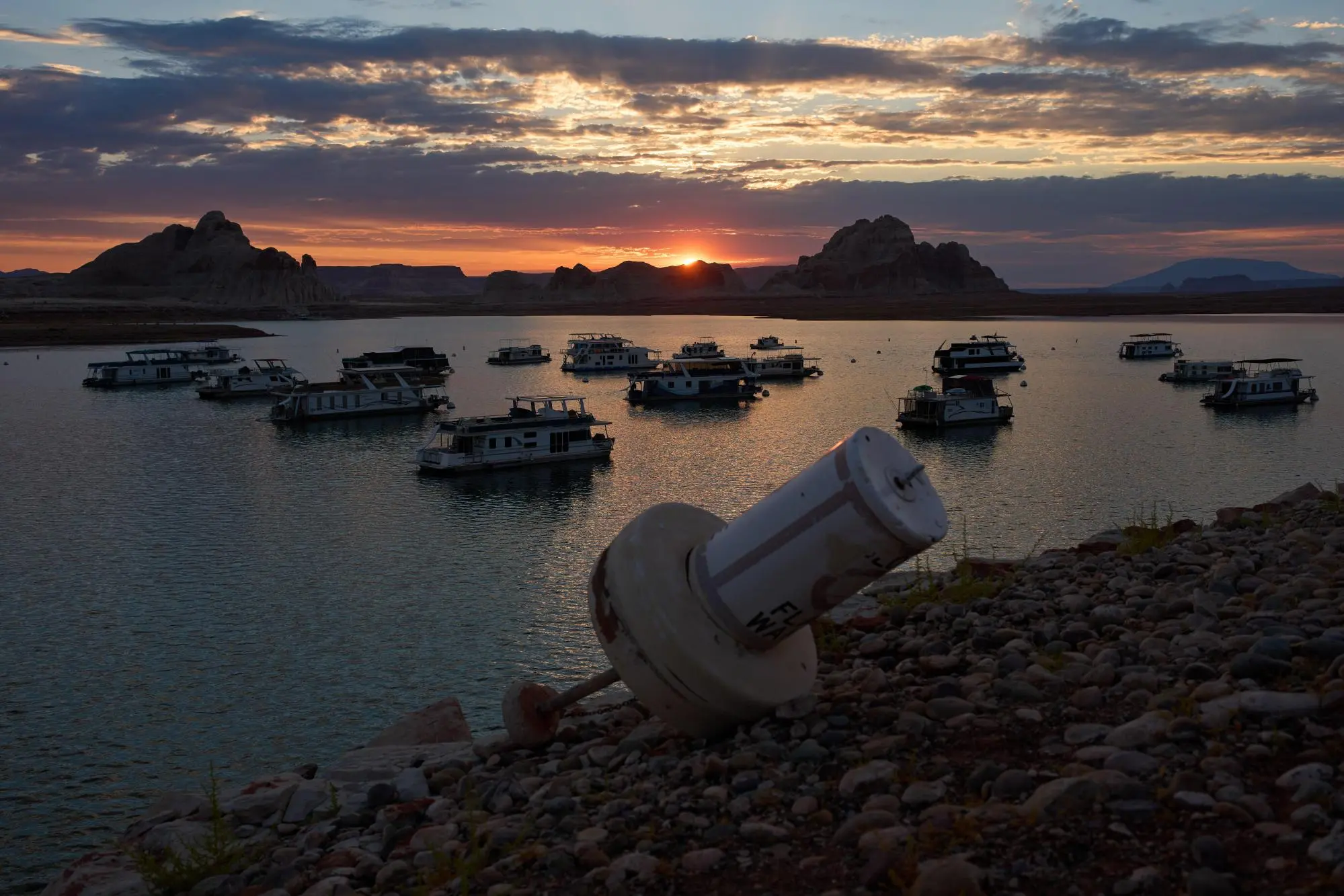
WASHINGTON (AP) — Arizona, California and Nevada would take less water from the Colorado River under a proposal announced Friday by the federal government to stave off crisis in the beleaguered waterway.
Read more Social media companies sued over deaths of four teens as pressure, lawsuits over child safety mount
The proposal from the U.S. Bureau of Reclamation spares Colorado, Utah, New Mexico and Wyoming from facing mandatory cuts for now. But it’s a temporary fix as the states that rely on the river still fight over a long-term management plan for the dwindling resource that powers huge swaths of the Western U.S.
Under the plan, the Lower Basin states could face collective cuts up to 3 million acre-feet through 2036, “subject to hydrology,” according to a news release by the Department of the Interior. That’s about enough water to serve more than 25 million people a year.
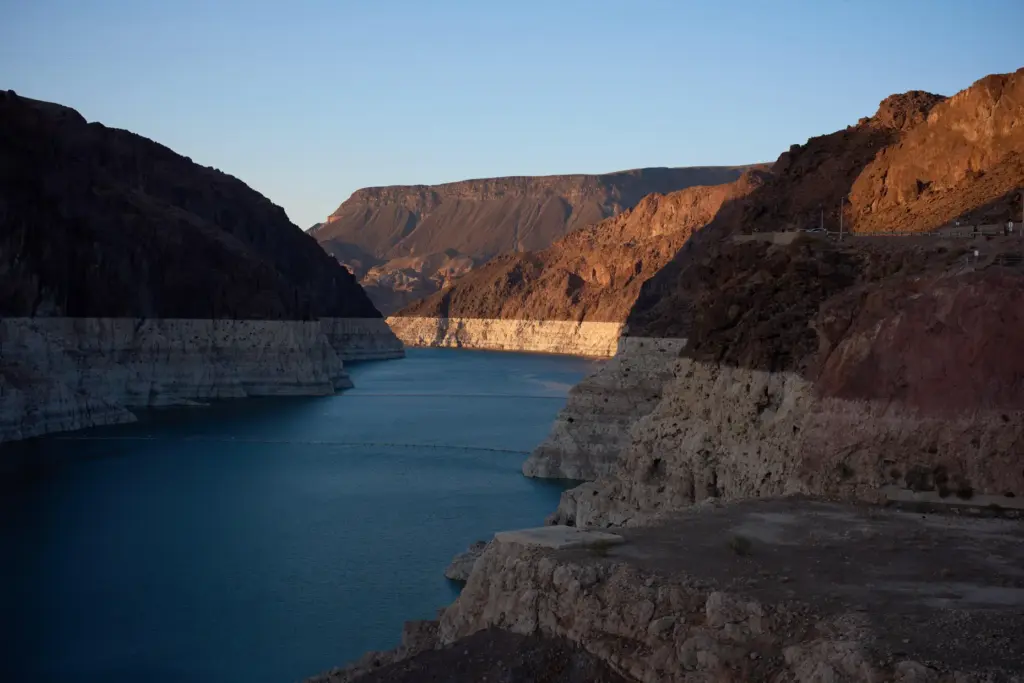 A bathtub ring of light minerals shows the high water line of Lake Mead near Hoover Dam at the Lake Mead National Recreation Area on Tuesday, June 30, 2026, near Boulder City, Nev. (AP Photo/John Locher)
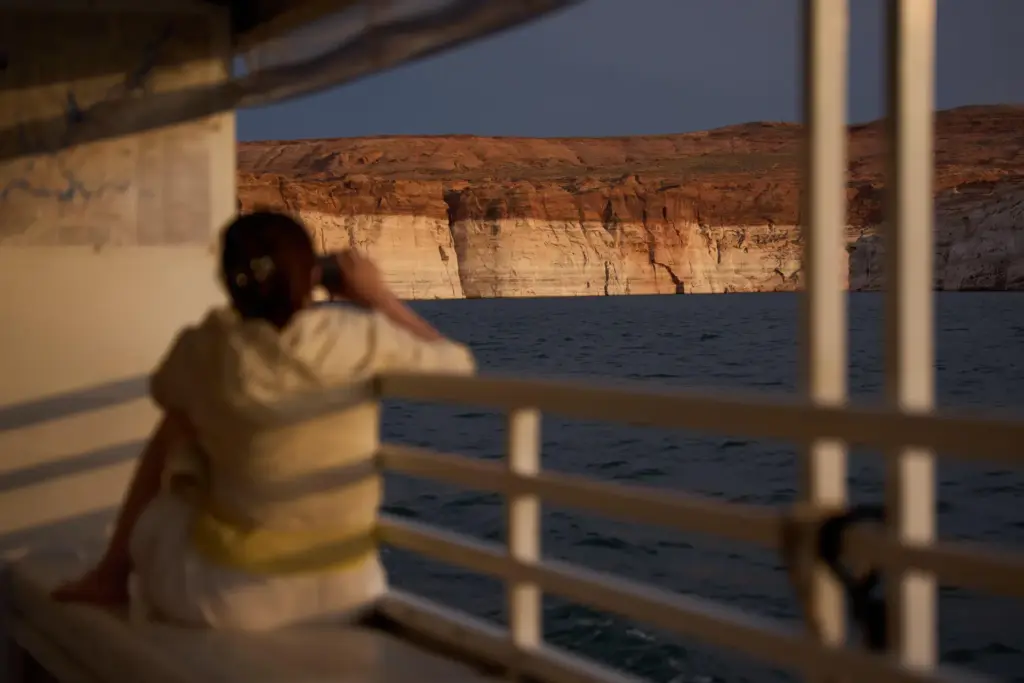 FILE – A person takes a picture during a tour on Lake Powell at the Glen Canyon National Recreation Area, Wednesday, July 15, 2026, near Page, Ariz. A bathtub ring of light minerals on the canyon wall shows the high water mark of the reservoir. (AP Photo/John Locher, File)
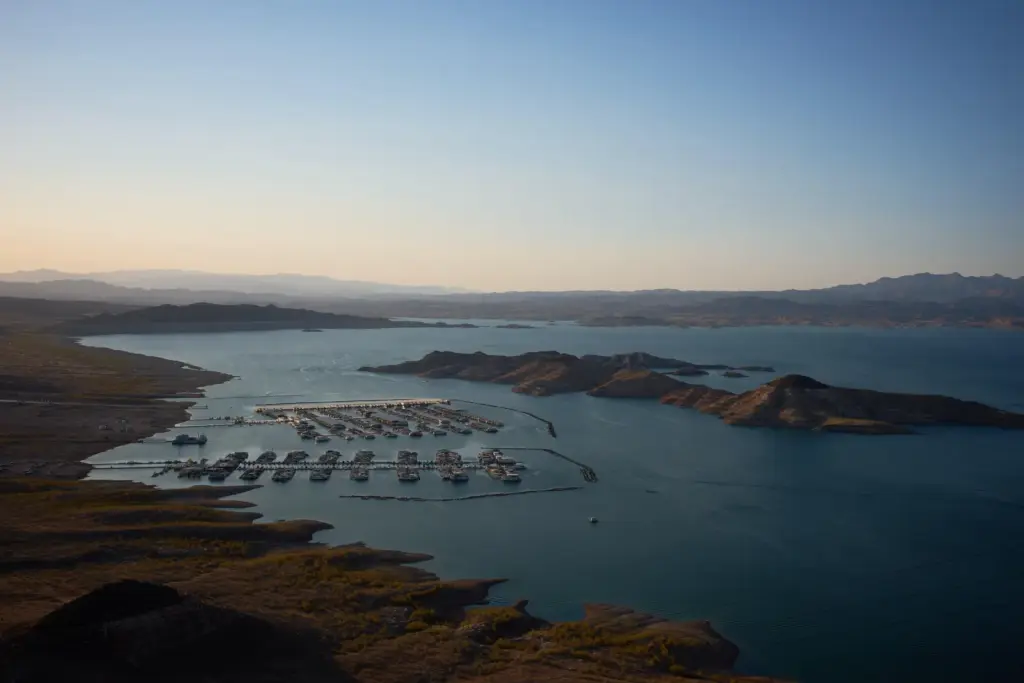 Boats are moored at a marina on Lake Mead at the Lake Mead National Recreation Area on Tuesday, June 30, 2026, near Boulder City, Nev. (AP Photo/John Locher)
The plan would also allow annual releases between 5 million and 12 million acre-feet from Lake Powell, the basin’s second-largest reservoir. Under the 10-year federal framework, water management decisions will be made every two years.
“This framework provides the flexibility to respond to changing hydrologic conditions while preserving the opportunity for the Basin States to continue working toward durable, consensus-based solutions,” said Secretary of the Interior Dough Burgum in the press release.
Read more Burglary charge could send man linked to Navajo elder’s disappearance back to federal prison
The proposed cuts in the Lower Basin states of California, Arizona and Nevada would be the biggest to date and could have huge impacts across cities and farms — higher water prices, increased groundwater reliance, more agriculture out of production and conservation mandates in places where none have existed before.
The federal plan comes after years of deadlocked negotiations and a record-dry winter that tipped Colorado River reservoirs to combined record lows. Federal officials are expected to finalize the plan in the coming days.
More than 40 million people in seven U.S. states, several tribal nations and Mexico, as well as farmers, wildlife, industries and hydropower, rely on the dwindling 1,450-mile Colorado River. Years of overuse combined with rising temperatures and drought have severely depleted flows in the Colorado today than in decades past.
The Associated Press receives support from the Walton Family Foundation for coverage of water and environmental policy. The AP is solely responsible for all content. For all of AP’s environmental coverage, visit https://apnews.com/hub/climate-and-environment
Read more 23 free fun things to do in Southern California in August