
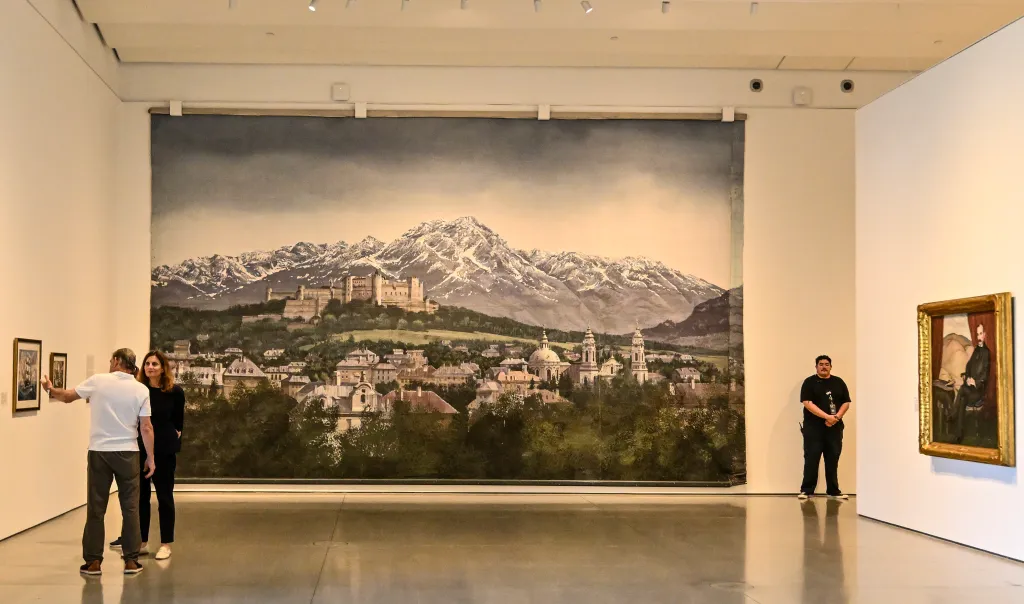
In the world woven together by UC Irvine Langson Orange County Museum of Art’s latest exhibit, images of a quaint French village, the shores of Hong Kong, the Wild West and the fictional land of Oz, there is a common thread: they’re actually in California.
Read more America already tried permanent daylight saving time. It lasted less than a year. Could it work now?
The collection, “Staging California in Early Hollywood,” explores Southern California’s role as both a real and an imagined setting in the early days of Hollywood cinema. It is the first major exhibition commemorating UC Irvine’s recent acquisition of the Orange County Museum of Art and its new $94 million home opened in 2022. The exhibition features more than 50 pieces of art — each encapsulating a piece of California history or inspiration — and runs through Oct. 4.
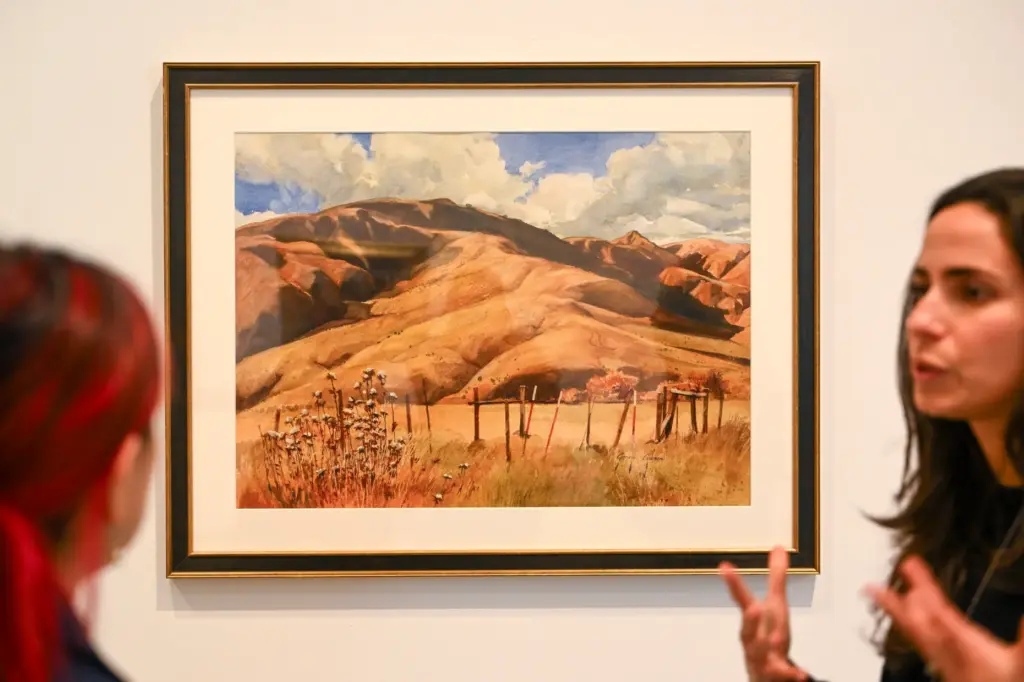 Michaëla Mohrmann, assistant curator of the UC Irvine Langson Orange County Museum of Art, right, discusses the “Staging California in Early Hollywood” exhibit in Costa Mesa on Wednesday, July 1, 2026. The collection explores the intersection of plein air painting, cinematic technologies, and the construction of place. (Photo by Jeff Gritchen, Orange County Register/SCNG)
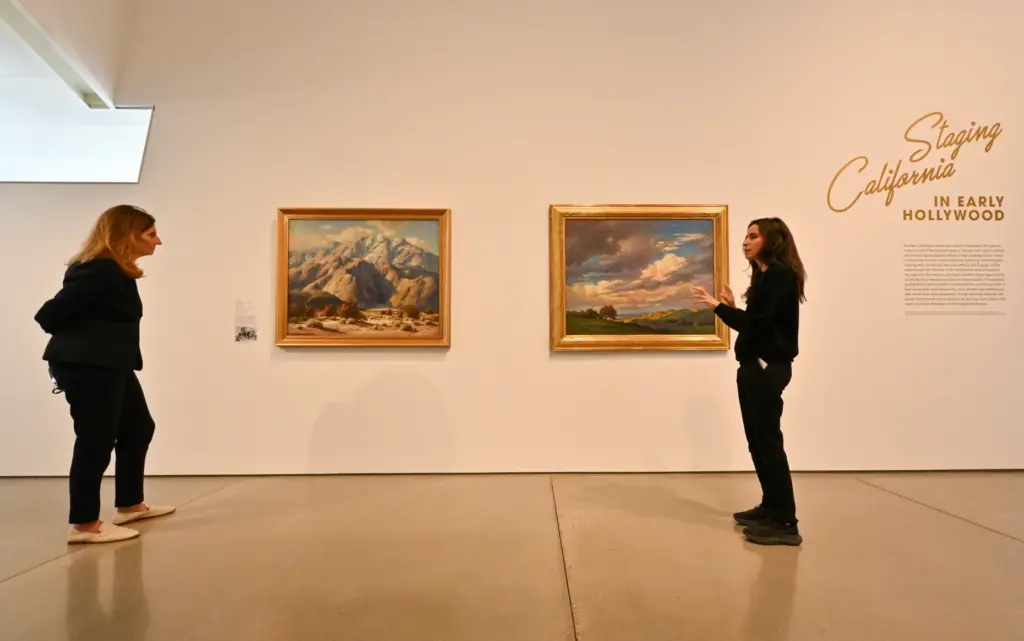 Museum Director Kathryn Kanjo, left, and Michaëla Mohrmann, assistant curator of the UC Irvine Langson Orange County Museum of Art, at the “Staging California in Early Hollywood” exhibit in Costa Mesa on Wednesday, July 1, 2026. The collection explores the intersection of plein air painting, cinematic technologies, and the construction of place. (Photo by Jeff Gritchen, Orange County Register/SCNG)
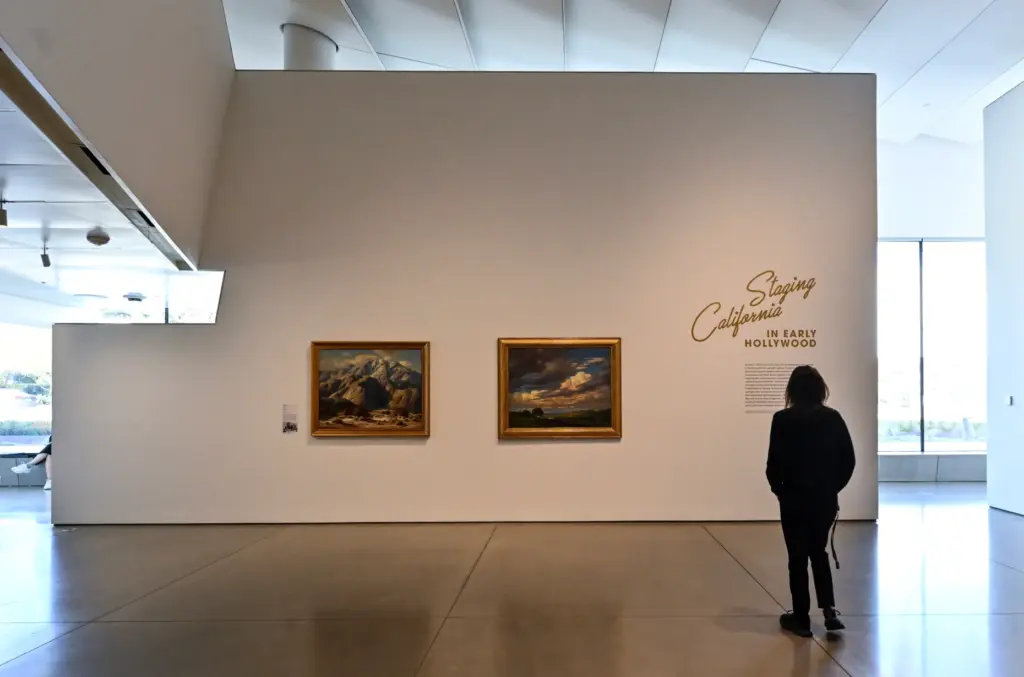 Museum Director Kathryn Kanjo at the “Staging California in Early Hollywood” exhibit inside the UC Irvine Langson Orange County Museum of Art in Costa Mesa on Wednesday, July 1, 2026. The collection explores the intersection of plein air painting, cinematic technologies, and the construction of place. (Photo by Jeff Gritchen, Orange County Register/SCNG)
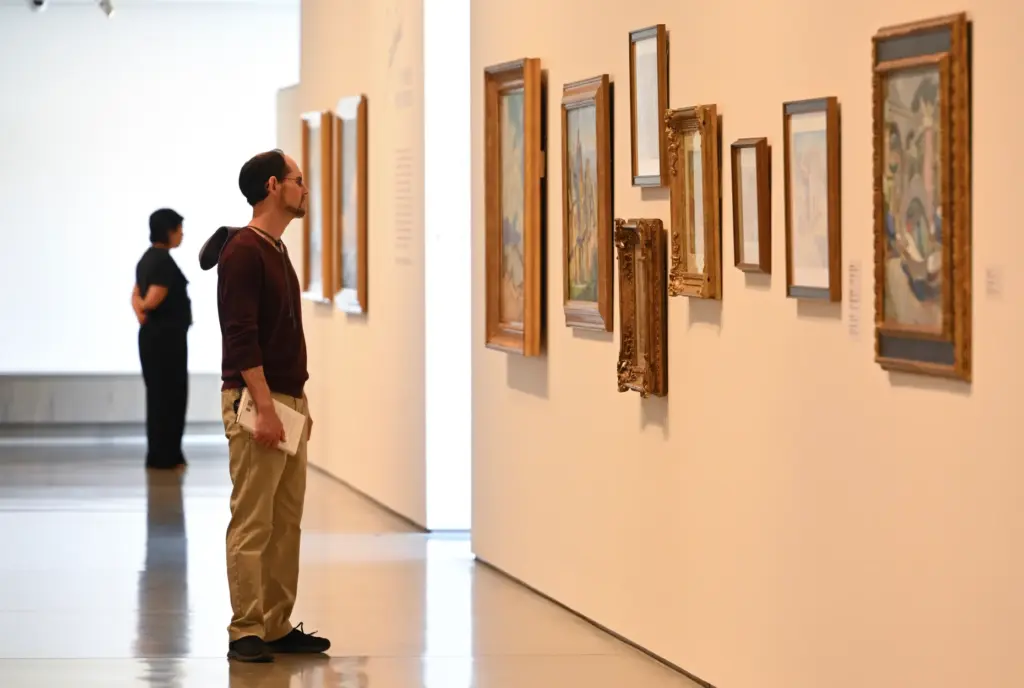 A visitor to the UC Irvine Langson Orange County Museum of Art examines the “Staging California in Early Hollywood” exhibit in Costa Mesa on Wednesday, July 1, 2026. The collection explores the intersection of plein air painting, cinematic technologies, and the construction of place. (Photo by Jeff Gritchen, Orange County Register/SCNG)
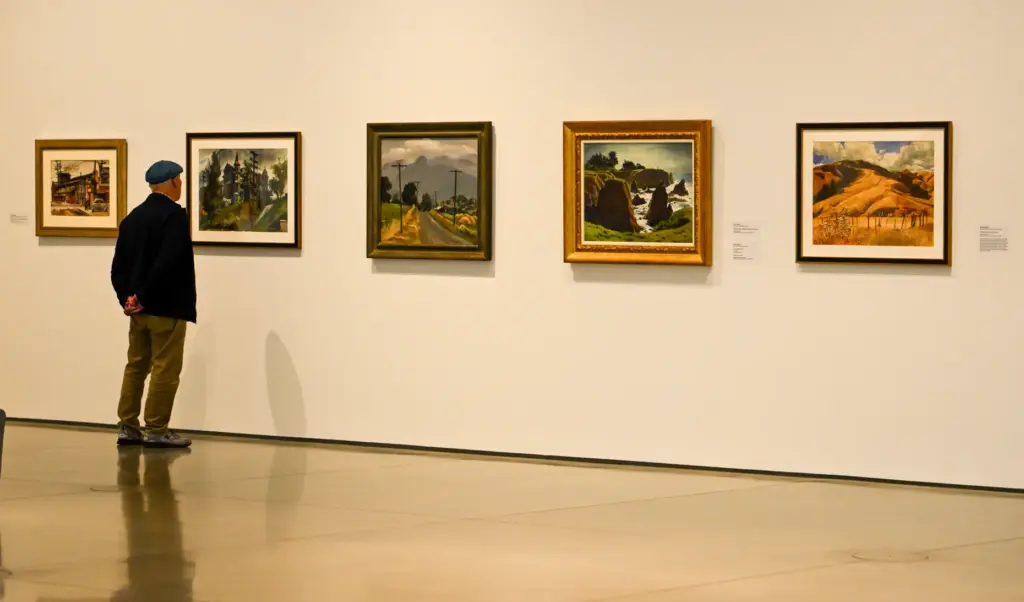 A visitor to the UC Irvine Langson Orange County Museum of Art examines the “Staging California in Early Hollywood” exhibit in Costa Mesa on Wednesday, July 1, 2026. The collection explores the intersection of plein air painting, cinematic technologies, and the construction of place. (Photo by Jeff Gritchen, Orange County Register/SCNG)
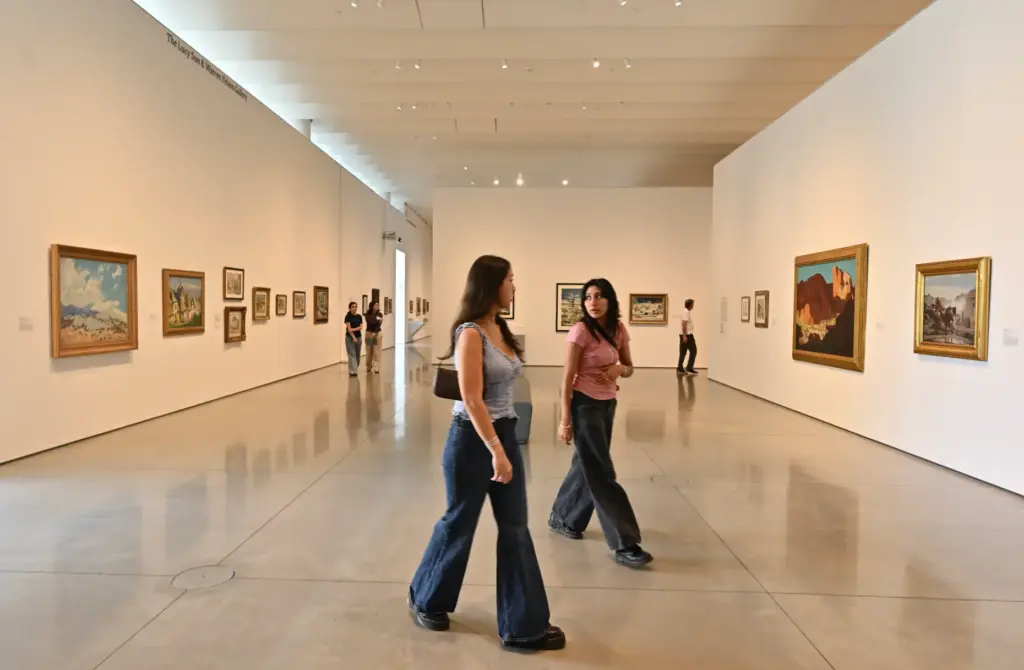 The “Staging California in Early Hollywood” exhibit in Costa Mesa on Wednesday, July 1, 2026. The collection explores the intersection of plein air painting, cinematic technologies, and the construction of place. (Photo by Jeff Gritchen, Orange County Register/SCNG)
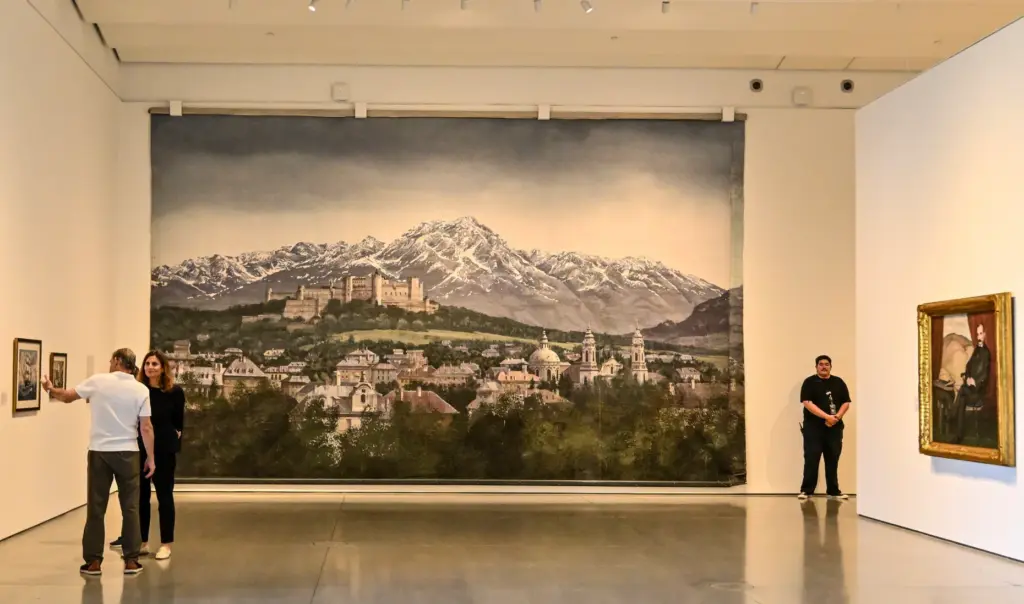 Museum Director Kathryn Kanjo, left, chats with a patron as a backdrop from the 1965 film “The Sound of Music” hangs inside the UC Irvine Langson Orange County Museum of Art in Costa Mesa on Wednesday, July 1, 2026. The exhibit, “Staging California in Early Hollywood” is a collection that explores the intersection of plein air painting, cinematic technologies, and the construction of place. (Photo by Jeff Gritchen, Orange County Register/SCNG)
“California is inherent to this institution — it is in our name, and it’s the genesis of the collection,” the museum’s new director, Kathryn Kanjo, said. “California reflects the evolution and innovations of the world around us — our audience gets to come in and find themselves, find their place in the artworks.”
“Staging California in Early Hollywood” also marks the first exhibition under Kanjo’s leadership.
The California native began her tenure in February, bringing her more than three decades of experience to the museum located on the Segerstrom Center for the Arts campus in Costa Mesa, where she now oversees a combined collection of more than 9,000 works. Kanjo previously served as the David C. Copley Director and CEO of the Museum of Contemporary Art San Diego.
Kanjo said she is committed to UC Irvine Langson Orange County Museum of Art’s mission of honoring OCMA’s legacy, while affirming UCI’s commitment to education and publicly accessible art. The exhibition reflects this vision, she said, drawing from works in OCMA’s permanent collection, as well as those from UCI’s Langson and Buck collections, now all one combined source of pieces tracing art over California’s history.
The exhibition’s opening pieces — two side-by-side oil paintings by artist Paul Grimm — invite viewers into a familiar depiction of California terrain. In the painting, “Approaching Storm,” Grimm recreates the state’s rolling hills set against an expansive blue sky and gold-tinged clouds — it’s the sort of scene that earned the artist a role in several major Hollywood film studios throughout the 1920s.
Grimm’s paintings are part of a section in the exhibit exploring “The Role of Place in Film,” in which the curation team set out to represent the painters whose contributions to Hollywood have gone largely overlooked, said Assistant Curator Michaëla Mohrmann. Bringing together plein air painting and cinematic technologies, “Staging California in Early Hollywood” spotlights a collective of global artists who found their footing in the film industry during the Great Depression.
“We’re looking at the way that the California landscape acted as a stand-in for other locations,” Mohrmann said. “It’s this sort of collapsing of the real and the fake.”
With jobs quickly declining across creative industries, many plein air artists transitioned into Hollywood scenic design, bringing their technical skills and knowledge of the surrounding California landscape to film sets. These artists, many of whom came from international backgrounds, transformed local environments into the recognizable backdrops of global locals from Paris to the coast of China. Among some of the most notable were George Gibson, who designed the technicolor dreamscape of MGM Studios’ “The Wizard of Oz” (1939), and Emil J. Kosa Jr., who worked with a team of artists to create backdrops for “The Sound of Music” (1965).
Read more California rental ads would have to disclose if pictures used AI, under new bill
Despite their integral contributions, many of these artists went unmentioned in the films they helped produce.
The exhibition touches on the Hollywood studio system, on the labor fights to be recognized and on the advent of AI, CGI and other advanced special effects, and how through all of these, art and the film industry have evolved.
“It is a love letter to this past — this industry — that was very much about this craftsmanship that nurtured a whole culture in Southern California,” Mohrmann said. “This exhibition helps us realize how important these jobs are, this industry is, the work they do and the kind of economic opportunities they generate.”
Today’s Hollywood is a legacy of that culture, and for recent museum visitors Samantha Lopez Arevalo, 22, of Costa Mesa, and Michelle Ridenhour, 22, of Newport Beach, knowing that history makes the exhibition more immersive.
“Looking at the images and the history behind the artists — it really makes the paintings come to life,” Lopez Arevalo said.
And it is important to document how local landscapes have evolved with the state’s social and cultural histories over time, Ridenhour added.
Kanjo said the UC Irvine Langson Orange County Museum of Art will continue to preserve California history as the foundation of its collections.
“There’s room for all of these histories,” Kanjo said. “The opportunity we have is to knit them together and see a continuum.”
Read more Top officials in Arizona’s Maricopa County agree on how to oversee elections, ending a legal battle