
You’ve probably noticed that dining out costs more than it used to. So have the people who run restaurants — even when they’re the ones setting the prices.
Read more Democrats flipped 9 US Senate seats — the most in almost 70 years
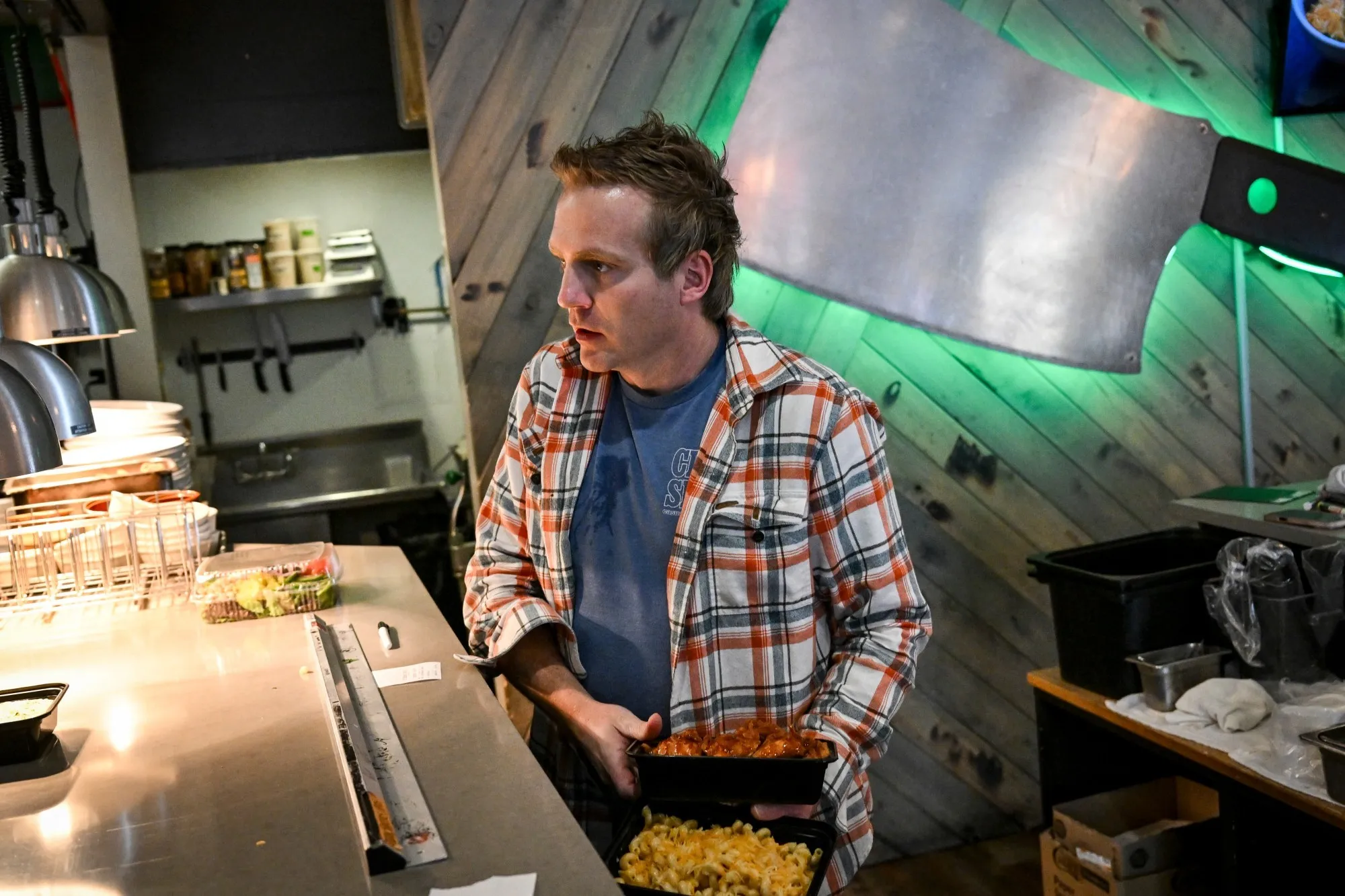
Christian Anderson, co-owner of Chop Shop Casual Urban Eatery, recently ordered takeout pizza for his wife, two young children and mother-in-law. The bill came to about $100. The pizza was good, and as a restaurant operator, Anderson understood the costs behind that total. Still, the next time his family wanted pizza, he bought a frozen one at the grocery store.
That was when it clicked: The customers of his contemporary American restaurant, which has three locations, were probably making the same calculation.
“I was like, ‘Man, there’s gotta be a lot of people thinking that way,’” Anderson said. “They’re just trading down.”
The cost of dining out in the Denver metro area rose 3.8% over the year ending in September, according to the U.S. Bureau of Labor Statistics. Spending has softened, too: In May, Denver was the only one of 21 major metro areas where restaurant spending per household declined from a year earlier, according to Bank of America card data.
Caught between cost-conscious customers and shrinking margins, local restaurants are trying to make dining out feel worth the expense. Some are lowering prices or packaging meals for families. Others are emphasizing generous portions, convenience, attentive service or experiences diners cannot replicate at home. The challenge is giving guests more reasons to return without cutting the quality — or the workers — that make a restaurant worth visiting in the first place.
Making the everyday meal affordable again
Anderson decided to give customers a reason not to head for the frozen-pizza aisle. The restaurant lowered its menu prices by about 10% on average (its entrées now range from about $8 to $21), even though its expenses suggested prices should go the other way.
“We just need people to feel comfortable coming out again,” Anderson said. “We’ll take a hit on cost, but hopefully we make it up in volume.”
It was a risky bet. But he said the response from longtime customers has been encouraging. While filling in for an injured employee, Anderson noticed some of the same guests returning several times a week.
But lowering prices requires difficult choices. Chop Shop removed a longtime short-rib dish after rising meat costs made it impossible to serve a satisfying portion at a viable price. The restaurant was losing money on it, Anderson said, while customers still felt as though they were experiencing shrinkflation. “It was a lose-lose,” he said.
At Panzano inside downtown’s Kimpton Hotel Monaco, patrons can order everything from $30 pasta alla vodka with house-made rigatoni to braised lamb shank with saffron risotto for $52. And they increasingly appear to measure value partly by whether dinner can stretch into another meal. Giovanni Lanzante, who took the helm as the upscale Italian restaurant’s executive chef in July, said guests are especially pleased when they leave with leftovers, though portion size isn’t the only consideration.
“Value isn’t always in the quantity of food. It is also in the quality of food,” he said. “But you gotta have one or the other, and if you have both, that’s really good.”
A diner paying $40 or $50 for a dish still needs to feel there was enough quality — or enough food — to justify the expense, he said.
For a fast-casual restaurant like Chop Shop, the value equation points to affordability and convenience. About two-thirds of its sales are takeout, so the restaurant introduced family meals with entries like fried chicken with all of the fixings that cost $40 to $45 or roughly $10 per person.
Other eateries are reaching similar conclusions. At Molino Chido — a Mexico City-style taqueria inside Aurora’s Stanley Marketplace — co-owners Michael Diaz de Leon and Tommy Lee introduced taco packs priced at $25 to $35, with each component packaged separately, so the food travels better and offers families and groups a lower-cost alternative to dining in. “We figured it was a really easy solution if you don’t wanna cook and you just need something quick, this would be great,” Lee said.
Chef Hosea Rosenberg also simplified his Blackbelly’s Denver deli after weekly sales reports showed that customers wanted breakfast, lunch and sandwiches — not the retail meat and grocery selection the Berkeley neighborhood business initially offered. Limited parking seemed to make those purchases even less practical.
“Sometimes less is more,” said Rosenberg, also the owner of Blackbelly, Santo, and Morso in Boulder.
Focusing on the experience
For food and beverage businesses that can’t compete on price alone, value increasingly depends on everything surrounding the food.
Mother Other, which opened in late June in the Denver Design District, has to be a place diners intentionally seek out. “Because we’re not in an area that has a lot of natural foot traffic, there’s definitely a pressure to create an experience good enough that people are gonna want to come back,” said Taylor Herbert, who owns the vegan restaurant with her wife, chef Alexi Mandolini.
Guests frequently praise the generous portions and prospect of having leftovers, Herbert said. Groups also order family-style, allowing them to share the dishes and the expense. But Mother Other’s approach surpasses how much food lands on the table.
Read more US futures point higher, led by rebound for Nvidia
Herbert calls it “radical hospitality”: learning guests’ names, making returning customers feel like regulars and creating a healthy workplace for employees. “We want our team to show up and make sure that everybody feels seen and appreciated,” she said.
Mary Nguyen sees those expectations across many kinds of dining. Her Olive & Finch Collective operates six Olive & Finch locations and three Little Finch cafes, plus food stands at Summit FC’s temporary stadium, self-serve airport kiosks, a catering division and a business selling prepared food to other companies.
The range of concepts gives Nguyen a window into how people eat when they want a sit-down meal, a quick bite or something convenient on the go. Whatever the format, she said, diners judge everything from the greeting and service to the atmosphere and how the restaurant makes them feel.
“Our guests aren’t just paying for what’s on the plate,” Nguyen said. “They’re paying for an experience. Of course the food has to be great, but so does everything around it.”
At Molino Chido, Diaz de Leon and Lee are trying to make the tasting-menu experience more accessible with a five-course dinner offered Fridays and Saturdays. Priced at $105 per person before tax, tip and beverages, it also allows the restaurant to generate additional income while showcasing the kitchen’s creativity.
“From what I know, we’re one of the more affordable tasting menus in town,” Diaz de Leon said. “I think that in itself finds value in people’s minds.”
Rosenberg also uses pop-ups, collaborations, special dinners and demonstrations to give customers another reason to visit his restaurants. The events are often more valuable as marketing than as moneymakers.
“We are trying to add excitement, and not try to advertise ‘deals,’” he said.
But delivering more — whether through generous portions, attentive hospitality or memorable experiences — doesn’t necessarily make a restaurant more profitable. Often, it means accepting tighter margins or finding savings in parts of the business customers never see.
Absorbing more of the cost
Denver restaurant operators surveyed for the 2025 State of Denver Restaurants report said their average hourly labor costs rose 50% to 55%, commercial rents roughly 23% and cost of goods sold 22% between 2019 and 2024. Respondents also reported that overall earnings fell nearly 20% during that period.
“Denver restaurants are caught in a terrible place between ever-rising costs and sluggish revenue growth,” said Denise Mickelsen, the association’s vice president of communications.
At Molino Chido, business has fallen about 15% since Labor Day, Diaz de Leon said. Because the restaurant is in its first year at Stanley Marketplace, the owners can’t yet say how much of that decline is seasonal. But conversations with other operators suggest they are not alone.
With costs climbing and fewer customers coming through the door, restaurants cannot pass every increase on to diners. Instead, operators are searching for savings customers may never notice.
Lee and Diaz de Leon review profit-and-loss statements weekly, use ingredients across multiple dishes, minimize waste and reconsider expenses as mundane as the company that collects the trash. They are also finding more ways to use the restaurant through subscriptions and private events. “ In this day and age, I feel like restaurants have to try a little bit of everything and just see what sticks cause you don’t necessarily know what’s gonna work,” Lee said.
Rosenberg said his restaurants also scrutinize their financial results every week and make changes quickly. But some options remain off the table. “We will not compromise on quality of ingredients or how well we pay our staff,” he said. “There are other levers that we can pull.”
At Mother Other, one of those levers is a four-day operating week. Concentrating service into fewer days helps the restaurant avoid staffing a slow Monday while giving employees three days off. The restaurant also declines to use the tip credit, pools tips across the staff, and starts employees at $19.29 an hour.
Nguyen’s company provides health insurance, paid time off and a retirement plan with a dollar-for-dollar match of up to 3%. Olive & Finch also prices some comparable dishes $10 to $20 below what diners might pay elsewhere, she said. Doing both means accepting a smaller return.
A restaurant might be fortunate to retain $1 of every $10 a guest spends, Nguyen said, and her company’s margins are tighter than that. However, restaurant owners remain convinced that people want places to gather, celebrate and be cared for. The challenge is giving them an experience worth leaving home — and paying — for.
“As operators,” Nguyen said, “we have to continue earning the privilege of being part of those moments.”
Read more Quentin Grimes’ 47-point night rallies Lakers past Hornets for 9th straight win