
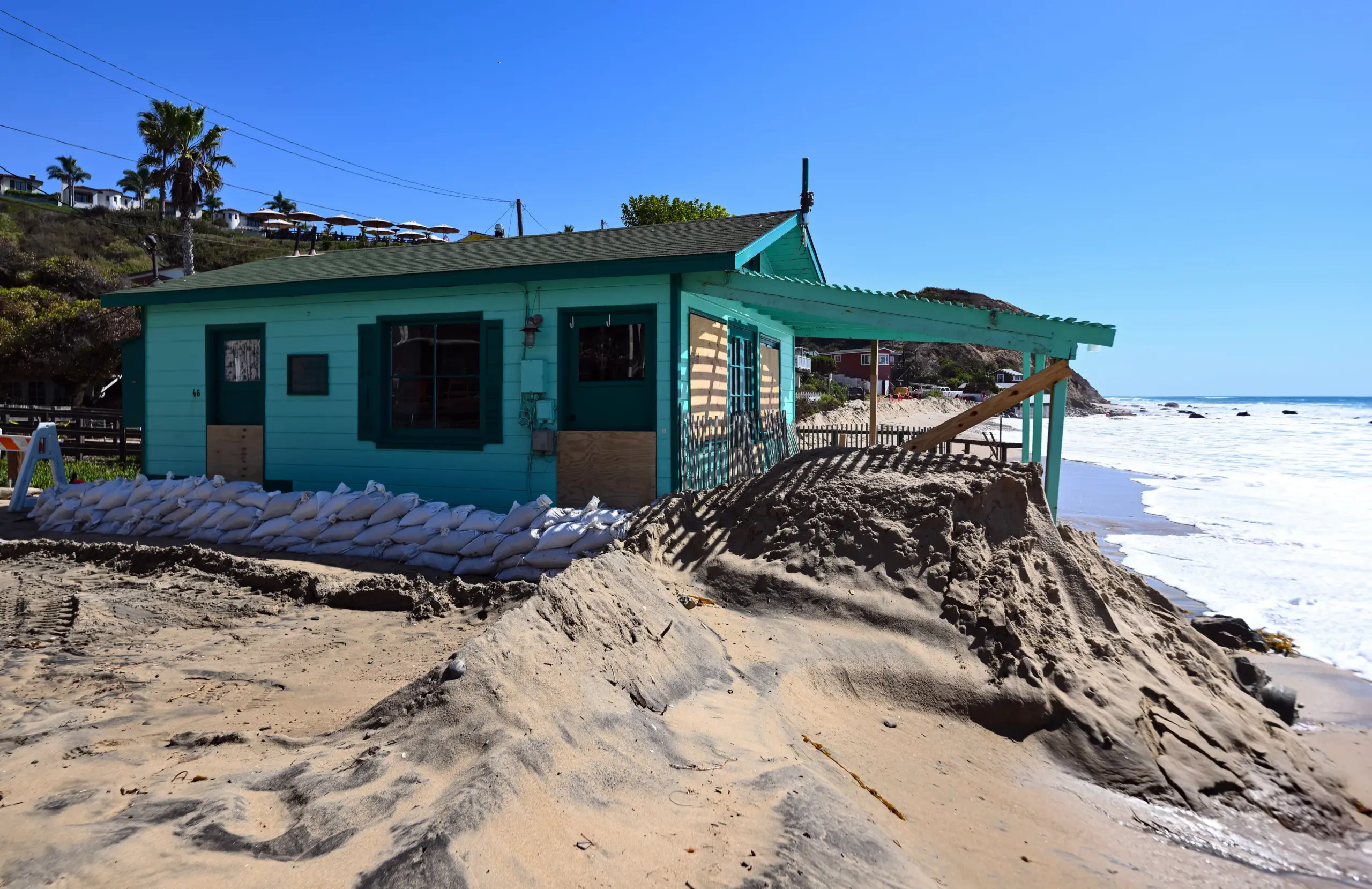
The historic cottages at Crystal Cove are a dreamy beach getaway that transports visitors back in time to coastal California’s storied past.
Read more Meta tells Brazil’s electoral court it treats Lula and Flávio Bolsonaro equally ahead of Sunday vote
But with the recent run of big waves and high tides, visitors are getting a look into the region’s future — when rising seas are expected to impact not just infrastructure such as roads and parking lots, but also the region’s most cherished beachfront landmarks.
Tropical Storm Rachel recently combined with extreme high water levels, and that raised enough concern to prompt an evacuation of several of the oceanfront cottages in the historic district, which aren’t an easy reservation to score in the State Parks system. A water main break from the swell also caused some canceled reservations.
“This is a beautiful place for millions of people who come to visit the park, they can see firsthand the balancing act we have ahead to provide access and space for people and nature,” said Brett Sanders, professor of engineering, urban planning and public policy at UC Irvine. “And that comes with some losses along the way that have to be managed.”
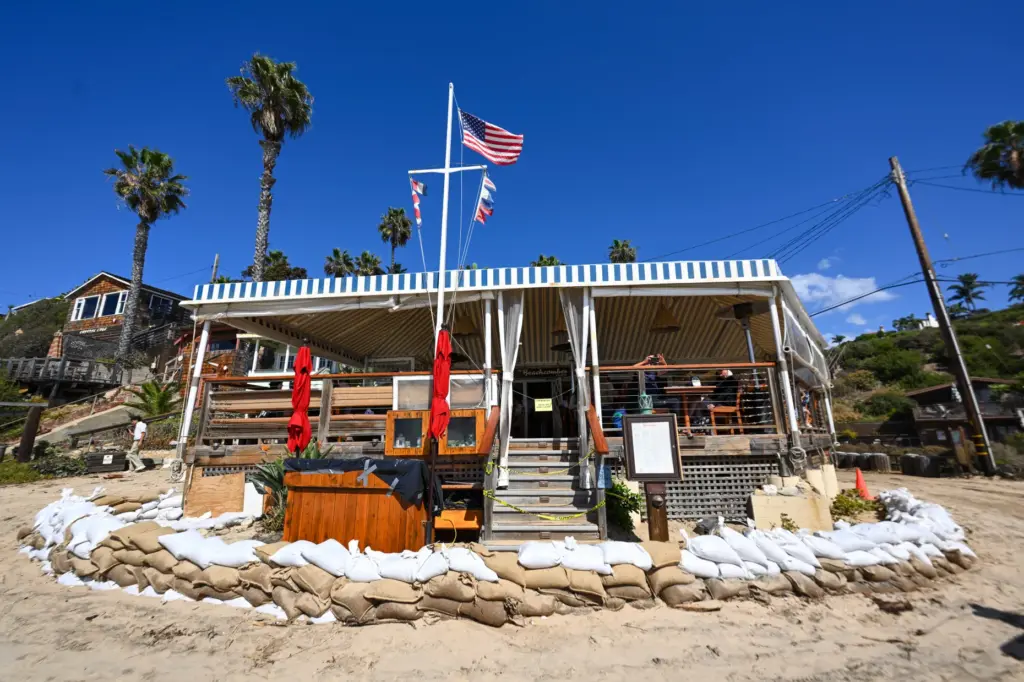 Sandbags surround The Beachcomber at The Historic District at Crystal Cove in Laguna Beach, CA, on Tuesday, October 13, 2026. (Photo by Jeff Gritchen, Orange County Register/SCNG)
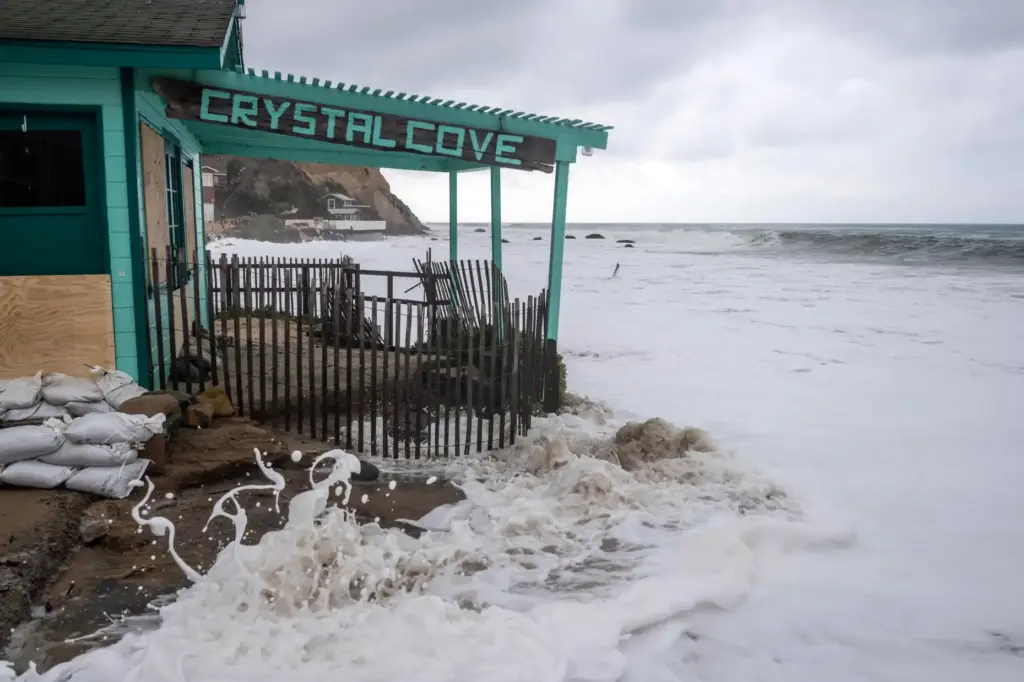 Waves crash onto one of the historic cottages at Crystal Cove State beach, eroding the foundation, as Tropical Storm Rachel continues to cause coastal flooding in Laguna Beach on Saturday, October 10, 2026. (Photo by Jeff Antenore, Orange County Register/SCNG)
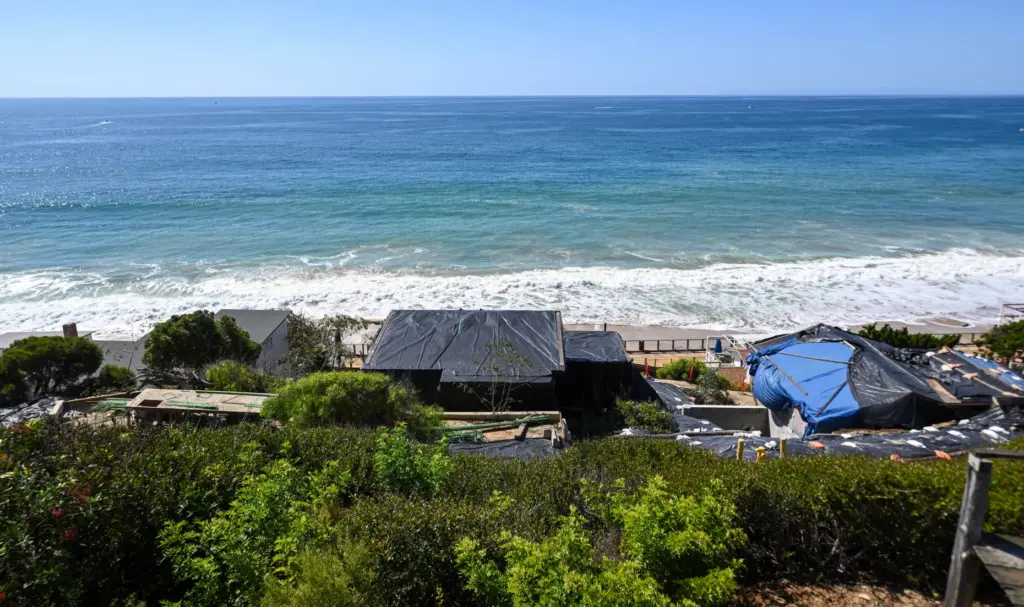 Cottages at The Historic District at Crystal Cove being refurbished in Laguna Beach, CA, on Tuesday, October 13, 2026. (Photo by Jeff Gritchen, Orange County Register/SCNG)
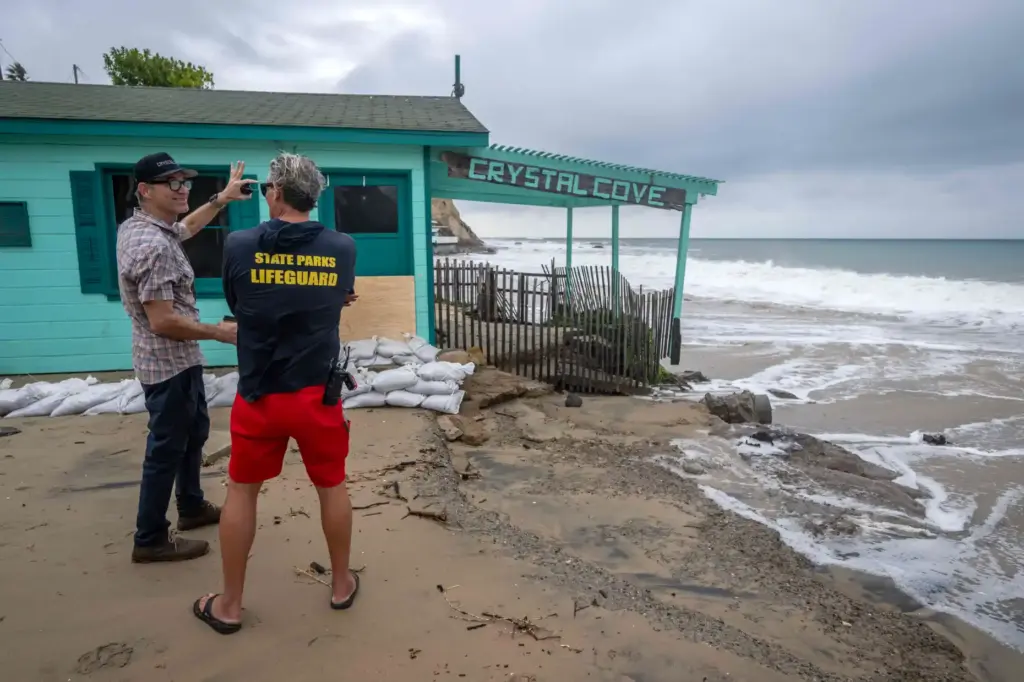 Crystal Cover State Beach staff and lifeguards look on as waves crash onto one of the cove’s historic cottages, eroding the foundation, as Tropical Storm Rachel continues to cause coastal flooding in Laguna Beach on Saturday, October 10, 2026. (Photo by Jeff Antenore, Orange County Register/SCNG)
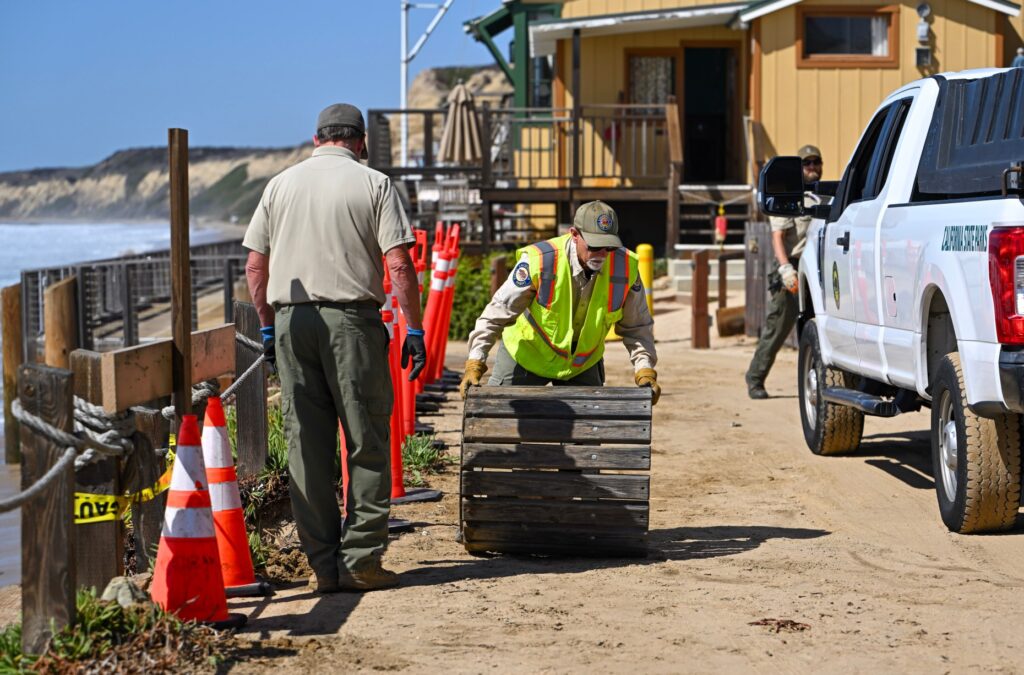 Workers ready cottages at The Historic District at Crystal Cove in Laguna Beach, CA, on Tuesday, October 13, 2026. (Photo by Jeff Gritchen, Orange County Register/SCNG)
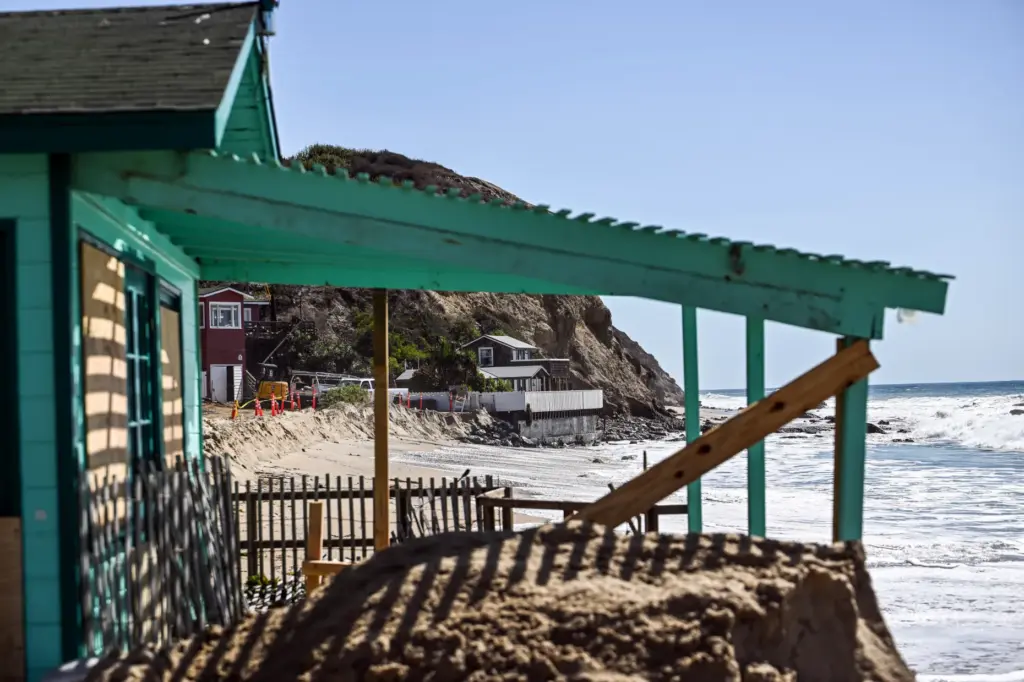 Cottages at The Historic District at Crystal Cove in Laguna Beach, CA, on Tuesday, October 13, 2026. (Photo by Jeff Gritchen, Orange County Register/SCNG)
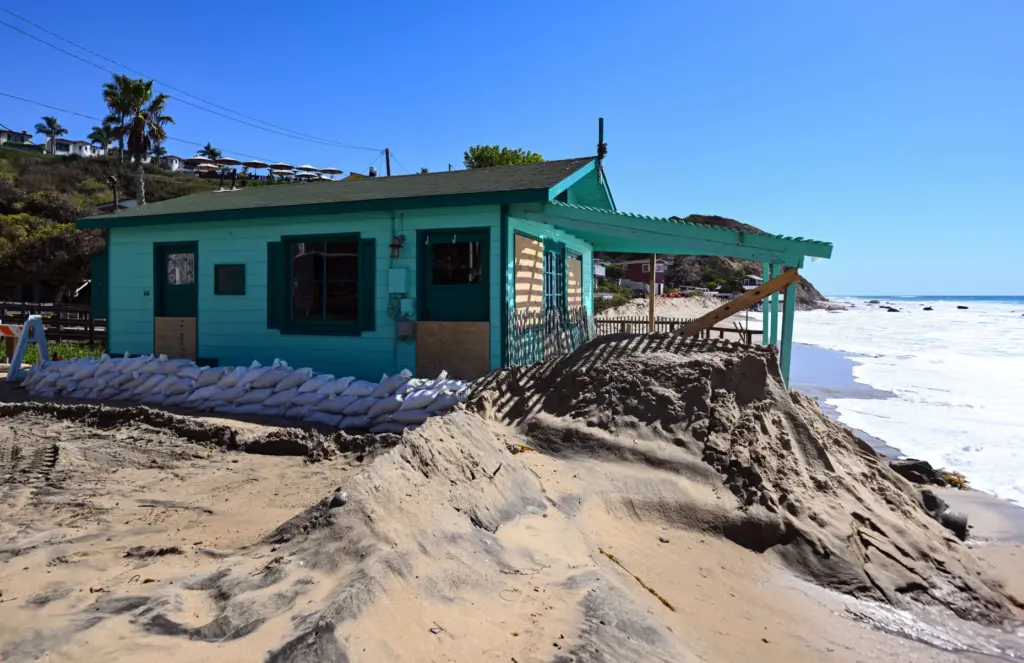 The Historic District at Crystal Cove in Laguna Beach, CA, on Tuesday, October 13, 2026. (Photo by Jeff Gritchen, Orange County Register/SCNG)
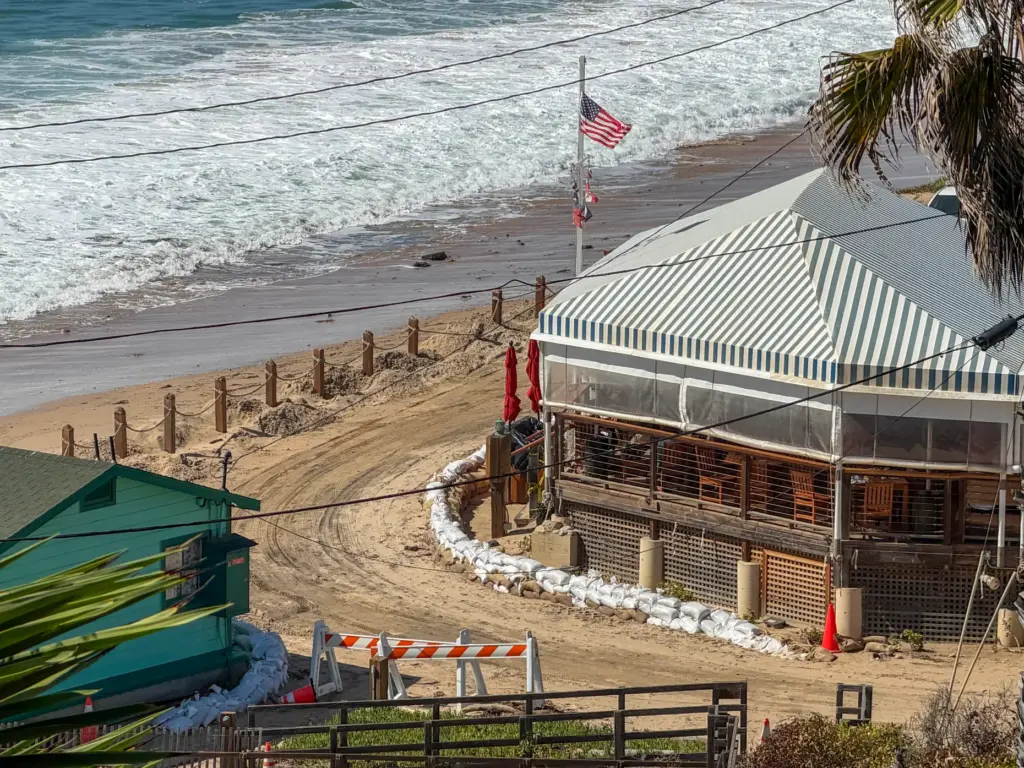 Sandbags surround The Beachcomber at The Historic District at Crystal Cove in Laguna Beach, CA, on Tuesday, October 13, 2026. (Photo by Jeff Gritchen, Orange County Register/SCNG)
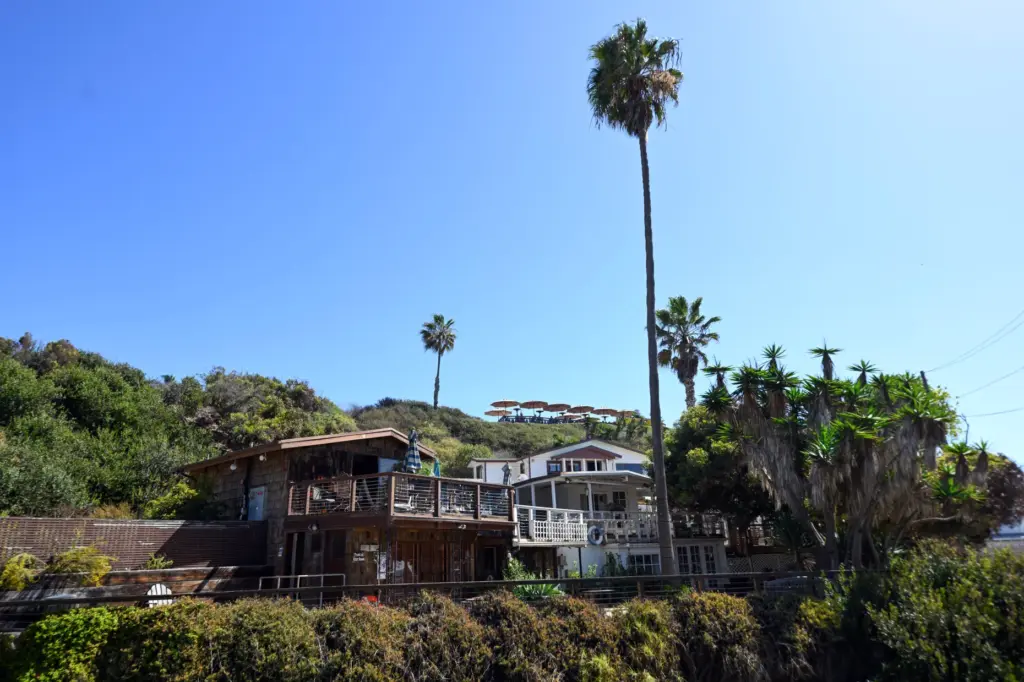 Cottages at The Historic District at Crystal Cove in Laguna Beach, CA, on Tuesday, October 13, 2026. (Photo by Jeff Gritchen, Orange County Register/SCNG)
State Parks Orange Coast District Superintendent Paul Andrus said 26 cottages were evacuated on Oct. 9 when the water reached near the cottages, splashing onto a wooden boardwalk in front of the North Beach area, which just reopened to the public a few years ago after extensive renovatons. There ultimatgely was no damage to the cottages, and visitors were allowed to resume overnight stays as of Oct. 15.
On the south end, the ocean’s force destroyed a water main and visitors staying in eight cottages needed to cut their stay short. Visitors were able to return last week.
One of the most famous cottages on the tucked-away stretch of beach, No. 13, suffered some foundation issues. That cottage, most famous for its appearance in the 1980s film “Beaches,” starring Bette Midler, remains closed to the public.
“We are fighting Mother Nature with the undermining that was happening in front of there,” Andrus said.
Another cottage, the teal No. 46 that sits in the center of the historic district, had pergola foundation damage that has been braced with lumber and will be repaired in the near future, Andrus said.
The area is an instant transport to coastal California’s past, a getaway where families would camp out in the 20s and 30s. The isolated cove would also become the backdrop for famous Hollywood films such as “Treasure Island.”
The early community used materials left behind from movie sets and washed up wood to build structures, the reason each cottage is so unique in design.
In 1979, the state purchased the 3,000-acre Crystal Cove area from the Irvine Co. for $32.6 million; the residents remained until the early 2000s, when the State Parks turned it into a place where vacationers could have a taste of that same beach living dream.
Two decades ago, when the state spent $13 million to restore the first 29 cottages on the south end, not much thought went into future sea levels, with an expansive beach in front of the homes.
But in more recent years, as plans for the renovation of the final North Beach cottages were developed, planners started thinking about the impacts of the sea reaching the homes in years to come.
For example, the 650-foot-long boardwalk was built on concrete caissons drilled down into the bedrock, so water could naturally slope under it, instead of a seawall that could exacerbate erosion.
Some of the cottages had to be lifted and moved higher, out of the ocean’s future potential pathway, and retaining walls were built to withstand possible cliff erosion.
The designs were a requirement of the California Coastal Commission, the state agency wanting to ensure the longevity of the project to protect against rising seas.
The boardwalk functioned exactly as intended as waves splashed onto it in recent weeks, said Andrus.
“That boardwalk did its job, we had some coastal engineers come out and assess. The construction worked just like it anticipated with no structural damage,” he said. “Everything held the way it was designed.”
The sea-level designs were thinking ahead to what the ocean levels could be like in 2050, but the latest swells and tides are giving a realistic look at what vulnerable areas will likely face.
Sanders said the north stretch of cottages are better engineered, better planned, and are holding up better against the sea. It’s apparent, he said, where planners were thinking about the future with the more recent cottage renovations.
“The constructed boardwalk in North Beach provides a relatively safe passageway for visitors,” he said. “The reinforced concrete structure will allow the public to be on the coast and enjoy the cottages for several decades in the future. Whereas parts of the coastline that are not so well planned out, we will have trouble accessing the coast.”
Read more New Jersey food importer files lawsuit challenging Trump’s 50% tariffs on Canadian goods
It took another $55 million to finish the final set of cottages on the north end, which opened 22 units in 17 cottages over the past few years — the sea-level rise adaptations adding time and money.
In total, an estimated $80 million has been invested to restore the historic cottages, according to the Crystal Cove Conservancy, a nonprofit that helps manage the property.
While Crystal Cove is best known for its overnight stays, it’s also a classroom setting for students to get real-life lessons on the ocean, erosion, and how the sea interacts with infrastructure.
Sanders helped launch the coastal dynamics education program that studies the area and tracks coastal impacts such as sea level rise, erosion, flooding and ocean dynamics.
The coastal dynamics initiative allows students visiting from around Southern California to learn measuring techniques for beach surveys to document sand height and width at a given time, tracking erosion levels.
Students have built a long-term data set of beach change, so each class comes in and adds another layer of data.
The hope is that students discover a passion for coastal engineering and want to use their knowledge toward a career path to address erosion-related changes.
Sanders visited the area last week, he said, watching families walking the beach at low tide and enjoying lunch at the Beachfront Cafe that sits on the sand.
But he also noticed the sand built up in front of the south beach cottages, a berm to try and protect them from the sea, and sandbags surrounding the buildings.
“They are clearly working hard to try and protect that from damage,” he said.
He also saw severe erosion, he said, a much thinner slice of beach than earlier this summer.
For now, Sanders said he takes comfort in knowing wave energy should be decreasing as El Niño conditions pass by March and April, and the higher water from a Kelvin Wave will likely have dissipated. Winter swells will hopefully push some sand back up to the beach, he said.
“We should see recovery in the spring. We have to, during this time, hunker down to get through winter,” he said.
But people should keep in mind: this is what the permanent state of California will be like in three to four decades, Sanders said.
“Which means we have to plan, we need an adaptation plan,” he said. “How do we step back from the coast, how do we make room for the higher water. To what extent do we go back, up, move away from the ocean?”
It’s important to plan, so that when El Niño conditions or sea level rise does occur, “it’s not a haphazard, rip-rap, rock-strewn plan,” Sanders said.
In recent years, several areas of damaged coast have been lined with rock boulders, a common emergency response.
But that method also comes at a cost, with erosion worsening when rocks are put in, he said. “If we don’t plan out, our coastline will be a bunch of rocks.”
State Parks and the Crystal Cove Conservancy will be watching the ocean closely this fall and winter, especially as king tides are expected during the busy Thanksgiving and Christmas weeks.
Visitors could see some cancellations, Andrus said.
“We haven’t gotten to that point, we are looking at the forecast,” he said. “As we get closer, the management team will be assessing and determining what messaging will go out to the public.”
But he knows the last few weeks have been just a glimpse at the potential impacts of sea level rise and other climate events ahead.
“It’s now causing us to look at things in the future, to make sure with any future projects, we are taking this into consideration,” Andrus said. “We were all expecting to see sea level rise impacts, but not as early as we are seeing now. This is what we were expecting in the future, but to see it this early … we’re seeing things now we would expect to see much later on.”
Read more Polymarket removes contract allowing users to wager on fate of Cornell students accused of rape