
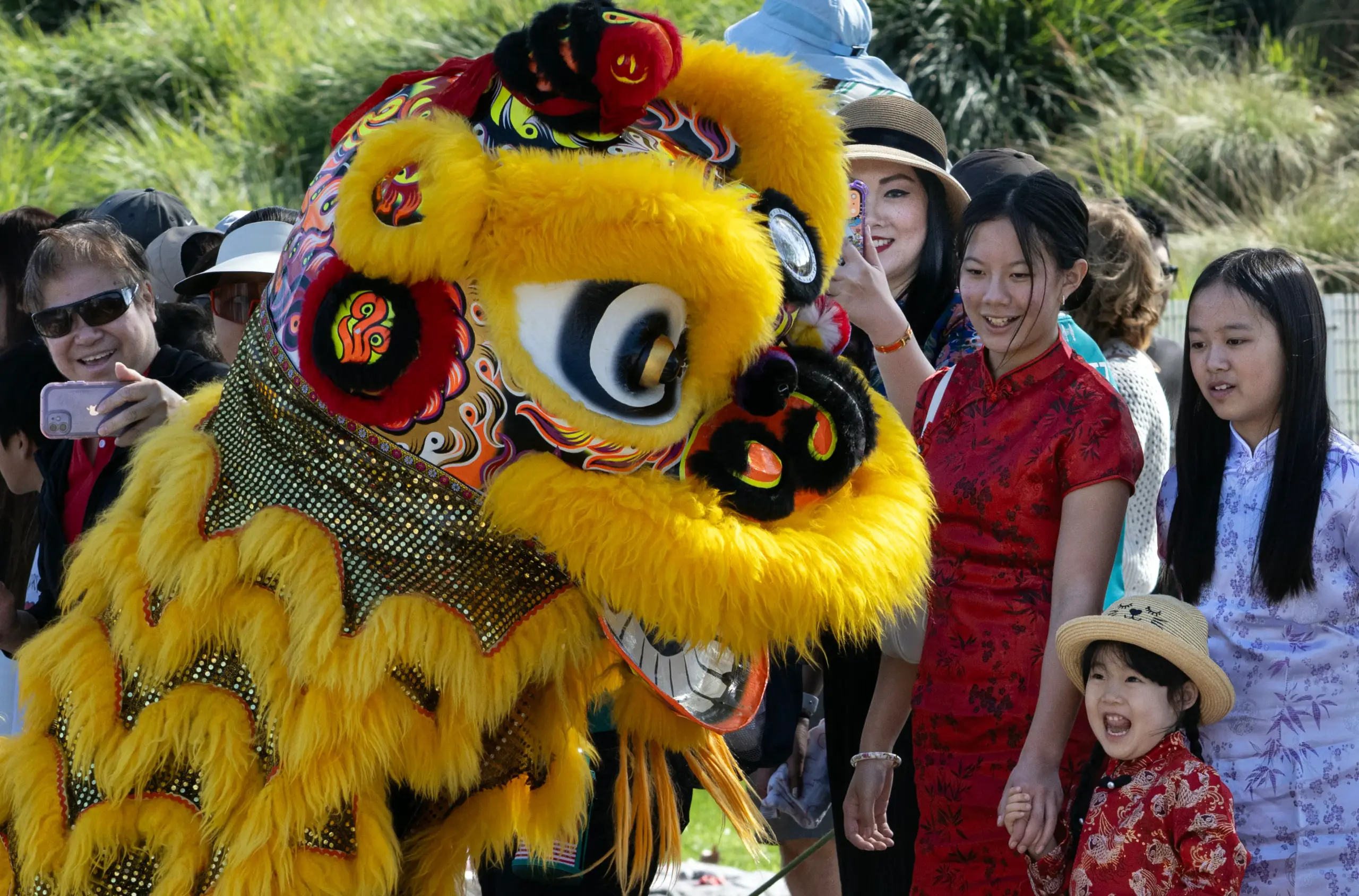
An envisioned Asian American Museum is making headway in its development plan, and project leaders are building community support through a series of public forums, cultural celebrations and local gathering events.
Read more Disneyland closes bathrooms and restaurants due to low water pressure
The expansive museum is set to find its home at the Irvine Great Park over the course of the next decade. This project — encapsulating a broad range of historical archives, educational initiatives and cultural events — is expected to be the first of its kind across the nation.
“We’re creating a physical anchor that says, ‘Hey, we as Asian Americans have a history here. We contributed to the building of this country,’” Executive Director Jack Toan said. “We’ve contributed in many ways — not only through art, culture, technology, but also infrastructure. We belong here, and this is a physical representation of our belonging.”
Irvine is home to nearly 200,000 Asian residents — roughly 44.8% of the city’s population, according to the U.S. Census Bureau’s 2021 report. Toan, who spearheads the museum’s operational team, said he and other project leaders are excited to spotlight the underrepresented stories buried within the city’s largest ethnic community. The project’s focus on diversity and inclusion across the Asian American community, he said, will make the museum a renowned cultural landmark.
Since the Irvine City Council greenlit plans for the 220,000-square-foot campus in June 2024, project leaders have been focused on building out the museum’s programs and acquiring the necessary funding to begin construction — around $75 million for Phase I of a proposed three-phase plan — which they hope to break ground on in the next five years.
The museum will join the Great Park’s Cultural Terrace, neighboring a relocated Pretend City Children’s Museum and Flying Leatherneck Aviation Museum — both of those are still in the early phases, too — and feature 94,000 square feet of exhibition space, a 125,000-square-foot sculpture garden and plaza and a 300-seat theater. The museum will have designated areas for community gatherings, galleries and a number of incubator kitchens intended to kickstart new Asian food businesses.
The Asian American Museum will highlight a diverse range of Asian ethnic communities and their distinct histories across the United States and Asia, Toan said. Project leaders are also interested in exploring cultural history unique to Southern California and Orange County, where 33% of the population identifies as Asian American or Pacific Islander.
“We’re Asian, but we’re also American, and this is our place that we can be proud of — this is where our heritage can be preserved,” Toan said.
Working with fellow historical institutions such as the Wing Luke Museum in Seattle, the Japanese American National Museum in Los Angeles and the Arab American National Museum in Dearborn, Michigan, to define the museum’s focus, Toan said the team plans to display histories that haven’t yet received national recognition, while collaborating with other organizations to establish collections that are in conversation with each other.
Read more Wildfires near Bordeaux bring more troubles to France’s wine industry
It’s also about making Asian American history more accessible across generations — one of the planning committee’s main objectives is to provide a space for visitors, particularly children, to be immersed in the art and history through various forms of media, Toan said. The museum’s education committee comprises several Asian American Studies professors, historical experts and educators across all levels of learning who will develop programs that cater to every age group. The committee also hopes to collaborate with local schools to make the museum’s content more accessible to students.
Speaking as a community member, Irvine Unified school board President Jeff Kim said he hopes students will play a role in the development and future of the museum.
“I would love for students to know their own story, to have a space where they can tell their story (and) listen to each other’s stories with empathy,” Kim said. “For a person to know their story — it’s powerful. In order for a tree to grow tall, you have to know your roots, and for students to know their roots and see the interconnection between one another — we can create a greater sense of belonging.”
The team is also prioritizing input from local community members. At a community listening tour hosted at the Advancing Justice Southern California office in Anaheim on July 28, attendees spoke with Toan and other members of the planning committee about their hopes for the museum. From mahjong tournaments to DIY cultural craft lessons, community members voiced their interest in programs that foster intergenerational and multiethnic connection. For supporters such as Irvine resident Aarti Chopra, the museum’s mission is a critical step toward preserving the narratives of earlier generations of Asian immigrants, while featuring stories that celebrate their legacy in America.
“Watching the older, first generation of Indian Americans and immigrants pass on … is a loss of history — no one is telling these stories,” Chopra said. “This Asian American Museum is absolutely going to be the perfect platform to tell the vast (and) global Indian diaspora experience.”
Chopra, who founded the local nonprofit Be Sanskriti Legacy, was born in England and grew up between India, the East Coast and Irvine, where she now lives. Chopra shares this transnational and multicultural background with many other Indian Americans, and it encompasses the diaspora stories that she hopes will be shared at the Asian American Museum.
As the project gains momentum, Toan stressed the importance of building and maintaining strong community foundations. The Asian American Museum will continue to host community-centered gatherings, such as its Rooted in Flavor culinary experiences, as well as other events in partnership with the city, such as the Lunar New Year Festival.
The Asian American Museum will host its second community listening tour at the Japanese American National Museum in Little Tokyo on Aug. 11, followed by another Rooted in Flavor exhibition exploring Filipino cuisine at the restaurant Terrace by Mix Mix on Aug. 23. Until the project achieves its funding goals, Toan said strengthening ties among the Asian American community and its allies across Orange County is vital.
Read more Cyclospora boosts fears that worse foodborne outbreaks are ahead
“We want this to be a museum that belongs to our community,” Toan said.