
Californians’ voting rights just got a booster shot.
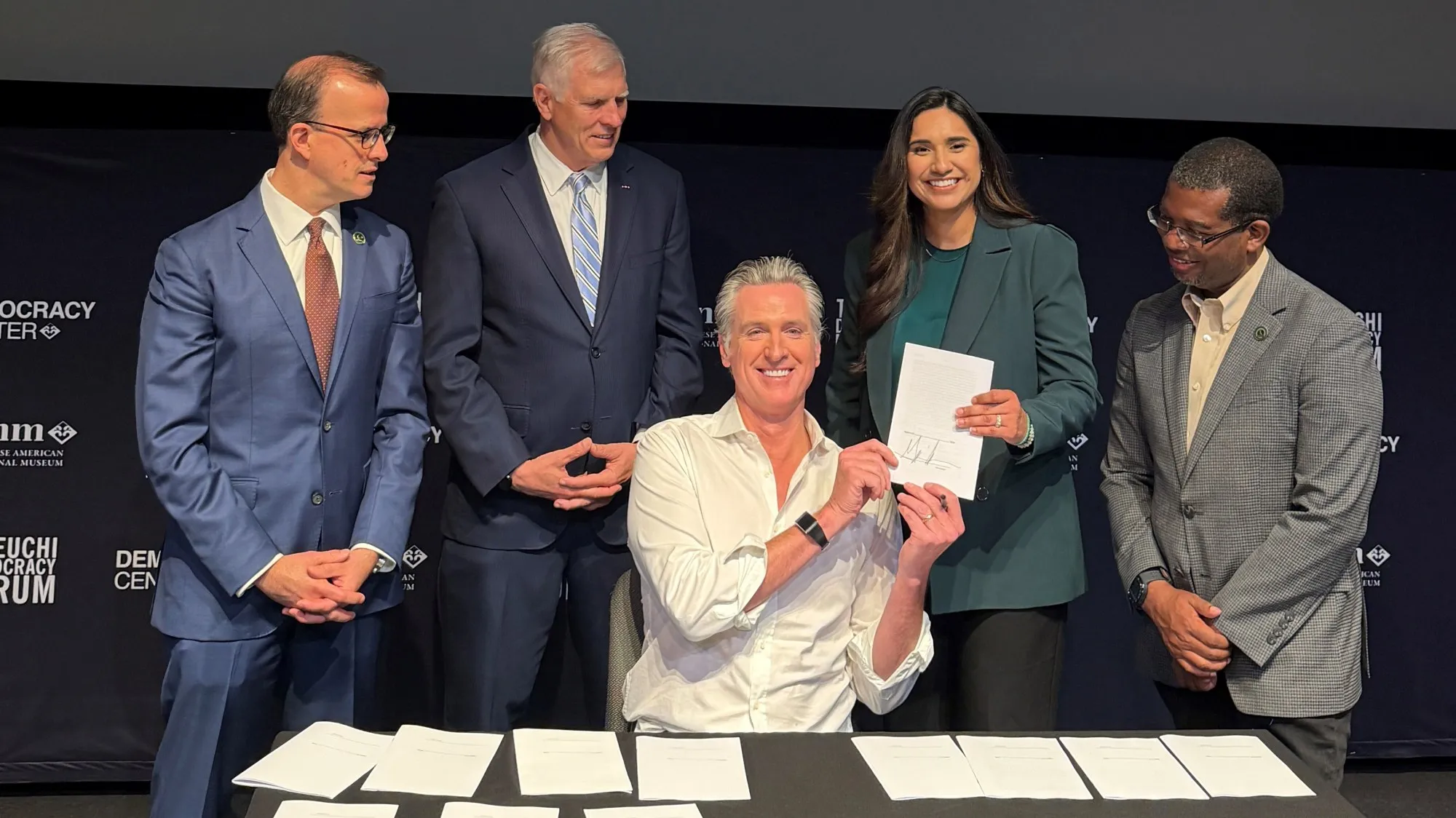
Gov. Gavin Newsom late last week signed three bills from Democratic Southern California state senators intended to shield state elections from interference.
Read more Flock cameras controversy set for Senate hearing
The bills are not-so-subtle jabs at President Donald Trump.
The president’s foes fear Trump, who has made repeated false claims about voter fraud, will try to disrupt the Nov. 3 midterm elections, which are expected to go badly for Trump’s fellow Republicans and possibly hand Democrats control of Congress.
“Voters want their voices heard, they want their votes to count, and they want free and fair elections,” Sen. Sabrina Cervantes, D-Riverside, who sponsored SB 1164 and SB 1360 — also known as the California Voting Rights Act of 2026 – said in a news release.
“The California Voting Rights Act of 2026 is part of the solution to protect the sacred right to vote while addressing the continued actions to dismantle our democracy by the federal administration,” she added.
Also over the weekend, Newsom signed legislation from Sen. Tom Umberg, D-Santa Ana, that aims to deter voter intimidation by barring law enforcement officials from making arrests in and around polling places on Election Day.
The law, dubbed the Protect Our Polls Act, is intended to limit actions by federal agents, including Immigration and Customs Enforcement officers, near polling places on Election Day, according to Umberg’s office.
“Today, we are sending a clear message to President Trump: Hands off our elections,” Umberg said in a news release. “California will protect its voters and exercise its constitutional authority to run safe and secure elections.”
The White House didn’t respond to requests for comment by deadline.
Umberg’s bill allows county election officials to keep polls open longer if a prohibited immigration enforcement operation disrupts voting at the polling place. County election officials are also able to extend the area around polling places where electioneering activities are prohibited, from 100 feet up to 200 feet.
Those prohibited activities include asking voters to cast ballots for or against any candidate or ballot measure; displaying a candidate’s name, image or logo, or wearing any clothing that includes such information; blocking access to drop boxes or loitering around them; circulating petitions, initiatives, or nomination papers; and displaying information or speaking to voters about a voter’s eligibility to vote, according to the secretary of state’s office.
The bill requires law enforcement officers to notify the secretary of state’s and the attorney general’s offices of “suspected, planned, or actual violation of the prohibitions on arrests or electioneering activities near polling places.”
Newsom said in a news release that laws like this one will help California stop Trump’s attempts to “exert dictatorial control over your free vote and disenfranchise millions of people this November.”
“We have no bigger task than fighting to protect the right to vote from interference and meddling — the future of democracy is on the line. These bills today build upon the wall California has built to safeguard our electoral process,” he said.
Read more Nneka Ogwumike and Sparks looking to test themselves against Las Vegas
Building upon a 2001 voting rights law, Cervantes’ bills respond to recent Supreme Court decisions derided by critics as demolishing federal voter protections, especially for people of color. In April, the court restricted the scope of the federal Voting Rights Act by striking down majority-Black congressional districts in Louisiana.
Cervantes’ bills enshrine federal voter safeguards into state law. For example, it would allow voters to go through state courts — not just federal courts — to enforce voting rights.
The bills also outlaw political maps “that weaken or silence the voting power of communities of voters,” according to an earlier press release from Cervantes’ office. Local governments “with a recent history of engaging in voter discrimination would need the state attorney general’s permission before changing voter policies or practices.
The bills also bolster voters’ rights to ballots and election materials in their native languages.
The bills from Umberg and Cervantes were first introduced in late February, weeks after Trump called for Republicans to “nationalize” elections in the U.S. and said on a podcast that Republicans should take over the voting in “at least as many” as 15 places, although he did not specify where.
Around that time, a Department of Homeland Security official said that immigration agents would not be stationed at polls during the November election.
Former White House Press Secretary Karoline Leavitt said the president was referring to the SAVE Act, federal legislation being debated by lawmakers in Washington that would impose strict new proof of citizenship requirements on voters ahead of the midterm elections. Still, the president’s comments have concerned elections officials on both sides of the aisle.
Besides OK’ing bills on voting rights, Newsom signed Cervantes’ SB 1418, which extends chain-of-custody protections for marked ballots to other kinds of election records.
The bill is a response to Riverside County Sheriff Chad Bianco’s seizure earlier this year of more than 650,000 ballots cast by his county’s voters in the 2025 Proposition 50 special election.
Bianco seized the ballots as part of what he described as a criminal investigation into an alleged 45,000-vote gap between the number of ballots cast and the number of ballots received by Riverside County’s registrar of voters.
Registrar of Voters Art Tinoco has said the gap is just 103 votes — well within the acceptable margin of error set by California’s Secretary of State. The ballot seizure led to an attorney general lawsuit that reached the California Supreme Court. A ruling is pending.
Read more Polo has rapidly intensified to a hurricane and is expected to impact Mexico