
At a chemistry lab at Cal State Fullerton, two students and their professor huddle around a tiny plastic jar containing a precious substance: dirt.
Read more When a friend becomes a caregiver
It may not look like much, but this dirt might hold an explanation for what’s been making people sick in Ladera Ranch, where a string of children have been diagnosed with Ewing sarcoma, a rare form of cancer.
This particular sample was collected from Boreal Plunge Park in Ladera Ranch, but water and soil samples also were taken from Wagsdale Dog Park and Town Green. The researchers plan to perform air quality tests as well.
Three professors in the Department of Chemistry and Biochemistry — Daniel Curtis, Paula Hudson, and Stevan Pecic — are leading this initial phase of a voluntary research project at Cal State Fullerton, with about a dozen undergraduate students assisting.
Curtis is examining the presence of heavy metals, such as lead, arsenic and chromium, in the water and soil. At certain levels, these toxins are linked to cancer. Commonly used pesticides used to contain harmful substances, including arsenic and lead, and although those have been phased out of use, they persist in the soil, Curtis said. Also, in the early 1900s, ranchers engaged in a process called cattle dipping, which involved having cows walk through vats of arsenic to rid them of cattle fever ticks, though it’s unknown where these vats were located.
Hudson is looking into the persistence of more modern pesticides. Pecic is studying how bacteria present in the soil might convert innocuous compounds into potentially toxic chemicals. Getting a variety of researchers involved allows them to “attack from every angle,” Pecic said.
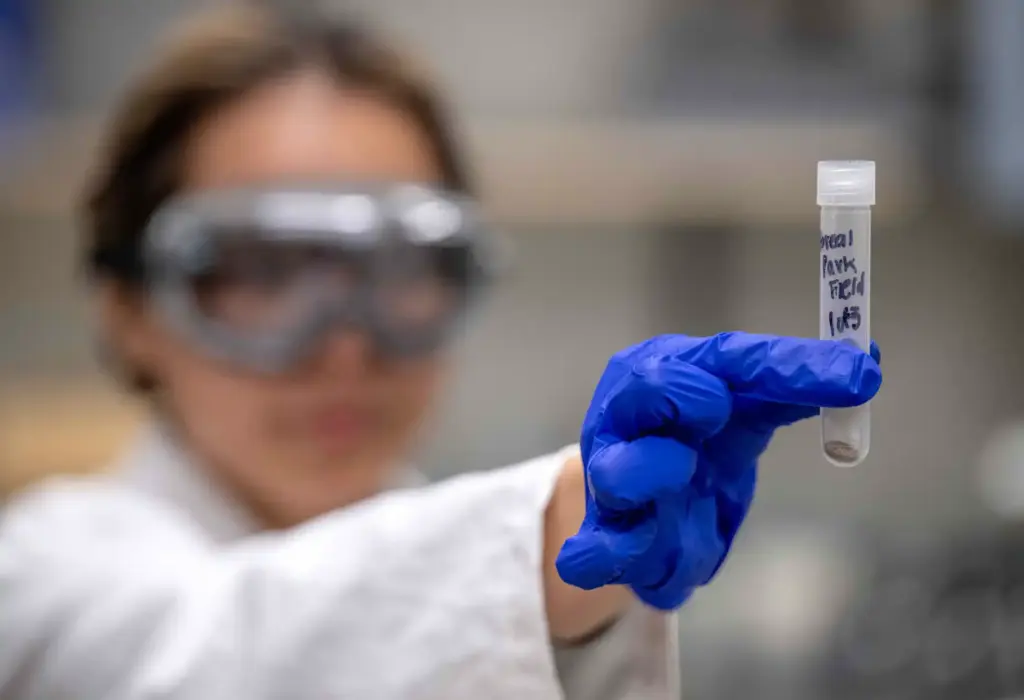 Angela Escamilla, a 4th year biochemistry major at Cal State Fullerton, holds up a sample of powderized soil in a vile, collected from Boreal Park in Ladera Ranch, as she and other researchers help investigate what might be causing a cluster of the rare cancer Ewing sarcoma in the South Orange County community, in a chemistry lab at the school in Fullerton on Wednesday, September 23, 2026. (Photo by Jeff Antenore, Orange County Register/SCNG)
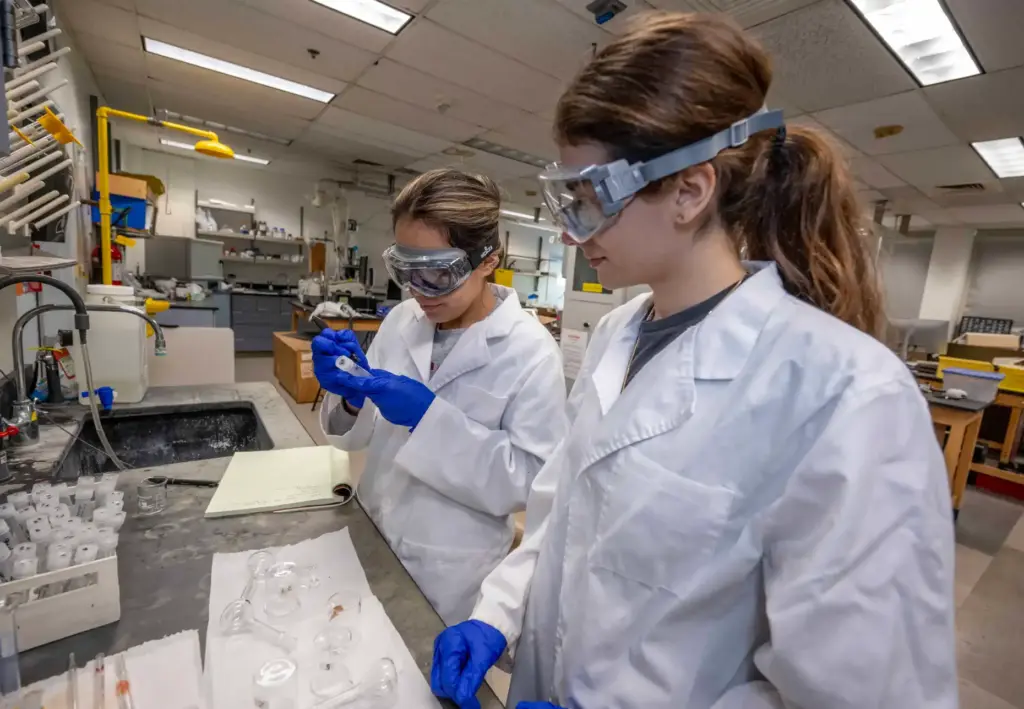 Cal State Fullerton biochemistry students Anita Abazi, right, and Angela Escamilla, work in a lab at the school to test a soil sample, previously collected from a park in Ladera Ranch, for traces of the heavy metal arsenic as they help investigate a possible culprit for a cancer cluster in the South Orange County community in Fullerton on Wednesday, September 23, 2026. (Photo by Jeff Antenore, Orange County Register/SCNG)
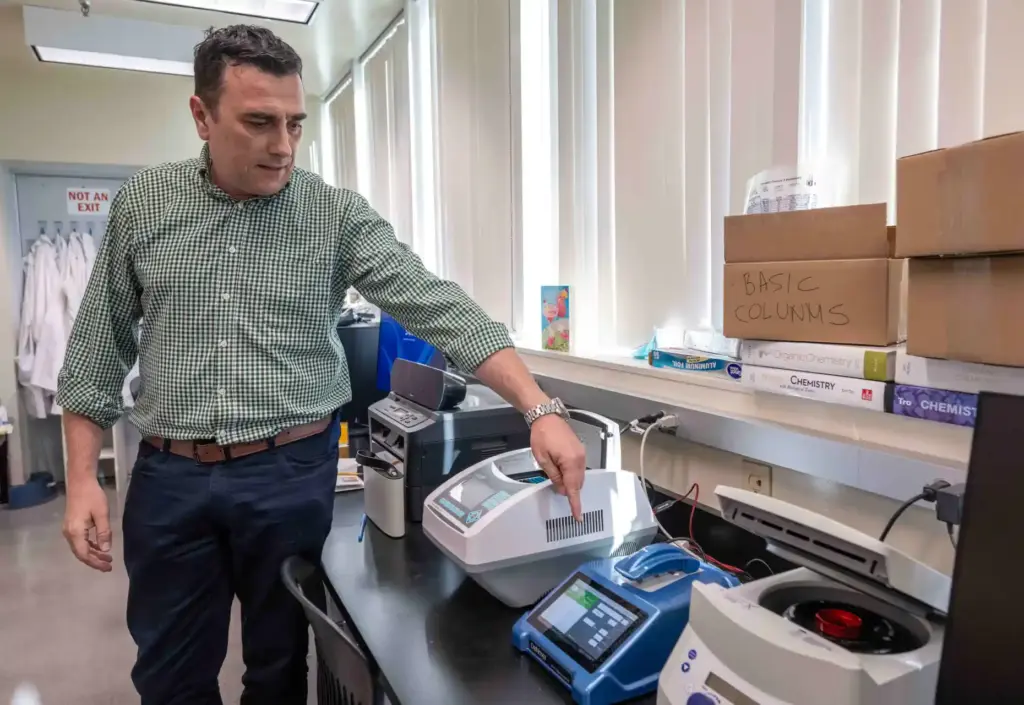 Cal State Fullerton Chemistry and Biology Professor Stevan Pecic, one of the researchers helping to test soil and water samples collected from parks in Ladera Ranch as they search for a potential culprit causing a cluster of the rare cancer Ewing sarcoma in the South Orange County community, discusses some of the high-tech equipment students are using in his biochemistry lab to do the testing in Fullerton on Wednesday, September 23, 2026. (Photo by Jeff Antenore, Orange County Register/SCNG)
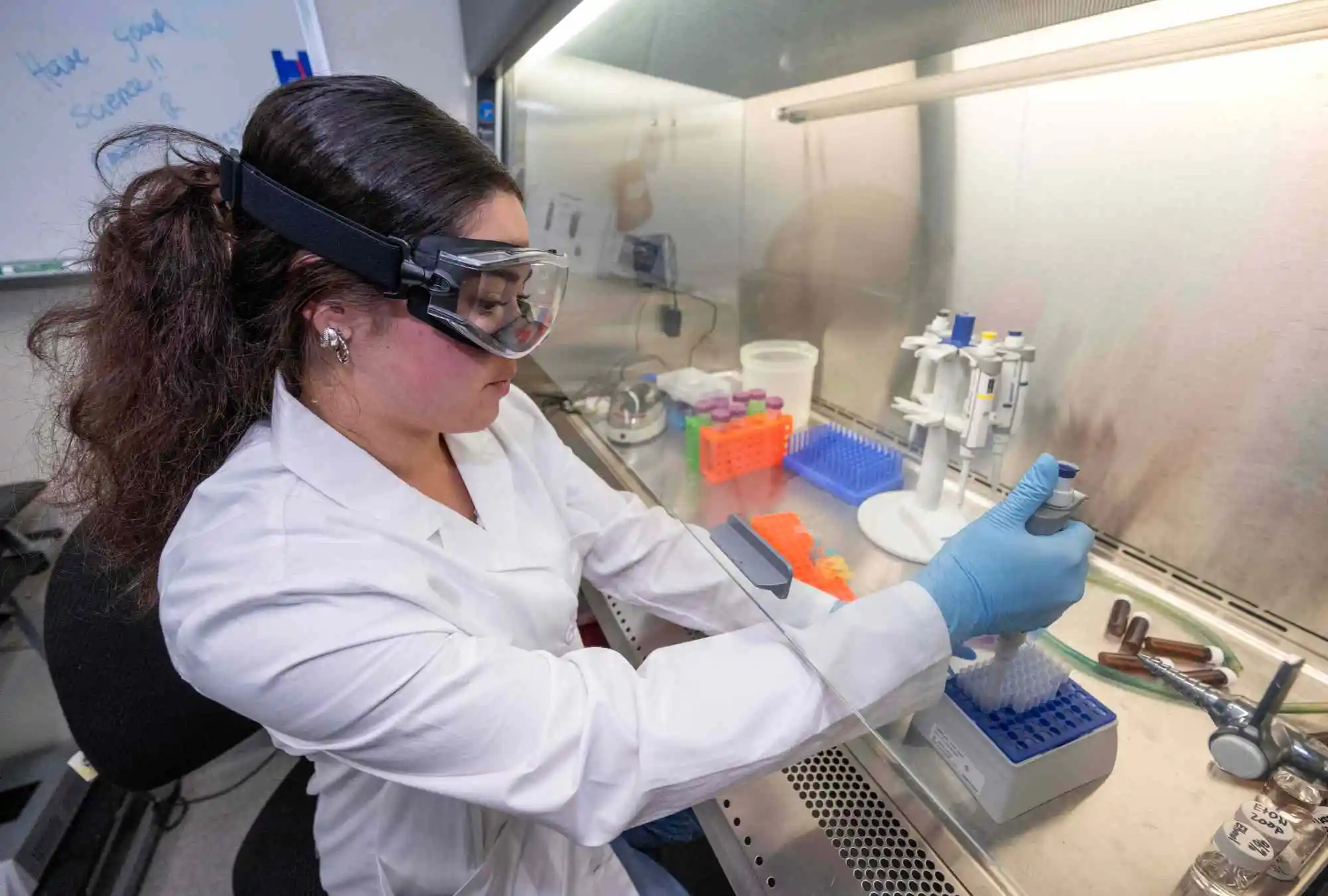
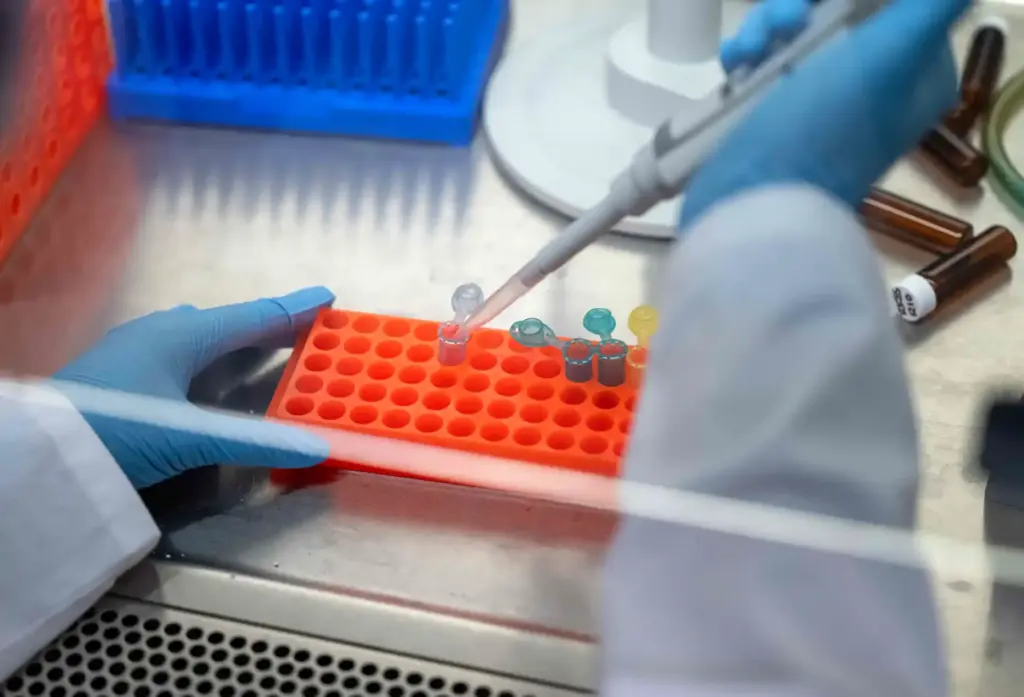 Sydney Clemens, a 3rd year biology major and pre-med student at Cal State Fullerton, works in a bacteria hood as she uses a micropipette to test a soil sample, collected from a park in Ladera Ranch, for various bacterias as she and other researchers help search for a culprit causing a cluster of the rare cancer Ewing sarcoma in the South Orange County community in a biochemistry lab at the school in Fullerton on Wednesday, September 23, 2026. (Photo by Jeff Antenore, Orange County Register/SCNG)
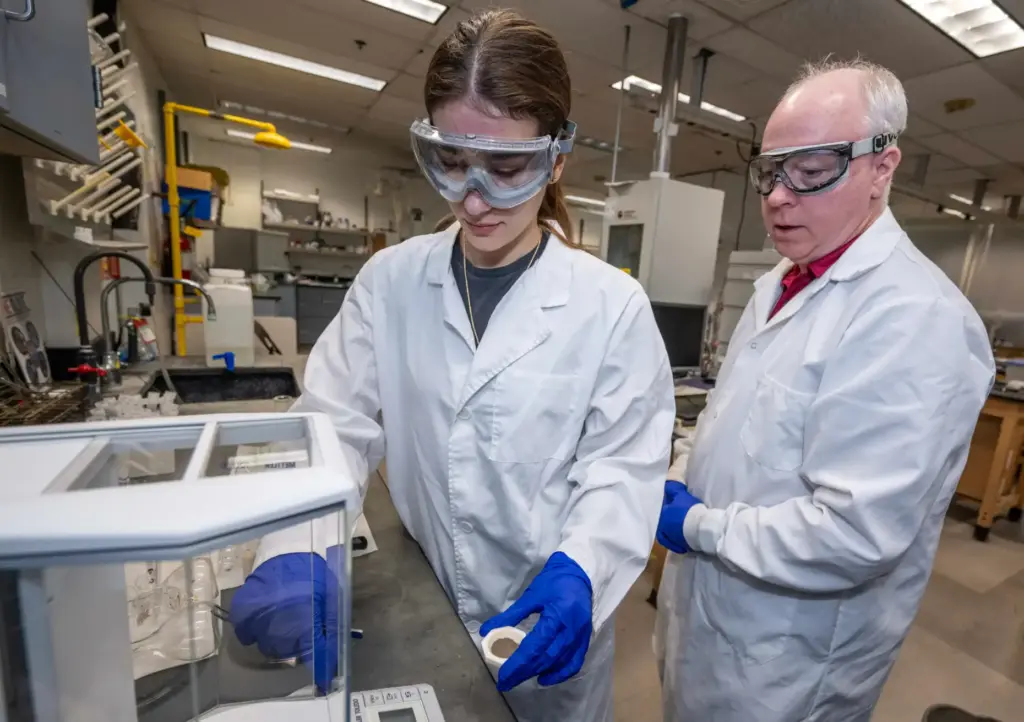 Cal State Fullerton Chemistry Professor Daniel Curtis looks on as his student, Anita Abazi, a 4th year biochemistry major, tests a soil sample, collected at a park in Ladera Ranch, for levels of the heavy metal arsenic, as they investigate a possible culprit for a cancer cluster in the South Orange County community in a chemistry lab at the school in Fullerton on Wednesday, September 23, 2026. (Photo by Jeff Antenore, Orange County Register/SCNG)
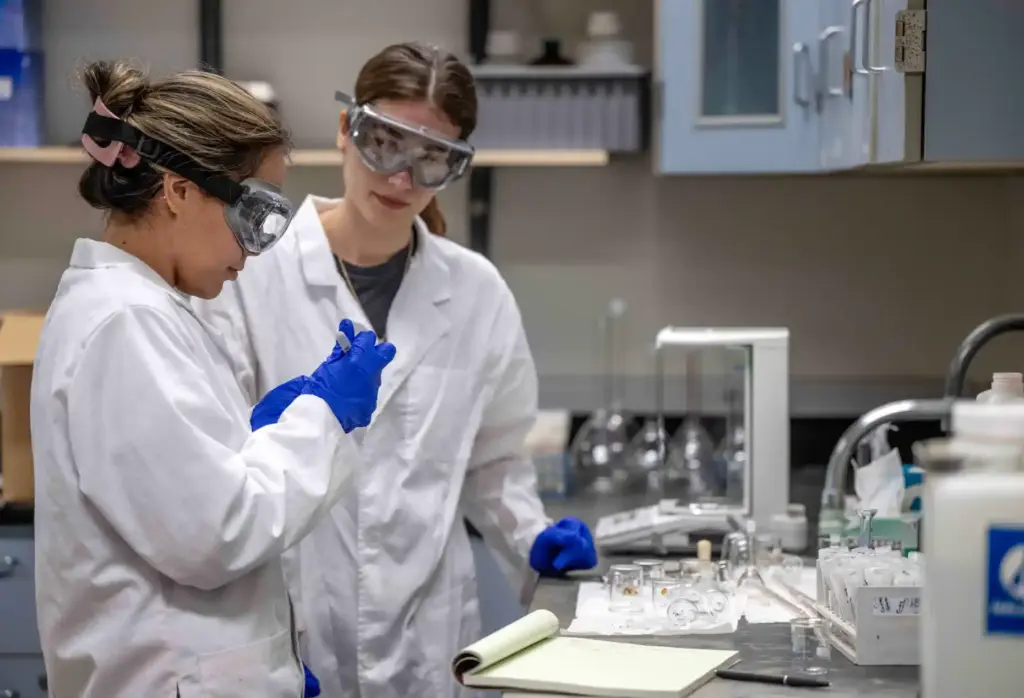 Cal State Fullerton biochemistry students Angela Escamilla, left, and Anita Abazi, work in a lab at the school to test a soil sample, previously collected from a park in Ladera Ranch, for traces of the heavy metal arsenic as they help investigate a possible culprit for a cancer cluster in the South Orange County community in Fullerton on Wednesday, September 23, 2026. (Photo by Jeff Antenore, Orange County Register/SCNG)
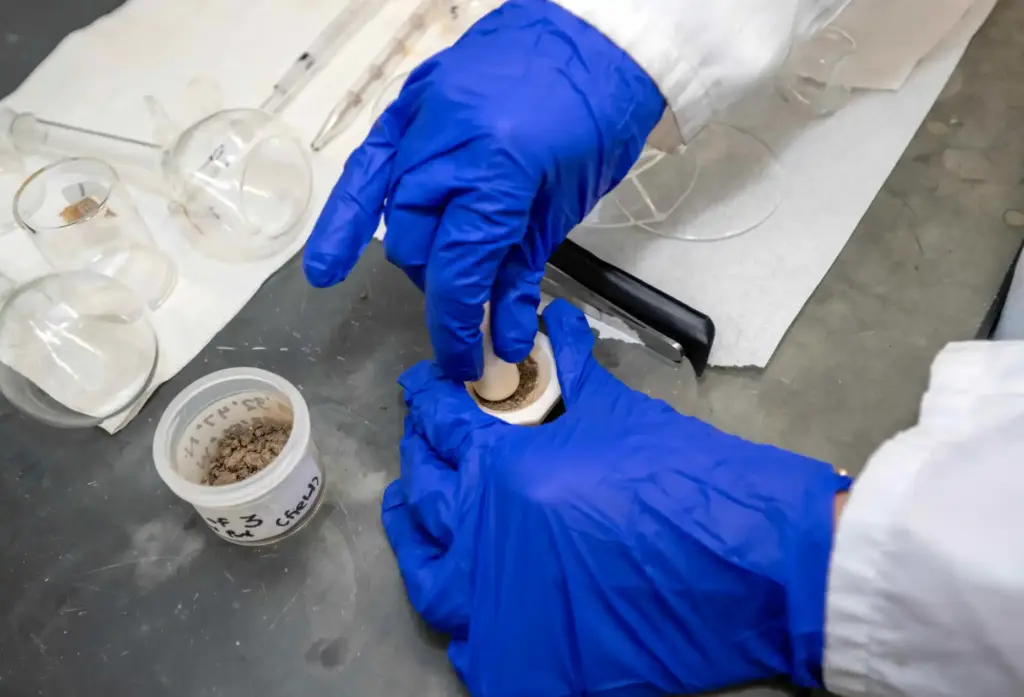 Anita Abazi, a 4th year biochemistry major at Cal State Fullerton, grinds up a soil sample, collected from a park in Ladera Ranch, as she and others investigate a possible culprit for a cancer cluster in the South Orange County community in a chemistry lab at the school in Fullerton on Wednesday, September 23, 2026. (Photo by Jeff Antenore, Orange County Register/SCNG)
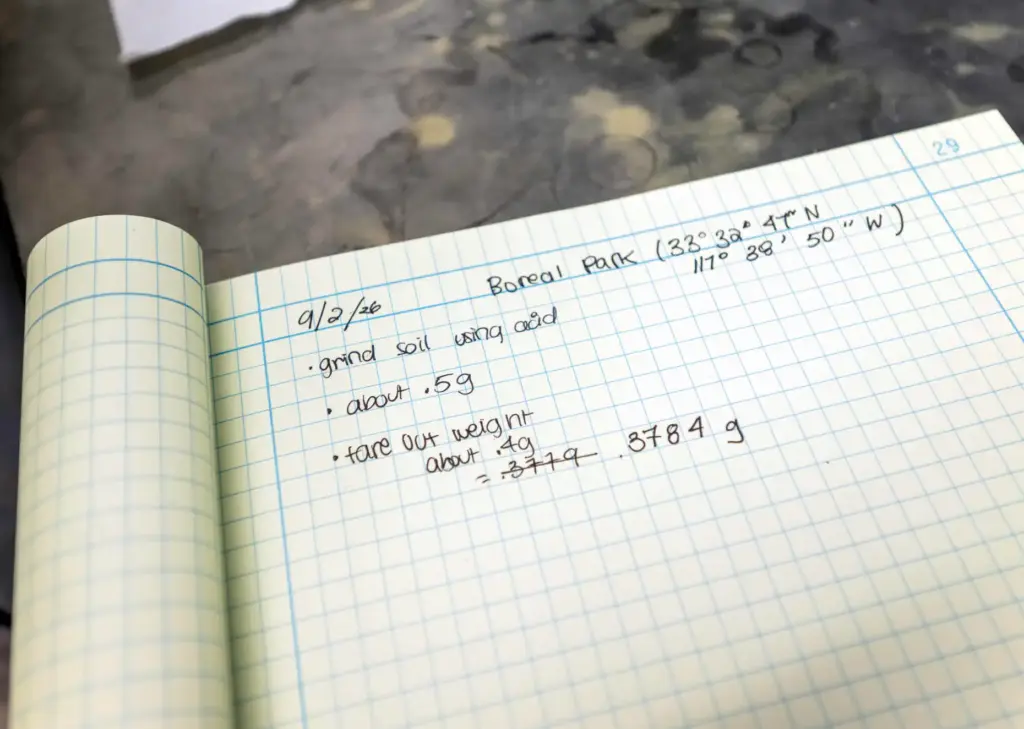 Scribbled notes in a notebook delineate the procedure for testing soil samples for heavy metals, like lead and arsenic, as researchers and students investigate what might be causing a cluster of the rare cancer Ewing sarcoma in Ladera Ranch in a chemistry lab at Cal State Fullerton on Wednesday, September 23, 2026. (Photo by Jeff Antenore, Orange County Register/SCNG)
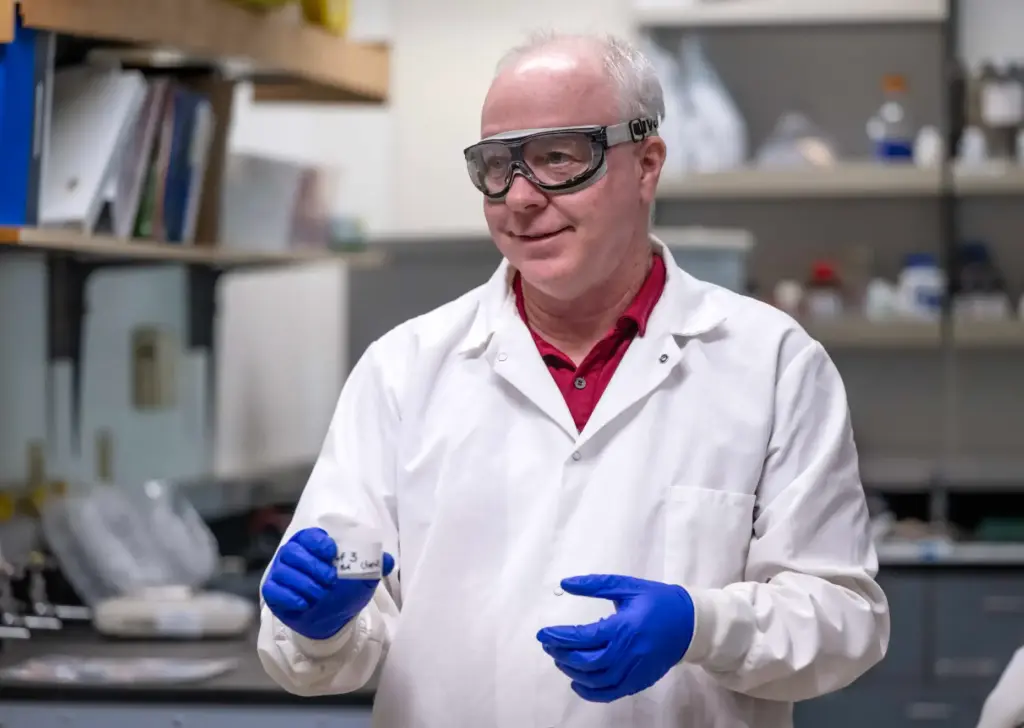 Cal State Fullerton Chemistry Professor Daniel Curtis instructs his students as they prepare to test soil samples they previously collected from parks in Ladera Ranch as they investigate a possible culprit for a cancer cluster in the South Orange County community in a chemistry lab at the school in Fullerton on Wednesday, September 23, 2026. (Photo by Jeff Antenore, Orange County Register/SCNG)
The samples will be compared with others collected from communities around Orange County, including soil from Cal State Fullerton’s campus and from Anaheim.
In Curtis’ lab, the students dry out the soil in an oven at 60 degrees Celsius, then they grind it into smaller bits with a mortar and pestle. They measure out less than half a gram of dirt, which is then mixed with acid, which will dissolve the metals present in the soil. This process allows the team to measure how much metal is present in the acid mixture.
“We don’t want to find anything, to be honest,” Curtis said. “We don’t want there to be pollution there. But if it is there, this would tell us pretty quickly.”
The researchers are careful to point out that nothing they might find will determine causation. There has been little research on Ewing sarcoma, and there are no known environmental causes of the disease, according to the American Cancer Society.
“We’re all very cautious about causality, but we certainly can start showing associations and correlations,” said Jennifer Piazza, a CSUF professor of public health and the scientific consultant for the group Ladera Health Watch.
Read more OC officials, nonprofit, schools work to help formerly incarcerated find jobs, purpose
But, the researchers stress, it’s important to know what’s out there. Their data could help inform the ongoing state-level investigation as well, Curtis said. The end goal is to publish a study on their findings, likely sometime in October.
“We’re just trying to figure out if there is something there,” Curtis said. “And that’s all we can do right now.”
More research to come
These tests are only the first phase of a much larger, likely multiyear scientific study, Piazza said. In total, seven professors from a variety of fields are planning research projects based in Ladera Ranch, including a geography professor who plans to look into mapping and historical land use and public health professors hoping to survey locals for bio-indicators of health.
“Right now we’re seeing soil and water samples, but this is one part of a much larger scientific investigation,” Piazza said. “We’re just slowly trying to figure out this puzzle, piece by piece.”
The first phase, which includes environmental testing and preliminary historical mapping, likely will conclude by the end of the year, Piazza estimates.
Though this research can’t definitively prove that environmental issues are behind the rash of Ewing sarcoma and other cancers, it’s important to have the data, she said. “Decisions are made by communities every day,” Piazza said. “To make the most informed decisions about human health, we need data.”
Since 2007, as many as nine people, ranging from pre-teens to young adults in their early 20s, in Ladera Ranch have been diagnosed with Ewing sarcoma. At least two have died, including 17-year-old Brody Matteson, who passed away in March. Lilly Dalton died of Ewing sarcoma in January at 23 years old. She grew up in neighboring Laguna Niguel, but spent a lot of time in Ladera Ranch as a teenager.
When news first broke about the cancer cases, Piazza began reaching out to professors for help, but soon, more began reaching out to her.
“It’s a lot of Titans helping Titans,” said CSUF chemistry professor Paula Hudson, referencing the CSUF mascot.
For Piazza, this issue is personal — she’s lived in Ladera Ranch for about 10 years and raised a child there. “I care about this community, I’m a part of this community,” Piazza said. “These are neighbors of mine.”
Read more Trump’s golf tour takes him back to the Presidents Cup