
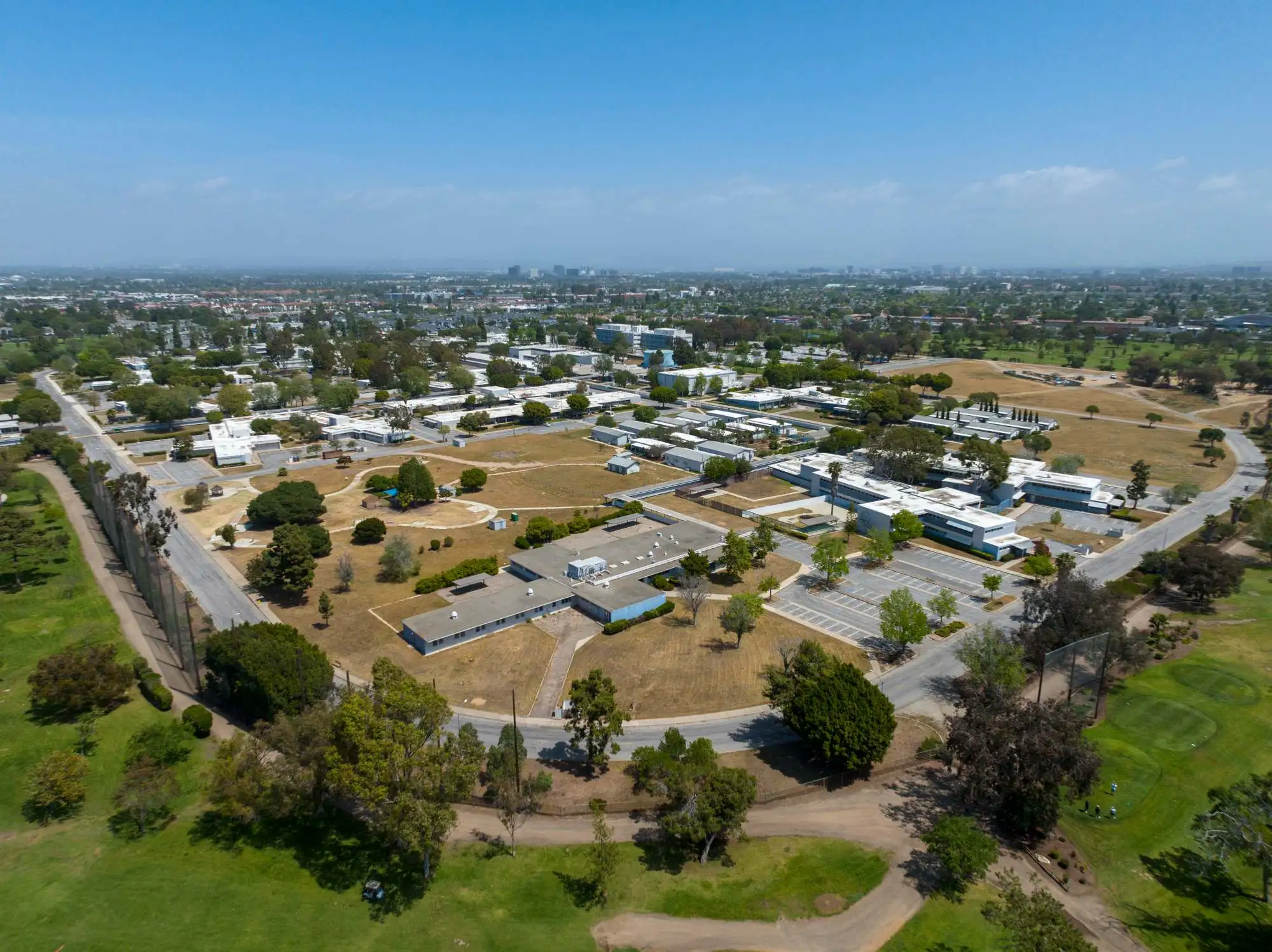
The Costa Mesa City Council has adopted a housing plan city officials believe is compliant with state law by identifying where and how 11,760 new homes can be built.
Read more Alexander: USC, UCLA in the Big Ten didn’t have to happen
Called a housing element, it is required to show how a city is planning for its share of new homes to help meet statewide needs, and now Costa Mesa leaders will ask state housing officials to sign off that the city is in compliance.
Attorney General Rob Bonta sued Costa Mesa and four other cities in July for failing to meet state-mandated housing goals. First submitted in 2022, Costa Mesa’s housing plan was rejected by state regulators who argued that the city had not “completed necessary rezones to make prior identified sites available.”
Despite unanimously approving an updated housing plan Tuesday, Sept. 1, to submit to the state, several councilmembers expressed ire with the state’s enforcement mechanisms and questioned whether the housing element law is the most effective way to boost development.
“I’m not voting on this with any tremendous confidence that it’s going to solve the problem,” Mayor John Stephens said at the meeting. “I’m not sure it’s the best way to go, but it’s the way that’s dictated to us.”
He criticized the so-called “RHNA methodology,” referring to the state-mandated process known as the Regional Housing Needs Allocation, which requires every city and county to plan for a specific amount of housing across all income levels in a given time frame.
“What is our realistic expectation when, if ever, any of these units are going to be built?” he asked of the options outlined in the new housing element. “Do we have a realistic expectation that they’re going to be built at any time in the near, moderate or distant future?”
The city’s planning officials noted that the housing allocation coastal cities like Costa Mesa are expected to plan for this decade is much higher than previous cycles.
“There’s absolutely a mismatch between the RHNA we’re expected to plan for and the reality of what actually gets developed,” senior planner Michelle Halligan said at Tuesday’s meeting. “All California jurisdictions are dealing with that difficulty as they implement really high RHNAs this cycle.”
Councilmember Andrea Marr questioned whether the housing identified in the plan could remain truly affordable for people who need it most.
“What incentives do developers have for building low-income housing?” she asked, adding that the city seems to be relying on large tax credits to draw affordable housing developers to “balance out what we expect to be mostly market rate housing.”
The housing element law requires cities to update their housing plans every eight years to zone for additional homes to alleviate the statewide housing shortage. The sixth housing element cycle, which lasts from 2021 to 2029, requires cities to collectively plan for 2.5 million homes statewide.
Read more High school football: Your guide to Friday night’s Week 2 games in SoCal
“I think our state has come up with a horrific scheme that’s impossible to implement,” Councilmember Mike Buley said, adding that the law strips cities of local control over housing.
Buley praised Huntington Beach for fighting against the state mandates. The city ultimately lost in court and adopted a plan in June to accommodate the construction of 13,000 new homes. It is also likely to face more than $160,000 in fines, though that is still to be decided by the courts.
“We’ve got a gun to our heads,” Buley said, referring to the state’s tactics for forcing compliance with RHNA. “Kudos to (Huntington Beach) for trying to push back, kudos to them for being a charter city.”
The cities aren’t responsible for housing construction; they just have to create the zoning environment and identify areas for developers to build.
Costa Mesa is required to plan for 11,760 new homes, 40% of which must be targeted for low- or very-low-income households.
The revised housing plan approved Tuesday updated the list of housing opportunity sites that could accommodate new residential development at a variety of income levels, in addition to incorporating environmental justice policies.
The Department of Housing and Community Development had informed Costa Mesa leaders in an Aug. 21 letter that the updated element would satisfy the “statutory requirements” of state housing law and can be certified, as long as the city completes the rezoning of the remaining sites, including the Fairview Developmental Center.
The City Council is expected to vote on a final land use plan for the Fairview Development Center on Sept. 15. The proposed density of the mixed-use development, which could include up to 4,000 new homes, has sparked resident concerns about traffic and strain on nearby neighborhoods.
Councilmember Manuel Chavez said that while a housing element “does not make housing appear,” it can be an important tool for ensuring that residents can work and start families in the city they love.
“There’s a way to create good neighborhoods while having density in your community,” he said. “We’re losing young people who make the city so great. The American dream seems to be not there because no one can afford homes.”
Read more Trump calls Iran conflict ‘small potatoes’ and says he agrees with Vance that it’s not a ‘war’