

 An animated Mira Farka, professor of economics and co-director of the Woods Center for Economic Analysis and Forecasting at California State University, Fullerton, is one of the main speakers during the 32nd annual economic forecast on Thursday, October 22, 2026 in the city of Irvine. (Photo by Karen Tapia / Orange County Register, SCNG
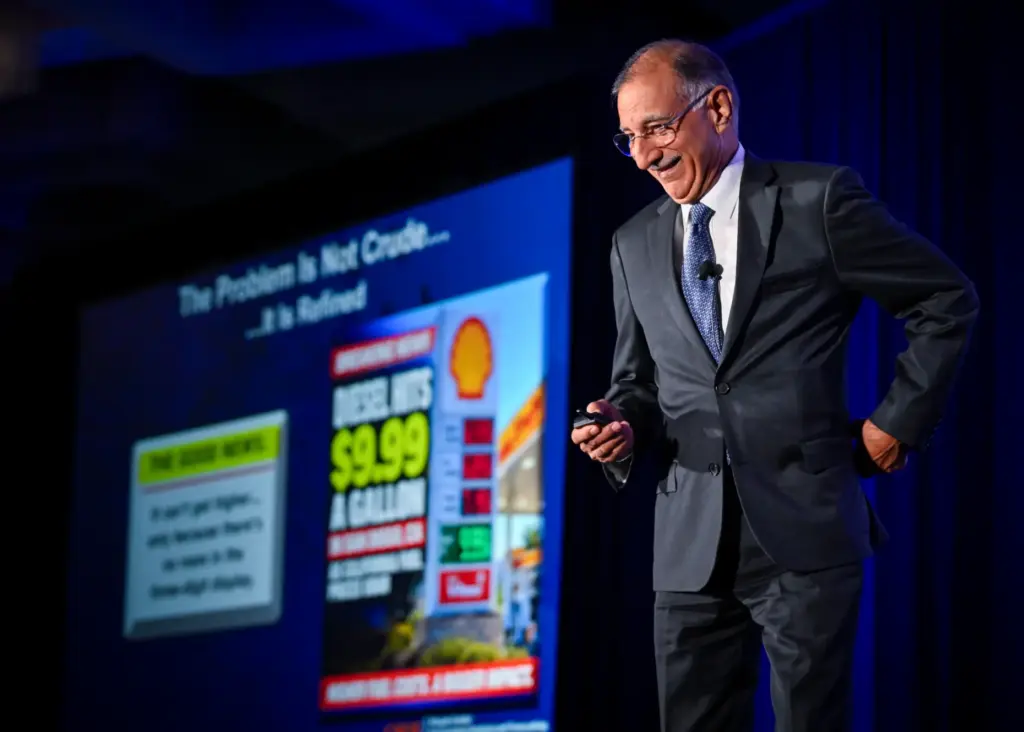 Anil Puri, economist and director of the Woods Center for Economic Analysis and Forecasting at California State University, Fullerton, speaks during the 32nd annual economic forecast on Thursday, Oct. 22, 2026, in the city of Irvine. (Photo by Karen Tapia / Orange County Register, SCNG)
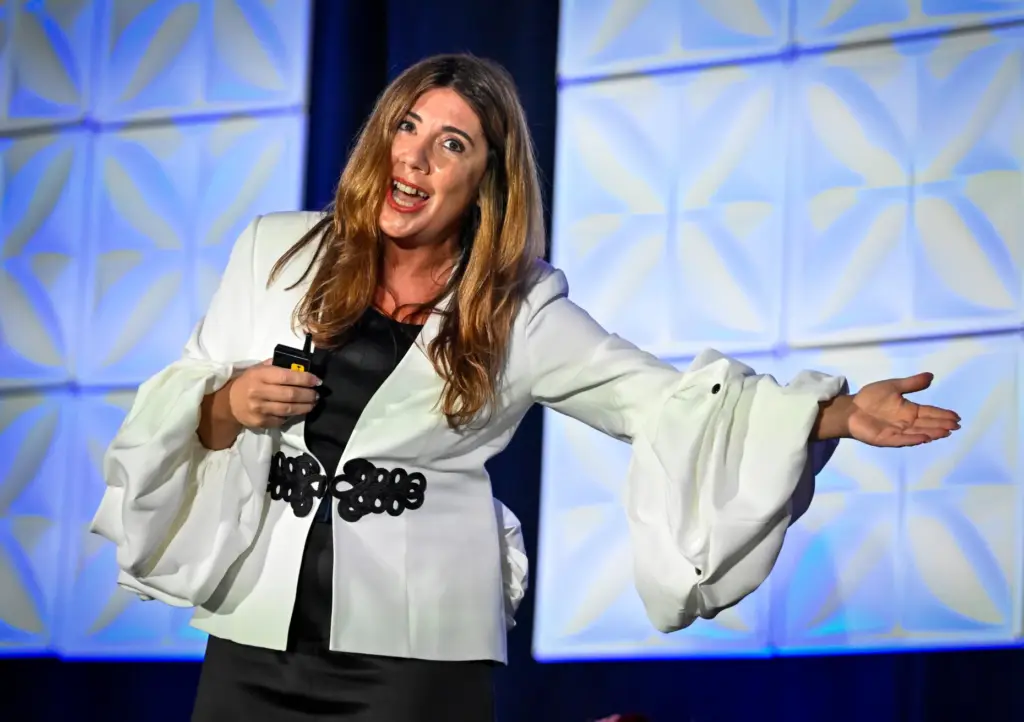 An animated Mira Farka, professor of economics and co-director of the Woods Center for Economic Analysis and Forecasting at California State University, Fullerton, is one of the main speakers during the 32nd annual economic forecast on Thursday, October 22, 2026 in the city of Irvine. (Photo by Karen Tapia / Orange County Register, SCNG
California’s economy, fueled by multibillion-dollar investments in artificial intelligence and defense spending, is outpacing the nation’s even as the state feels the sting from significant weakness in hiring and sliding consumer optimism, Cal State Fullerton economists said Thursday.
Read more Quest Diagnostics reports cyber breach affecting ‘certain patient records’
Anil Puri and Mira Farka said that they’re worried the Southern California jobs market in could suffer if it becomes overly concentrated in AI, especially if the technology boom turns into a bubble.
“I feel at the national level, we’re in balance with AI and jobs. But at the local level we’re imbalanced. There are a lot of jobs at risk,” Farka told the Southern California News Group. “At least 17% of the workforce in Orange County is at risk for disruption by AI. That’s going to create a shift in jobs rather than a replacement of jobs.”
Puri echoed Farka’s observation.
The sectors in Orange County that are most vulnerable to AI exposure are professionals, information technology, finance and insurance work, he said. “We do think about how we can protect the data or change the training for our workforce to meet that challenge,” Puri said.
Investments in technology are pushing up the state’s gross domestic product, but underneath all that growth lurks a trifecta of trouble: flat hiring, a frozen housing market and sour consumers.
And while evidence of an economic slowdown abounds, Farka said that talk of a U.S. recession is off the table because of the offsetting boost in tech and defense spending.
She cited California’s GDP, which grew 3.5% in the first half of 2026 compared with the same period a year ago, well ahead of the nation’s 2.4%.
The theme of CSUF’s 94-page economic forecast focused on AI’s effects.
Puri pointed out that AI now accounts for 37% of California’s growth, nearly double the share in 2023 and 2024 when it hovered around a fifth, and well above the 27% it accounts for nationally. The leap came in 2025, when AI’s share of the state’s growth doubled, he said.
Despite the state’s growth, rising interest rates, inflation and a stalled housing market have consumers turning gloomy about the future, the economists noted.
“The mood among American consumers has turned from sour to sullen,” they wrote in their forecast. “Sentiment has languished for almost the entire post-pandemic period, but some measures are now plumbing new depths.”
The U.S.-led war in Iran, now in its eight month, has disrupted global crude oil supplies through the Strait of Hormuz passageway in the Persian Gulf. About a fifth of the world’s crude oil that travels through the waterway has been largely halted, leading to historically high gas and diesel prices and inflation in the U.S.
Growing jitters among consumers showed up recently in the University of Michigan’s consumer sentiment index. The economic barometer fell to an all-time low of 44.8 in May, its first sub-50 reading in 74 years, and the four lowest readings ever have all come in the past six months.
While CSUF’s economists don’t foresee a recession, they do see growth slowing.
The federal government’s Bureau of Economic Analysis in late September said the nation’s GDP expanded at a 2.2% rate in the second quarter, down from 2.5% in the first quarter.
CSUF economists in their forecast expect more interest rate hikes in 2027 to help tame inflation caused by the oil price shock.
The U.S. Labor Department recently reported that inflation accelerated in September as gasoline and many other goods and services became more expensive. The consumer price index rose 3.7% in September compared with a year ago and was up from 3.4% in August.
Concerned about inflation, the Federal Reserve responded in September by raising its benchmark federal funds rate by a quarter-point to a target range of 3.75% to 4%. It was the Fed’s first rate increase in more than three years.
“The Fed has penciled in one more rate increase this year, followed by a long pause through 2027,” the economists said. “Markets are more hawkish still, pricing in roughly three to four additional hikes over the next year.”
Puri and Farka said they expect one more hike this year, followed by two in 2027.
Read more Sister of American held in Russia says he didn’t know he was being released until he saw US flag
Weak income
Another worry for the economists is disposable income, which they say is limping along at a 1.3% annual pace this year, down from 1.6% last year and less than half the 3.3% pace of 2024.
The nation’s wage hikes have fared worse, turning negative this year as prices picked up. Households are leaning on credit to fill the gap. Credit card balances have climbed to $1.26 trillion, up $54 billion from a year earlier.
Meanwhile, the savings rate has dropped to 4.1% of disposable income, the lowest since June 2022, when inflation was raging at 9%, and far below its pre-pandemic norm of 6.1%.
Personal savings have fallen below $1 trillion at an annual rate, some $200 billion less than a year ago and $400 billion below 2024 levels.
“The erosion in savings is concentrated at the bottom, among low income households,” the economists said. Only 31% saved anything, down from 35% a year earlier, and just 49% paid all their bills on time, down from 54%.
“For almost two years now, the labor market has been moribund, stuck in what might be called the Great Stasis: a low-hire, low-fire equilibrium in which few are hired, fewer are fired, and almost no one quits,” according to the economists.
“Sluggish hiring has been the hallmark of both the national and regional economies for two straight years,” they said.
“Job growth across Southern California’s three largest economies (Orange County, Los Angeles County and the Inland Empire) has slowed to a crawl, a fraction of its pre-pandemic pace,” according to the forecast.
Housing isn’t much better, the economists said.
“If the labor market is frozen, the housing market is an icy tundra,” they wrote.
The 30-year fixed mortgage rates hit 7.4% earlier this month, the highest in nearly three years and up from 6.3% a year earlier. On Thursday, Freddie Mac said the benchmark mortgage rates slipped to 7.32%. One year ago, the average rate was 6.19%.
Defense spending powers up
Amid the region’s stalled hiring, the defense industry is making strides.
Southern California’s aerospace and defense sector, which lost about half its jobs following an early-1990s peak, is growing quickly, driven by venture-backed, defense-tech and space startups clustered in coastal communities in Los Angeles and Orange County.
Orange County is at the heart of the revival.
Aerospace and defense employment in the county grew 8.4% in 2025, to about 22,600, according to the economists. The local industry stands to make even further gains as the Trump administration has proposed a record $1.5 trillion defense and national security budget for the current fiscal year, which began Oct. 1.
Local highlights
The Woods Center index of Orange County business sentiment — based on a quarterly survey of Orange County executives — found that inflation remains a top concern.
—Nearly half, or 48.1%, expect inflation of 3% to 3.5% by December. That’s up from 26.4% in the previous quarter, while 28.8% expect 3.5% to 4% and 9.6% expect it to top 4%. Only 13.5% expect it to ease between 2.5% and 3%, down from 18.9%. More than half of the surveyed firms plan to raise prices: 32.7% expect slight increases and 21.2% moderate ones. Another 44.2% plan to hold prices steady, and just 1.9% expect to cut them.
—Nearly all firms are using or planning to use AI, but only 9.6% use it extensively across multiple areas of their business. Another 34.6% use it regularly but only in selected areas, while more than half (51.9%) are still experimenting, using it sparingly or planning to deploy it within the next year. Just 3.8% have no plans to use AI.
—Roughly 88.5% expressed concern about passage of Prop 40 on the Nov. 3 ballot, a one-time 5% tax on billionaires. About 57.7% said they were very concerned passage could prompt high-income individuals and businesses to move investment or economic activity out of California, while 30.8% said they were somewhat concerned. Only 9.6% were not very concerned, and 1.9% were unsure.
Read more Metrolink cancels service Oct. 26-30 through south OC due to high tides