
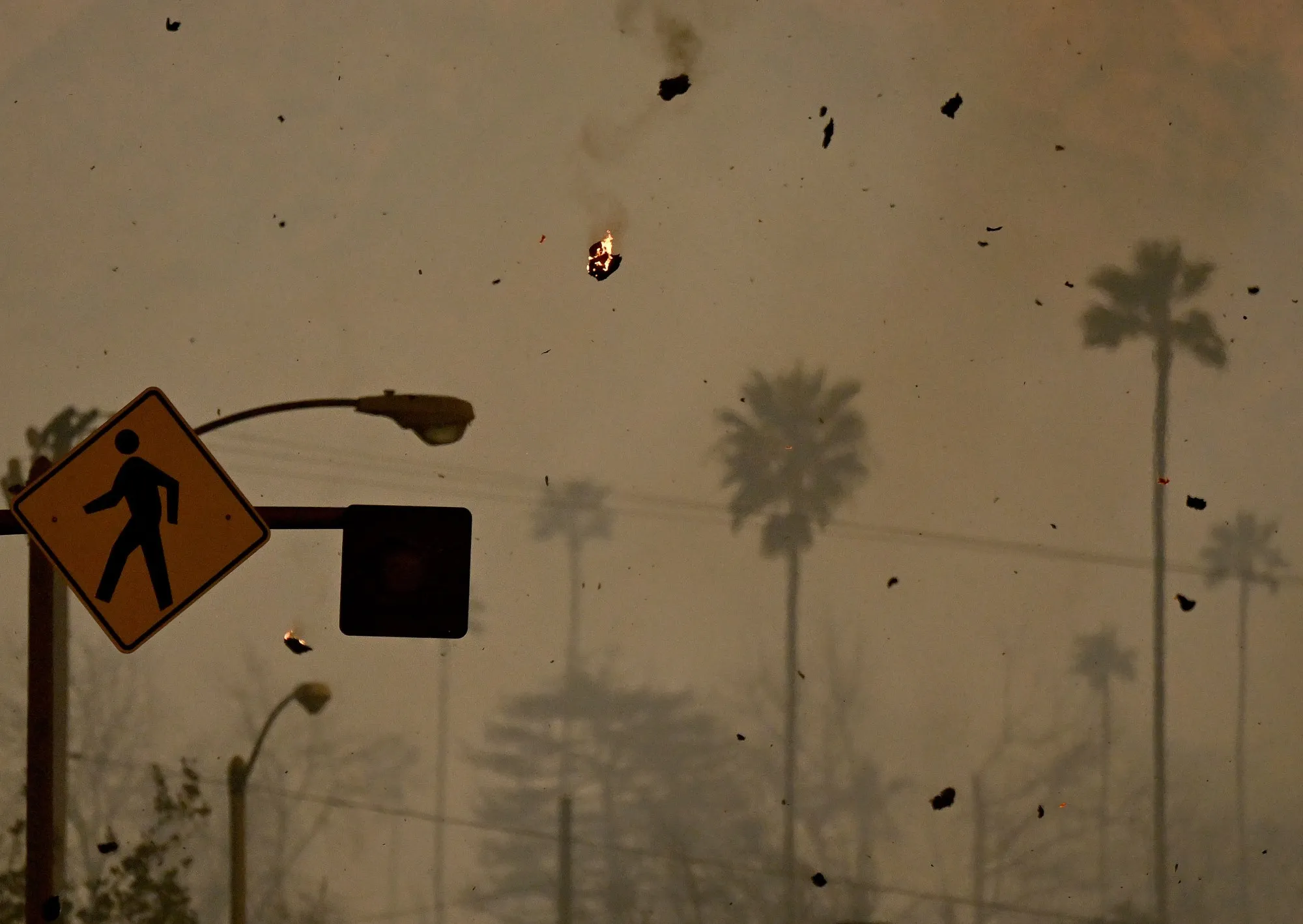
Smoke from the 2025 Eaton fire sent toxic airborne contaminants soaring downwind, including lead levels up to 250 times above normal, but pollution returned to background levels within roughly six days after the flames were extinguished, according to findings from a UCLA study announced Thursday.
Read more Horse racing: Santa Anita fall season will be fast out of the gate
Researchers found highly elevated levels of arsenic, chlorine, bromine and copper during active burning, but no evidence that toxic smoke or heavy metals lingered in the air, with pollution levels remaining normal for months afterward.
“As wildland-urban interface fires like what the LA region experienced in January 2025 become more frequent, this study helps us better understand the immediate risks posed by smoke from these kinds of fires to surrounding communities,” Suzanne Paulson, a UCLA professor of atmospheric and oceanic sciences and one of the study’s authors, said. “Still, there’s more work to be done to better understand the dynamics of how burning in urban environments versus wildlands affects the makeup of the pollutants in the smoke these fires produce.”
Researchers analyzed air-quality data from monitoring locations at UCLA and the South Coast Air Quality Management District‘s Huntington Park station, about 17 miles south-southwest of where the fire began. They combined the data with satellite fire tracking and wind models to distinguish fire smoke from everyday urban emissions.
The researchers said they could not clearly determine whether the contaminants came from burning wildlands or urban structures.
Read more Horse racing notes: Santa Anita puts wagering-menu changes in place
“Elements like lead, arsenic, zinc, bromine and chlorine are expected to be higher in smoke from urban fires, but we found that they persisted even when the fires shifted away from the urban areas and into the wildlands,” UCLA doctoral student and study co-author Catherine Banach said.
Banach said potassium, commonly used as an indicator of burning vegetation, did not correlate with increased smoke levels but instead with dust particles stirred up by winds.
“This drives home the complexity of these kinds of fires and the need for a better understanding of the area’s soils before using these indicators to assume the sources of their emissions,” she said.
Read more Ducks 2026-27 season preview: 8 games to watch