
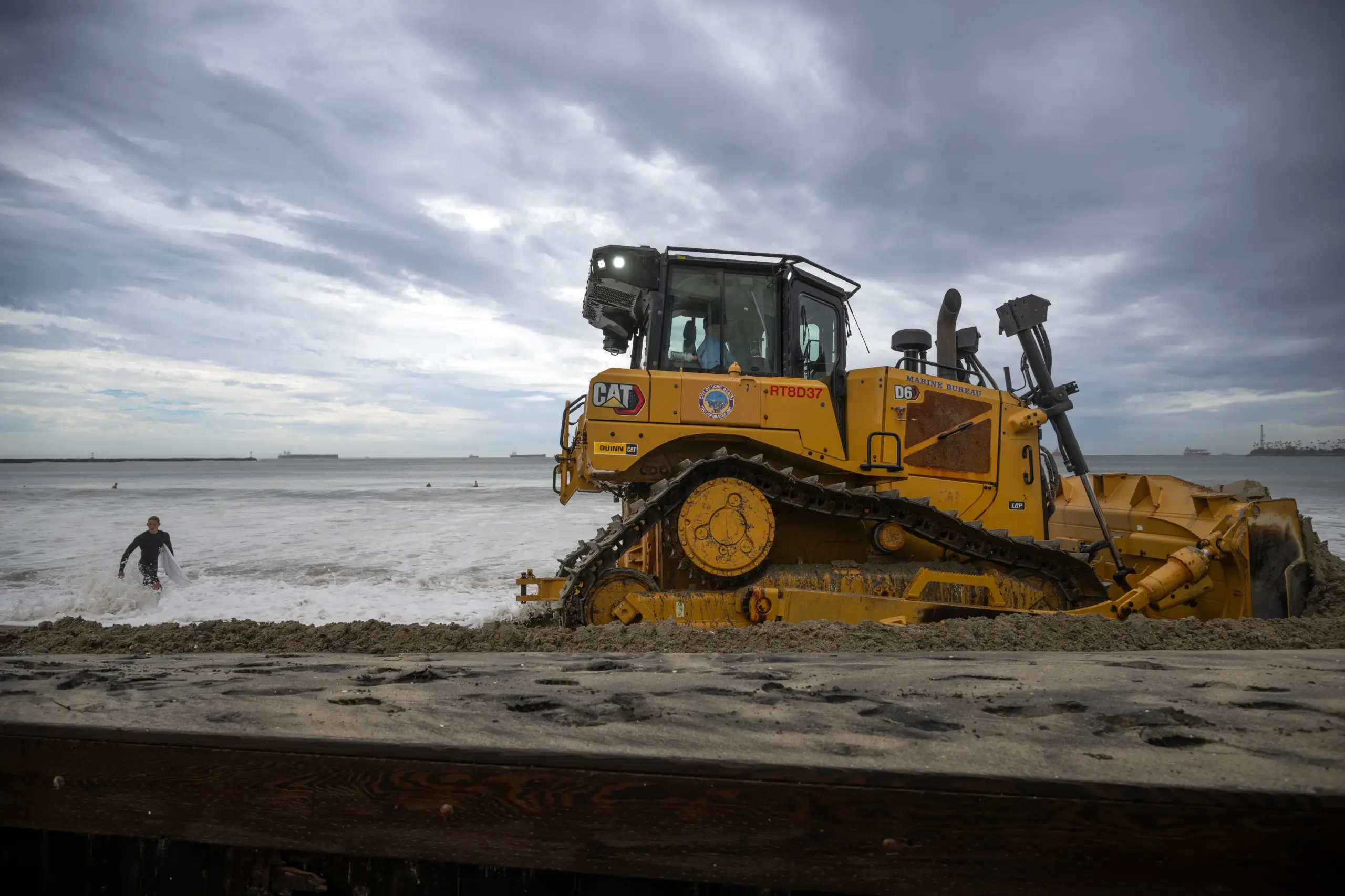
Gov. Gavin Newsom proclaimed a state of emergency Monday in California in preparation for what state officials say could be a historic El Niño season, directing agencies to stage equipment, protect infrastructure and prepare communities for severe winter weather.
Read more Orange County scores and player stats for Saturday, Sept. 19
The looming El Niño event is already breaking records, and forecasters expect it to continue to strengthen, potentially becoming the strongest in recorded history.
Officials warn El Niño could bring heavy rain, strong winds, mountain snow, and coastal flooding.
“California is strongest when we look out for one another,” Newsom said in a statement. “That is what this action is about. Giving communities the support they need, giving first responders the tools to do their jobs, and giving families the confidence that their state is ready. We are preparing for this El Niño early because every Californian deserves to be safe in their home, connected to their community, and protected when severe weather comes.”
According to the governor’s office, the emergency proclamation mobilizes state resources and streamlines procurement to prepare for El Niño’s anticipated impacts, like strong storms and coastal flooding. The declaration orders state agencies to lead the state’s flood-risk-reduction efforts, stage flood-fighting supplies such as sandbags and pumps, and pre-position other critical equipment.
The California National Guard will also be called in to assist with emergency response, Newsom said.
During the February 1998 storms, the largest El Niño in the 20th Century, there were 17 storm-related deaths in California from rainstorms, mudslides, floods and fallen trees. That month set precipitation records at 19 stations in California. Many were not expecting this much rain.
Communities around Southern California are already concerned about a wetter-than-normal season.
Coastal Southern California
In past El Niño years, piers have been knocked down by heavy surf, bluffs have collapsed and already from Hurricane Marie this month, homes have had to be condemned and infrastructure, including a key train line that runs coastal through southern Orange County and northern San Diego County, has been impacted.
Earlier this month, heavy surf crashed over the seawall, tossing sand and debris into Long Beach streets, forcing the evacuation of 20-plus Long Beach homes for a few days.
“Hurricane Marie was a little foreshadowing of what could come to a lot more of the coastline and the state,” Surfrider Foundation Executive Director Chad Nelsen said.
So it is great the governor is getting ahead of the potential challenges an El Niño could create, so people and local communities are best prepared for what’s to come, Nelson said.
“However, that should not be the end all,” he said. “This should be the beginning of longer-term coastal resilience and adaptation planning because the real way to avoid the next disaster is to prepare for it, before the El Niño and these storms come.”
L.A. County’s Beaches and Harbors division chief Gary Jones said that, like every winter, they will set up 15-foot-tall sand berms to stop surging waves from rushing over the flat beach or into the parking lots.
The emergency proclamation helps put people on notice and streamlines responses, but Nelson said coastal advocates are concerned that having the declaration in place will make it easier for agencies to dump rocks on beaches for emergency protection, which could impact the coastline in the longer term.
A cycle of inaction and then emergency declarations isn’t sustainable in the long term, he said.
“I think we’re going to see flooding from strong rain storms,” he said. “We might as well be ready for them, that’s why I’m glad he made the declaration. We could see extreme rain, a lot of flooding and precipitation, extreme storms and really large surf.”
Inland
In Riverside County, the Emergency Management Department has been warning residents to prepare for possible heavy rainfall this fall and winter.
County spokesperson Shane Reichardt said the Emergency Management Department has held El Niño briefings with the National Weather Service to discuss potential storm impacts across the region.
Along with the county’s Flood Control Department and the County Transportation and Land Management Agency, Reichardt said they have held community meetings and presented on El Niño preparedness. Areas in the Coachella Valley, Jurupa Valley and Palm Desert have, in particular, experienced flooding in the past, Reichardt said.
Preparedness is key, Reichardt says, encouraging residents to have sandbags filled and ready to go. Residents can find and fill sandbags at most county fire stations. Residents can find sandbag locations at rivcoready.org.
Check your insurance coverage, too, Reichardt said.
“Flooding is not typically covered by a lot of homeowners insurance policies, and flood insurance is something that typically takes 30 days to enact,” Reichardt said by phone Monday afternoon.
“Flooding is probably the most consistent disaster that Riverside County faces,” Reichardt said. “It causes the most economic impacts. It impacts homeowners and residents probably more than wildfire.”
Read more Dan Albano’s biggest revelations from Week 4 in Orange County football
“When people see water going across a roadway (due to flooding), they have no clue what is underneath that water,” warns Reichardt. He says that during flooding conditions, it may be difficult to identify if a roadway has been washed away, eroded, or if there’s an obstruction that cannot be seen.
“Even if their vehicle doesn’t stall out, their vehicle may get stuck in a crater,” Reichardt said, adding that a sudden deluge can move a car with ease.
“It doesn’t take a ton of water to move a vehicle, even a four-by-four vehicle,” Reichardt said. “I’ve personally seen a Jeep get washed sideways in about eight inches of water.”
The San Bernardino Mountains communities, which were paralyzed by an epic blizzard for a few weeks in February and March 2023, may be better positioned now that additional resources were obtained for future storms, the county announced in late 2024.
“Over 30 new pieces of heavy machinery, including loaders and blowers, have been added to the Public Works arsenal, bringing the total number to over 100 machines. This expanded fleet will enhance the county’s ability to respond to winter storms, clear roads and ensure public safety in mountain communities,” the county stated at that time.
San Bernardino County has taken similar measures to Riverside County, including monitoring National Weather Service forecasts and launching a community outreach and education campaign, spokesperson Lauren Howland said by email Monday afternoon.
“County departments are prepared to pre-position equipment, materials and personnel as conditions warrant, and emergency responders are trained in swift water rescue, search-and-rescue, aviation and evacuation procedures,” Howland said.
Howland also suggests that San Bernardino County residents sign up for the county’s alert system for emergency updates and keep a go-bag ready. Residents can also download the Ready SB County App for on-the-go information, Howland said.
Residents can learn more about emergency preparedness or sign up for emergency alerts at prepare.sbcounty.gov.
L.A. County
Los Angeles County officials said the first area of attention will be areas denuded by wildfires, which may be the places where residents receive warnings or evacuation orders. This includes Altadena and the Pacific Palisades-Malibu areas, both devastated by the January 2025 fires and more prone to mudflows.
Next on the L.A. County watch list are low-lying areas prone to flooding, such as Pacific Coast Highway, which can experience erosion and slipping slopes.
Also, the north L.A. County area is where significant damage has occurred in the past due to poor drainage and dangerous roadway washouts, according to county officials.
L.A. County Public Works is also responsible for making sure all county debris basins, channels and dams are functioning at the highest capacities.
Mark Pestrella, director of Los Angeles County Public Works, said his teams have just about completed cleaning out mud and soil from these catch basins. Pestrella told the Board of Supervisors on Sept. 1 that all will be ready for holding water by Oct. 15 — the start of the rainy season.
He also said 600 L.A. County Public Works employees will be on 24/7 standby through April.
L.A. County Public Works is pre-deploying resources at flood-prone areas and clearing out debris basins and dams.
Sheriff Robert Luna said the Homeless Outreach Services Team (HOST) will be going to unhoused populations in riverbeds (L.A. River, Rio Hondo River, San Gabriel River) to provide warnings and help with evacuations.
The state proclamation also directs the Governor’s Office of Emergency Services, along with state agencies, to expand multilingual public outreach efforts about preparedness for severe weather, flooding, emergency alerts, evacuation readiness, power outages and more.
Forecasters say this fall and winter could be dangerous, and possible impacts include repeated heavy rain, strong winds, mountain snow, flooding, landslides, debris flows, large waves, and coastal flooding.
Officials said Californians should prepare early. El Niño is strengthening, they say, with a greater than 90% chance of a very strong event this fall and winter and a 75% chance it could reach historic strength. The Pacific is unusually warm, and that warmth can shift storm tracks and load the atmosphere with more energy over the months ahead.
Staff writers Israel Carreon, Laylan Connelly and Steve Scauzillo contributed to this report.
Read more Google hit with $463 million fine for EU location data rule breach