
CAMPBELL, Calif. — Catherine Perez inhaled, raised her arms and interlaced her fingers. The 71-year-old relaxed her shoulders before following the instructor into a seated sun salutation.
Read more RFK Jr. eases access to unproven peptides despite opposition from FDA scientists
For a few moments Saturday morning at the Campbell Community Center, Perez’s attention was on her own body and breath as she performed the modified yoga flow from her chair. Much of the rest of her time is spent thinking about someone else.
For a little more than two years, Perez has been caring for her 92-year-old mother, whose needs have grown as her health has declined.
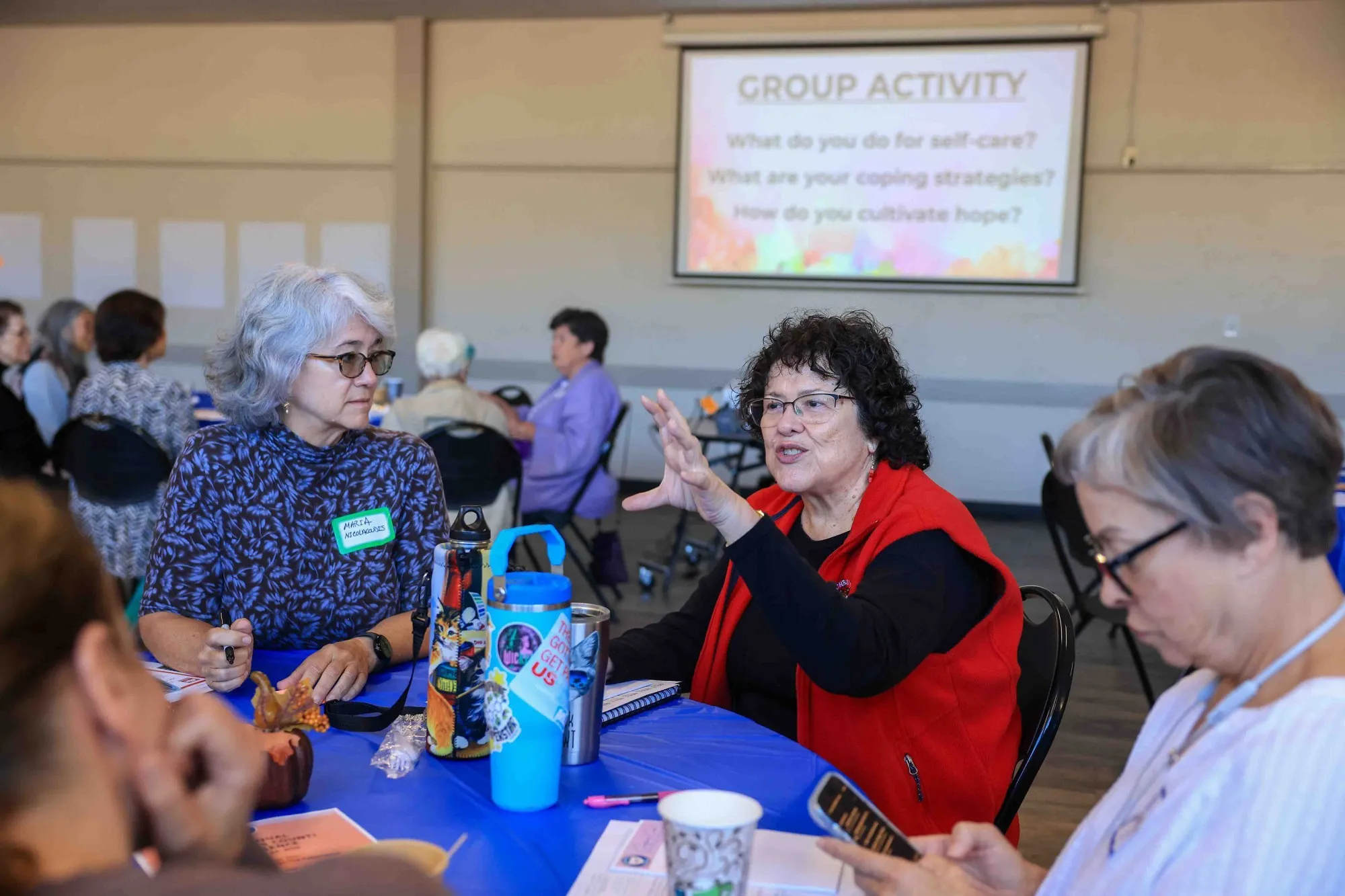
Perez was among the family caregivers who gathered Saturday for the 16th annual Caregivers Count! Conference, hosted by the Family Caregiver Alliance. This year’s conference focused on helping caregivers manage the physical and emotional demands of caring for an aging loved one.
But making time for themselves can be considerably more complicated than simply telling caregivers to practice self-care.
For some, a yoga class or a walk requires arranging for someone else to stay with a loved one. Others juggle caregiving with work and raising children, leaving little room for their own needs.
About 63 million Americans — nearly 1 in 4 adults — had provided care for an adult or child with a medical condition or disability in the previous year, according to a 2025 report from AARP and the National Alliance for Caregiving. That represents an increase of about 20 million caregivers over a decade.
Time is one of the biggest barriers, said Christina Irving of the Family Caregiver Alliance. Beyond looking after another person, caregivers often handle less visible responsibilities, from filling out paperwork to dealing with insurance companies.
“Oftentimes with caregivers, their first question is, ‘How?’” Irving said when conversations turn to self-care.
For Perez, caregiving began after another major change in her family. Her father died after more than 50 years of marriage to her mother. Her mother had spent years looking after her husband, Perez said, and his death sent her into a period of intense grief. Along with other health concerns, that grief contributed to a rapid decline in her well-being.
“The challenges vary from day to day,” Perez said. “You become used to dealing with a certain set of conditions or responsibilities, then something new comes into play.”
Part of the difficulty is watching her mother cope with her declining health. Having more health problems to contend with can be “demoralizing for her,” Perez said. At the same time, Perez has found it difficult to turn her focus back toward herself.
“Once you find yourself in this position, your focus is so much the other person,” Perez said. “How did they sleep? The list is endless.”
One in five caregivers surveyed for the national report described their own health as fair or poor. Nearly 1 in 4 said caregiving responsibilities made it difficult to care for their own health.
Irving said caregivers should pay attention to changes from what is normal for them. Changes in sleep can be an early warning sign, she said, as can persistent worry, irritability or having less patience. Others may begin withdrawing from people around them or find they no longer have the energy to connect. Feeling overwhelmed, hopeless or depressed can also signal that caregiving is taking a toll.
Read more GKN Aerospace executives answer questions, but concerns endure
“The symptoms in every caregiver are going to be different,” Irving said. “Check in with yourself.”
Perez has developed her own ways of managing stress. She meditates, listens to self-help podcasts and practices tapping, which involves gently tapping parts of the face and body with the fingertips. But caregiving has also limited some of the things she would like to do. A retired licensed skin care professional, Perez would like to return to work. She also wants to travel more, but said caregiving makes both difficult.
For Janet Von Konsky, 65, taking care of herself requires another layer of planning.
Von Konsky has lived with her 91-year-old mother for about a decade. Over that time, she has watched the amount of care her mother needs progressively increase. Now, her mother cannot be left alone. Something as seemingly simple as attending a yoga class or going for a hike requires Von Konsky to arrange for someone else to stay with her.
She relies on a sibling who lives nearby as well as a paid caregiving service to provide relief.
As a gig worker in fitness and wellness, Von Konsky said she has an advantage: She can make her own schedule and arrange her work around her mother’s needs. Even then, much of her day is structured around when her mother needs her.
She said she can usually focus more fully in the morning before her mother wakes up and in the evening after she goes to bed. During her mother’s waking hours, she is continually balancing caregiving and work.
Irving said employers have a role to play in making that balancing act easier. That can begin with creating a workplace where employees feel comfortable disclosing their caregiving responsibilities, she said, as well as providing flexibility when caregivers need to shift their hours or work from home.
Federal and California laws already provide some workers with protections. Under the federal Family and Medical Leave Act, eligible employees of covered employers can take up to 12 workweeks of unpaid, job-protected leave during a 12-month period to care for a spouse, child or parent with a serious health condition. When medically necessary, that leave can also be taken intermittently or through a reduced work schedule.
The California Family Rights Act also provides eligible employees with up to 12 weeks of job-protected leave, covering employers with five or more employees and a broader range of family relationships, including siblings, grandparents, domestic partners and certain other people with a family-like relationship. Not every worker qualifies for either law.
Separately, California’s Paid Family Leave program provides eligible workers with up to eight weeks of partial wage replacement during a 12-month period to care for a seriously ill family member. That program provides payments, but job protection comes from other applicable laws.
For Von Konsky, arranging help allows her to get to yoga or spend time in nature. She tries to do that every week. Some weeks, she can’t.
“A week ago there was too much going on for me to take care of myself,” Von Konsky said.
Read more Less flooding across Newport, Huntington Beach as tides ease