
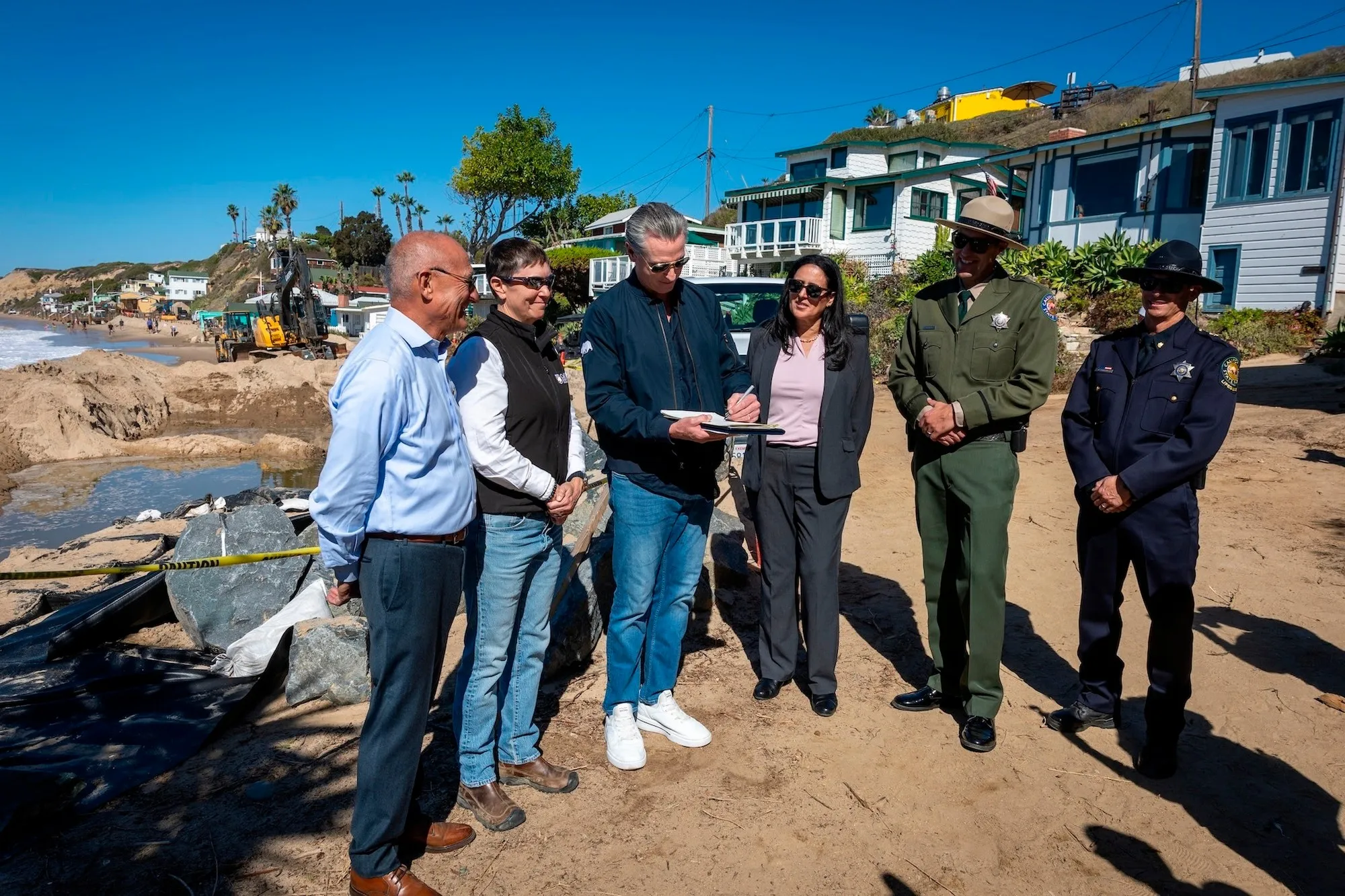
Gov. Gavin Newsom visited Orange County on Tuesday, Oct. 27, to sign an executive order meant to protect a vulnerable stretch along Pacific Coast Highway that is showing severe cracking on the bluff between Laguna Beach and Newport Beach.
Read more Judge rules Bill Essayli cannot serve as chief federal prosecutor, removes him from 2 cases
Newsom is directing state agencies to prepare Highway 1 and surrounding communities for potential El Niño storm damage and address longer-term climate threats.
“Highway 1 is more than our nation’s most iconic roadway. It keeps our coastal economy moving. It gets people to work, children to school, goods to local businesses, first responders where they’re needed most, and visitors to our legendary beaches,” Newsom said in a statement. “We know what repeated closures cost these communities, and we’re putting state agencies to work now to reduce the danger before storms hit.”
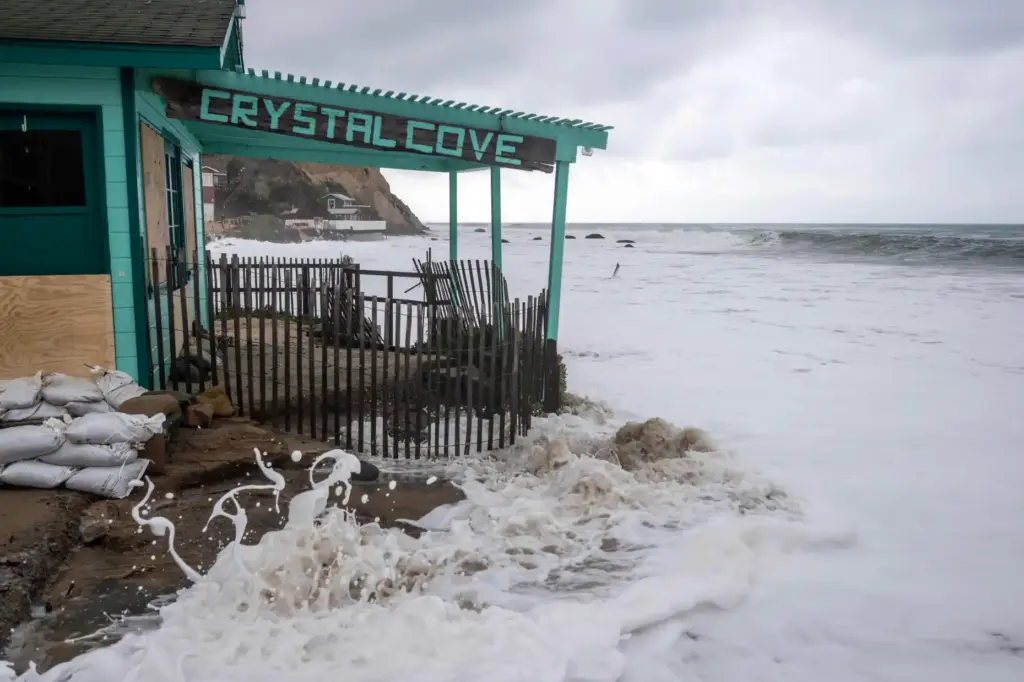 Waves crash onto one of the historic cottages at Crystal Cove State beach, eroding the foundation, as Tropical Storm Rachel continues to cause coastal flooding in Newport Beach on Saturday, October 10, 2026. (Photo by Jeff Antenore, Orange County Register/SCNG)
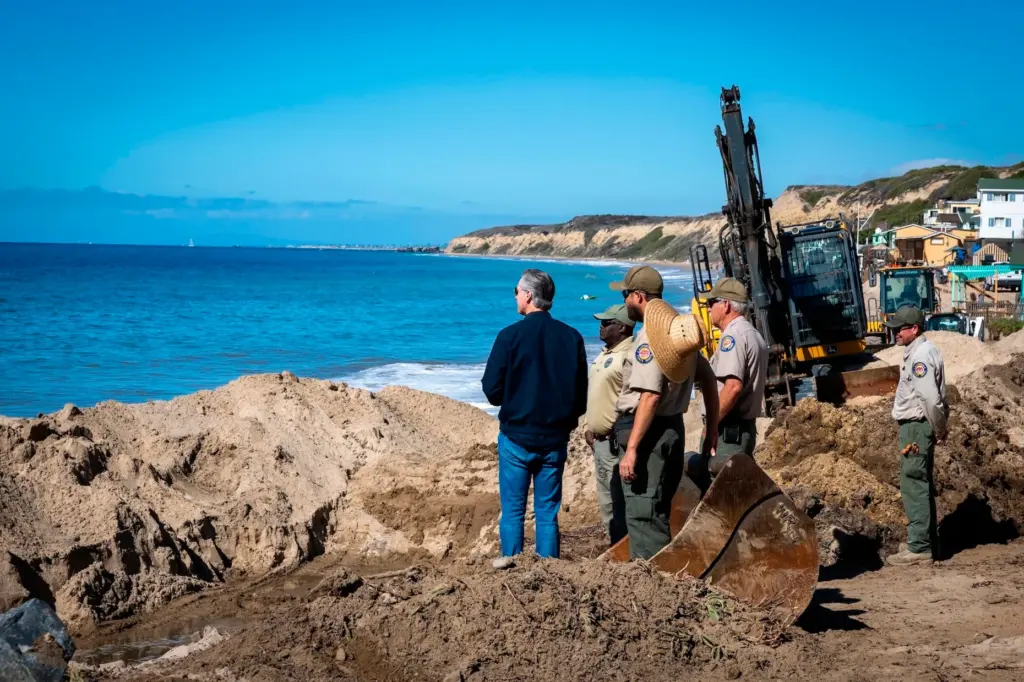 Gov. Gavin Newsom visited Orange County on Oct. 27, 2026, to assess erosion at Crystal Cove State Park and damage along PCH, which developed a major crack. (Courtesy of Gov.Newsom office)
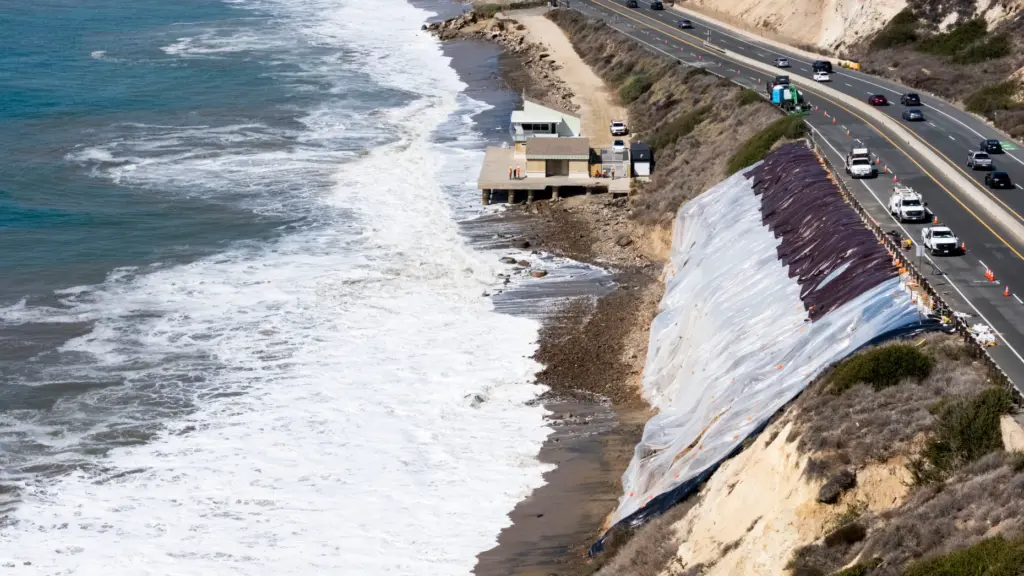 A tarp covers a crumbling bluff along Pacific Coast Highway at Crystal Cove State Park between Newport Beach and Laguna Beach on Monday, October 19, 2026. (Photo by Paul Bersebach, Orange County Register/SCNG)
An estimated 29,000 to 32,000 vehicles use PCH daily through the affected area. Since the crack was detected and emergency repairs started, northbound and southbound lanes have been reduced to one lane each direction.
The estimated 360-foot crack, with widths up to 24 inches, was discovered on Oct. 10 following a big swell and high tides that slammed the ocean-facing slope, where waves have been rapidly wearing away the coastal bluff.
Caltrans approved $4 million in emergency repairs funding to address the large crack, first by placing plastic tarping on the slope as part of “immediate protective intervention” to prevent surface runoff and keep rainwater from entering the existing crack.
Caltrans crews have repositioned the existing sand-filled barriers closer to the base of the slope and are continuing to build them up at least three layers high, Caltrans officials said. The work is creating a protective barrier approximately 12 feet tall, according to Caltrans.
The crews have been timing the work during low tides when the water recedes away from the slope.
“We’re dealing with a perfect storm of conditions, including ongoing coastal erosion, changing ocean conditions, and the potential impacts of El Niño. These factors add to the challenges of protecting Coast Highway,” said Caltrans spokesperson Christianne Smith. “We’re continuing to monitor the slope and roadway closely and adjust our mitigation efforts as needed.”
Once Caltrans receives approval from California State Parks and the California Coastal Commission, the agency will install a fill buttress at the base of the slope and reinforce it with large rocks to help reduce erosion and limit further slope movement.
“Protecting the traveling public is our top priority, and we are moving urgently to stabilize this slope and reduce the risk of further erosion,” Caltrans District 12 Director Lan Zhou said in a statement.
Newsom’s executive order creates a Highway 1 Task Force, led by the California State Transportation Agency and California Natural Resources Agency, to prepare the corridor for El Niño storms and address longer-term climate threats.
The task force will identify vulnerable stretches, such as the one at Crystal Cove State Park, recommend priority actions and funding needs, and find ways to get preventive work done faster.
The governor’s order also directs Caltrans to prioritize landslide prevention where practicable and State Parks to assess how closures and repairs could affect parks and public access.
Read more Orange County girls athlete of the week: Yasmin Alfadhiel, Garden Grove
Already, during a high tide and big swell event a few weeks ago, overnight visitors at Crystal Cove’s popular cottages were sent home when the ocean’s force threatened the historic cottages closest to the ocean. The waves also broke a water main that kept some cottages closed for nearly a week.
Newsom signed Tuesday’s executive order at the cottages, which are near where the crack is on PCH.
Newsom had already proclaimed an emergency in September, signing an executive order to strengthen flood preparedness to protect communities and critical infrastructure across the state.
The declaration comes as the region braces for El Niño. Already, strong tropical storms from the southern hemisphere have wiped away beach sand that acts as a buffer between homes and infrastructure.
On the same day Newsom was in Orange County, neighboring Newport Beach was suffering from flooding into streets and homes from the harbor spilling over from higher-than-expected tide levels, and further north, Pacific Coast Highway and other streets were flooded in Huntington Beach.
“Keeping communities safe means taking action before a storm arrives,” Cal OES Director Caroline Thomas Jacobs said in a statement. “Cal OES is putting the governor’s emergency proclamation into action by leading coordination among state agencies, preparing resources, and supporting our local partners. Together, we’re working to protect vital routes like Highway 1, which coastal communities depend on to evacuate safely, connect with essential services, and receive help during emergencies.”
The executive order will help communities prepare before storms arrive, officials said, giving agencies additional tools to reduce flood risks and protect communities and critical infrastructure from other anticipated El Niño impacts.
Public agencies, for example, can streamline storm preparedness work through the California Natural Resources Agency website.
The hope is to get ahead of reducing risk before more damage occurs, officials said. An emergency project on the Big Sur Highway 1 corridor cost an estimated $312 million from 2020 through 2026, the governor’s office said. The collapsing section of highway was closed for three years, only reopening earlier this year.
Caltrans was already doing assessments for some long-term planning for the stretches of PCH along Crystal Cove and Bolsa Chica State Beach, also an area prone to flooding.
The plan for that project includes conducting an existing conditions and coastal hazard analysis this winter, with concepts presented next fall and a draft final study by summer 2027.
The vulnerable area at Crystal Cove being studied spans 300 feet north of Moro Ridge Road to the Moro campgrounds.
“Highway 1 is the gateway to many state parks and beaches along California’s coast,” said California State Parks Director Armando Quintero in a statement. “As we brace for potential significant impacts from El Niño and longer-term climate threats along this essential corridor, cross-collaboration will be critical for visitor safety, public access, resource protection and emergency response.”
Read more Put the credit cards away. Workforce Pell will help pay for career training