
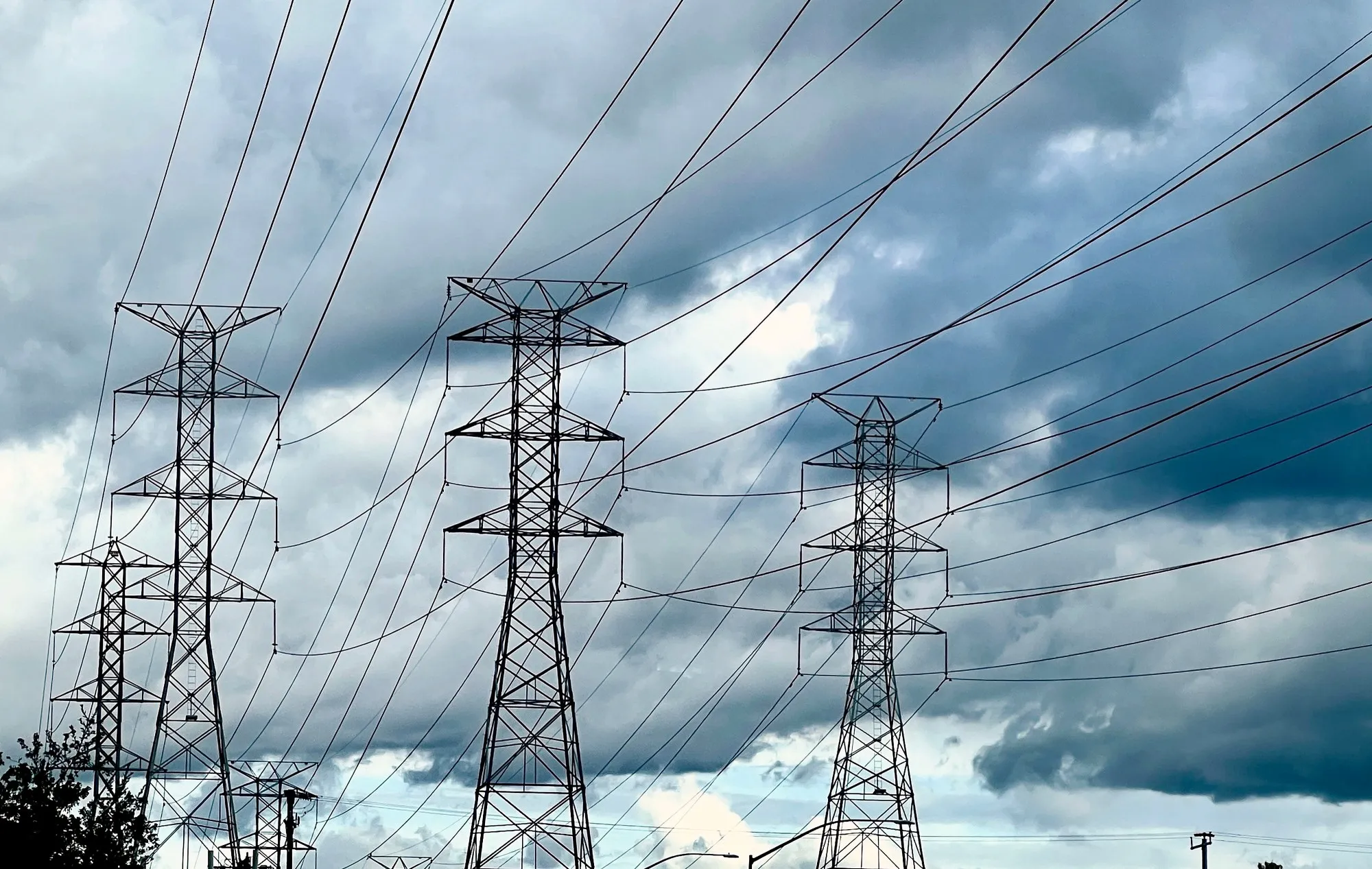
Q: Jim Davis of Murrieta asked, “Recently while driving on everything from interstates to city and county roads, I have seen signs that read ‘Caution: Overhead power lines.’” He cites examples on the 10 Freeway between San Bernardino and Redlands and also in San Diego County.
Read more Guard deployment to Washington into 2029 will cost roughly $1.4B, estimate shows
“These power lines are from 30-75 feet overhead. No semi or RV is going to hit them,” he said. “Other than in the event of occasional high winds, why on earth should I care? I honestly don’t see any reason for these signs.”
A: In responding to our inquiry about the high-up power lines, Caltrans spokesperson Emily Leinen took the opportunity to highlight the importance of driver notifications, especially as they relate to safety on the road.
“Ultimately, the main goal is to warn drivers of their presence. I believe most people would prefer to be alerted rather than unaware, even if it means the notifications may sometimes feel a bit redundant,” she said.
“Safety is always our top priority, and having these notifications in place gives everyone — especially those transporting large loads or those who are unfamiliar with the area — an extra layer of assurance. The notification system serves as a proactive measure to keep everyone informed and safer,” Leinen said.
This seems reasonable as it’s always important to be aware of your surroundings while driving.
San Bernardino gets federal money
Good news for residents and commuters in San Bernardino: the city has been awarded $1,145,144 in federal Community Project Funding to strengthen the city’s emergency preparedness and infrastructure resiliency. The funding will support installing permanent backup power generators at critical water booster pump stations and battery backup systems for up to 50 high-volume traffic signals citywide.
With regard to the traffic signals, city officials said the recent Palisades and Eaton fires in Los Angeles County highlighted the need, as widespread power outages can disrupt emergency response operations and threaten public safety. Keeping traffic signals working will improve public safety, reduce congestion and support emergency response efforts during a disaster, the city said in a press release.
Read more Judge orders Huntington Beach to comply with state audit into Pacific Airshow settlement
San Bernardino — like other communities across Southern California — has experienced wildfires, flooding severe wind events, and an ongoing earthquake risk associated with the San Andreas Fault.
According to the city of San Bernardino, between October 2023 and January 2025, Southern California Edison conducted 119 public safety power shutoffs affecting nearly 35,000 city residents for a total of over 4,000 outage hours due to extreme fire and wind conditions. By strengthening infrastructure, San Bernardino said it aims to reduce service disruptions, improve emergency response capabilities and reduce reliance on future federal disaster assistance.
Public hearing
And, finally, we know it’s short notice (sorry), but the Riverside County Transportation Commission is holding a public hearing on Monday, Aug. 10, to gather input on transit needs in the county. The agency will use comments received to help identify transit needs in preparation for transportation plans and programs.
The public hearing is at 11 a.m. at the commission’s conference room A, 4080 Lemon St., 3rd floor, in Riverside. If you can’t make it, you can email comments in by Aug. 10, or call 951-787-7141.
More information rctc.org/transit-needs-public-hearing/ by Aug. 10, or call (951) 787-7141.
Do you commute to work in the Inland Empire? Spend a lot of time in your vehicle? Have questions about driving, freeways, toll roads or parking? If so, write or call On the Road and we’ll try to answer your questions. Please include your question or issue, name, city of residence, phone number and email address. Write [email protected] or call 951-368-9995. Note that we may use material from letters or phone calls in future columns.
Read more This summer isn’t breaking heat records — yet. Wait until El Nino kicks in, scientists say