
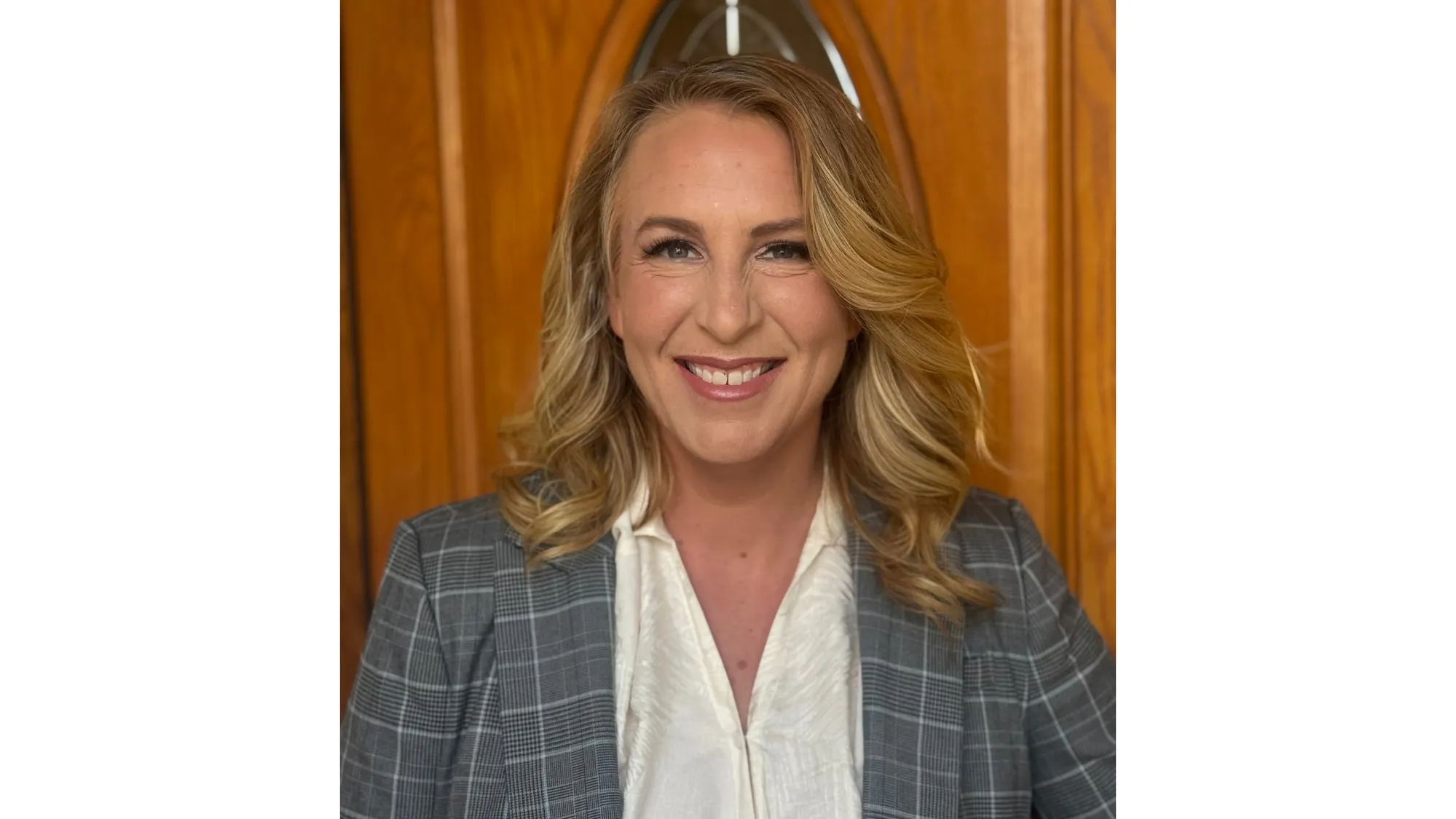
Ahead of the November general election, the Southern California News Group compiled a list of questions to pose to the candidates who wish to represent you. You can find the full questionnaire below.
Read more Dave Min, CA-47 candidate, 2026 election questionnaire
Name: Jenny Rae Le Roux
Age: 46
Current job title: Director of CAL DOGE and Entrepreneur
Political party affiliation: Republican
Incumbent: No
Other political positions held: None
City where you reside: Irvine
Campaign website or social media: jennyraeca.com
What is the single most important issue this district faces, and what can Congress, realistically, do to address it? (Please answer in 200 words or less.)
Affordability. Sacramento policies have driven up the cost of living in Orange County and our federal government is making it worse with inflationary spending.
I got into this race because as a government watchdog, I couldn’t sit back and watch our elected officials continue to turn a blind eye to waste, fraud, and abuse in our federal budget. I have spent this year identifying billions of wasteful spending and fraud in California’s state budget and will take that same approach to root out the waste in Washington, D.C., that is directly driving up costs here in Orange County.
In business, I grew startups into global companies by demanding results and that is exactly what I will do in Washington. Our politicians are too comfortable allowing lobbyists and bureaucrats to call the shots. We need someone who isn’t beholden to special interests; Californians deserve someone who will fight to make life more affordable by reducing the financial burden on families so they can build the future of their dreams.
My opponent enjoys the title of congressman but doesn’t want to do the work necessary to help his constituents. I will.
Housing is increasingly unaffordable and remains top of mind for many Californians. What is one federal policy you’d push to make housing more affordable? How would you measure whether that policy was actually successful? (Please answer in 200 words or less.)
In Congress, I will push to tie federal infrastructure and community development funding to local permitting reform. This will reward cities and states that cut red tape and speed up housing approvals instead of handing out federal dollars with no accountability for results.
Only 18% of Orange County residents can afford to buy a home, and the average cost of rent is nearly $3,000 per month. Layers of bureaucratic delays add months (sometimes years) and tens of thousands of dollars to every single project. Washington shouldn’t keep sending blank checks to states that make it harder to build.
I’d measure success the way I do with my business: with real numbers. We will track permitting timelines and total housing units approved and built, year over year, in the jurisdictions receiving federal funds. If timelines aren’t shrinking and supply isn’t increasing, the incentive isn’t working and funding should be restructured. Government waste isn’t just about fraud. It’s also about billions in federal housing dollars that produce delays and more expensive housing instead of new homes built. We need a watchdog to ensure every tax dollar is getting the result it is intended to achieve.
Concerns about the use of surveillance technology have intensified recently, often relating to license plate readers made by Flock Safety. How can Congress balance the use of these technologies in public safety cases while limiting infringement on an individual’s right to privacy? (Please answer in 200 words or less.)
We need both public safety and a protected right to privacy. Right now, the balance is tilted too far toward unaccountable data collection. Tools like license plate readers can help find criminals and reunite loved ones, and I support law enforcement having effective tools to keep our communities safe. However, Americans shouldn’t have to choose between safety and being tracked without their knowledge every time they drive to church, a doctor’s appointment, or while taking their kids to soccer practice.
Congress must set clear federal guardrails: require a warrant or documented case number before searching historical location data, mandate short data retention windows, and ban the pooling of local camera data into unaccountable nationwide databases that operate without transparency and oversight.
As someone who has spent the last year exposing how the government abuses public trust and misuses taxpayer resources, I know unchecked systems get exploited. Whether it’s a state agency or a private surveillance company, accountability is essential to ensuring public trust in our systems. The answer isn’t to ban useful technology. It is building in real accountability so that technology can’t be turned into a tool weaponized against innocent Americans.
What should immigration policy in the U.S. look like five years from now? (Please answer in 200 words or less.)
I have visited over 50 countries and am married to a first-generation legal immigrant. I understand why so many want to live and work here — there truly is no place like America.
We need strong, clear pathways to legal immigration. Growth is vital to our future, yet Congress has failed to act. We must do better.
First, we must secure our border. Drugs cannot pour into our communities, and we must vet everyone who seeks to enter our country. Without border security, our immigration system isn’t functional and is deeply unfair.
Additionally, we must apprehend and remove people who have committed crimes and have been ordered to leave. We also need every immigrant who entered the country illegally to either complete the asylum process or return to their home country and re-enter legally.
At the same time, we must recognize that our world-class universities, companies, and farms benefit from the ideas and efforts of immigrants. While Americans should vie for and win every possible job, we must have a visa system that allows skilled immigrants to advance our capabilities and continue American excellence and growth.
I will work across the aisle on immigration reform. Our immigration system must be just and orderly, welcoming immigrants but upholding the law.
Would you like to see any changes to Medicare, Medicaid or prescription drug policies? What specifically would you change, cut or fund? (Please answer in 200 words or less.)
As a government watchdog, I’ve spent the last year following the money, and what I’ve found should alarm every taxpayer. We’ve helped expose over $2 billion in fraud and waste in California’s government, including fraudulent hospice billing networks that were bilking Medicare while regulators looked the other way. Fraud is what happens when nobody’s watching the register.
In Congress, I’ll bring that same relentless focus to bring down Medicare and Medicaid costs. Nationally, estimates suggest tens of billions of dollars a year are lost to improper payments. I’ll push for real audits, data-driven fraud detection, and accountability for criminal networks that exploit these systems.
On prescription drugs, I support more transparency and competition. I support cracking down on the insurance middlemen who set drug prices and pad their margins while patients pay more at the pharmacy counter.
I won’t cut benefits for seniors and families who’ve earned them. But I will not tolerate a system that lets fraudsters drain it dry while honest people wait longer and pay more. Waste is simply enabling theft from the people who need help most.
Increasingly, we’re seeing communities push back on data centers opening in or near their neighborhoods. Environmentalists complain about the amount of water and energy that data centers need to operate. Residents complain about relentless noise pollution. And others worry about losing agricultural land to these centers. On the other hand, the tech industry emphasizes the role of data centers in supporting cloud computing and artificial intelligence. As a policymaker, how would you balance the concerns of critics with desires to ensure that the U.S. remains a leader in innovation? (Please answer in 200 words or less.)
California has long been a hub for innovation, and we should not shy away from the development of AI. We should welcome the opportunity to lead our country into this frontier, but under no circumstances should data centers and developers receive a blank check.
Read more Armen Kurdian, CA-49 candidate, 2026 election questionnaire
Data centers are crucial infrastructure in the growth of AI and technology — but so is access to plentiful water and abundant, affordable energy. All three are essential to ensure the United States does not fall behind China in the race to develop a next-generation economy.
I believe the federal government should regulate power, water, and AI data center standards so we have one standard — not 50 different sets of rules — for companies developing the national AI ecosystem. Outside of federal safeguards protecting natural resources, the decision of where and when to build data centers should be left to local communities.
Officials, stakeholders, and residents must have an open and transparent process when deciding whether building a data center is right for them. Each project should be evaluated individually based on its location, water and power demands, economic benefit, and impact.
There is growing debate about whether political candidates or committees should be allowed to run ads created with the use of artificial intelligence. Recently, we’ve seen videos or images depicting a candidate’s political opponent in disparaging ways – and which some critics say falsely misrepresent their political rival. In your opinion, should there be a strict ban on AI-generated political content? If AI-generated content is permitted, should there be restrictions on its use? What should the terms be, if any? Explain your position. (Please answer in 200 words or less.)
When AI is used to create or substantially alter a political ad, voters deserve to know it. I would support a federal law mandating all AI-generated political advertisements have a clear disclaimer that AI was used.
I don’t support a strict ban on AI-generated political content — a blanket ban raises serious First Amendment concerns. What I support is transparency and accountability for deception.
It’s important to note that if a piece of content is deliberately designed to deceive voters about what a candidate actually said or did, that is not “free speech” — it is fraud, and existing deceptive-practices laws should apply with real enforcement teeth. Voters can handle the truth. What they can’t do is make informed choices when they’re being lied to by a computer-generated fake.
How should the U.S. balance support for foreign allies with concerns about the country’s spending and the risk of entering “forever wars”? (Please answer in 200 words or less.)
As a government watchdog, I am a fierce advocate for rooting out waste, fraud, and abuse and reining in government spending. The budget for the Department of War is 13-14% of total annual federal spending. This is a big enough line item that it deserves careful scrutiny, yet it is also a small price to pay to keep our country safe.
My promise to you is that I will examine every budget request through the lens of what is best for our national security and our district, and that I will not vote to authorize overseas military action without justification for that action and a clear definition of success.
The Trump administration is aggressively pushing to expand offshore oil drilling and production in California. Do you support this move? Why or why not? (Please answer in 200 words or less.)
Expanding safe, responsible offshore production means more supply, more energy independence, and real relief for families — but it wouldn’t be necessary if Dave Min and Sacramento Democrats expanded safe, affordable onshore production. I’ll fight for policies that incentivize clean energy and lower costs while keeping our environment safe and beautiful. Both are possible — we do not have to choose between one or the other.
California has the second-highest gas prices in the nation because of Sacramento Democrats’ policies: sky-high gas taxes, the Low Carbon Fuel Standard, and a regulatory nightmare designed to make fossil fuels as expensive as possible. Orange County families are paying the price for decisions made by politicians beholden to political activists.
Dave Min is part of that Sacramento machine. As a state senator, he voted to pile new costs onto drivers, and once in Congress, he voted against a bipartisan bill to bring down energy costs for American families. He talks about affordability, but his voting record shows he’s more interested in appeasing his activist base than actually lowering prices at the pump.
The polarization of politics in this country has only grown. If you’re the incumbent of this office, what’s an example of you bucking that trend and cooperating with colleagues you may have political or ideological differences with? And if you’re running to step into this office for the first time, what’s an issue you will work on with those across the aisle to tackle? (Please answer in 200 words or less.)
In business, I’ve worked with colleagues across the political spectrum — and as the head of an external government watchdog, I’ve seen that fraud isn’t partisan. It steals from Democrats and Republicans alike. When programs meant for our most vulnerable are robbed or experience waste, it puts them at risk for the citizens who need them.
Republicans and Democrats both want to protect tax dollars while ensuring programs work for the American people. That is the common ground I plan to build on with members of both parties who care more about results than partisanship.
My opponent, Dave Min, talks about bipartisanship, but his record doesn’t back it up. He has voted in lockstep with the DSA-backed members of his caucus, voted against the bill that delivered SALT relief for homeowners, voted not to condemn socialism, and voted for the highest tax increase in U.S. history. In short, he votes for his party, not our district.
That’s the difference I’ll bring to Congress. I’m not a career politician, and I didn’t get into this fight to score cheap political points. I got into it to deliver for my neighbors, regardless of who they vote for, because that’s true bipartisanship.
Tell us about a time you’ve changed your mind on a political position. What was it, and what changed your mind? (Please answer in 200 words or less.)
When I graduated from college, I was a socialist. As a woman of faith, I viewed socialism through a religious lens — to my mind, wealth was corrupting, and if the populace was not naturally generous, the government should mandate generosity through taxation and even the seizure of assets.
After graduating, I committed months to service work overseas to prepare for my intended career as a doctor. As I began my service work, I started to notice creativity and problem-solving in every corner of every society — from rural villages in El Salvador to the bustling cities of Taiwan.
To my shock, the government was not the problem solver in any one of those places. Entrepreneurs were! Businesses were solving real societal problems at a rate I had never imagined.
When I saw the unrestrained problem-solving power of business, I had an astonishing revelation — businesses form the foundation of thriving communities. When I returned from my travels, I dedicated my life to helping businesses grow — and now, one of my favorite pastimes is to visit businesses throughout the 47th District to hear about your struggles, celebrate your success, and identify ways I can help all of us thrive.
Bonus question: What is the best book you’ve read this year? Explain why you found it compelling.
My family and I love the library systems that are available to us here in Orange County. This summer, I read classics out loud to my young kids every day. One book we read together was “The Black Stallion.” It describes ingenuity, creativity, and how to advocate for those you love against all odds, even on a deserted island. Our family fell in love with the book and expects to finish the series in the upcoming months.
I also love reading about history, politics, culture, travel, adventure, and fiction. I was recently given the book “Suicidal Empathy: Dying to Be Kind,” which I am excited to read this fall.
Read more Mike Levin, CA-49 candidate, 2026 election questionnaire