
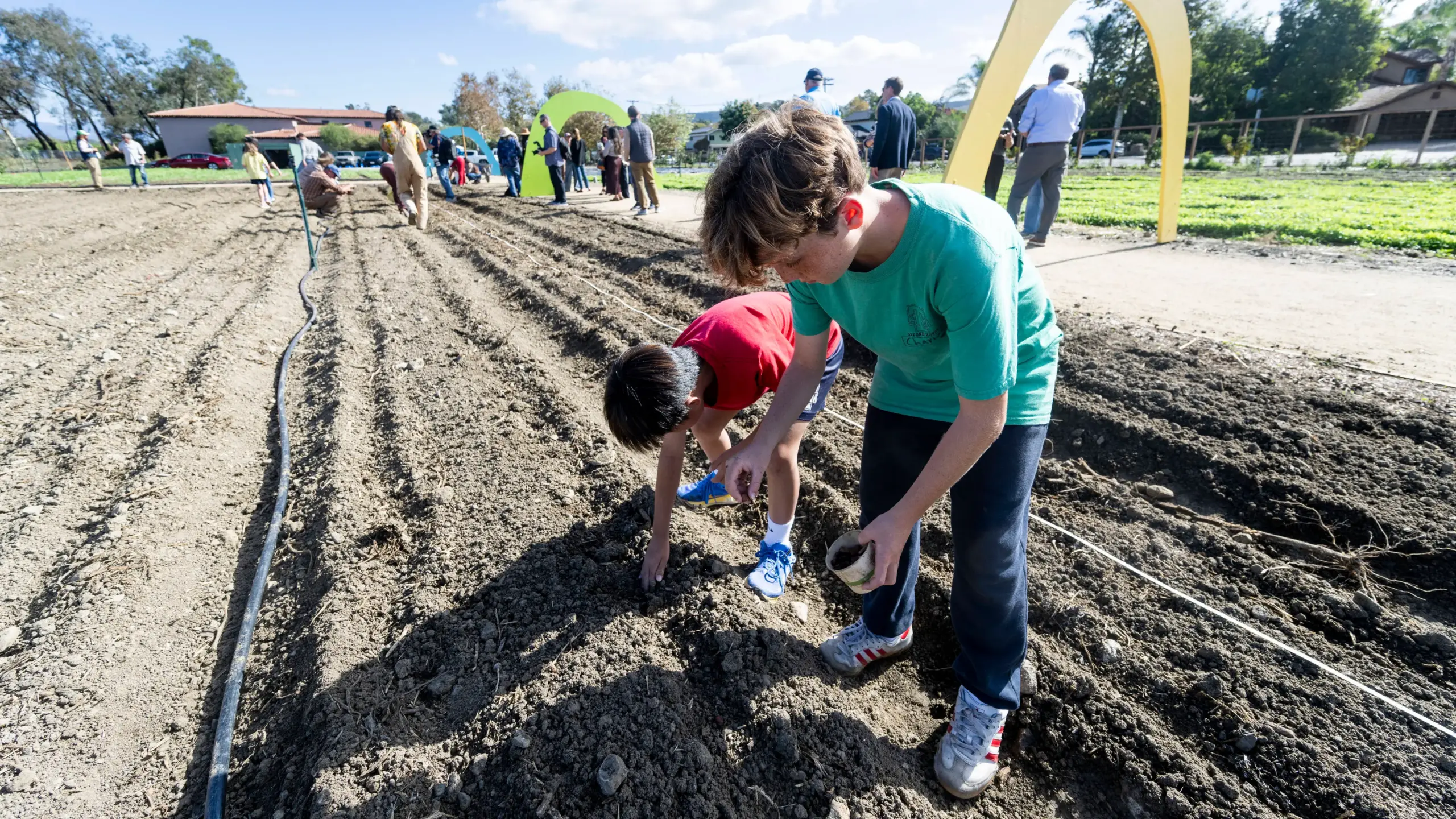
With a two-acre patch of soil serving as a classroom, a group of students from St. Margaret’s Episcopal School in San Juan Capistrano got hands-on with lessons in regenerative agriculture, learning that when treating the earth with care, the earth has a way of returning the favor.
Read more Mission San Juan Capistrano is celebrating 250 years
The students, all fifth graders, gathered recently at La Novia Farm within the 28-acre Ecology Center in San Juan Capistrano to demonstrate — and celebrate — the way partnerships can bring regenerative agriculture and firsthand environmental education to life.
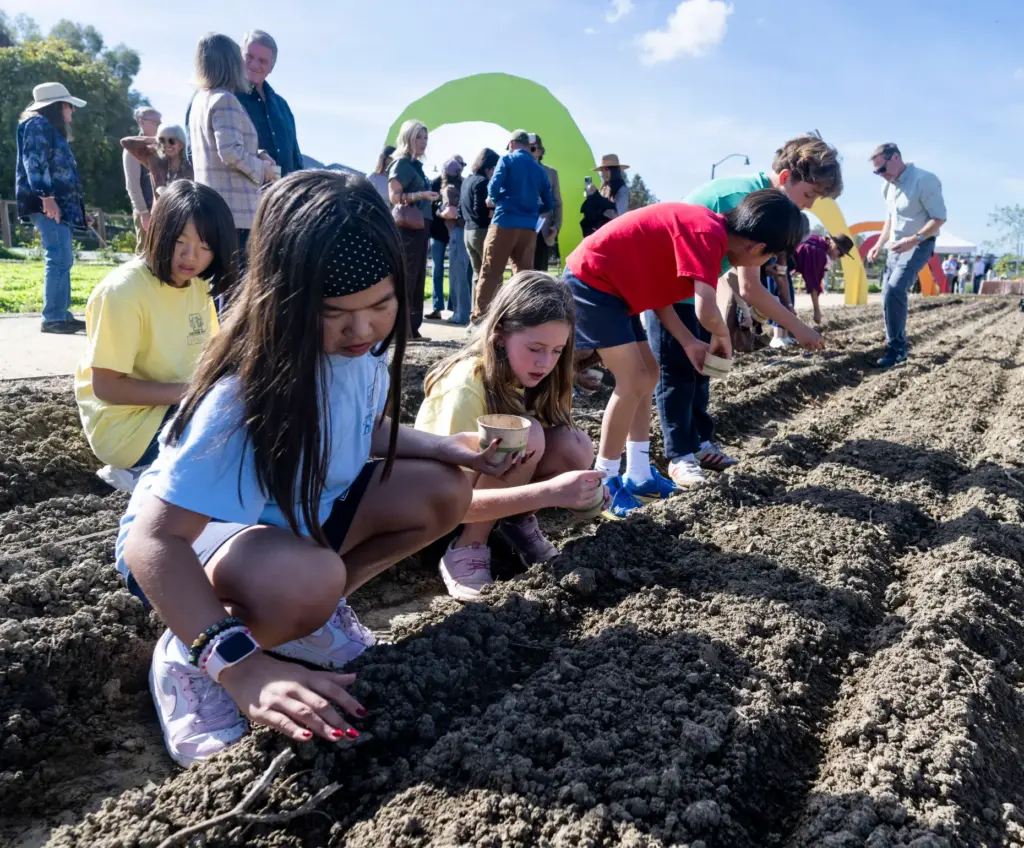 Chloe Carter, left, and her classmates from St. Margaret’s Episcopal School plant fava beans at a commemoration ceremony at La Novia Farm in San Juan Capistrano on Wednesday, October 28, 2026. The two-acre regenerative farm is a collaboration between The Ecology Center, the city of San Juan Capistrano, and St. Margaret’s Episcopal School. (Photo by Paul Bersebach, Orange County Register/SCNG)
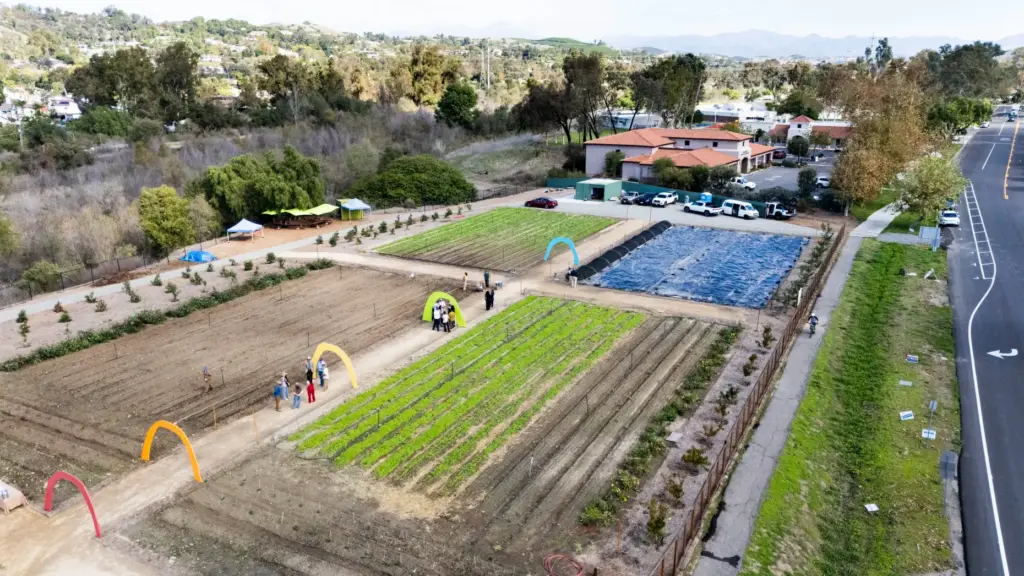 Officials held a commemoration ceremony at La Novia Farm in San Juan Capistrano on Wednesday, October 28, 2026. The two-acre regenerative farm is a collaboration between The Ecology Center, the city of San Juan Capistrano, and St. Margaret’s Episcopal School. (Photo by Paul Bersebach, Orange County Register/SCNG)
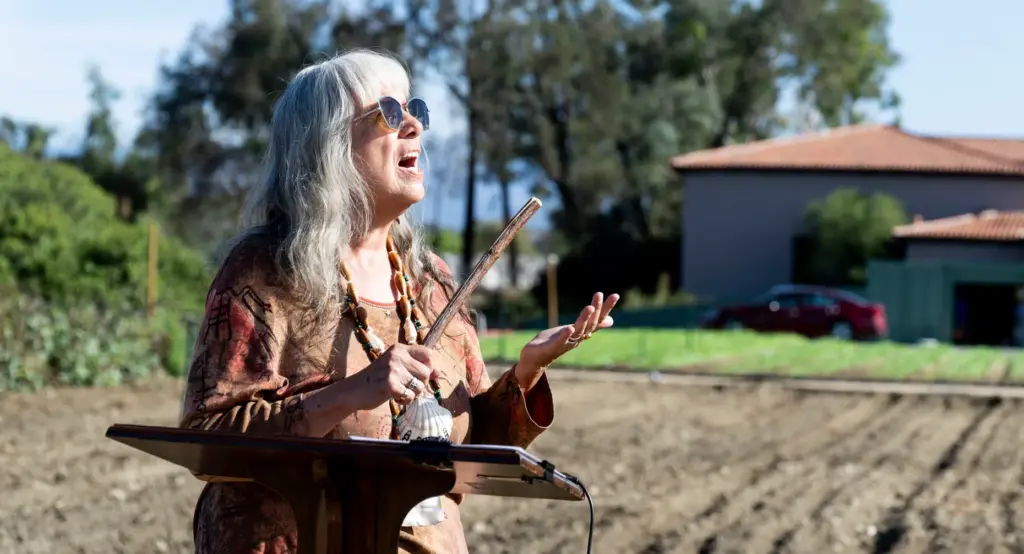 Adelia Sandoval, Elder & Spiritual Overseer of the Juaneño Band of Mission Indians/Acjachemen Nation sings a song at a commemoration ceremony at La Novia Farm in San Juan Capistrano on Wednesday, October 28, 2026. The two-acre regenerative farm is a collaboration between The Ecology Center, the city of San Juan Capistrano, and St. Margaret’s Episcopal School. (Photo by Paul Bersebach, Orange County Register/SCNG)
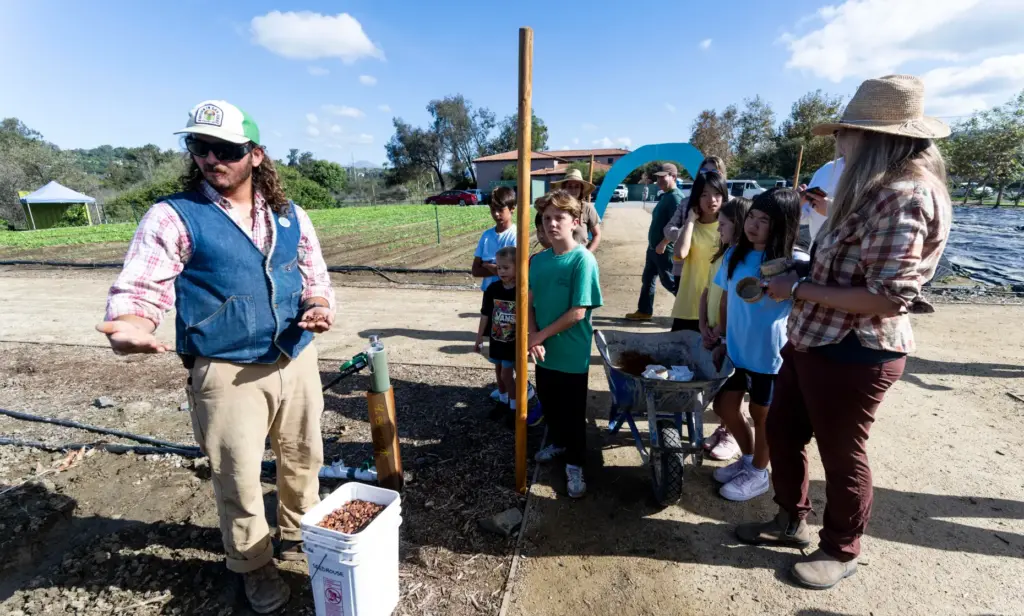 Zack Schuman, Farm Replication Manager with The Ecology Center, talks to students at a commemoration ceremony at La Novia Farm in San Juan Capistrano on Wednesday, October 28, 2026. The two-acre regenerative farm is a collaboration between The Ecology Center, the city of San Juan Capistrano, and St. Margaret’s Episcopal School. (Photo by Paul Bersebach, Orange County Register/SCNG)
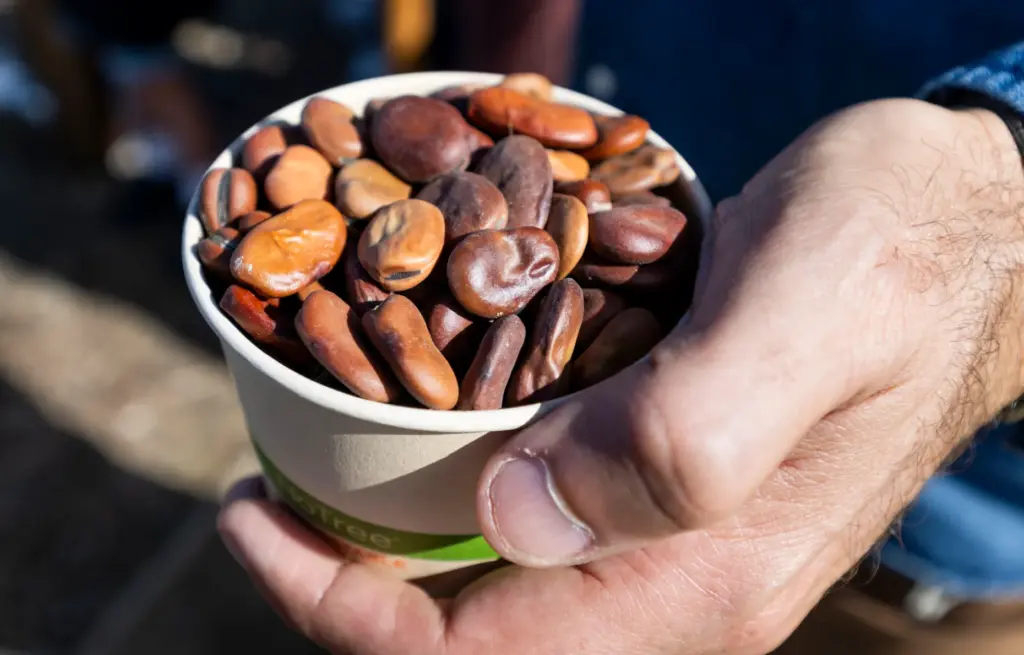 Workers and attendees planted fava beans during a commemoration ceremony at La Novia Farm in San Juan Capistrano on Wednesday, October 28, 2026. The two-acre regenerative farm is a collaboration between The Ecology Center, the city of San Juan Capistrano, and St. Margaret’s Episcopal School. (Photo by Paul Bersebach, Orange County Register/SCNG)
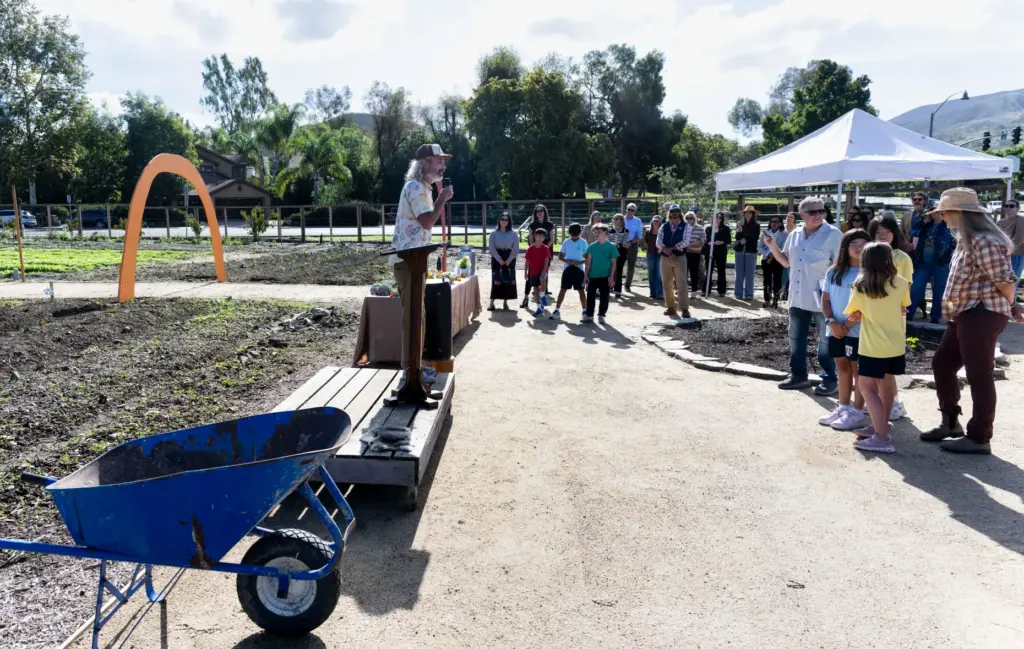 Evan Marks, founder and executive director of The Ecology Center, speaks at a commemoration ceremony at La Novia Farm in San Juan Capistrano on Wednesday, October 28, 2026. The two-acre regenerative farm is a collaboration between The Ecology Center, the city of San Juan Capistrano, and St. Margaret’s Episcopal School. (Photo by Paul Bersebach, Orange County Register/SCNG)
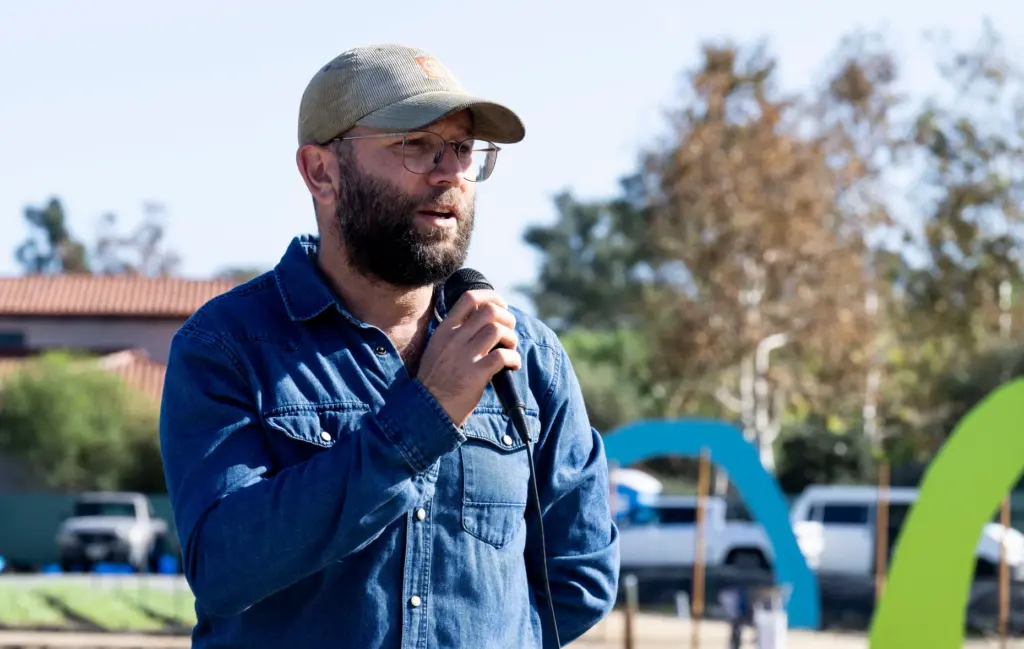 Jonathan Zaidman, from The Ecology Center, speaks at a commemoration ceremony at La Novia Farm in San Juan Capistrano on Wednesday, October 28, 2026. The two-acre regenerative farm is a collaboration between The Ecology Center, the city of San Juan Capistrano, and St. Margaret’s Episcopal School. (Photo by Paul Bersebach, Orange County Register/SCNG)
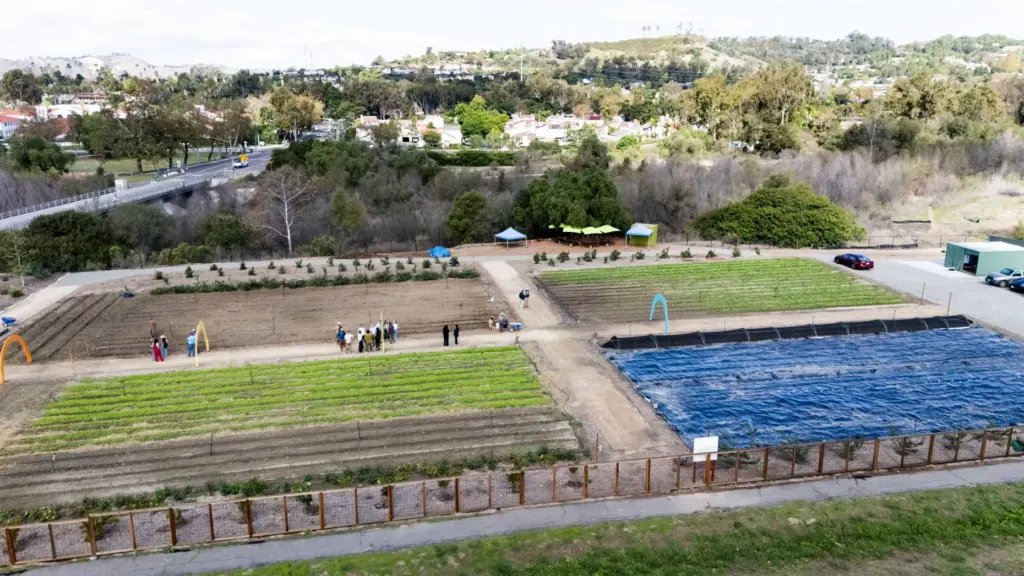 Officials held a commemoration ceremony at La Novia Farm in San Juan Capistrano on Wednesday, October 28, 2026. The two-acre regenerative farm is a collaboration between The Ecology Center, the city of San Juan Capistrano, and St. Margaret’s Episcopal School. (Photo by Paul Bersebach, Orange County Register/SCNG)
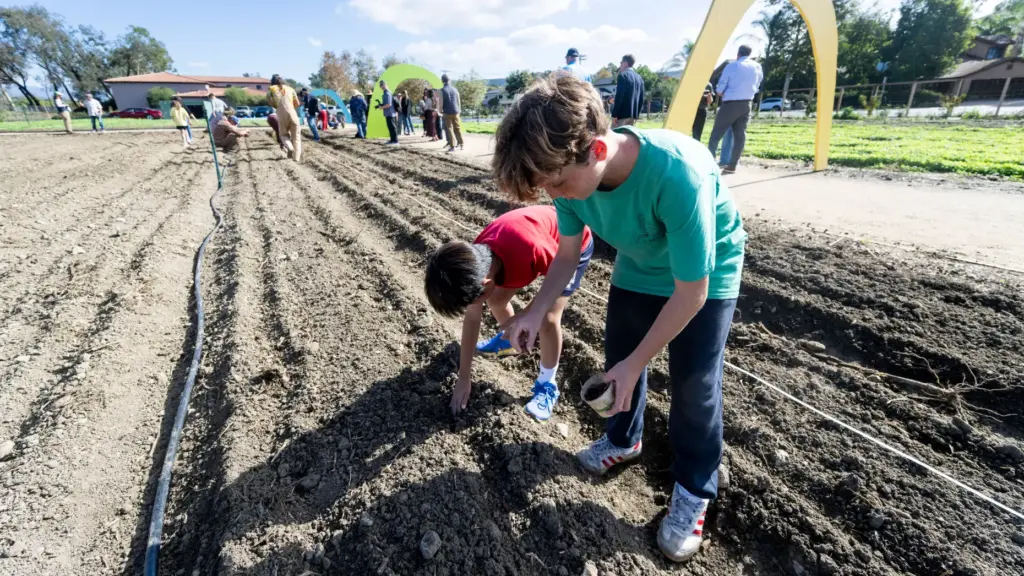 St. Margaret’s Episcopal School students Aiden Zhang and Charles Beshk, from left, plant fava beans at a commemoration ceremony at La Novia Farm in San Juan Capistrano on Wednesday, October 28, 2026. The two-acre regenerative farm is a collaboration between The Ecology Center, the city of San Juan Capistrano, and St. Margaret’s Episcopal School. (Photo by Paul Bersebach, Orange County Register/SCNG)
“I think it is really beautiful,” said St. Margaret’s fifth grader Charles Beshk, who, with his classmates, got their hands dirty this visit planting fava beans and chickpeas. “It is really great to know that we get to eat all this amazing food. It makes us feel very independent knowing that we planted it and we eat it. It helps us grow and be good citizens of the earth.”
After planting seeds, the children return to the farm to see the plants sprouting from the soil.
Pam Conti, a garden and plant science educator and liaison between the farm and St. Margaret’s and other schools, said implementing a lesson plan on the farm is more meaningful to the children compared to learning in a classroom.
She accompanies children to the farm about three times a year for curriculum-aligned lessons or service days.
“We’ve had everything from health and spirituality classes here, to science and chemistry classes, to Native American studies,” Conti said. “They get to see the whole process.”
The Ecology Center sits on ancestral Acjachemen land, historically home to the Juaneño Band of Mission Indians for more than 12,000 years, serving as a trading and gathering region for the tribal communities.
Adelia Sandoval, a tribe elder and spiritual overseer, staff member and board member at the Ecology Center, said there is no better use for land than farming.
Read more Huntington Beach to appeal state audit into Pacific Airshow settlement
“When the Ecology Center got access to this land and then collaborated with St. Margaret’s … I was so excited because finally, finally, this land was going to properly honor the people that used to walk here and do prayers and ceremony,” Sandoval said. “The beauty that’s going to be coming forth, the knowledge, the wisdom that the children are going to learn about working with the soil, planting those seeds and watching them grow, the harvesting … the whole process is life-giving. And so, the children will be so blessed.”
The land on which the Ecology Center sits was acquired by its founder Evan Marks in 2008.
The La Novia Farm project is designed as a model for future regenerative community farms throughout Southern California and beyond, Marks said, and a space to embrace the connections between healthy soil, food production and environmental stewardship.
“We’re so consumed as a society with technology and innovation, and at the heart of it, there’s nothing more technologically advanced than nature,” Marks said. “And so this is a reminder that coming back to the traditional ways is a critical piece of how we step into the future.”
The 28-acre Ecology Center is on land that has been farmed with surrounding acres since the 1860s. Most recently, the Kinoshita family purchased the property in 1955 and farmed it until 1990 when it was sold to the city of San Juan Capistrano.
The acreage was untended and barren for nearly two decades before Marks founded the Ecology Center, which features a daily farm stand and a variety of community events along with the La Novia projects.
“For all of our world’s problems, we come back to the garden, which is that we come back to one another,” Marks said. “We grow food in community, we find purpose, and we find nourishment. So, we are enthusiastic that this little garden is the first of many throughout this county, throughout this city, and throughout the greater geography.”
Read more Historic Balboa Theater in Newport Beach sold and to be restored, buyer’s rep said