
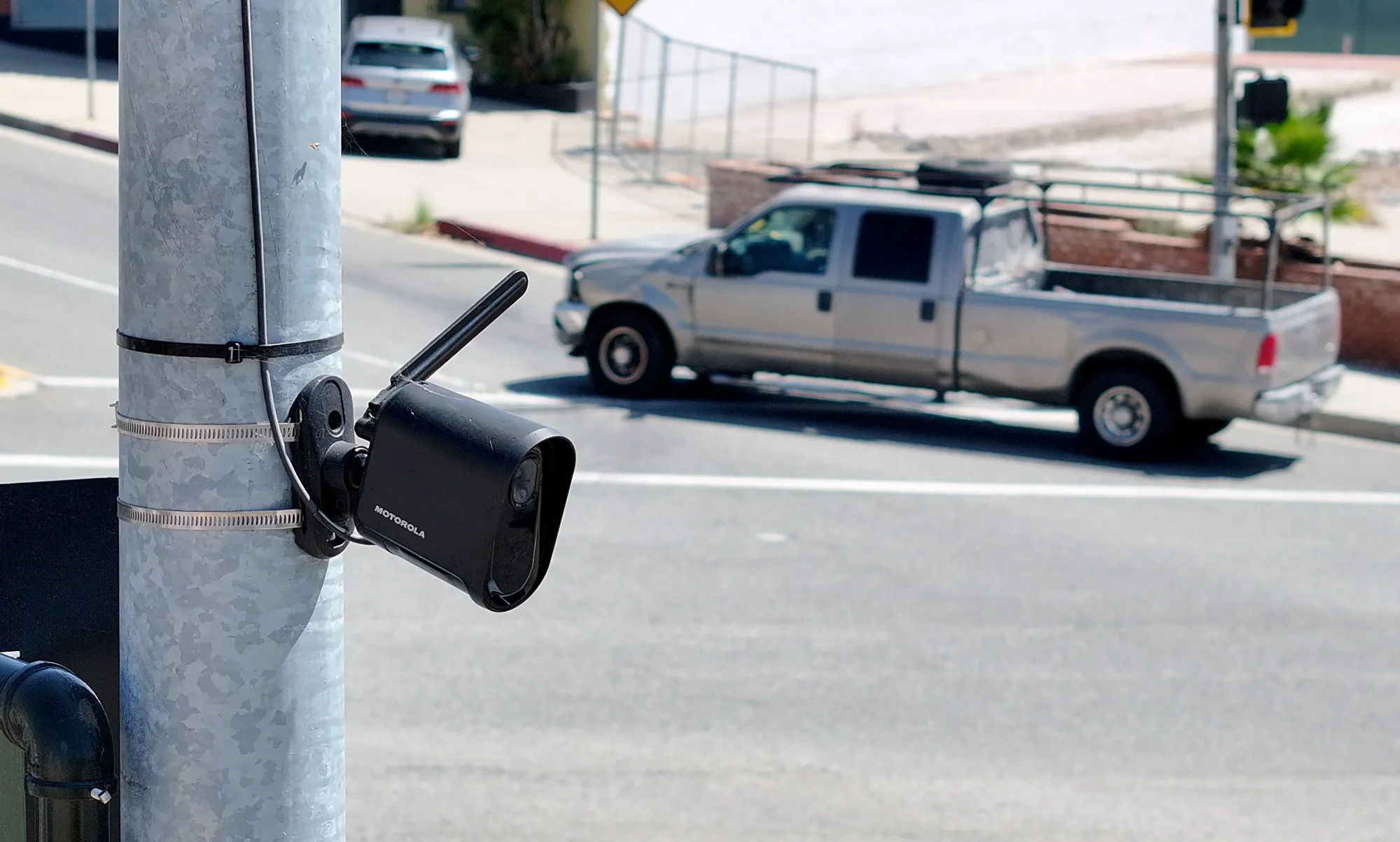
The Los Angeles Police Department may be closing in on a new 10-year, $235 million contract with Axon Enterprise for updated equipment, including new patrol car cameras with license plate reader capabilities and the possibility of using artificial intelligence to create the first draft of officer reports based on audio from their body worn cameras, after the Board of Police Commissioners voted Tuesday, Sept. 22 to approve the contract and send it to the City Council.
Read more Wife of detained Chinese American scientist hopes Trump brings up his case in Xi summit
In a separate vote, the commission also approved a three-month pilot program with Axon Enterprise that will outfit some city-owned street lights with license plate reading surveillance cameras at no cost to the city.
The latter vote comes at a time when license plate reader cameras are being heavily scrutinized by members of the public for a number of reasons, including data-sharing with federal authorities and privacy concerns.
Both items were approved with 3-0 votes, with Board President Sasha Gerges Shields recusing herself for a possible conflict of interest and Commissioner Fabian Garcia absent.
The LAPD in July chose not to renew a contract with Flock cameras over concerns regarding privacy, data ownership and security, officials said, adding that the department wanted stronger contractual protections regarding ownership and control of data collected by the cameras.
Dean Gialamas, the department’s chief information officer, told the commission on Tuesday that though talks have continued with Flock, no agreement has been reached. The department has not had access to the Flock system since the previous contract ended in mid-July, he said.
Gialamas said he understood public concerns regarding automated license plate reader cameras and likened them to concerns felt by the public when DNA technology was first introduced in the 1990s.
“My goal today was really to demonstrate that, like the now-trusted DNA testing, we can preserve this incredible investigative and public safety tool while placing deliberate audible limits around access, retention, sharing, advanced capability and protected activity,” Gialamas said.
Some of those safeguards would include “role-based access controls, multi-factor authentication, continuous audit logging and an annual independent security testing of all systems that store or process LAPD data.”
The city and LAPD “would retain sole and exclusive ownership of all data, images, video, plate reads, metadata and derived or algorithmic outputs” generated by the cameras.
Of the Axon cameras, Gialamas stressed that the test cameras would focus solely on license plate and vehicle type and while they may capture the driver of the vehicle or a person on the sidewalk, the cameras do not have facial recognition technology, or any other technology that would lead to a person’s identity.
Read more Suspect in Yom Kippur shooting outside Ontario synagogue dies from his injuries
“It does not have the ability to recognize or identify individuals,” Gialamas told the commission.
While it wasn’t known where specifically the cameras would be mounted, Gialamas said they would solely go on city-owned street lights and would face the direction of general traffic. They would not be used on private residences.
The camera locations would be decided among several factors “centered around where crime tends to occur,” Gialamas said.
It wasn’t known when the cameras would be installed or exactly when the pilot program would begin.
In a separate vote, the commission also agreed to send a contract proposal with Axon Enterprise to the City Council.
Among the technologies available under the new contract were upgraded in-car camera systems, upgraded body-worn video cameras, Tasers and more digital storage. New technology would also include a system called Draft One, which would give officers an “AI-assisted report-writing capability,” according to the contract.
That technology would essentially produce a first-draft narrative for officer review based on the audio content on an officer’s body-worn camera. The officer would then review, check and approve the report before it goes to a supervisor, Gialamas said.
The department has contracted with Axon Enterprise since 2016 for body-worn cameras and secure digital evidence storage and added in-car video systems through Axon in 2022.
If approved, the contract would run through July 2036, according to a staff report.
Read more Killer Dana film premiere party will highlight O.C.’s long-lost big wave break