
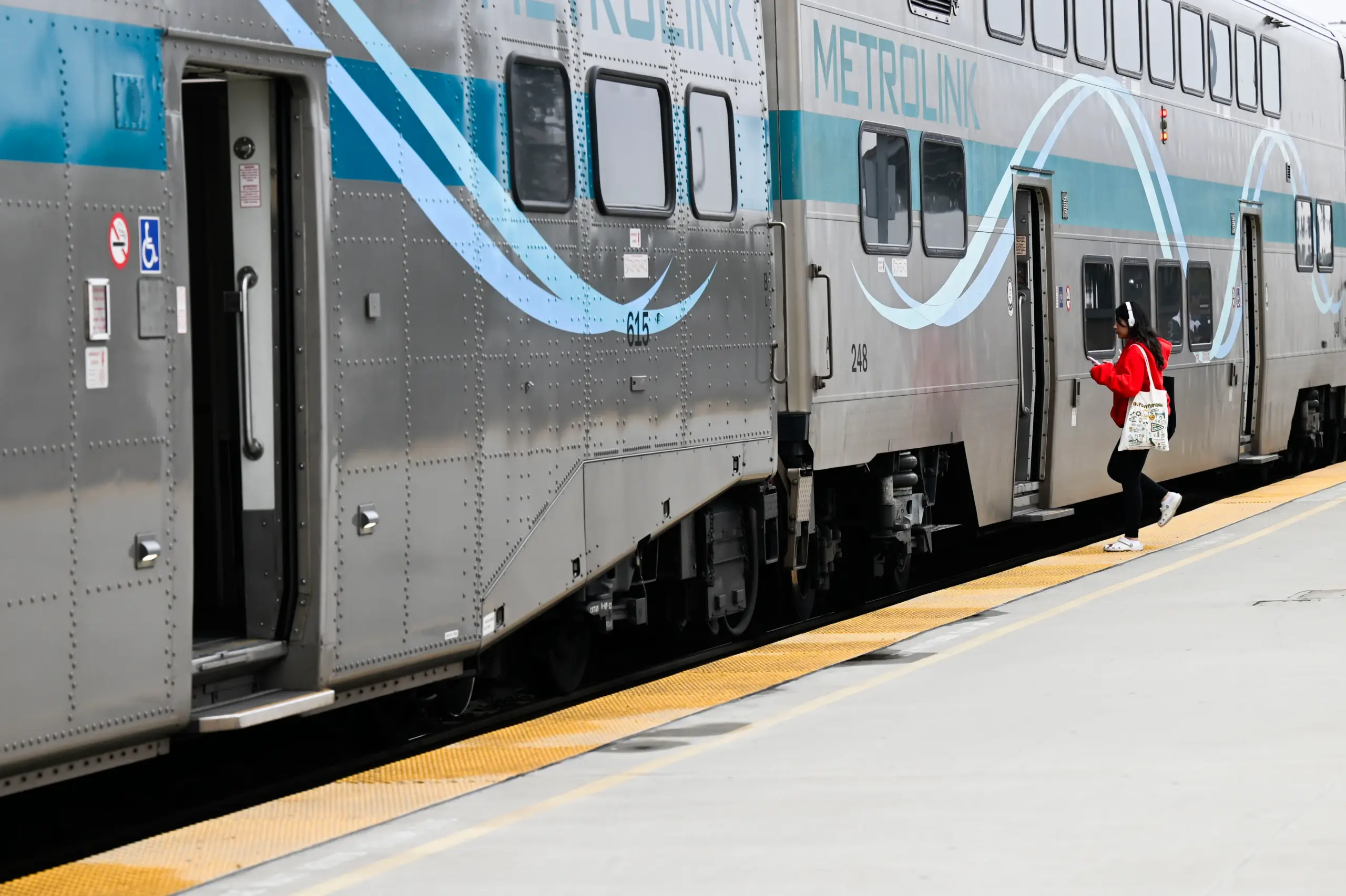
Metrolink, the regional passenger rail hurting from reduced ridership and budget shortfalls, is having difficulties finding parts to repair some of its locomotive fleet that my be compromising safety, said LA Metro Board Member Tim Sandoval on Thursday, Sept. 24 at the Metro board meeting.
Read more Chargers OC Mike McDaniel: ‘There’s no magic formula’ for fixing offense
Sandoval, also a member of the six-county Metrolink passenger train agency, led a motion approved for LA Metro to perform a comprehensive audit of Metrolink’s problems obtaining parts for locomotives as well as “safety concerns” at the regional heavy-rail passenger train agency.
“Metrolink is facing serious structural challenges and is having difficulty getting parts for locomotives,” said Sandoval, who is also mayor of Pomona. Downtown Pomona has a Metrolink station for 10 Riverside Line trains, five each way on weekdays. “We must address this supply chain issue. Safety is not negotiable.”
Metrolink declined to discuss the action by LA Metro, which oversees Metrolink’s budget and operations, along with the Orange County Transportation Authority.
However, It released a statement on Thursday afternoon that read:
“Metrolink welcomes the opportunity to provide information responsive to the Metro Board’s request and demonstrate the rigorous work underway every day to support the safety of our passengers and employees. Safety is foundational to everything we do, and we remain focused on strengthening the reliability of our rolling stock and providing service our passengers can depend on.”
L.A. County Supervisor and LA Metro board member Kathryn Barger agreed with Sandoval. She was part of an 11-0 vote that approved Sandoval’s audit, and also gave a boost to Metrolink for funding a fare decrease on its San Bernardino to Los Angeles line.
“I know that catastrophic mechanical issues have plagued Metrolink trains and have seriously undermined the safety of the Metrolink system. This requires Metrolink to take a closer look at what is going on,” she said.
Metrolink commuter train service that began in 1992 serves six counties: Los Angeles, Orange, Riverside, San Bernardino, San Diego and Ventura. The agency has lost about 40% of its riders since the COVID pandemic hit six years ago. Simply put, workers are not commuting to the office as often, and many are working for home instead of riding Metrolink.
As ridership has dipped, so have fare revenues. Metrolink riders paid $35.1 million in fares in 2016; now, annual fare revenue is down to about $17 million, according to the Orange County Transportation Authority.
Metrolink has an operational deficit of between $30 million and $35 million, Metrolink CEO Darren Kettle said in an interview with the Southern California News Group in May.
It cut train service in March by eliminating many trains. And there is talk of further train service cuts.
Read more 3rd and Broadway redevelopment project in Santa Ana remains in limbo
On Oct. 5, fare increases will be in place, marking the first increase in fares for the agency in 13 years. This is an effort to raise cash and cut into the deficit.
One-way fare tickets will increase by 14%. The SoCal Day Pass will increase from $15 to $19 on weekdays and from $10 to $12 on weekends and holidays, according to Metrolink. The day pass price increase is 27% on weekdays and 20% on weekends. However, the price of the LA Zone Pass will remain $5.
To attract riders and keep those they have, the agency cut fares on the most used San Bernardino to Los Angeles Line. This line runs from San Bernardino, into Rancho Cucamonga, Montclair, Pomona, Claremont, Baldwin Park, El Monte, Covina, Cal State Los Angeles and reaches L.A. Union Station, a transportation hub that also has L.A. Metro rail lines, buses and other transit services, such as the Flyaway Bus to LAX and the Dodger Stadium Express.
LA Metro also awarded Metrolink $365,202 for what it called “Metro’s share” of the San Bernardino Line 25% fare reduction. The extra funding extends the reduced fare program on that popular line from June 30, 2025 to June 30, 2030, LA Metro reported.
Today, a one-way ticket between Los Angeles and San Bernardino is $9.75. That price reflects the 25% discount currently in place (without that adjustment, it would go up to $13), explained Meredith Yeoman, a Metrolink spokesperson in an email Thursday.
Some have called LA Metro board members to demand full funding for Metrolink. But making up the regional passenger line’s operational funding gap may not be in the cards.
“We are working with Metrolink,” said LA Metro board member Ara Najarian, who also serves on Metrolink’s board. “We are facing some very difficult financial times. We have to be strict and disciplined on how we do this. We will have to tighten our belts but we are not abandoning working with you (Metrolink),” he said during Thursday’s LA Metro board meeting.
Kettle said in a statement that his agency is facing “rising operating and maintenance costs, reduced post-pandemic ridership, and declining state and federal funding support.”
The agency must pay a 31% increase in diesel fuel, as well as rising wage costs.
LA Metro will continue working with Metrolink on revising is fiscal year 2027 budget proposal so that it matches Metro’s operating subsidy. Once the agency submits a final 2027 budget, the LA Metro staff will return to the Board with a recommendation on funding.
Metrolink told the Southern California News Group in May that it is also seeking additional state and federal funding to stave off additional service cuts as it prepares for an influx of riders for the LA Summer Olympics in 2028.
Read more Why bond yields are rising and why everyone should care