
I hoped I would live long enough to see them. And I did!
The new David Geffen Galleries at the Los Angeles County Museum of Art opened to the public recently after years of controversy, construction and keen anticipation.
Read more At least 5 dead after Amazon cargo plane barreled off runway at Miami airport
The concrete and glass gallery space, designed by architect Peter Zumthor, is long and thin and meandering. Its organic shape stretches across and over Wilshire Boulevard in what resembles a spider or a snake.
There are two entrances, one on each side of the boulevard, but the one closest to the LACMA plaza near the parking structure seems to be the one most visitors would use.
I approached the new space on a recent Saturday morning with a great measure of excitement due to its years in the making filled with comments both negative and positive.
Many have decried its strange design, its unwelcoming stone walls that are not conducive to hanging art, and its square footage measuring less than the spaces it is replacing.
Others have praised its innovative design and its unorthodox juxtaposition of artworks.
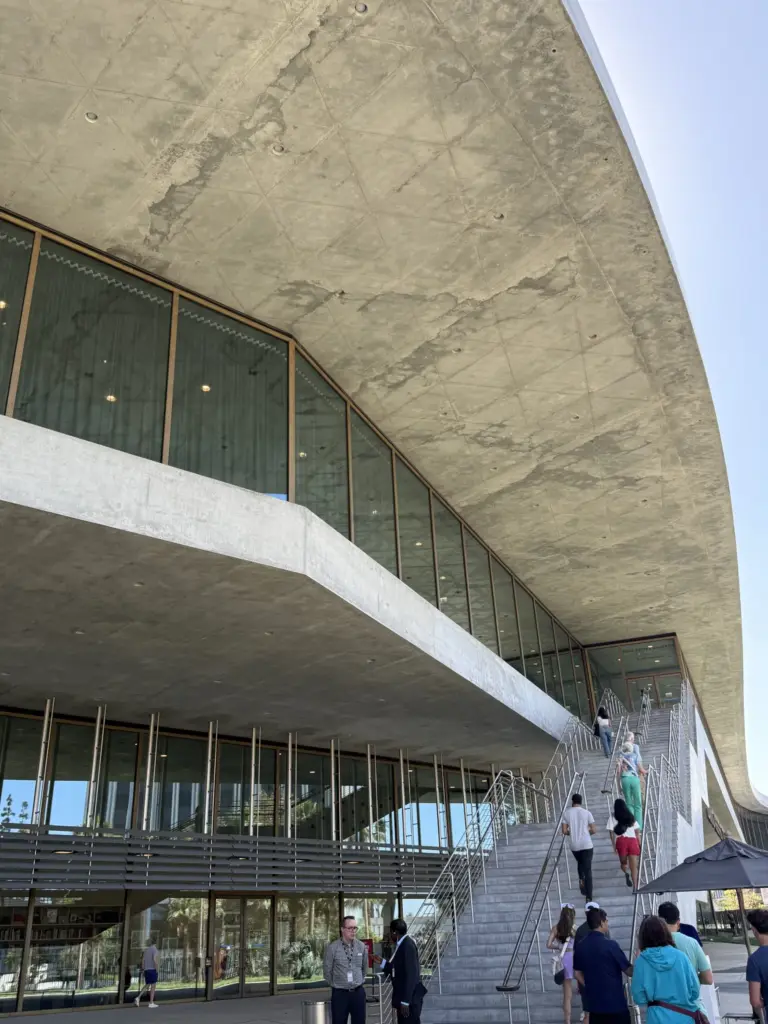 Visitors climb the stairs to the north entrance of the new David Geffen Galleries at the Los Angeles County Museum of Art. (Photo by Penny E. Schwartz)
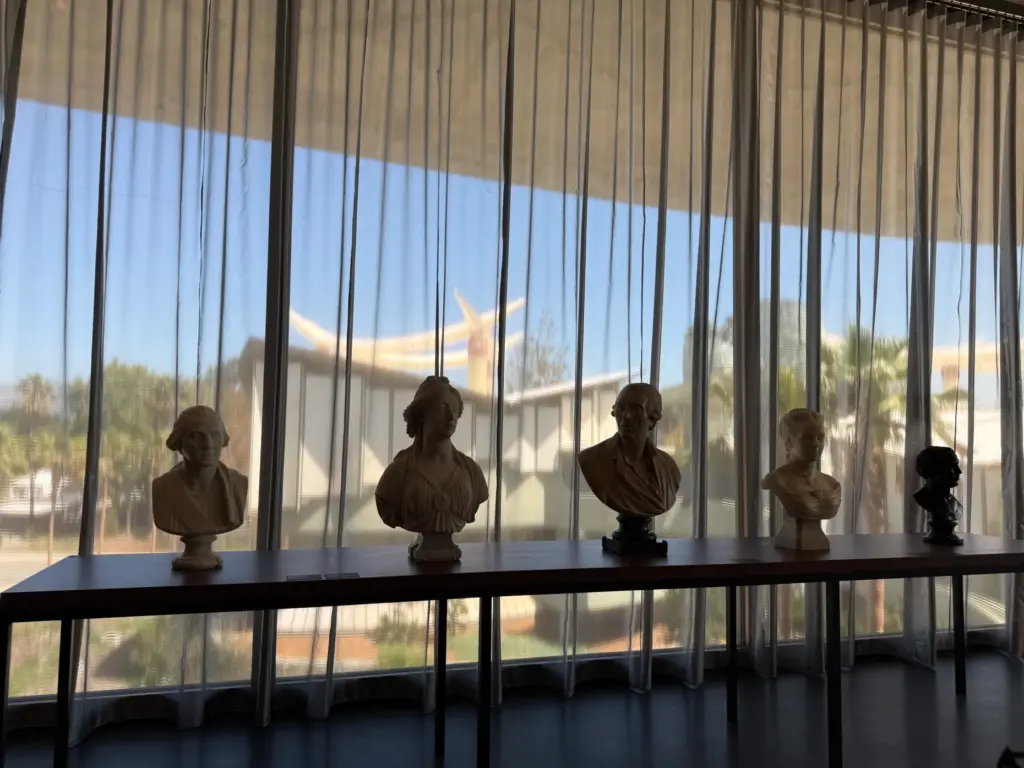 Busts in the new David Geffen Galleries at the Los Angeles County Museum of Art are silhouetted in front of a window. (Photo by Penny E. Schwartz)
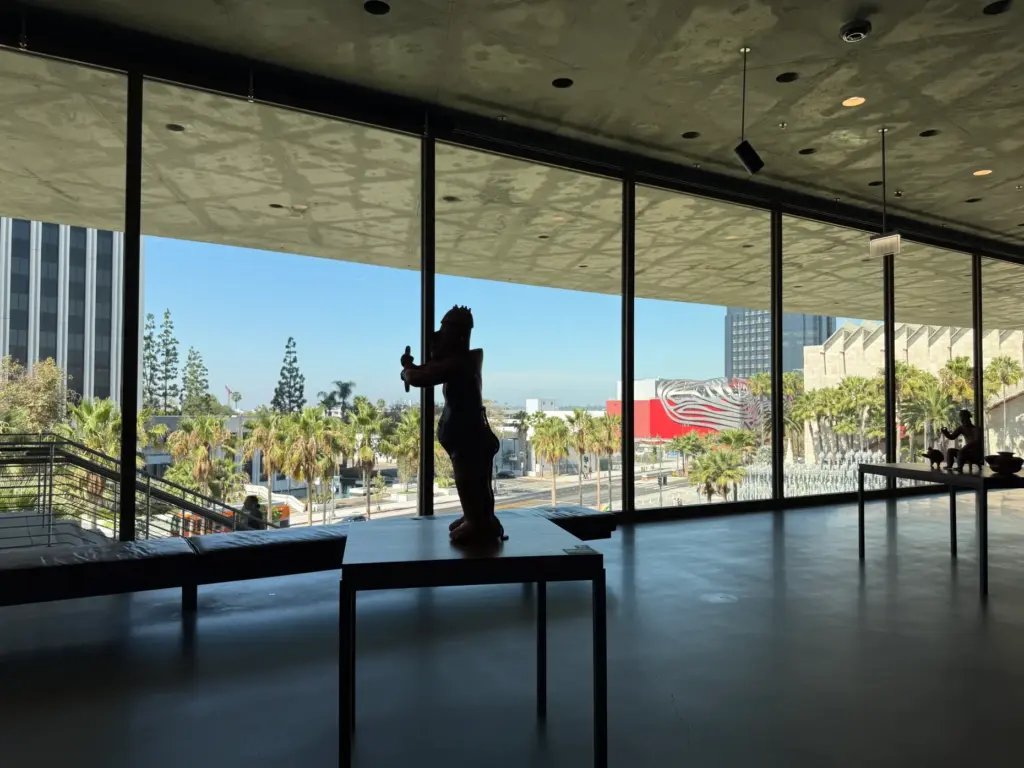 Artworks in the new David Geffen Galleries at the Los Angeles County Museum of Art are silhouetted against a backdrop of Wilshire Boulevard. (Photo by Penny E. Schwartz)
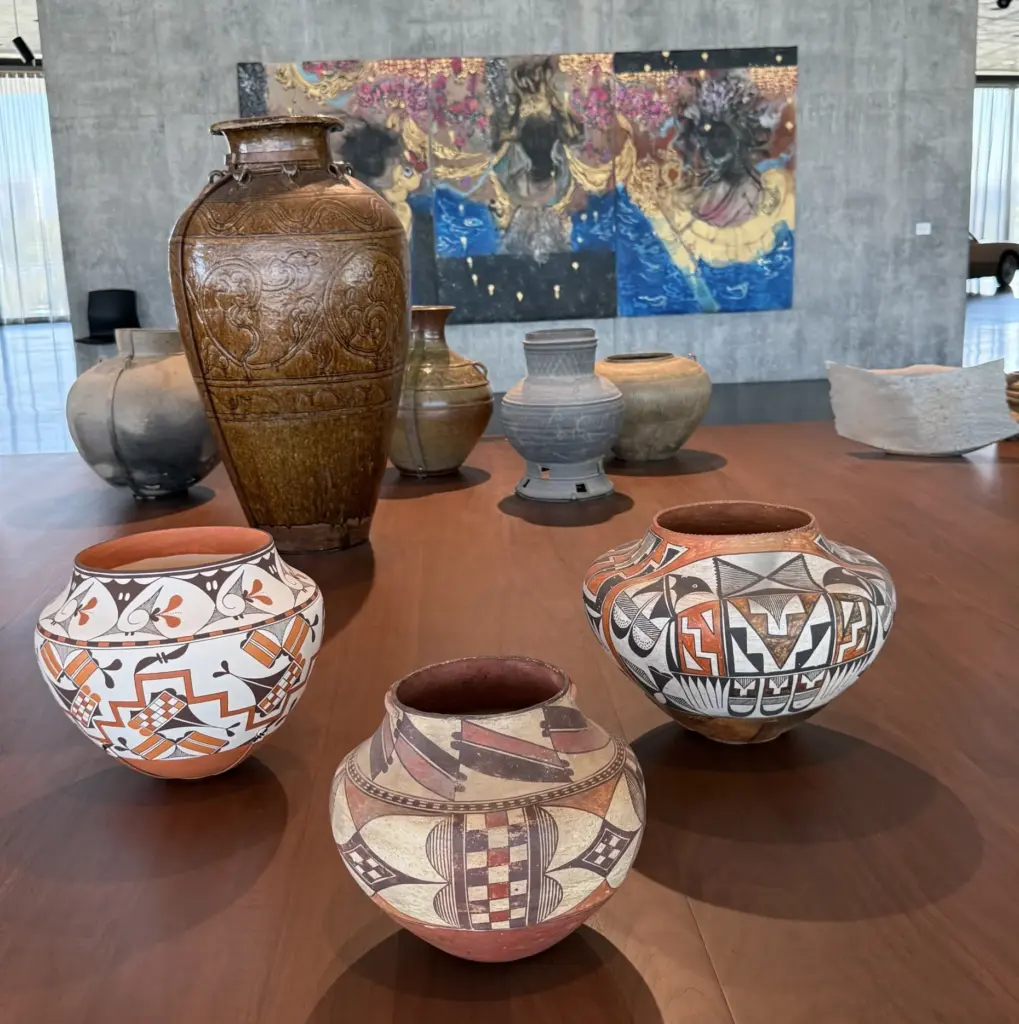 Ceramic pots from Acoma Pueblo in the American Southwest are displayed in full and easy view of museum goers in the new David Geffen Galleries at the Los Angeles County Museum of Art. (Photo by Penny E. Schwartz)
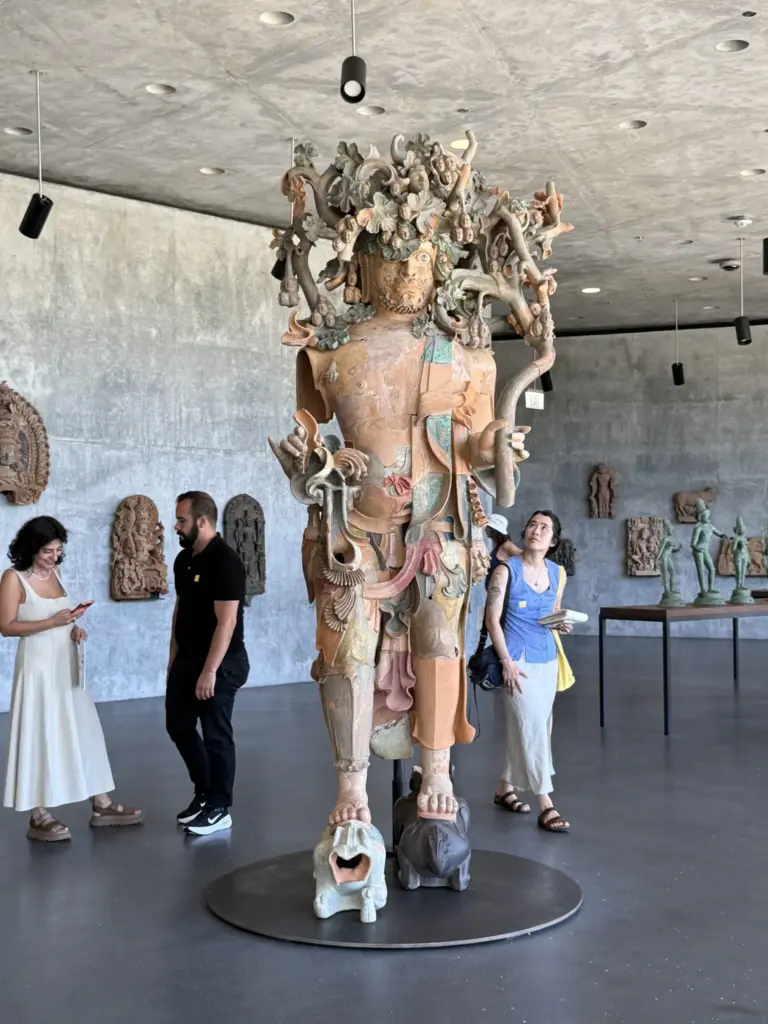 Museumgoers study a larger than life sculpture in the new David Geffen Galleries at the Los Angeles County Museum of Art. (Photo by Penny E. Schwartz)
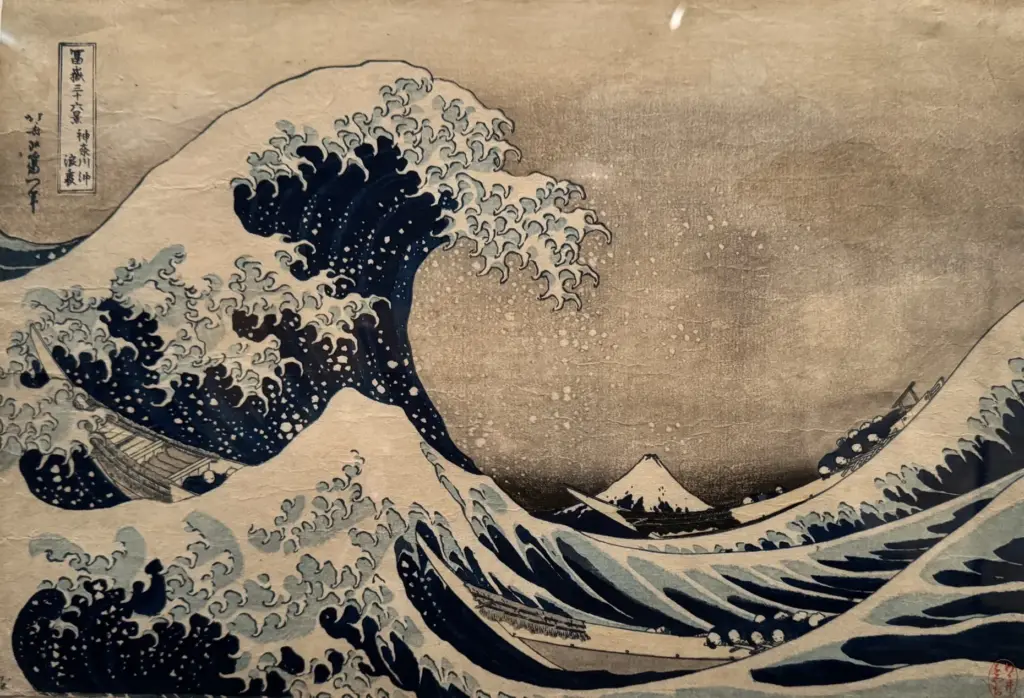 “The Great Wave off Kanagawa,” created by famed Japanese artist Hokusai in late 1831, hangs in the new David Geffen Galleries at the Los Angeles County Museum of Art. (Photo by Penny E. Schwartz)
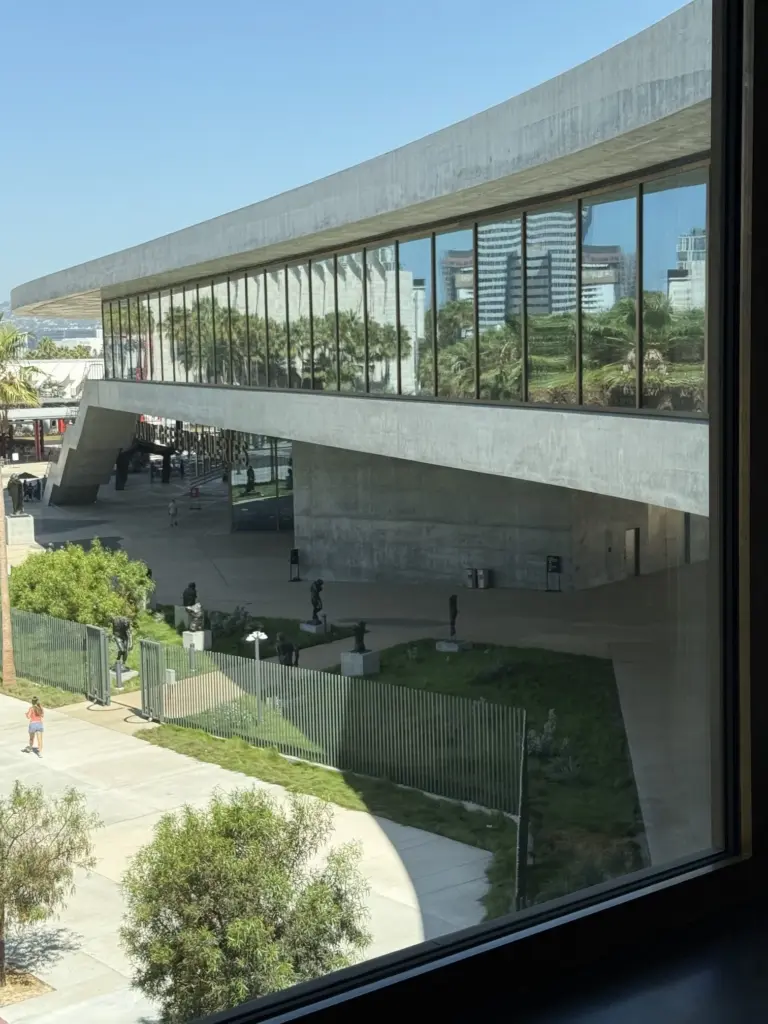 The concrete and glass gallery space of the new David Geffen Galleries at the Los Angeles County Museum of Art stretches across and over Wilshire Boulevard. (Photo by Penny E. Schwartz)
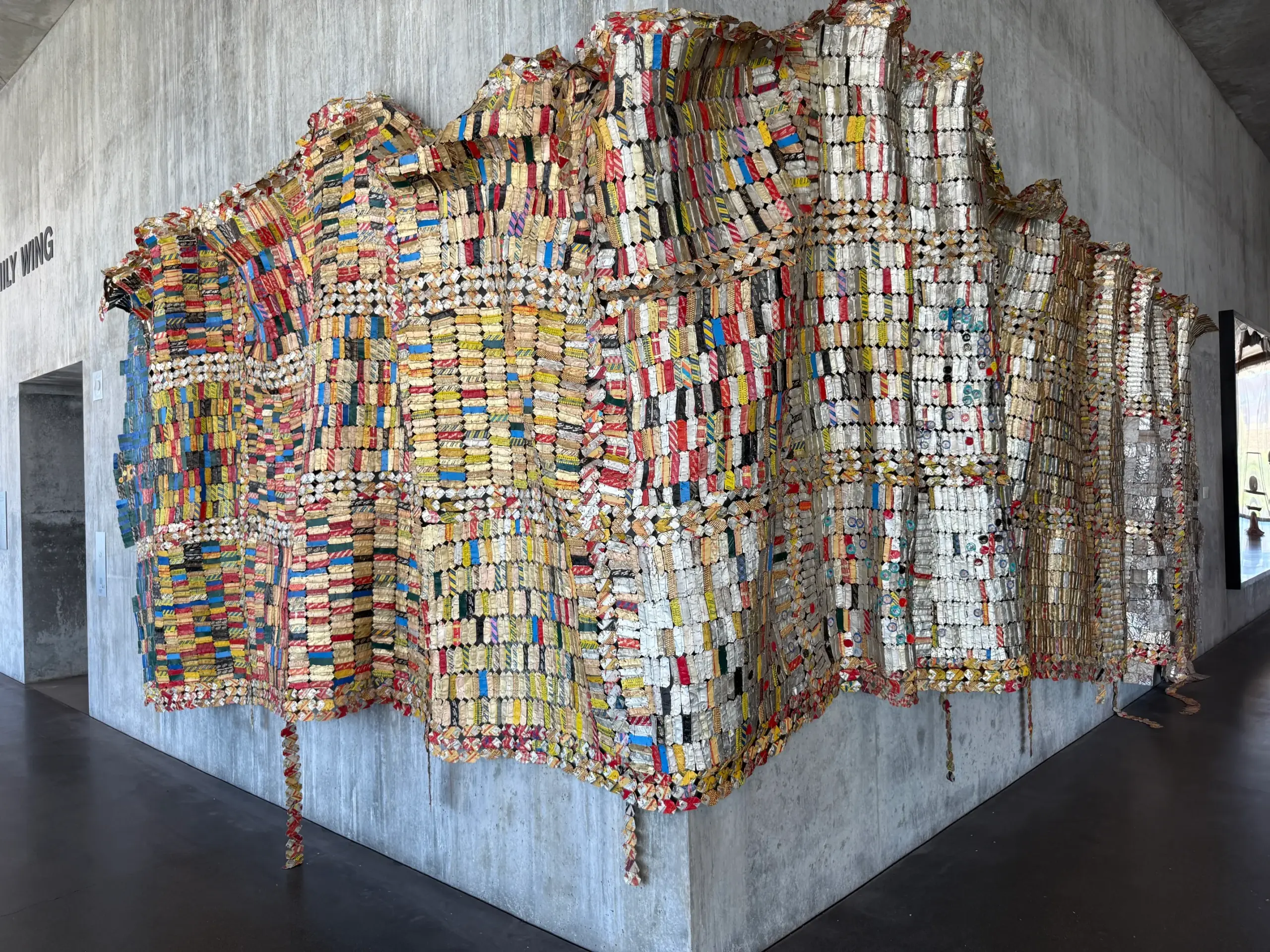
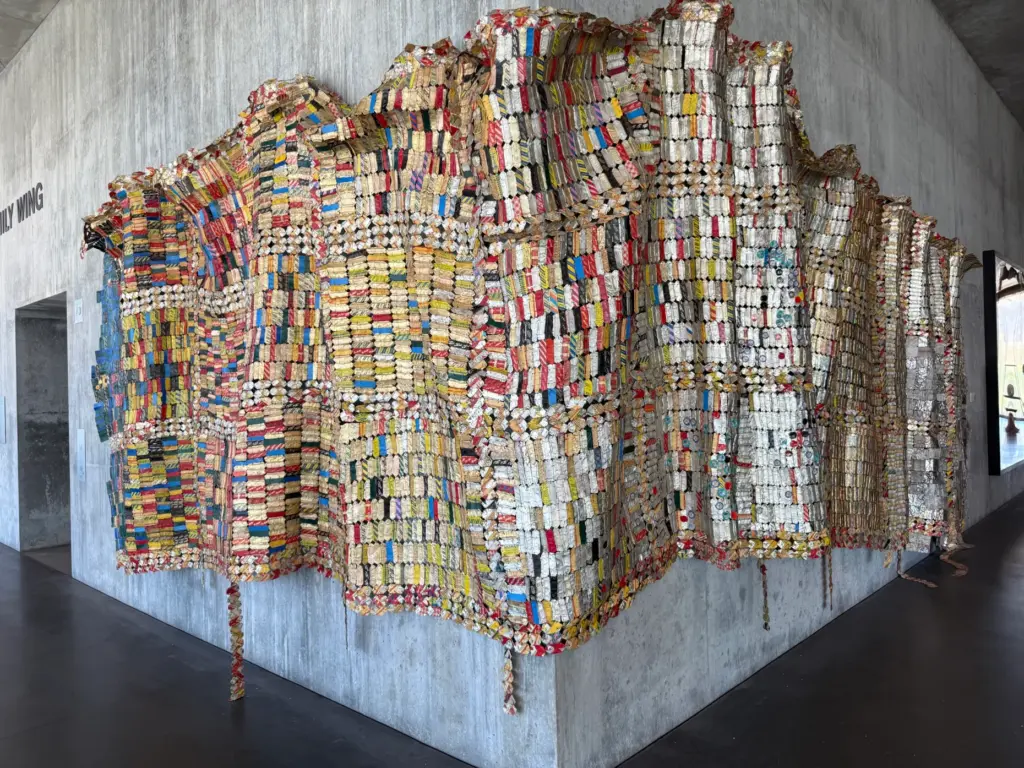 An African textile creation is hung on a gallery corner for maximum effect in the new David Geffen Galleries at the Los Angeles County Museum of Art. (Photo by Penny E. Schwartz)
To clear the former LACMA plaza and make way for the gallery of the future, the museum buildings of the past had to be demolished. Gone are several 1960s era constructions that housed thousands of art objects displayed by category at the museum.
The newer Resnick and Broad buildings still stand to the west side of the LACMA campus, but they were never part of the main event. They are almost like an afterthought and, indeed, were built much later than the original museum buildings.
I must admit that I miss the now razed upper plaza area where you could grab a cup of coffee, sit in the sun and watch the world go by. Perhaps a friendly common area will develop as time goes by and the new building becomes old hat.
As to its insides, full disclosure: I am not an art critic nor would I even begin to assess the artistic value of the displays in the new galleries.
I can only comment as an appreciator of the arts and an avid museumgoer who has always treasured what LACMA has to offer its visitors through the more than half century I have lived in Southern California.
I just knew I had to see the new museum space for myself.
Much to my surprise, the access to the Geffen Galleries is easy from the old ticket booth by elevator or staircase.
The first piece of art to greet me was a large, orange-hued sculpture that resembles a grouping of horses’ rear ends arrayed in a circle. Try as I did, I could not find a description of this work that would help me make sense of it.
Leaving that puzzling piece, I veered to the left and was soon caught up in the magic that swept me into this unusual gallery space. Artifacts from Mesoamerica are arrayed on tables and pedestals in striking proximity to the viewer. The desire to touch these beautiful clay carvings and sculptures is strong, although I knew that I must not. Warning signs and a multitude of docents ensure that this is the case.
Rarely have I seen items displayed in a museum that were so accessible to the viewer. Members of my small group agreed that it was “astonishing” to enjoy such a close-up view of museum artworks.
Read more Grissom has found success with Angels after trade from Boston
While many of the artifacts are behind glass in free-standing and wall cases, so many are right out in the open that you feel almost like you are in a gift shop where all is displayed for your close inspection. If only, one could buy one!
The overarching theme of the inaugural gallery displays is the world’s four major bodies of water and the coastlines and inland cultures that are inspired by them. Represented are the Pacific Ocean, Indian Ocean, Mediterranean Sea and Atlantic Ocean, with artworks grouped loosely according to these designations.
For example, the Pacific Ocean connects the Americas, East Asia, Southeast Asia and Oceania, giving the curators license to display artifacts from these cultures in galleries that flow into one another.
The inaugural installation seems to focus much more on artifacts than fine or wall art like paintings, although there is a section of European masterworks among the exhibits. Art objects from the ancient Americas are the first to greet viewers at either entrance.
While there is ostensibly a theme to the groupings, it is far from obvious as you wander from Mayan ceramics to photographs, from a Matisse masterpiece to modern Mexican silver to a Studebaker representing car culture. I soon gave up trying to make sense of the juxtaposition of artworks and just went with the flow.
This is the best advice I can give for appreciating the new galleries. Enjoy the play of light and dark as you walk from the galleries that line the exterior walls to the interior ones lit strictly by museum lights. The dark gray walls of architectural concrete offer a uniform and muted palette for the works that are hung on them.
I can’t help wondering how the next set of installations for the galleries will make use of the holes already drilled into the walls, but that’s a question for a future visit.
For the outside galleries, metallic curtains by textile designer Reiko Sudo shield the artworks from harsh sunlight but are transparent enough to allow views of the cityscape below. The galleries sit entirely on the second story of the construction. The walls of the interior galleries have been slightly tinted to serve the artifacts on display.
Text boxes and descriptions of the displayed items are minimal as is the bare-bones gallery map you receive upon entry. As in so many museums today, the bulk of the pertinent information can be found online by downloading a Qcode. This is my least favorite aspect of any modern museum visit, truth be told.
The beauty of the many objects displayed is beyond dispute, and I thoroughly enjoyed the colorful quilts, Asian screens, Buddhist figures, African masks and so many other creations of humans through the ages and across cultural divides.
Perhaps the flow of human creation from one geographical area to another and one medium to another is the point that the curators are trying to make with this novel and innovative set of museum galleries.
Elevated above Wilshire Boulevard, you look down on the humdrum flow of daily traffic and appreciate that you are on an elevated plane where art directs the conversation and takes you where it wants you to go.
The Los Angeles County Museum of Art, the largest art museum in the western U.S., is at 5905 Wilshire Blvd. along Museum Row in west L.A. It is open from 11 a.m. to 6 p.m. Monday, Tuesday and Thursday; 11 a.m. to 8 p.m. Friday; and 10 a.m. to 7 p.m. Saturday and Sunday; closed Wednesday. Tickets are $30 for adults, $15 for age 17 and under, and $26 for seniors. Prices are discounted for L.A. County residents, and admission is free for members. Tickets for daily time slots are available for pre-purchase online at lacma.org or at the box office on the museum plaza. Parking in the designated garage is $24, but it is possible to find metered street parking along 6th St. behind the museum campus.
Read more Offense no help for Urena in Angels’ 1-0 loss to Pirates