
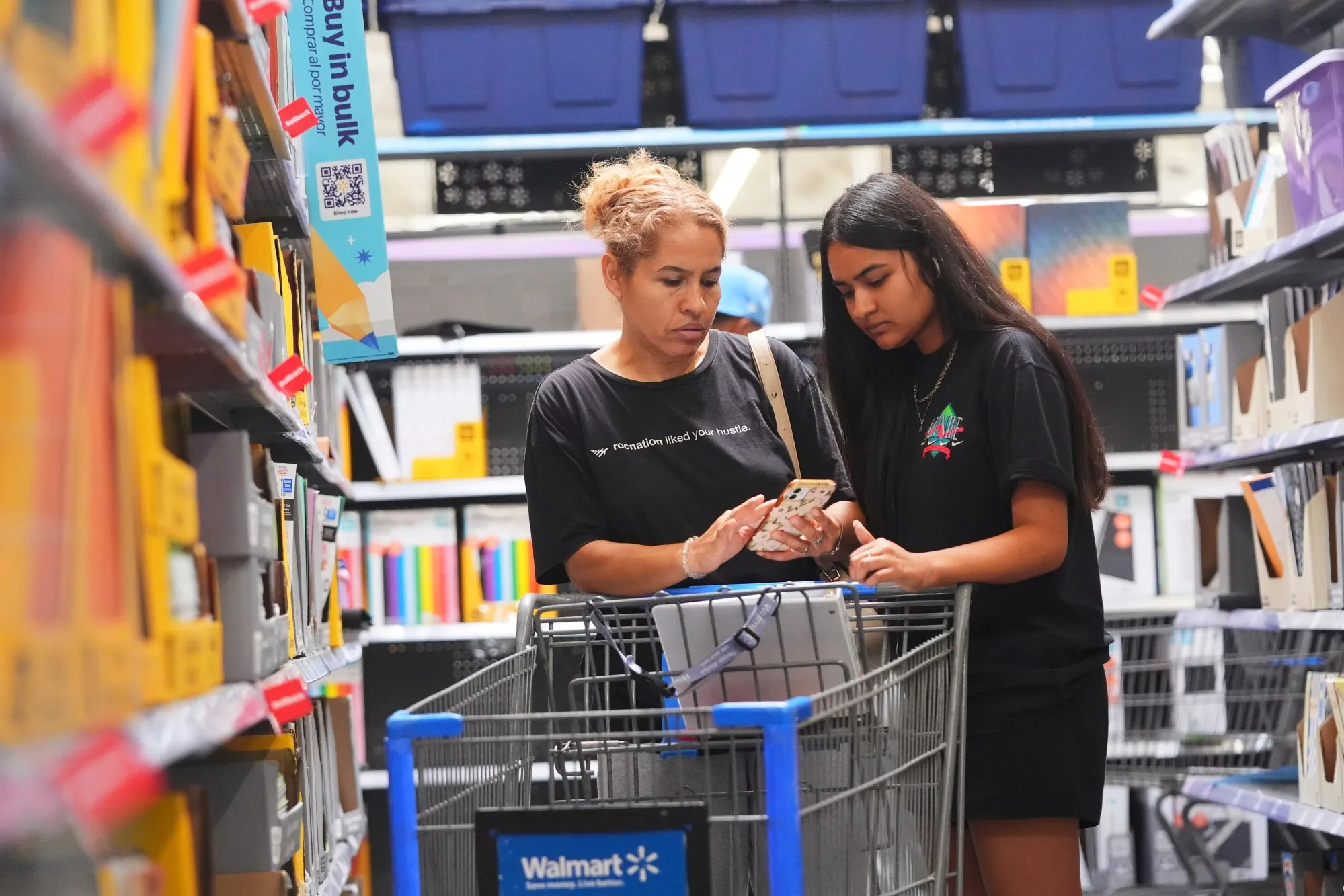
As swipe fees continually increase, back-to-school shopping will be more expensive — adding another burden for families already struggling to afford daily necessities.
Read more Stocks open higher on Wall Street and crude oil prices drop 6% as Mideast tensions cool
The swipe fees that banks charge to process credit card transactions will drive up the price of school and college supplies by a record $3.4 billion this year and cost the average family as much as $34, the Merchants Payments Coalition announced.
Jessica Wallo, director of community services for United Neighborhood Centers of Northeastern Pennsylvania, noted any added costs are felt by families.
“Our neighbors are struggling to make ends meet and struggling just to get by, whether it’s food, household items, back-to-school uniforms or whatever the case may be,” she said. “It’s important for that child not to be worried about some of these things when they’re in school. Any increase in fees — $34 or even more or less — could be detrimental to some of the kids.”
Averaging 2.36% of the transaction but ranging as high as 4%, swipe fees are most merchants’ highest operating cost after labor, and they must be built into pricing, coalition officials said.
With few consumers using cash and credit card rules making discounts difficult, all shoppers pay more because of swipe fees regardless of how they pay, officials added.
Families are expected to spend an average of $864 on K-12 school supplies, clothing and related items for a total of $43.3 billion this year, according to the National Retail Federation’s annual back-to-school and back-to-college surveys conducted with Prosper Insights & Analytics.
“With the rising cost of everything that we’re seeing, whether it’s at the pump or at the checkout register at the grocery store, it’s kind of scary times,” Wallo said. “We want to continue to support our community to make sure families have what they need. Back to school is a necessity; it’s not something that is a want.”
The Merchants Payments Coalition estimates swipe fees for K-12 school supplies will account for about $20 of the per-family cost and $1.02 billion of the total while the fees will equate to $34 on average and $2.4 billion overall for back-to-college spending.
Coalition officials reported swipe fees for Visa and Mastercard credit cards have more than quadrupled since 2010, to $118.8 billion last year, and total credit and debit card swipe fees reached a record $198.25 billion, raising prices by more than $1,200 a year for the average family.
National Association of Convenience Stores General Counsel Doug Kantor calls on Congress to help families with the high cost of school supplies by passing the Credit Card Competition Act.
Read more Clinton Foundation launches an institute to help state governments find nonpartisan solutions
“A family could buy superhero lunch boxes for two kids or a backpack for their college sophomore with the money credit card companies are swiping from them,” Kantor said in a news release.
Should the bill be passed, banks with at least $100 billion in assets would enable credit cards to be processed over at least one unaffiliated network like Star, NYCE or Shazam, in addition to Visa or Mastercard — resulting in an anticipated savings of $17 billion a year for merchants and their clients, MPC officials added.
As prices and fees increase, so do the requests for assistance from community members on a daily basis, Wallo said.
“We see increased need in everything across the board,” she said. “We do the best we can within our resources and even beyond. We try to get really creative to look at methods to help families save money so their dollar can stretch further — like providing recipes to create a delicious meal based on what we have in the pantry.”
Allison Zeller, vice president of consumer and industry insights for the National Retail Federation, stated 61% of shoppers reported seeing higher prices this year and 41% of customers plan to shop at discount stores.
“Affordability is definitely top of mind this season across all of the consumer demographics,” Zeller said in an NRF conference call. “As consumers have more options than ever, they are very savvy to shop around and find the location, retailer and format that best works for them.”
NRF Chief Economist Mark Mathews added 37% of consumers plan to cut back spending in other areas to ensure they have money for back-to-school shopping.
As the economic picture continues to evolve, Wallo recognizes the hardships many people face.
“If you look at the affordability as it stands today versus a couple years ago or even further, I don’t know how families are able to sustain a comfortable living situation and the basic needs to survive,” she said.
Read more This House bill would enable parents to enforce screen time limits on their kids’ devices