
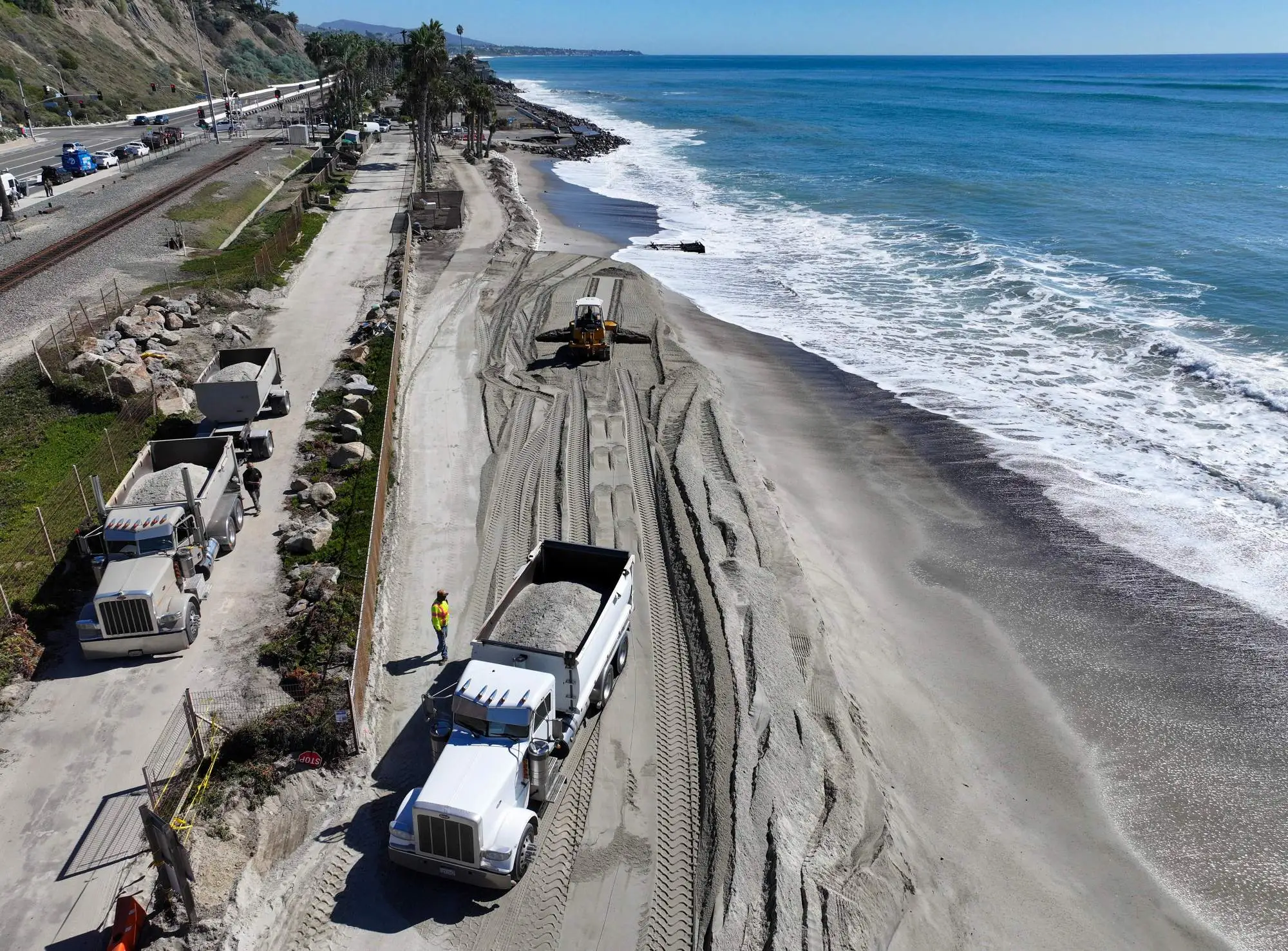
Truckloads of sand were hauled to Capistrano Beach Park on Wednesday, Oct. 14, part of a $520,000 replenishment project that should add about 9,000 cubic yards when complete in two weeks.
Read more Orange County Fire Authority to test software that simulates wildfire response strategies
In November, nearly 10 times that amount is scheduled to be hauled out of the Santa Ana River and put between groin jetties in West Newport to beef up the beach buffer between the ocean, homes and roads.
As beaches continue to be battered by relentless swells and El Niño winter conditions near, coastal towns and county agencies are scrambling to battle erosion that has left homes and roads vulnerable to the sea’s force.
The recent run of summer tropical swells has left several south-facing beaches unrecognizable in recent months, eroding the coastline severely. Now decision-makers are asking: What more can be done in the near- and long-term to preserve beaches?
Fifth District OC Supervisor Katrina Foley talked about the importance and need for regular sand maintenance as the OC Parks crews hauled in sand from the LaPeyre Quarry off Ortega Highway in San Juan Capistrano on Wednesday, depositing it just north of where several homes on Dana Point’s Beach Road have been destroyed by recent big waves. She knows it’s not nearly enough, but every bit helps, she said.
While the sand — enough to cover about the size of two football fields — to be placed at Capistrano Beach is just a “bandage” to protect a storm drain and sandbags, it adds to the “system” with hopes it will eventually move down the coast to help better buffer Beach Road from being destroyed by the sea.
“We have to start replenishing the sand, just like we repair potholes,” Foley said. “The entire coast is under siege right now.”
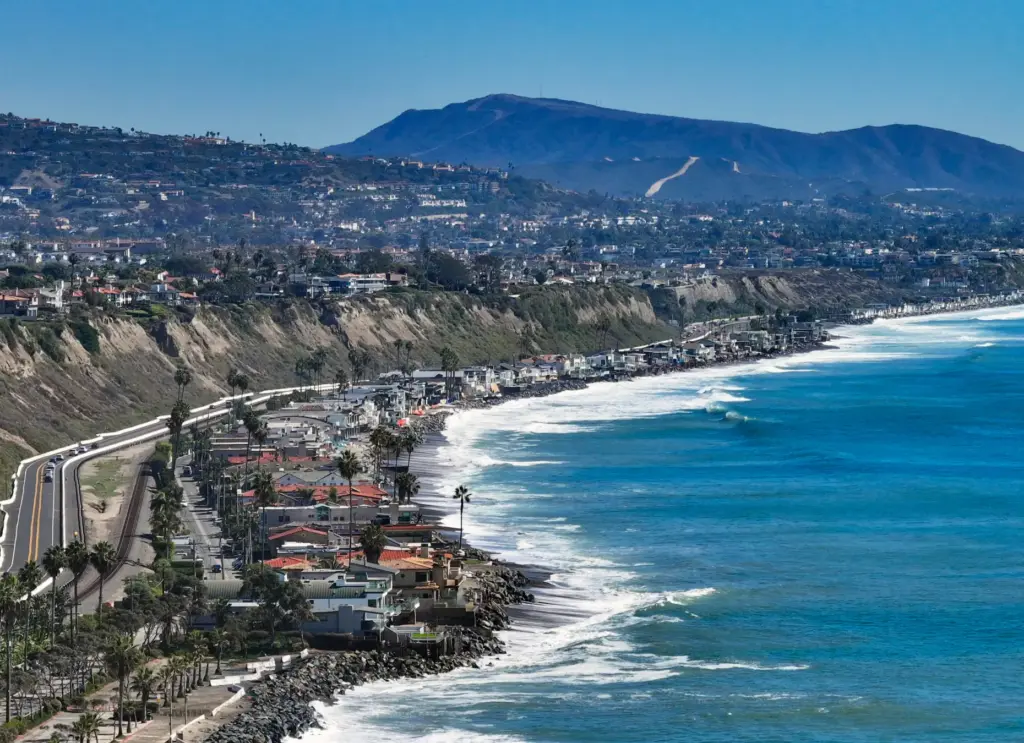 Homes along Capistrano Beach in Dana Point, CA, on Wednesday, October 14, 2026. (Photo by Jeff Gritchen, Orange County Register/SCNG)
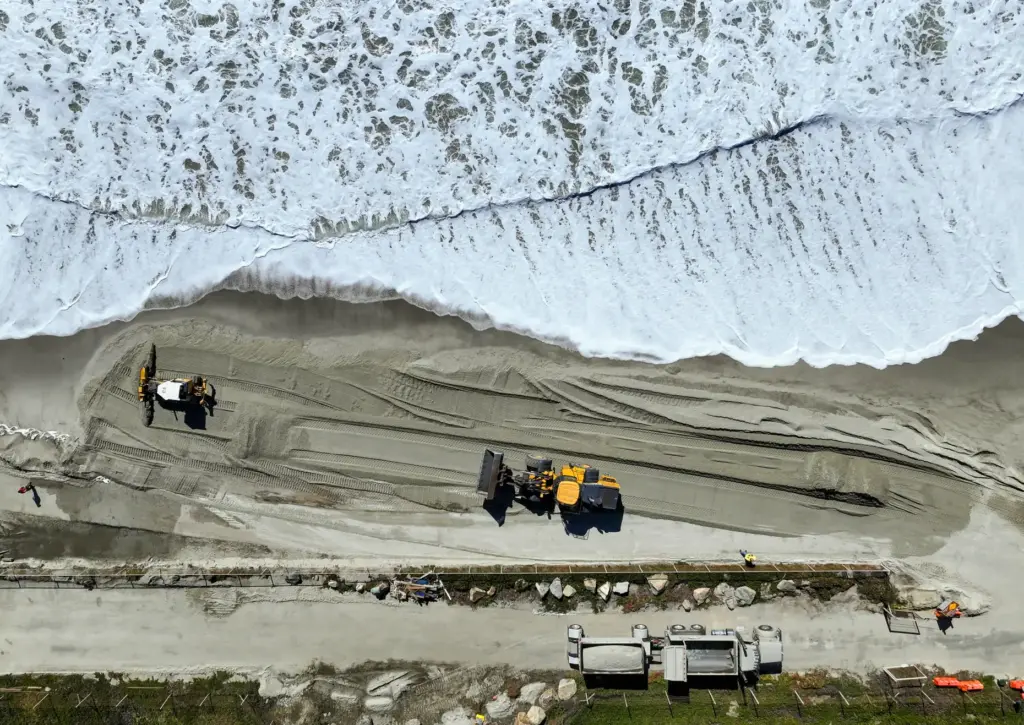 Truckloads of sand arrive at Capistrano Beach in Dana Point, CA, on Wednesday, October 14, 2026. OC Parks is placing 9,000 cubic yards of sand from the LaPeyre Quarry off Ortega Highway in San Juan Capistrano. The approximately $520,000 effort is designed to protect the shoreline, support sandy beach habitats, and preserve coastal recreation. (Photo by Jeff Gritchen, Orange County Register/SCNG)
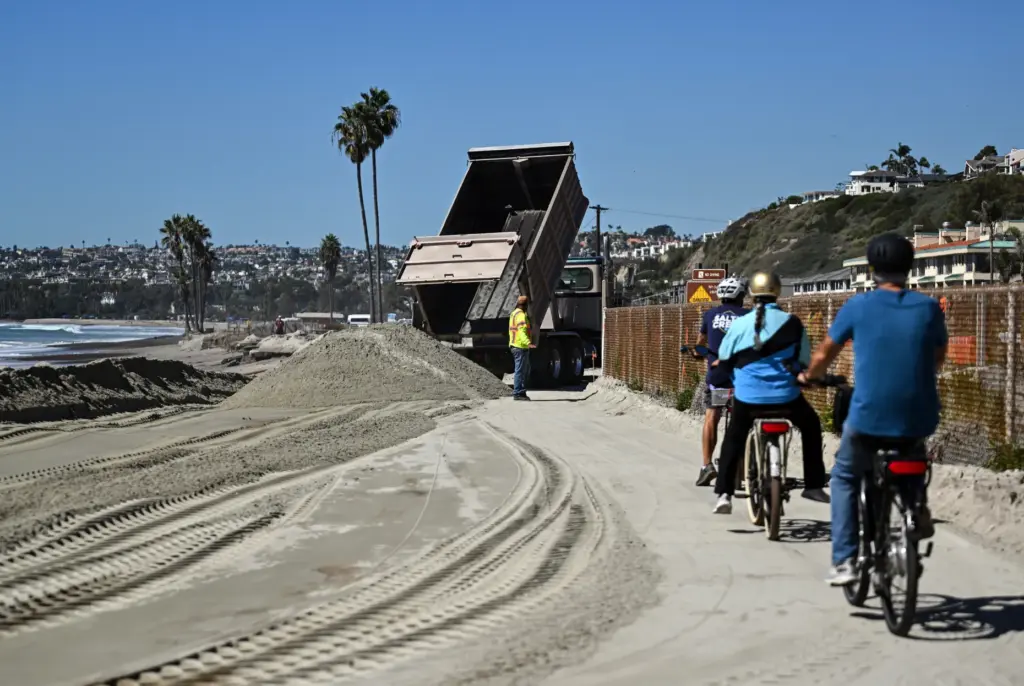 Beachgoers ride past new sand at Capistrano Beach in Dana Point, CA, on Wednesday, October 14, 2026. OC Parks is placing 9,000 cubic yards of sand from the LaPeyre Quarry off Ortega Highway in San Juan Capistrano. The approximately $520,000 effort is designed to protect the shoreline, support sandy beach habitats, and preserve coastal recreation. (Photo by Jeff Gritchen, Orange County Register/SCNG)
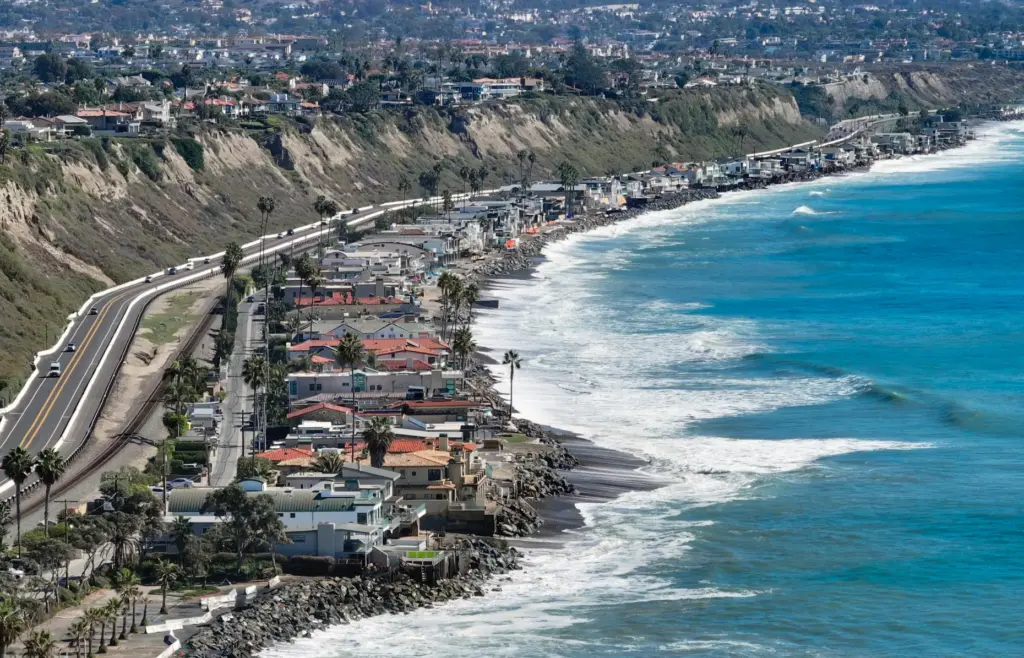 Homes along Capistrano Beach in Dana Point, CA, on Wednesday, October 14, 2026. (Photo by Jeff Gritchen, Orange County Register/SCNG)
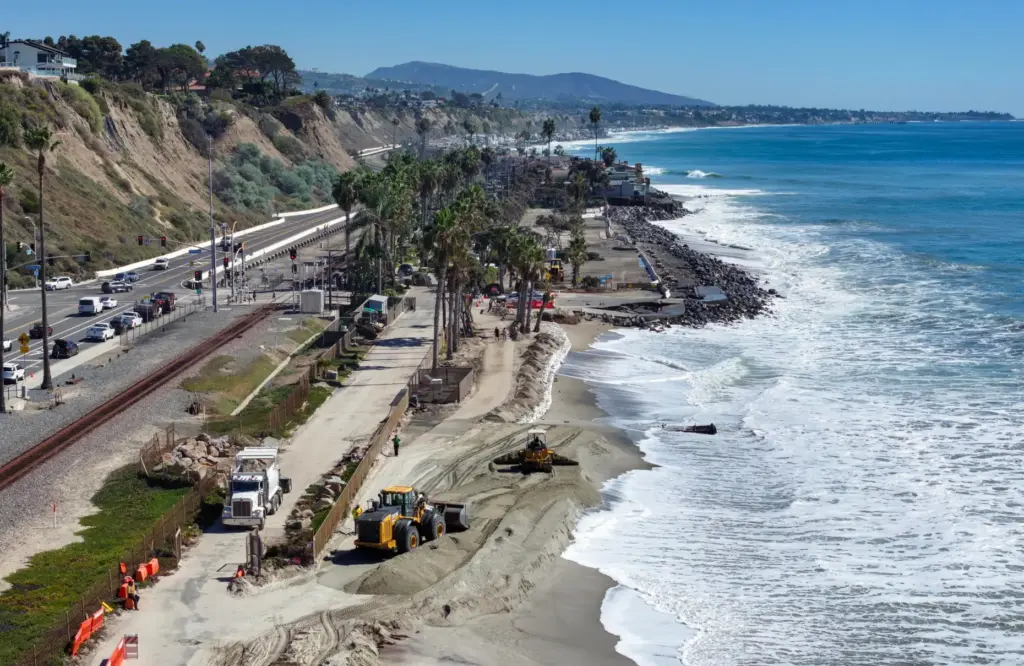 Truckloads of sand arrive at Capistrano Beach in Dana Point, CA, on Wednesday, October 14, 2026. OC Parks is placing 9,000 cubic yards of sand from the LaPeyre Quarry off Ortega Highway in San Juan Capistrano. The approximately $520,000 effort is designed to protect the shoreline, support sandy beach habitats, and preserve coastal recreation. (Photo by Jeff Gritchen, Orange County Register/SCNG)
Since 2023, just under 87,500 cubic yards of sand have been placed on the same stretch of beach, which sits just south of Doheny State Beach. The cost: about $1.6 million.
The project is adding sand to an area battered in recent years, with a basketball court, parking lot and wooden walkway at the county-operated beach destroyed in 2018.
A long-term plan to adapt the shoreline with natural sand dunes to help hold sand in place has been delayed for years by funding shortfalls, but the OC Board of Supervisors just days ago approved a grant for $2.4 million to revitalize the project, Foley said.
Capistrano Beach isn’t alone in its struggles. Laguna Beach needed to recently get an emergency permit to fix the damaged parking lot at Aliso Beach, which has been closed since early August, only to have Hurricane Rachel and high tides rip it apart even more.
The dirt road into the popular San Onofre State Beach is shut down following severe erosion, with State Parks having to tear down a restroom building to make more room for cars to enter when it does open back up.
There are also efforts underway by the Orange County Transportation Authority to bring in a dredger to pump about 700,000 cubic yards of sand onto San Clemente beaches by January to protect the threatened and vulnerable rail line that runs oceanfront at several spots, Foley said.
Newport Beach is still reeling from unexpected flooding that overtook roads and homes last week.
During a study session at Tuesday’s council meeting, city leaders and the public brainstormed ideas for protecting the town from future flooding, both during the expected El Niño season and in the long term as problems are expected to worsen with climate change and sea level rise.
The finger-like rock groins that help trap sand in West Newport were the answer to erosion and big storms that had the ocean crashing into homes in the late 1960s, said Public Works director Dave Webb.
In coming weeks, the project to move 100,000 cubic yards of sand from the Santa Ana River should again widen the beach in West Newport, he said.
At the sand-deprived Wedge, the city is hoping to use a hydraulic dredge to pump sediment from the Newport Harbor channel that sits on the other side of a long rock jetty to fill in the beach, but that work still needs to get through permitting and study, and could cost the city an estimated $5 million.
The hope, if all goes well, officials said, is to do the project by spring of 2027.
Read more Watchdog group seeks to block Jared Kushner from serving in his volunteer envoy role
Newport Beach is also looking for long-term solutions, such as surveying for a sandy site on the ocean floor off the city’s shoreline to dredge.
“We could pump right onto our beaches,” Webb said.
In response to the latest flooding event, the city was able to scoop material out of the Santa Ana River to backfill the beach with sand and build up berms, officials said.
Councilman Erik Weigand, who is also a board member with the Orange County Water District, talked at Tuesday’s meeting about the challenges of trucking in sand from other sources, such as the Prado Dam, which has a surplus of beach-quality sand built up that needs to be removed.
Permitting and the small window available because of environmental and other concerns to remove the sediment make using the sand for area beaches challenging, he said.
And it’s not cheap, Weigand added. While the sand is free, trucking 100,000 cubic yards of it would take 5,000 trips using 18-wheeler trucks, at the cost of about $30 to $50 a cubic yard, or more than $3 million, he said.
Weigand also noted there’s sand in Anaheim Lake, about 800,000 cubic yards worth, free to anyone who can cover the cost of removal. That sand can be used for any community that needs it for sandbags to protect against immediate threats, he said.
Weigand had other brainstorming ideas to better prepare for upcoming seasonal king tide events and strong El Niño winter swells, including hiring or contracting with a meteorologist who can constantly check forecasts and alert the city when they need to do extra preparations.
“That gives us an opportunity to know what’s coming in advance,” he said.
San Clemente has a “sand czar,” Leslea Meyerhoff, who is tasked with navigating projects and permitting to address the beach town’s eroded coastline, Weigand noted. Newport Beach could look into adding a similar position to the city’s staff, he said.
Residents, during the study session meeting, also had a few ideas to share.
One speaker suggested the city look at infrastructure such as offshore reefs, similar to what Oceanside is doing, to dissipate wave strength before it hits the coast.
San Clemente is also exploring the idea of a reef off North Beach, that could be shaped to create a surf break, but also slow wave energy so the beach there would stay sandy.
There’s a lot of ideas out there, Weigand said. “We have to figure out how to pay for it.”
A ballot initiative in San Clemente is proposing a 1% local sales tax, half of which would go to sand replenishment and beach restoration projects, he noted.
While Newport Beach has more funds to work with than the smaller coastal city to the south, “that’s something the city is paying attention to,” Weigand said.
Weigand and city staff also recently connected with the Australian team responsible for the Tweed River Sand Bypass System, a coastal engineering project that pumps sand from a river to nourish the southern Gold Coast beaches.
The communities there had lost millions annually in tourism revenue when beaches became depleted years ago, and came up with the project to continuously pump sand to the shoreline, an investment that paid off when the sandbars created the now world-famous surf break, Superbank.
The project cost an estimated $85 million, with $8 million a year spent annually to move the sand. The town now sees about $200 million a year in tourism revenue as a result of widening beaches and creating a surf break.
“If we lose the beaches, we potentially lose a lot of income to our city,” Weigand said. “Protecting the assets we have is essential.”
Read more Southern California woman sought for bank fraud added to FBI’s ‘Most Wanted Fraudsters’ list