
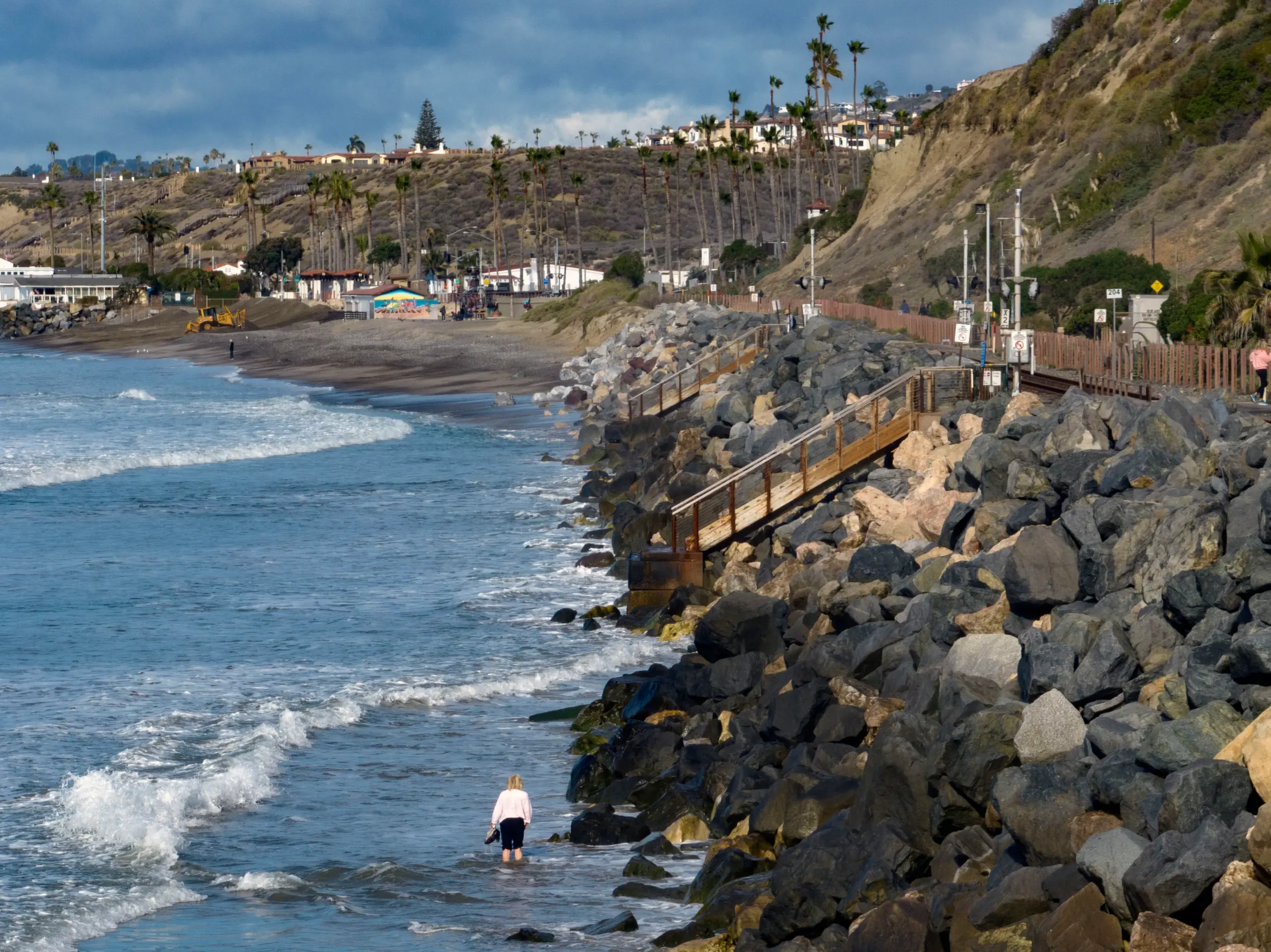
The goal is simple: To walk along San Clemente’s shoreline any time of the day, no matter how high the tides.
Read more Left standing in search of one particular 9/11 memorial bench
Under current conditions, when tides are high or the surf is big, the ocean covers the sand, with waves bouncing on rock structures and cutting off the ability to use the beach until the tides recede later in the day.
The lack of beach isn’t just a problem for strolls along the sand or for people looking to sunbathe. Eroded beaches mean the ocean is closer to infrastructure — like the oceanfront train tracks, homes and parking lots — and waves can cause damage. No beach means an impact on tourism, city officials say.
San Clemente officials were recently briefed on a buffet of potential solutions to the city’s ongoing erosion troubles with a presentation of the city’s updated Coastal Strategic Plan, first published in 2024.
Coastal Administrator Leslea Meyerhoff talked about the progress that has been made to reverse the trend of shoreline erosion, but noted significant work remains.
The interim goal is to get the beaches to 100 feet wide in the next decade, then 200-to-250 feet wide within two decades, she said.
“San Clemente has experienced widespread beach erosion over the past several decades due to historic, natural sand supplies being cut off and no longer reaching the beach, coupled with significant storm wave events and El Niño events over time,” city officials said in a report on the strategic plan. “The city’s shoreline is now in a significant sediment-deficit condition requiring immediate action and intervention to proactively restore the public beach so that it can function once again as natural shoreline protective infrastructure.”
Based on a monitoring program that finished in May, city beaches ranged from essentially nothing to 179 feet in width. The next shoreline profile monitoring data will be collected at 18 locations later this month.
City and coastal engineers estimate that millions of cubic yards of sand are required to restore the shoreline over time.
Already in 2024, the city added about 200,000 cubic yards of sand between T Street and Linda Lane near the pier, and another 37,000 at North Beach.
“Together, this volume of sand added represented the first meaningful efforts to begin the process of restoring the beaches of San Clemente, which is expected to take one to two decades of sustained beach sand replenishment efforts,” officials said in their report.
Meyerhoff showed images of the beach near the San Clemente Pier before and after the U.S. Army Corps of Engineers project that added 200,000 cubic yards of sand to the beach, showing a stark difference from the previous erosion.
“We have some practice now, adding sand to the city’s beaches, and we know that it’s an effective strategy to not only protect the shoreline, but also to enhance recreational amenities, and also to provide sandy beach habitat,” she said.
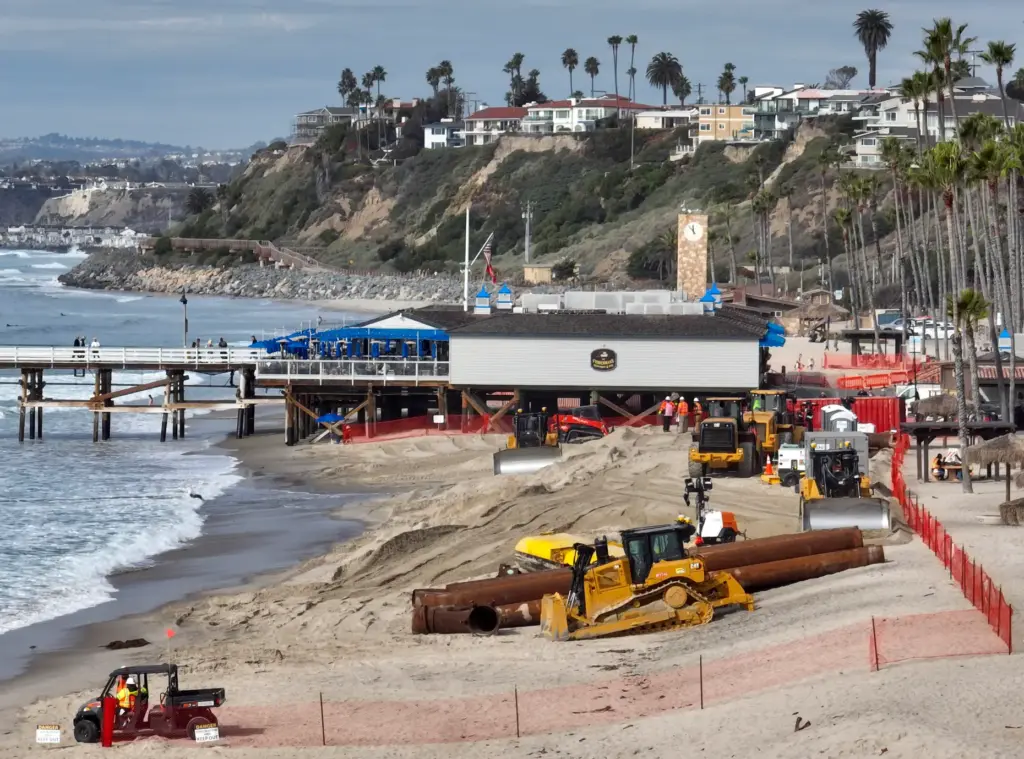 Workers start the long-awaited sand replenishment project near the pier in San Clemente, CA, on Monday, December 18, 2023. The project, led by the US Army Corps of Engineers, is supposed to happen every 5-7 years. (Photo by Jeff Gritchen, Orange County Register/SCNG)
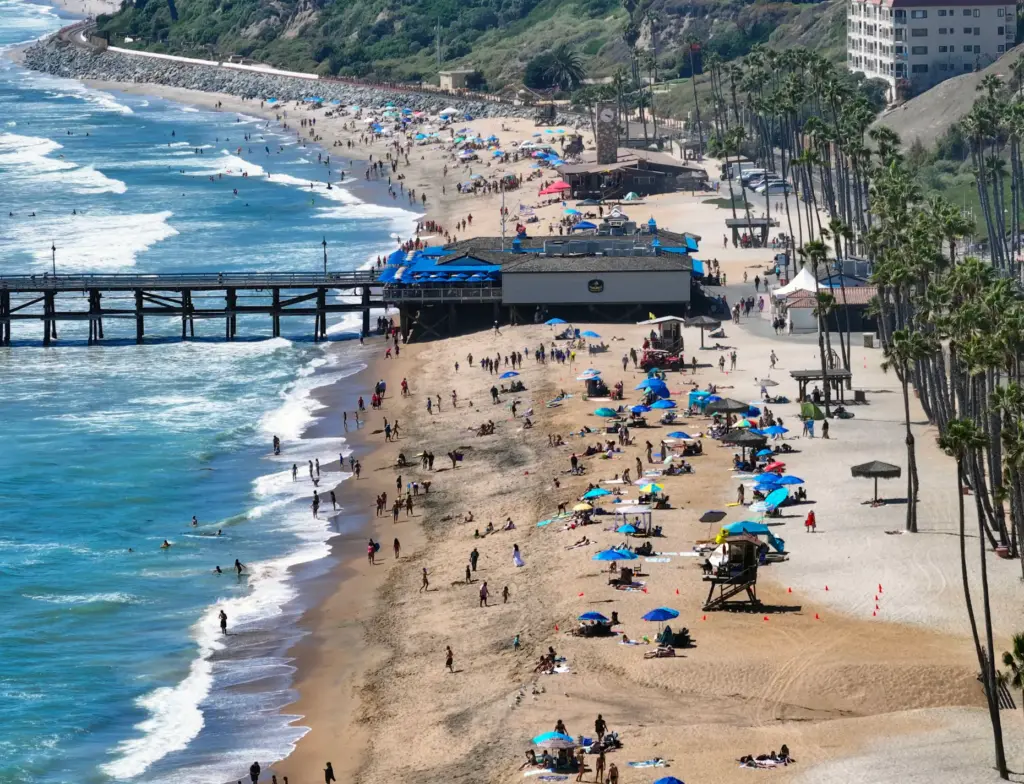 Beach-goers flock to the sand near the pier in San Clemente, CA, on Tuesday, July 8, 2025 following a sand replenishment project that brought darker-colored grains from Surfside/Sunset in Huntington Beach. (Photo by Jeff Gritchen, Orange County Register/SCNG)
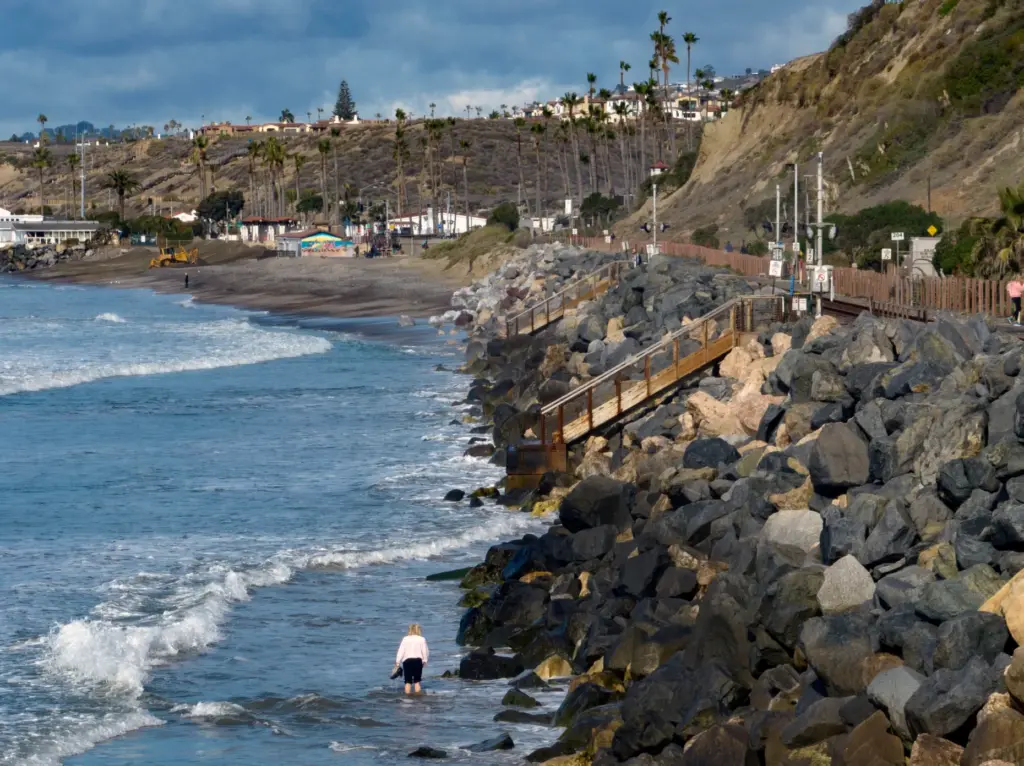 A beachgoer makes her way across north San Clemente, where the beach has suffered severe erosion. Many parts of the coast have no sand left during higher tides as severe erosion has drastically changed the coastline in recent years (Photo by Jeff Gritchen, Orange County Register/SCNG)
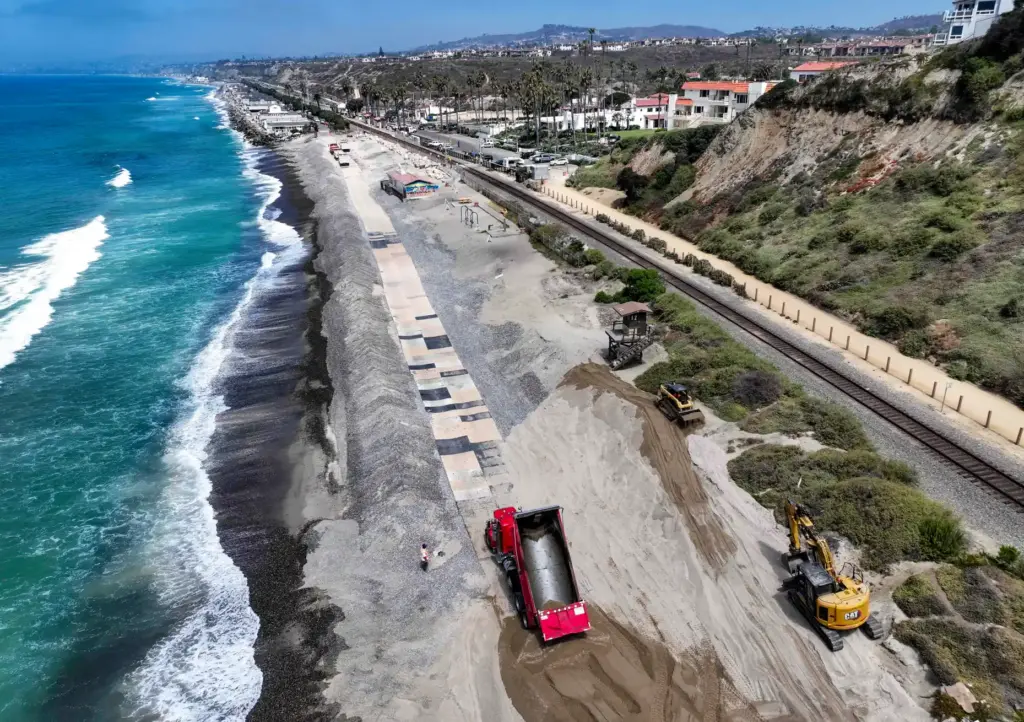 Workers replenish sand on North Beach in San Clemente, CA, on Monday, August 12, 2024. (Photo by Jeff Gritchen, Orange County Register/SCNG)
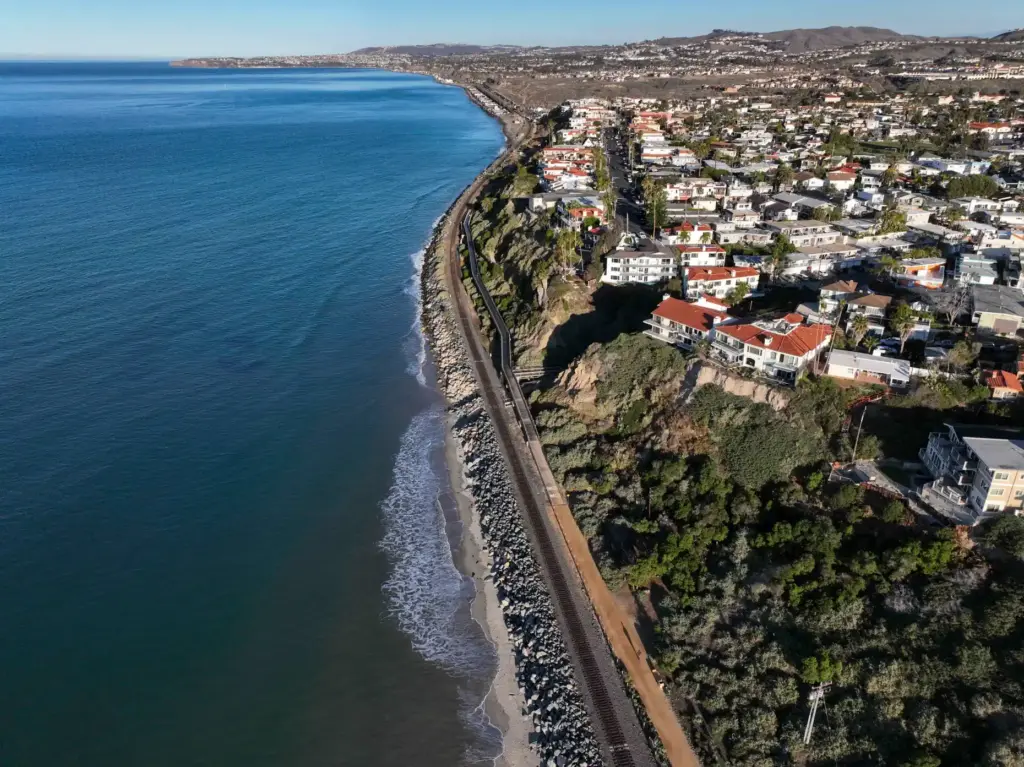 Some of Orange County’s most popular beaches are disappearing as waves swallow up the sand. Above, north San Clemente during high tide on Thursday, December 8, 2022. (Photo by Jeff Gritchen, Orange County Register/SCNG)
Beach nourishment is the best strategy to build long-term coastal resilience, she said, with “the goal of walking from the north part of the city to the south, regardless of the tides, any time of the day, because there will always be sand.”
There are several more efforts completed or in the works:
• A SCOUP (Sand Compatibility and Opportunistic Use Program) project to bring 5,000 cubic yards of new sand is in the works for this fall to provide extra protection for city assets and infrastructure in advance of the predicted El-Nino.
• The Army Corps of Engineers project is designed add 251,000 cubic yards of sand every 5-to-6 years, with the next cycle planned for 2029. This would be a total of 2 million cubic yards over the 50-year project timeline — at a cost of $240 million, which would be split between the city and federal government.
Read more Why client services are similar to quarterback role
• A SANDAG (San Diego Association of Governments) project would add 1 million cubic yards of sand every 10 years beginning in about 2030 and repeating each decade.
• SCOUP permit allows the city to take advantage of opportunities to acquire and place sand up to 300,000 cubic yards per year for the next 10 years.
• The Orange County Transportation Authority has promised at least 540,000 cubic yards of sand by fall 2028, with more sand after that initial placement occurs. About $300 million in state and federal funding was given to OCTA for rail protection efforts, which include a combination of sand replenishment and hard armoring.
Councilmember Mark Enmeier asked about sand availability in local riverbeds. The Santa Ana River, according to county public works officials, only has about two inches of sand spread out along a very long distance, not enough to be delivered to the beach, Meyerhoff said.
There is a sand quarry along Highway 74, just up the hill from Talaga, that has sand and has already delivered some to Capistrano Beach.
While some projects are fully permitted and “shovel ready,” funding remains a challenge, officials said.
The city was recently awarded $1 million of discretionary funding from State Sen. Tony Strickland that could be used for a smaller-scale project, about 25,000 cubic yards. However, it would take $15 million to $20 million to get a large amount of sand — funding that is not currently available, Meyerhoff said.
The city also does not have funding earmarked for its share of future rounds of the Army Corps replenishment project, which would cost an estimated $15 million each time it is done.
The city has also been encouraged to use a different sand source, rather than the one off Surfside-Sunset, due to the high cost of transporting the sand, Meyerhoff said. “So we’re looking for closer sources of the sand, because it will have a lower price tag.”
Voters will be asked in November whether to add a 1% local sales tax to fund beach restoration and reduce wildfire risks.
If the measure passes, the city will be required to prepare a “Beach Protection Operational Plan.”
San Clemente has received a new $2 million grant to explore ideas for a sand retention pilot project, the frontrunner being an artificial reef that would possibly produce a new surf break at North Beach.
The grant will allow the city to move ahead with identifying projects that can improve sand retention on the beach using nature-based solutions.
The new funding comes after an initial $300,000 grant from the California Coastal Commission in 2022 that allowed for a consultant to explore sand-retention ideas, paired with 500,000 cubic yards of sand nourishment, ultimately recommending the dog-bone-shaped offshore reef at North Beach.
The new study will last three years, through 2029, and will allow planners to prepare technical studies of local and regional sediment flows and wave dynamics, conduct environmental baseline studies and a new alternatives analysis, do community outreach and engagement and gain input from advisors, officials said.
Read more OCVarsity’s football wrap-up: Stories, scores, photos from Friday’s games