
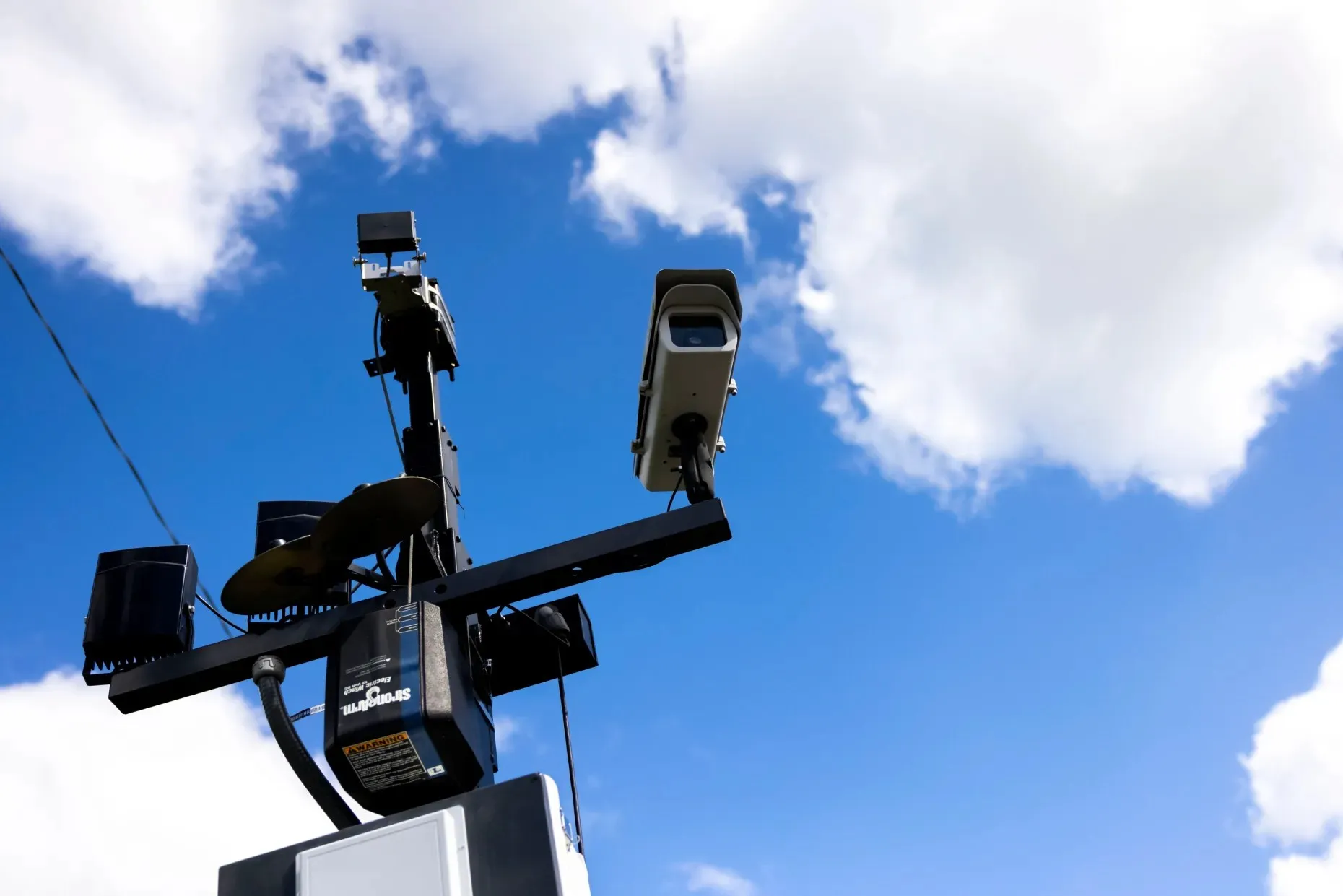
Santa Ana leaders will be asking the state legislature to amend a bill that would allow the city to join an automated speed safety system pilot program, along with six other California cities currently authorized to post the cameras.
Read more This National Park in California will be turning 110 soon
Established in 2023 and created through AB 645, the pilot is currently underway in Los Angeles, San Jose, Oakland, Glendale, Long Beach, San Francisco and Malibu, which was added later to the legislation. Those cities are allowed to install automated speed cameras on certain streets using radar or laser systems to photograph license plates of speeding cars and issue citations.
The temporary program is set to expire in 2032, unless California lawmakers choose to extend it.
This week, the City Council agreed to have city staffers ask Assemblymember Avelino Valencia, Senator Tom Umberg and the state governor’s office to amend the legislation to have Santa Ana included.
City Manager Alvaro Nunez said a 12-camera program placed at six locations would cost roughly $2 million to launch. Annual operating costs would be between $1.5 million and $2 million, though city officials noted if Santa Ana saw the citation revenue seen in other cities it would help offset expenses.
“These are not license plate readers,” said Councilmember Phil Bacerra, who argued in favor of the program, adding that the speed cameras are strictly event-driven. “They only capture data when a vehicle triggers the sensor by committing a speeding violation… They do not continuously log or track passing vehicles the way that automated license plate readers do.”
Opposition on the council centered on privacy, surveillance, and the experimental nature of the program, with Councilmember Jonathan Hernandez arguing that stronger guardrails were needed.
“I don’t want Santa Ana to be a test subject,” he said, expressing concern that the technology could create enforcement disparities for undocumented residents. “There’s a large body of research to show us the disparities that do exist within this technology.”
Read more Man charged with arson in Spokane, Washington, told police he planned wildfire for weeks
Mayor Valerie Amezcua and Bacerra, who advocated for the program, cited traffic safety data and speeding corridors as reasons for joining the pilot. Santa Ana recorded 3,487 collisions in 2025, according to a report from city staff, with 1,943 people injured and 26 who died, ranking among the cities in the state with the largest number of pedestrian and bicycle-related collisions.
Bacerra also recalled a single-vehicle crash in April 2025 on Segerstrom Avenue in which five young adults — including four Santa Ana high school students, died after their vehicle lost control and struck a tree. He also cited statistics from other cities already operating the program, noting that Oakland has seen a 72% reduction in excessive speeding at camera locations and San Francisco a 73% reduction.
“Why would we hesitate to bring those sorts of results to the streets here in Santa Ana?” he asked.
But Councilmember Thai Phan said the city needs to be cognizant of what can be afforded in the city’s budget.
“I do understand that there are grants, whether it’s federal or state, but I don’t want to make promises up here that we can’t keep, and what we do know is that this pilot program, even in all these cities, is incredibly expensive,” she said. “I know that this comes from a place of care. I know that we up here want to prevent any types of accidents and deaths, but we can’t afford this item.”
The program allows the included cities to install cameras in school zones and on streets with a record of speed-racing and high-crash rates. Cities are required to give residents a month’s heads-up before the program starts, and for the first 60 days of operations, violators may only receive warning notices and no fines. After that, the first ticket a vehicle gets in that city for going 11 to 15 miles over the limit is automatically just a warning, with fines growing for higher speed violations.
If California lawmakers choose to authorize the pilot program in Santa Ana, which wouldn’t be until 2027, the council would still have to approve the camera locations, vendor, privacy policies and identify funding options before any cameras could go live. The technology would be managed through the public works department, not local police.
Read more Body found in California home burned by wildfire believed started by chain saw