
The 80th anniversary of the first commercial flights at Los Angeles International Airport will arrive in December.
Read more WTA introduces gene testing for all players on women’s tennis tour
The former Mines Field west of Inglewood became the city’s first official airfield, Los Angeles Municipal Airport, on Oct. 1, 1928, but the first commercial flights to use the facility didn’t do so until Dec. 9, 1946. It was renamed Los Angeles International Airport on Oct. 11, 1949.
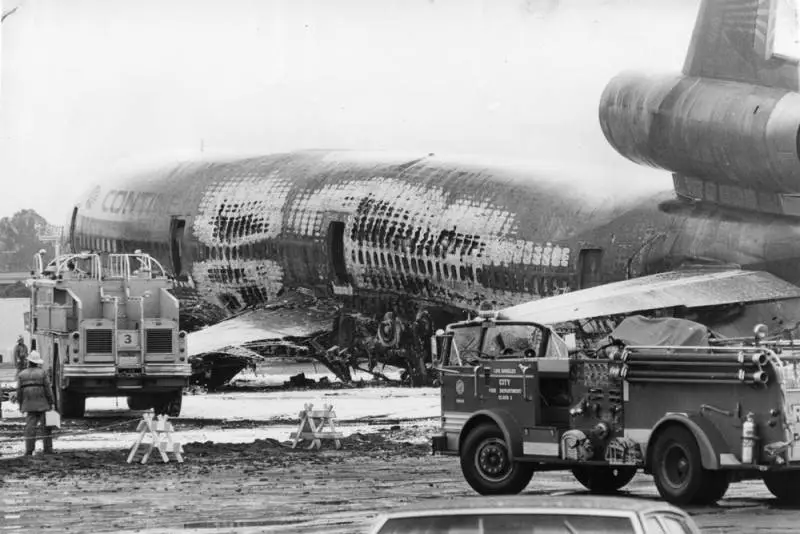
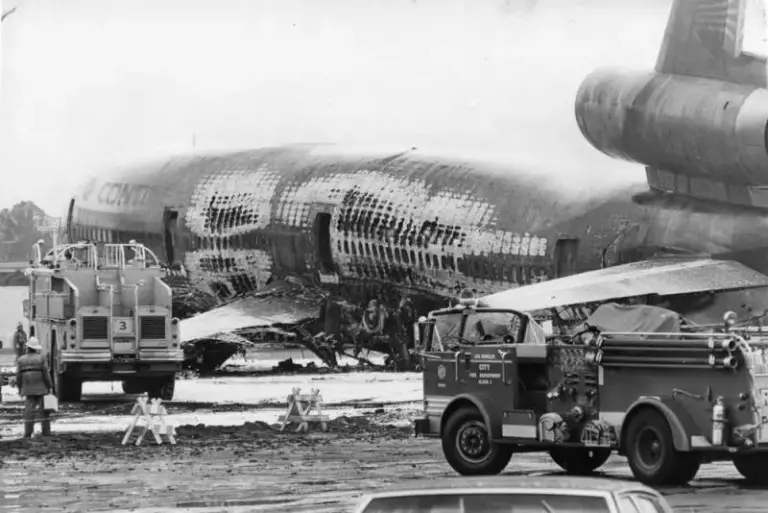 A Continental Airlines DC-10 bound for Honolulu experienced tire failure of the left main landing gear during take-off on March 1, 1978. Two of Flight 603’s 200 occupants were killed in the accident. (Los Angeles Public Library Photo Collection)
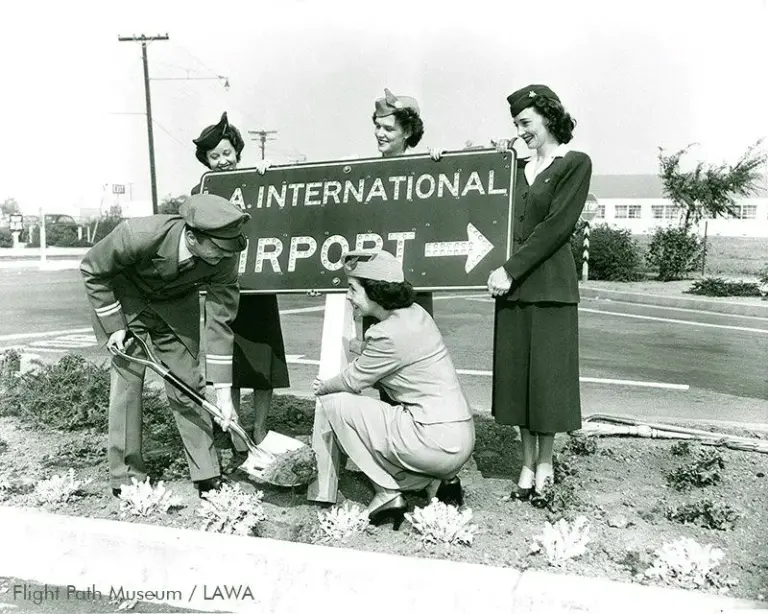 The “L.A. International Airport” sign dedication in 1949 celebrates the airport’s expansion into international flight service. (Flight Path Museum LAX / LAWA)
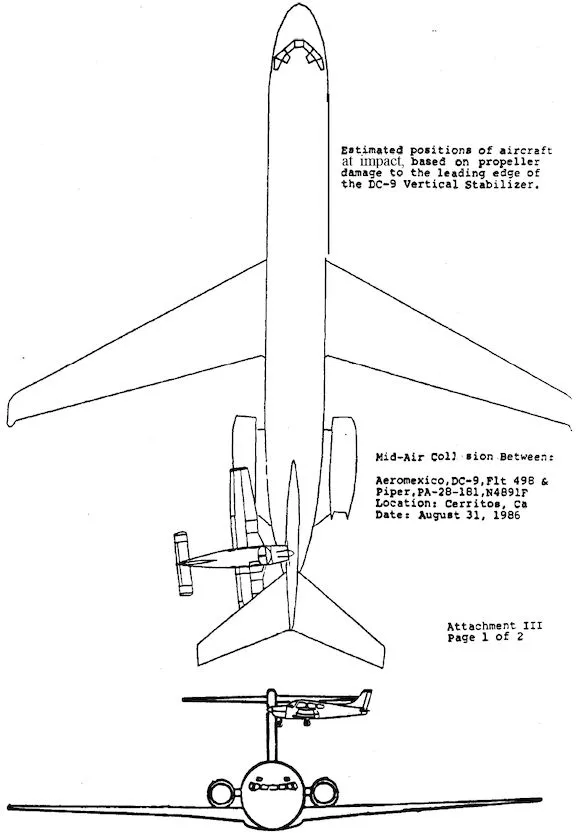 Diagram shows the approximate positions of the planes at impact above Cerritos on Aug. 31, 1986. (National Transportation Safety Board)
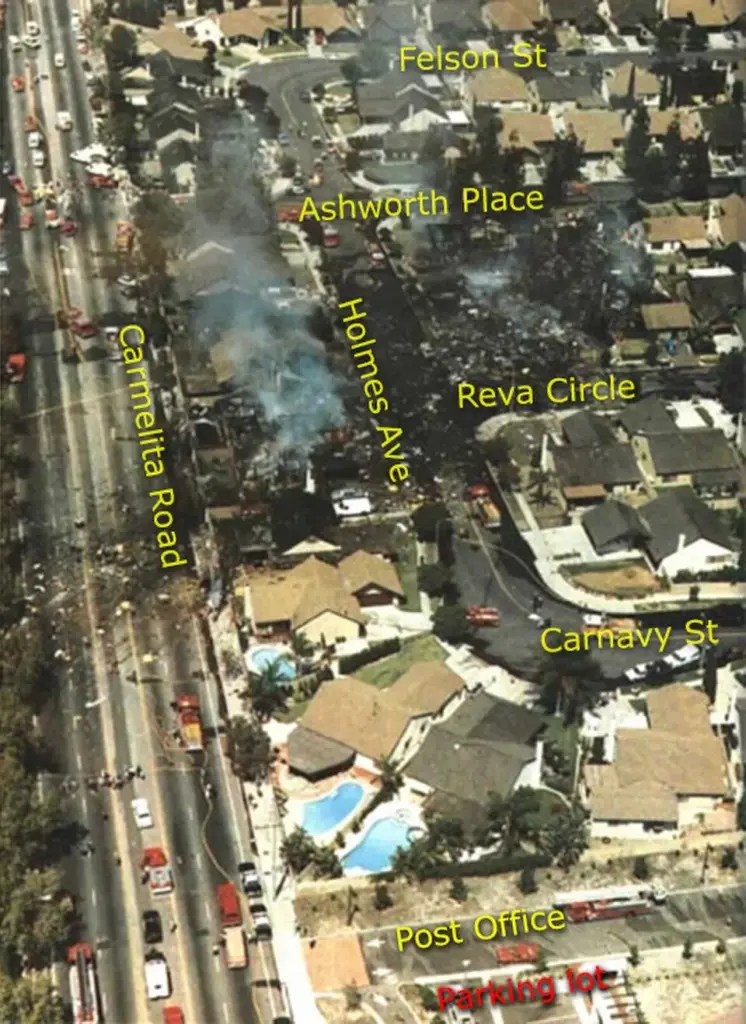 Devastation on the ground in Cerritos following the Aug. 31, 1986 Aeromexico crash. (Wikimedia Commons)
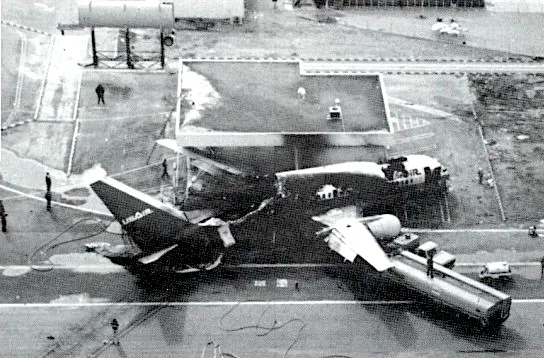 35 people died when this USAir 737 crashed into a smaller SkyWest commuter plane using the same LAX runway on Feb. 1, 1991. (National Transportation Safety Board)
Since then, LAX has had several serious aviation accidents, but considering its size and the volume of flights, its overall safety record is impressive.
The worst LAX-related accident in its history, in fact, actually took place more than 30 miles from the airport — over the city of Cerritos.
Shortly before noon on Sunday, Aug. 31, 1986, a Piper Cherokee private plane — which was had taken off minutes earlier from Torrance Municipal Airport, on its way to Big Bear — flew undetected into the tail assembly of Aeromexico Flight 498. The Aeromexico DC-9 had just started its descent into LAX on its flight from Tijuana after originating in Mexico City.
The Piper Cherokee went undetected by the Aeromexico pilot because he was dealing with reports of another private plane in the area. Airplanes in those days were not universally equipped with adequate detection systems, and smaller planes weren’t equipped with transponders that would make them easily detectable.
The resulting collision, at roughly 6,560 feet in the air, sent both planes hurtling to the ground. The Piper Cherokee crashed into an empty elementary school playground, its three occupants killed in the initial collision.
Tragically, the Aeromexico plane crashed and burned into a neighborhood of tract homes in Cerritos. In all, 82 people died from the crash, including all 64 on the jetliner, 15 on the ground and the three in the Piper. Six houses were destroyed on the ground, and many more were damaged.
Ultimately, blame for the crash was shared by the Piper pilot and LAX air traffic control. But much was done to help prevent future tragedies following the crash. Small planes in the LAX air space area, for example, were required to carry transponders, making them detectable by larger planes. In 1989, the Federal Aviation Administration also began requiring all commercial airliners to install on-board traffic avoidance systems.
Seventeen years earlier, pilot error caused the crash of a Scandinavian Airlines DC-8 jetliner into Santa Monica Bay some 6 nautical miles short of its landing strip at LAX on Monday Jan. 13, 1969. That crash killed 15 people — the first commercial airline flight deaths in LAX’s history.
Five days later, on Jan. 18, 1969, a United Airlines 727 jet suffered an unexplained total power failure four minutes after takeoff from LAX. Without power, the crew of Flight 266 lost control of the aircraft, and it plunged into the sea. All 38 people, passengers and crew, died.
Read more Trump imposes 50% tariffs on Canadian goods, citing disputes over autos, alcohol and cheese
The other most deadly LAX crashes mostly took place on the ground, not in the air.
At 9:30 a.m. on March 1, 1978, for example, a Continental Airlines DC-10 airliner blew two tires as it attempted to take off from a rain-soaked LAX runway. Flight 603 never left the ground. A nose wheel collapsed, causing the plane to skid to a halt and erupt into flames.
Two passengers died when they jumped from the airplane’s wing into an area of the plane that then burst into flames. Another 79 people were injured.
The worst ground accident at LAX was a runway incursion that occurred on Friday evening, Feb. 1, 1991.
The LAX control tower mistakenly gave the go-ahead for USAir Flight 1493 to land on a runway where SkyWest Airlines Flight 5569 had just been given the go-ahead to take off. The SkyWest plane, a smaller turboprop Fairchild Swearingen Metroliner with 12 people aboard, was crushed by the larger Boeing 737 as it attempted to land in the same spot.
In total, 35 people died — including all 12 aboard the SkyWest aircraft and 23 people aboard the USAir 737 — in the fiery crash and aftermath. Of the 23 USAir casualties, 20 died from asphyxiation because of smoke inhalation.
Investigators later found that the airport’s ground radar system wasn’t working at the time of the crash, and that the SkyWest plane was in a blind spot not visible from the control tower.
As with the 1986 Aeromexico tragedy, the horrifying USAir crash resulted in improvements in LAX operations. Takeoffs and landings henceforward were made on completely separate runways, a recommendation made by the National Transportation Safety Board following its investigation of the crash.
The price paid for the safety improvements resulting from these accidents has been high — but the results are a drastic reduction in LAX incidents in recent years.
Sources: Bureau of Accidents Archives website. Daily Breeze archives. “LAX History,” Los Angeles World Airports (LAWA) website. Wikipedia.
Read more Tropical storms bringing big surf and beach dangers, hot muggy weather