
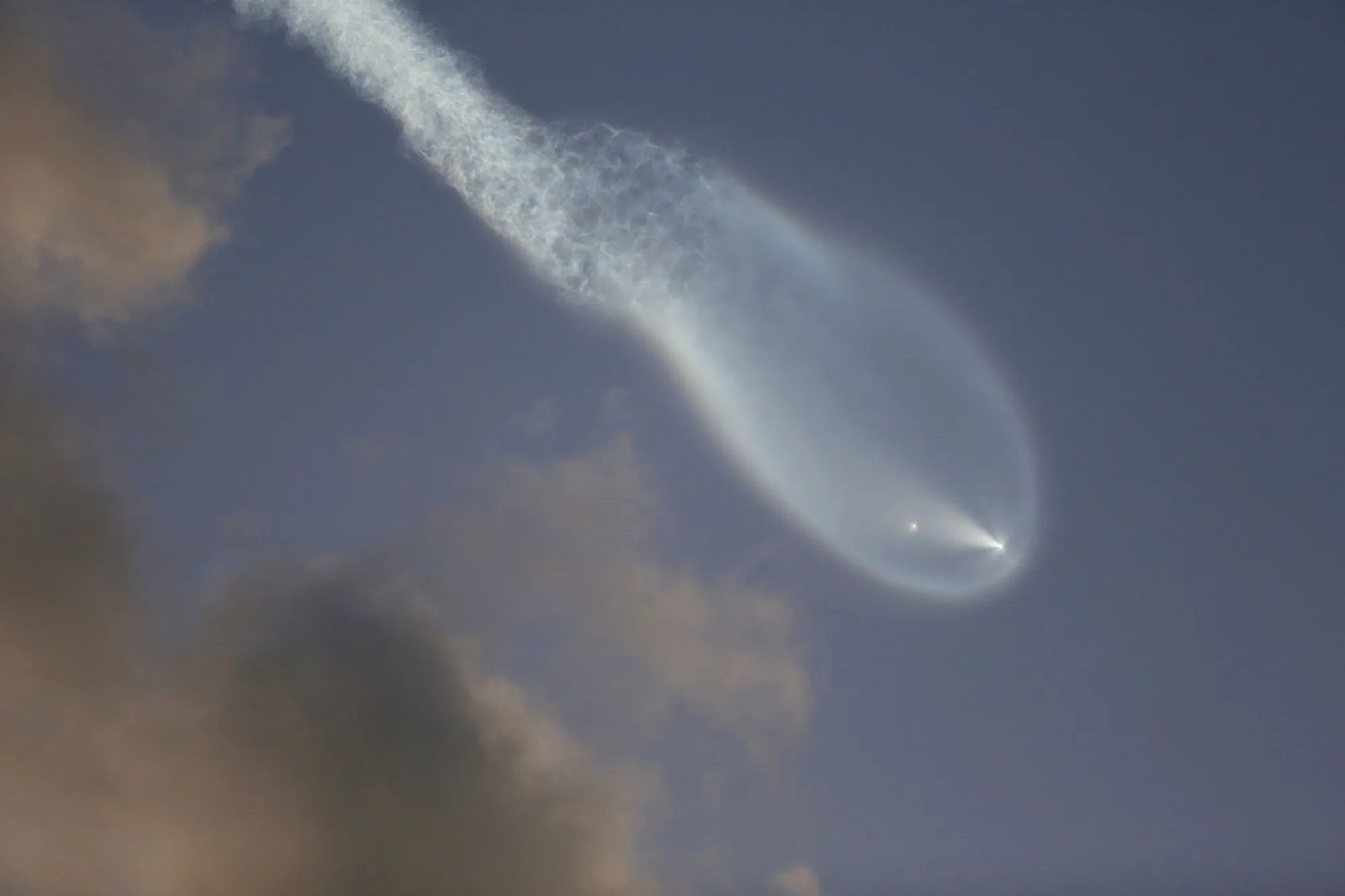
Weather cleared and SpaceX executed a predawn launch Tuesday morning that offered viewers another serving of space jellyfish, albeit a smaller, shorter-lived version than the one seen last week.
Read more The 411 on red light therapy: How does it work?
That launch created the effect of the expanding nebula that was seen among clear skies all the way up to Washington, D.C. Closer to the launch site in Florida, the massive post-launch cloud formation was among the most impressive ever seen, said local photographers.
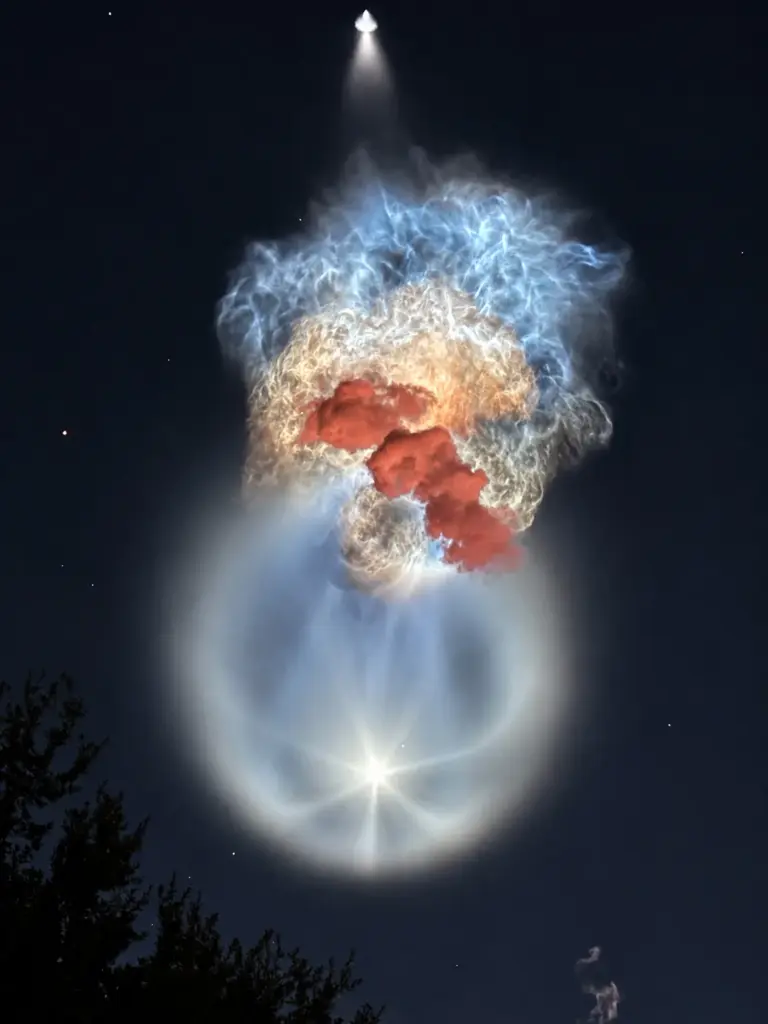 After the launch of a SpaceX Falcon 9 rocket, with the company’s Dragon spacecraft atop, at 6:33 a.m. EDT Tuesday, Oct. 13, 2026, from Space Launch Complex 40 at Cape Canaveral Space Force Station in Florida as part of the company’s 35th commercial resupply services mission to the International Space Station for NASA, the rocket’s exhaust plumes, illuminated by sunlight against the predawn sky, created a glowing jellyfish-like shape. This can also happen with a launch near sunset. Dragon will deliver about 6,300 pounds of science investigations, supplies, and equipment to the International Space Station. (Bill White/NASA)
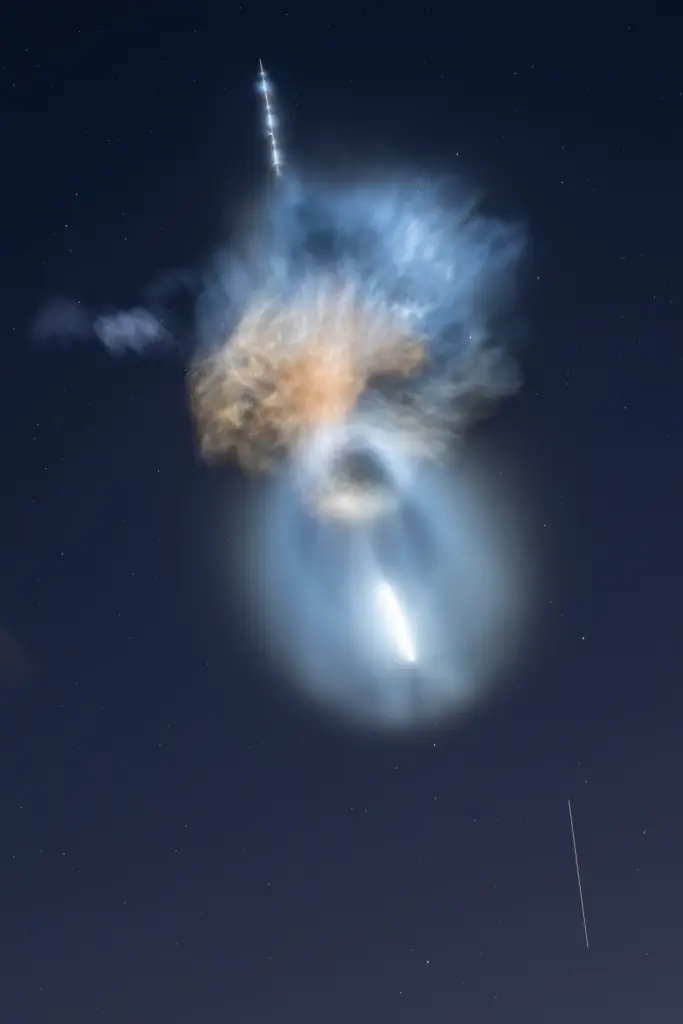 In this 15-second long exposure photograph, the International Space Station is seen as a streak of light during the launch of NASA’s SpaceX CRS-35 mission as the Falcon 9 rocket’s first stage begins its return to Landing Zone 40 for landing and the rocket’s second stage and Dragon spacecraft continue toward orbit, Tuesday, Oct. 13, 2026, as seen from Cocoa Beach, Florida. The mission lifted off at 6:33 a.m. EDT from Space Launch Complex 40 at Cape Canaveral Space Force Station, carrying scientific investigations, supplies, and equipment to the orbital outpost on SpaceX’s thirty-fifth commercial resupply services mission for NASA. The rocket’s exhaust plumes, illuminated by sunlight against the predawn sky, were visible across the eastern United States. (John Kraus/NASA)
 The exhaust plumes of a SpaceX Falcon 9 rocket carrying the company’s Dragon spacecraft are seen illuminated by sunlight against the predawn sky during the launch of NASA’s SpaceX CRS-35 mission, Tuesday, Oct. 13, 2026, as seen from Cocoa Beach, Florida. Also visible is the Falcon 9 rocket’s first stage performing its reentry burn to prepare for landing at Landing Zone 40 at Cape Canaveral Space Force Station. The mission lifted off at 6:33 a.m. EDT from Space Launch Complex 40 at Cape Canaveral Space Force Station, carrying scientific investigations, supplies, and equipment to the International Space Station on SpaceX’s thirty-fifth commercial resupply services mission for NASA. The rocket’s exhaust plumes, illuminated by sunlight against the predawn sky, were visible across the eastern United States. (John Kraus/NASA)
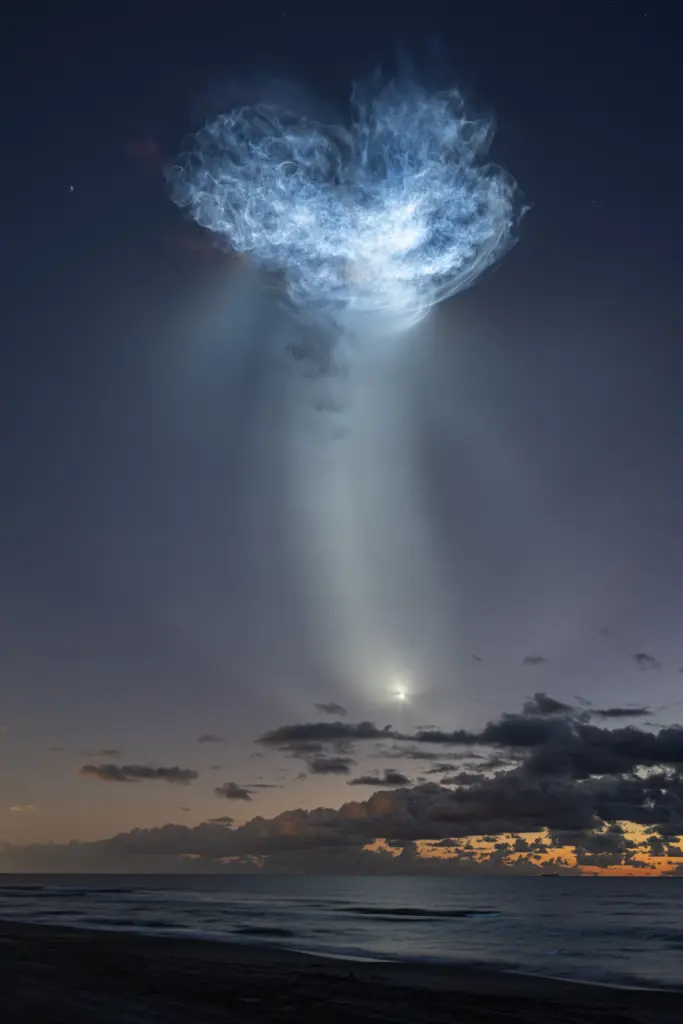 The exhaust plumes of a SpaceX Falcon 9 rocket carrying the company’s Dragon spacecraft are seen illuminated by sunlight against the predawn sky during the launch of NASA’s SpaceX CRS-35 mission, Tuesday, Oct. 13, 2026, as seen from Cocoa Beach, Florida. The mission lifted off at 6:33 a.m. EDT from Space Launch Complex 40 at Cape Canaveral Space Force Station, carrying scientific investigations, supplies, and equipment to the International Space Station on SpaceX’s thirty-fifth commercial resupply services mission for NASA. The rocket’s exhaust plumes, illuminated by sunlight against the predawn sky, were visible across the eastern United States. (John Kraus/NASA)
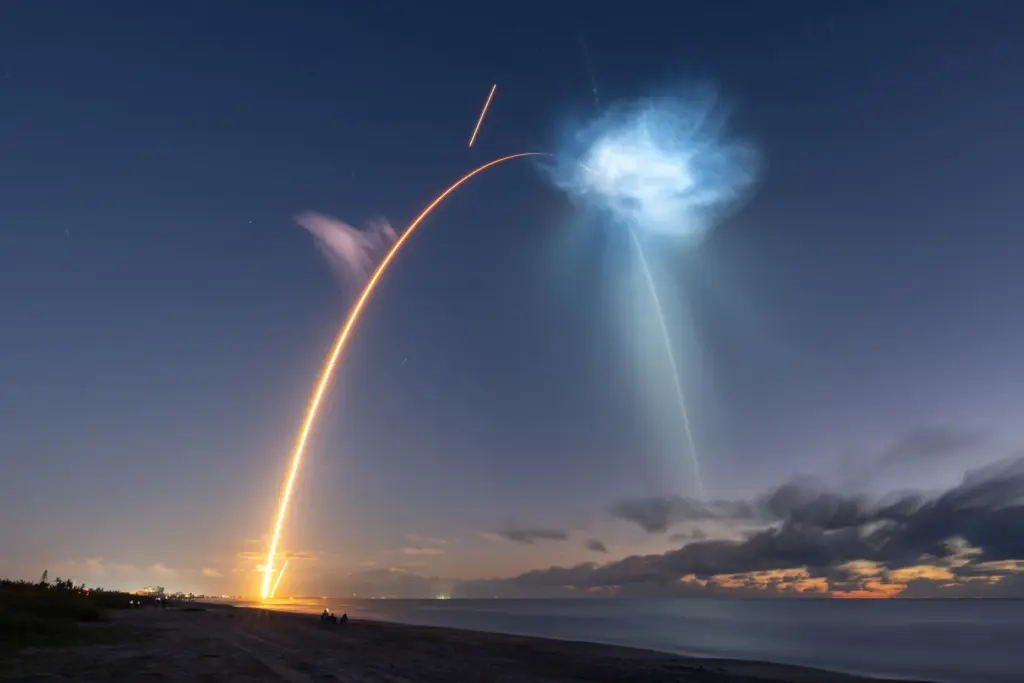 In this 480-second long exposure photograph, a SpaceX Falcon 9 rocket carrying the company’s Dragon spacecraft launches on NASA’s SpaceX CRS-35 mission to the International Space Station and its first stage returns to land at Landing Zone 40, Tuesday, Oct. 13, 2026, as seen from Cocoa Beach, Florida. The mission lifted off at 6:33 a.m. EDT from Space Launch Complex 40 at Cape Canaveral Space Force Station, carrying scientific investigations, supplies, and equipment to the orbital outpost on SpaceX’s thirty-fifth commercial resupply services mission for NASA. The rocket’s exhaust plumes, illuminated by sunlight against the predawn sky, were visible across the eastern United States.(John Kraus/NASA)
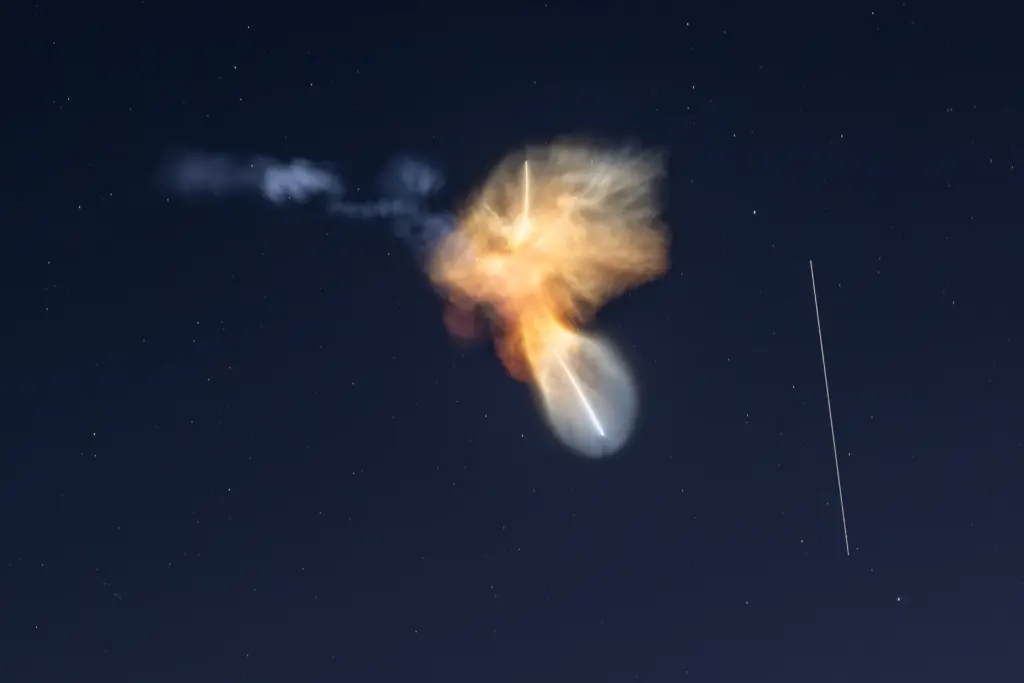 In this 15-second long exposure photograph, the International Space Station is seen as a streak of light during the launch of NASA’s SpaceX CRS-35 mission as the Falcon 9 rocket’s first stage begins its return to Landing Zone 40 for landing and the rocket’s second stage and Dragon spacecraft continue toward orbit, Tuesday, Oct. 13, 2026, as seen from Cocoa Beach, Florida. The mission lifted off at 6:33 a.m. EDT from Space Launch Complex 40 at Cape Canaveral Space Force Station, carrying scientific investigations, supplies, and equipment to the orbital outpost on SpaceX’s thirty-fifth commercial resupply services mission for NASA. The rocket’s exhaust plumes, illuminated by sunlight against the predawn sky, were visible across the eastern United States. (John Kraus/NASA)
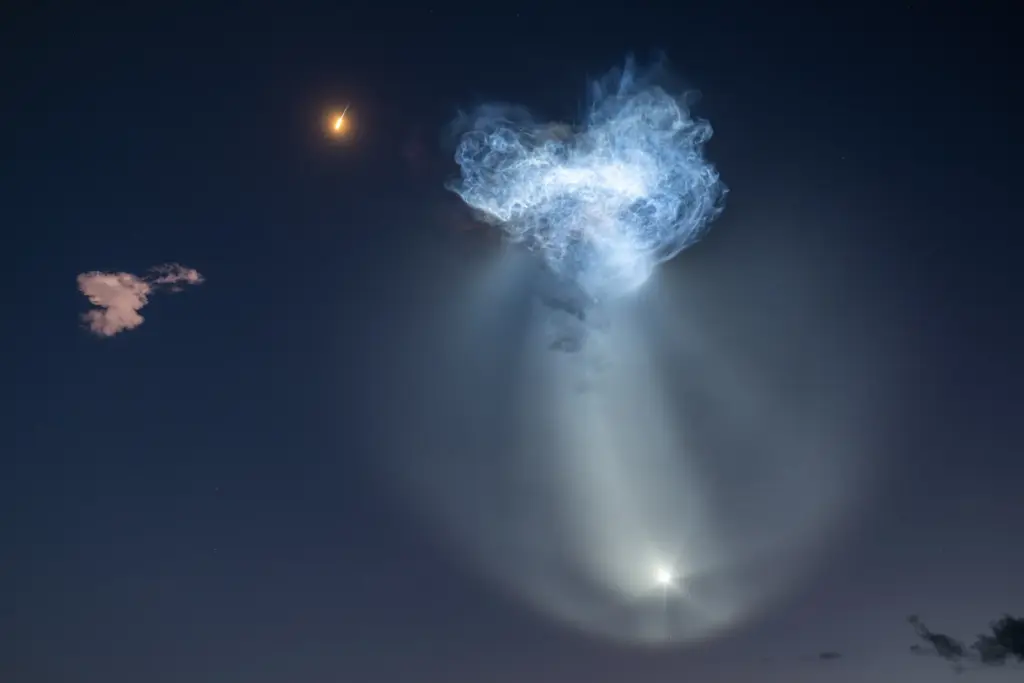
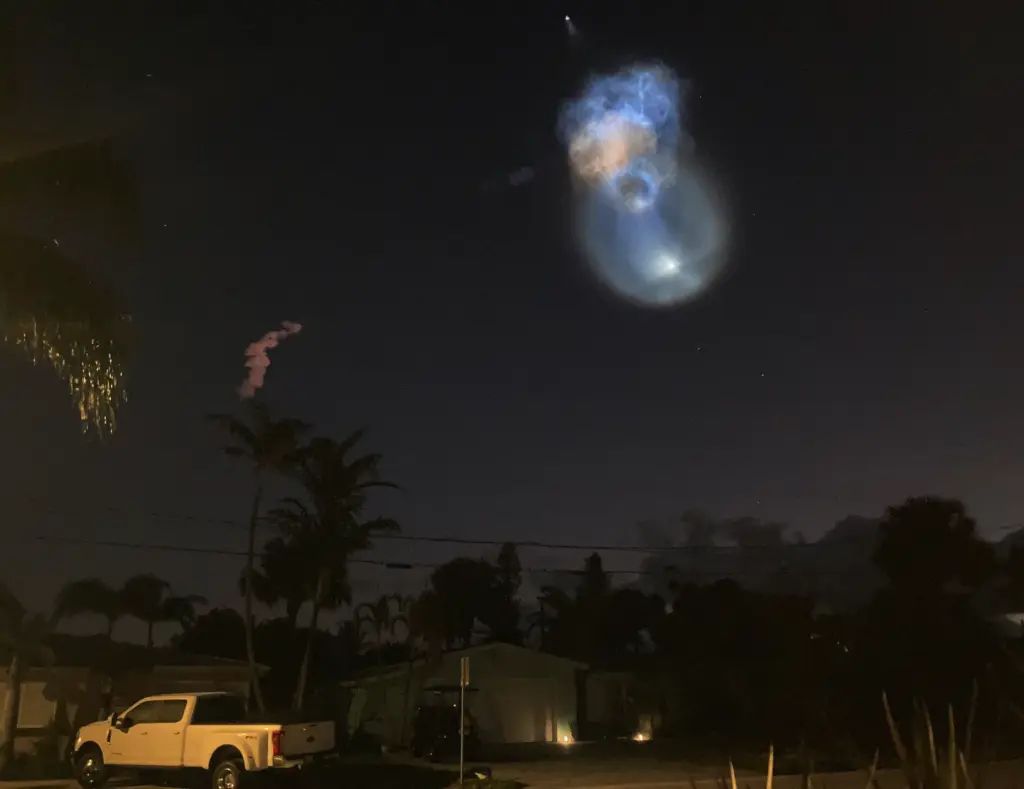 The SpaceX Falcon 9 launch on NASA’s CRS-35 mission to the International Space Station before dawn Tuesday, Oct. 13, 2026, created a space jellyfish effect in the sky that was seen up and down the U.S. East Coast. This image is shot from Satellite Beach about 25 miles south of the Cape Canaveral Space Force Station launch site. With stage separation having already occurred, the first-stage booster from the launch is seen to the upper left of nebula while the upper stage is bright within the nebula as it continues on into space. (Richard Tribou/Orlando Sentinel)
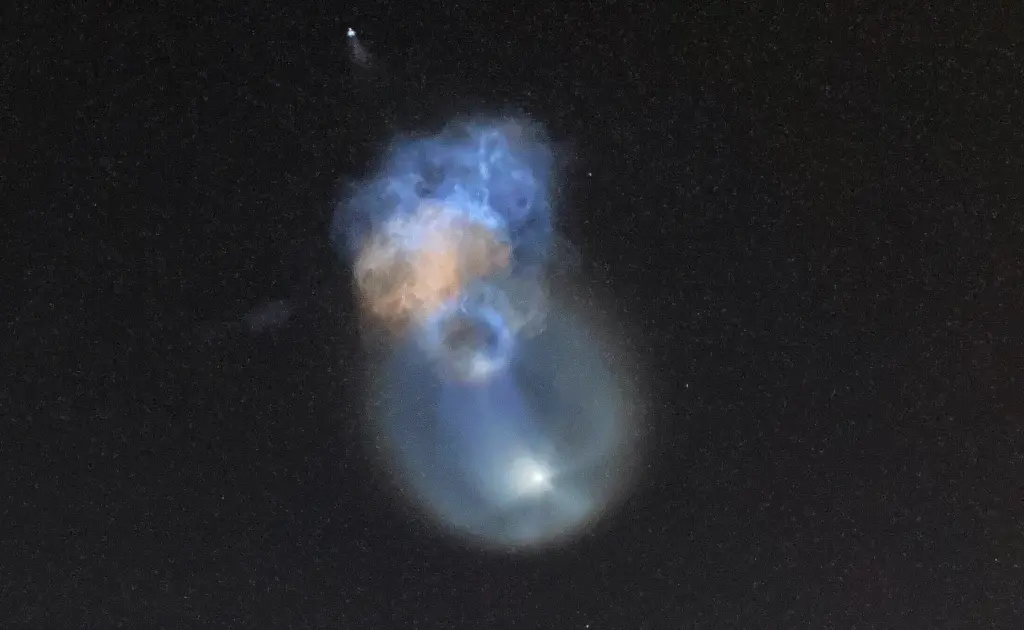 The SpaceX Falcon 9 launch on NASA’s CRS-35 mission to the International Space Station before dawn Tuesday, Oct. 13, 2026, created a space jellyfish effect in the sky that was seen up and down the U.S. East Coast. This image is shot from Satellite Beach about 25 miles south of the Cape Canaveral Space Force Station launch site. With stage separation having already occurred, the first-stage booster from the launch is seen to the upper left of nebula while the upper stage is bright within the nebula as it continues on into space. (Richard Tribou/Orlando Sentinel)
Tuesday morning’s followup did not have the same grandeur, but for those who watched, it created the unique effect once again after liftoff.
That came minutes after a Falcon 9 rocket on the Bandwagon-5 rideshare mission carrying 32 payloads took flight from Cape Canaveral Space Forde Station’s Space Launch Complex 40 at 7:04 a.m. just 22 minutes before sunrise, with skies already tinged a lighter blue than the darker skies seen during last week’s launch.
With a trajectory headed to the southeast, the exhaust from the rocket billowed out again, but only captured the light of the sun in the upper atmosphere for the jellyfish effect for about a minute, not capturing the orange and blue hues seen on similar launches, and then quickly dissipating.
The first-stage booster for this mission made its 19th trip to space with a recovery landing on the droneship A Shortfall of Gravitas stationed in the Atlantic.
Among the payloads is SpaceX’s Starfall system, which will make a re-entry shortly after launch. It’s designed to carry customer payloads that seek just short-term microgravity effects.
Read more How can Southern Californians save $758 monthly on rent? Get a roommate
Among the other rideshare customers on board are communication and navigation satellites for a variety of companies.
This was the 60th launch from all providers in 2026 from the Space Coast with SpaceX having flown all but seven of those. SpaceX, though, has dialed back its Florida-based launch plans — which led to a record 109 launches from all providers in 2025 — as it focuses on building up its Starship and Super Heavy launch tower at Kennedy Space Center’s Launch Complex 39-A.
What had been pacing to be a launch every three days last year has been a rarity in the last two months. SpaceX has only flown four other times since Aug. 30, and the other launch providers have yet to announce new targets for their return to flight.
United Launch Alliance is still trying to return to the launch pad before the end of the year with its Vulcan rocket working through issues seen on its last flight earlier this year. ULA’s Atlas V, though, could beat Vulcan, which has only flown four times, as Boeing’s Starliner might be ready to fly as early as this December for an uncrewed mission to the space station, according to NASA. ULA last flew on July 2.
Blue Origin, meanwhile, flew its New Glenn rocket successfully once this year, but the launch pad at Canaveral’s Launch Complex 36 was heavily damaged from a massive explosion during a rocket test hot fire back in May, so Jeff Bezos’ company has been in rebuild mode trying to get back to flight readiness at LC-36 before the end of the year. The lone New Glenn flight this year was on April 19.
NASA flew the other launch with the flight of its Space Launch System rocket topped with the Orion spacecraft on the Artemis II lunar flyby mission taking off from KSC’s LC-39B on April 1. SLS won’t fly again until at least mid 2027 for Artemis III, although NASA Administrator Jared Isaacman is slated to update that mission’s progress in a press conference from KSC this Friday.
Read more Scores of California children left in harm’s way by systems meant to protect them