
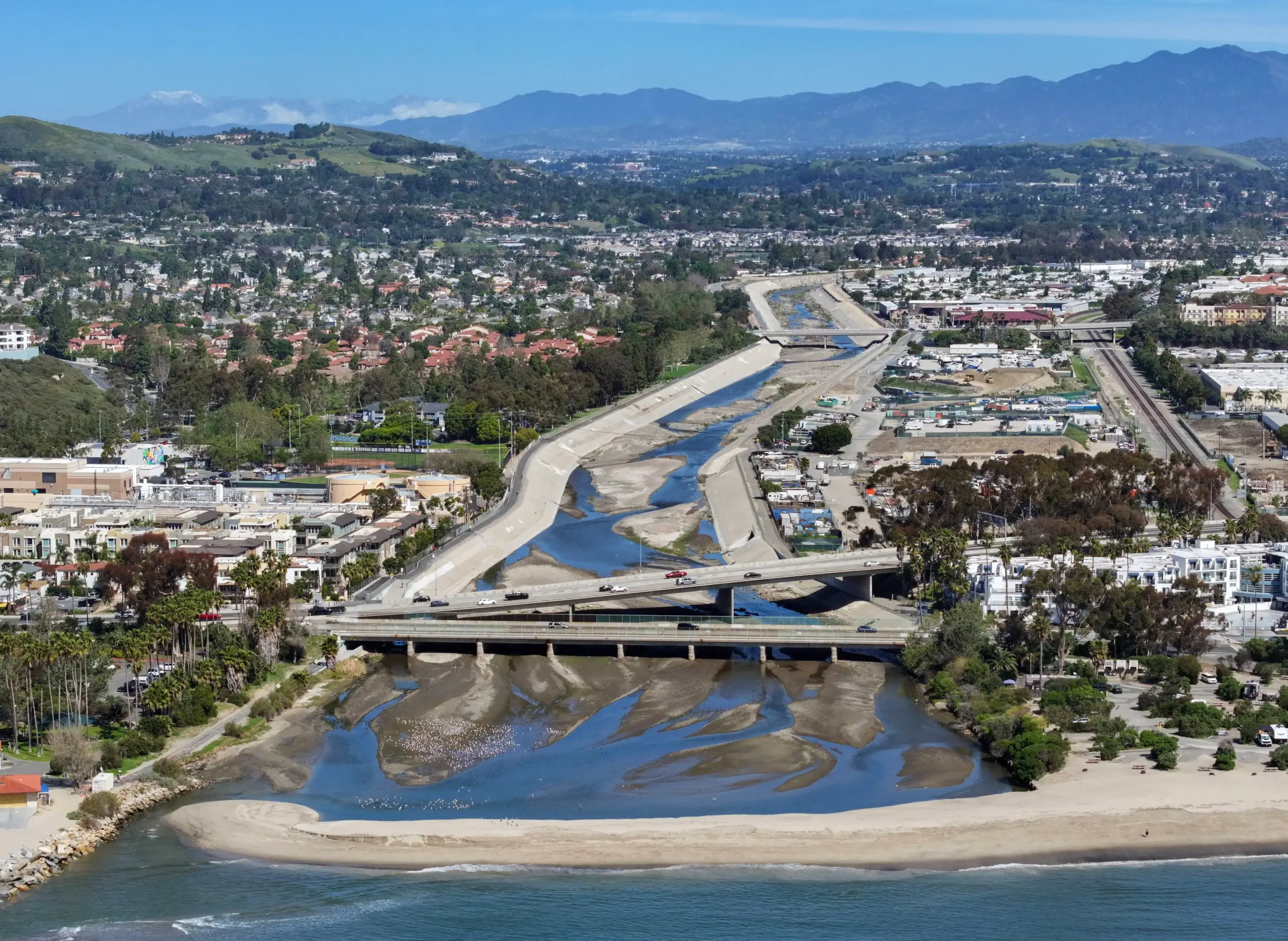
A month after pausing the use of herbicide spraying to manage flood control in the San Juan and Trabuco creeks running through South Orange County to the coast, OC Public Works has had to halt its plans to remove non-native vegetation manually.
Read more Thousands of migrant children in the US could face new deportation risks as legal aid deal expires
The agency announced on July 15 that it would be conducting a 10-day maintenance project to uproot non-native, invasive plant species of small trees, shrubs and brush, “cutting vegetation down to ground.” A biological monitor would be present to ensure that sensitive biological resources were not harmed during the project’s duration, officials had assured.
But just five days later, the project was postponed amid pushback from local activists and state regulators worried about adverse impact on creeks’ ecosystem and endangered species such as the Southern California steelhead.
The California Department of Fish and Wildlife met with Public Works officials on July 22 to address concerns related to the agency’s “overall implementation of and compliance with their Routine Maintenance Agreement, OCPW’s vegetation management practices, and unauthorized activities by OCPW affecting fish and wildlife resources,” CDFW spokesperson Cort Klopping said.
“As a result of the meeting, OCPW agreed to postpone the approved vegetation removal in San Juan and Trabuco Creeks until the channels are dry and to limit work to dry portions of the channels to avoid potential impacts to sensitive species,” Klopping said.
The two agencies are in the process of hashing out a new Routine Maintenance Agreement — a permit issued by the state wildlife department for flood control projects — to more clearly outline the county’s maintenance activities and establish “better and frequent communications between the two agencies to address resource concerns and resolve disputes,” Klopping said.
In June, the OC Board of Supervisors approved a yearlong pilot program suspending herbicide use in San Juan and Trabuco creeks and directed OCPW to study “mechanical and manual methods” of clearing vegetation in flood control channels.
Local residents and activists behind the group Creek Team OC, who were instrumental in pushing for the temporary herbicide ban, were first to raise alarm about OCPW’s plans to cut down vegetation in the creeks.
Read more F-35 fighter jet crashes at Marine Corps Air Station Miramar
“You really have to ask yourself, ‘Is this really about flood control … or is this about preventing the establishment of an ecosystem that could support endangered species?’” Brent Linas, Creek Team OC’s founder, said in a video posted to Instagram. “If it’s truly going down there and only removing invasive weeds, then we support that. But if they go down there and take everything out of these creeks, then we’ve got a problem.”
OCPW spokesperson Jamie Cargo said the department notified the Board of Supervisors of its vegetation removal plans by email on July 14, a day before making a public announcement.
“OC Public Works paused the manual and mechanical removal of vegetation in the San Juan and Trabuco Creek channels to address community concerns,” Cargo said in a statement. “We have not rescheduled the work as we have been meeting with the California Department of Fish and Wildlife to discuss our current permit and the amendment that was issued for the pilot project work, and to verify that our work plan avoids potential impacts to sensitive species.”
A followup meeting with the state agency was expected to happen Thursday, July 30.
Supervisor Katrina Foley, whose Fifth District includes the San Juan and Trabuco creeks, said county leaders did not sign off on the vegetation removal activities. Foley noted that her office had formed a subcommittee with Public Works specifically to review plans to clear the channels before they’re made public but said she didn’t see the email from OCPW and learned about the scheduled action from the public notice.
“The expectation was that they’d talk to the subcommittee first,” Foley said of the expected protocol. “That didn’t happen.”
While the project is on hold, Foley said the subcommittee will consult with Public Works officials and provide feedback on the scope of manual vegetation management.
Read more US to make visa bond requirements permanent, affecting mostly African countries