
By SETH BORENSTEIN and EDITH M. LEDERER
UNITED NATIONS (AP) — A strengthening El Nino has already broken records for intensity at its early stages, and it likely will spark even more wild weather worldwide as it grows, “adding fuel to a planet already on fire,” United Nations officials warned Friday.
Read more Missouri proposal would create nation’s toughest standard for citizen-led constitutional amendments
A key area of the Pacific Ocean used to measure the strength of El Nino this week reached its warmest and most intense level ever recorded for the 15th week since it formed, which is early in its lifetime, scientists at Columbia University reported.
El Nino — a natural warming of the Pacific near the equator that warps weather patterns worldwide — won’t peak for several months and should last through spring 2027. The World Meteorological Organization, a U.N. agency, cautioned on Friday that it will likely trigger extreme heat, drought and rainfall well into next year.
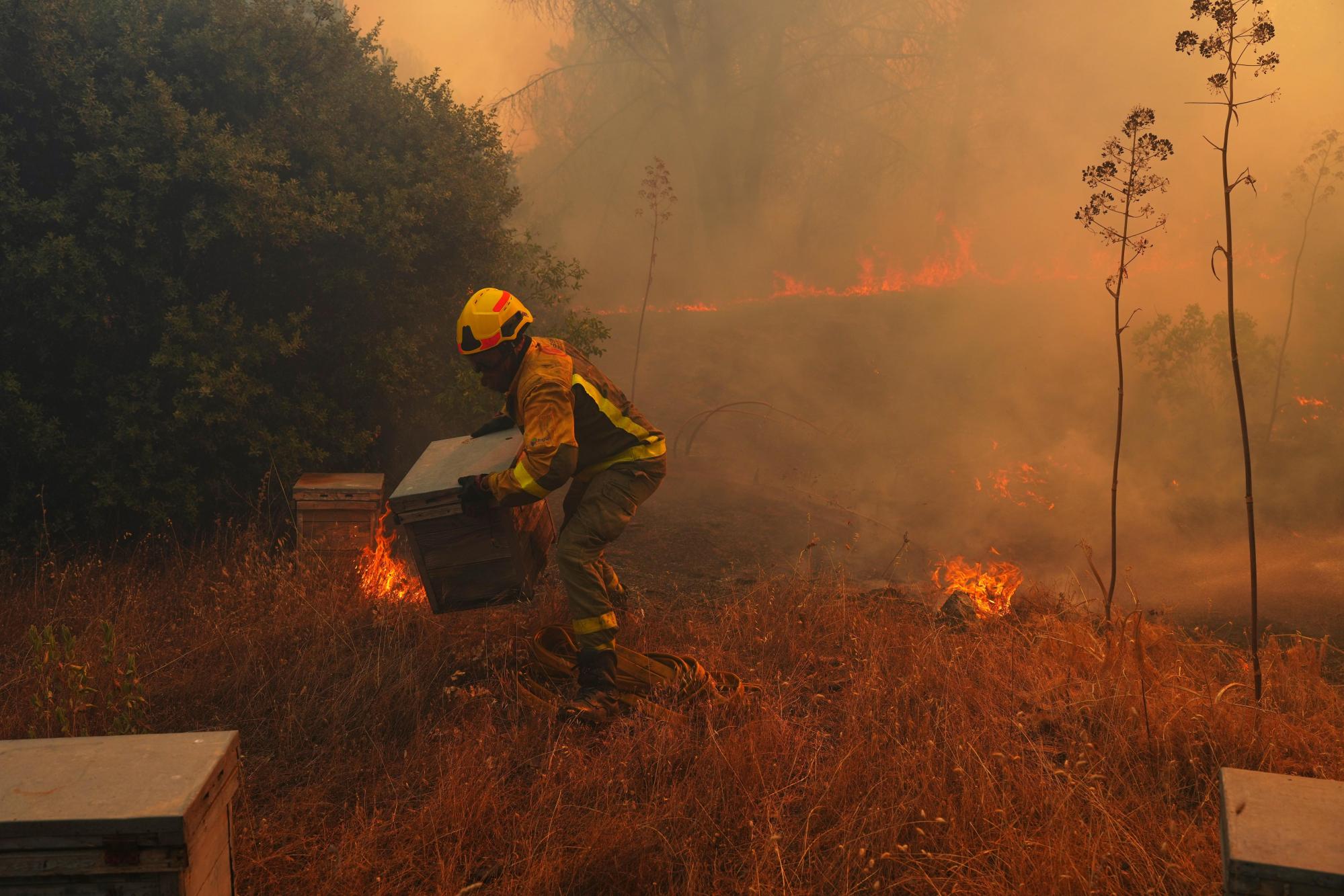
“Two months ago, I warned that El Nino was arriving on our doorstep. Now it is inside the house — and turning up the heat,” United Nations Secretary-General Antonio Guterres told reporters Friday. “We have already endured a summer of extremes — record-shattering heat domes; apocalyptic wildfires raging in Spain, France and far beyond; thousands of lives lost in the scorching conditions.”
“But according to the latest science, this is only a warm-up act,” Guterres said, saying as the El Nino strengthens it will be “adding fuel to a planet already on fire.”
“We are in uncharted territory,” he said. “The climate crisis is in overdrive.”
Most computer forecast models are showing that this El Nino will likely break the all-time record for intensity when it peaks, sometime late fall or so, but that’s not guaranteed, scientists said.
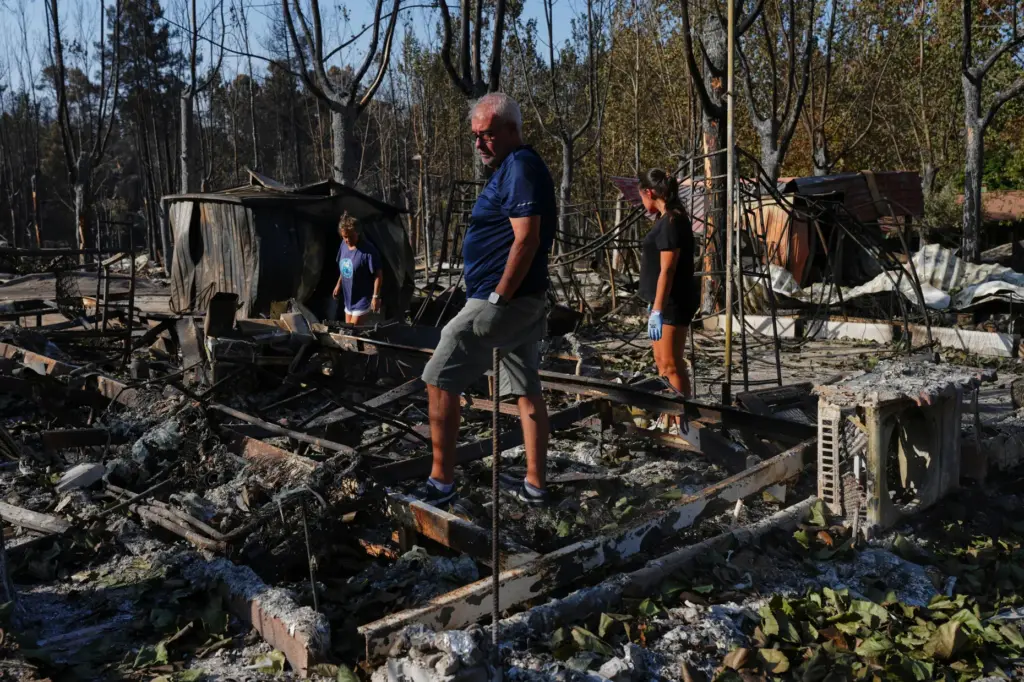 FILE – Maria del Carmen, left, her daughter Maria del Carmen Lopez, right, and her partner Mario Gonzalez, center, collect their belongings after their bungalows were ravaged by a wildfire at a campsite in Valle de Iruelas, Spain, July 30, 2026. (AP Photo/Manu Fernandez, File)
 FILE – Meghana Jalagam uses a fan to keep cool from the hot weather during a World Cup soccer match between the United States and Bosnia and Herzegovina at a watch party July 1, 2026, in Detroit. (AP Photo/Paul Sancya, File)
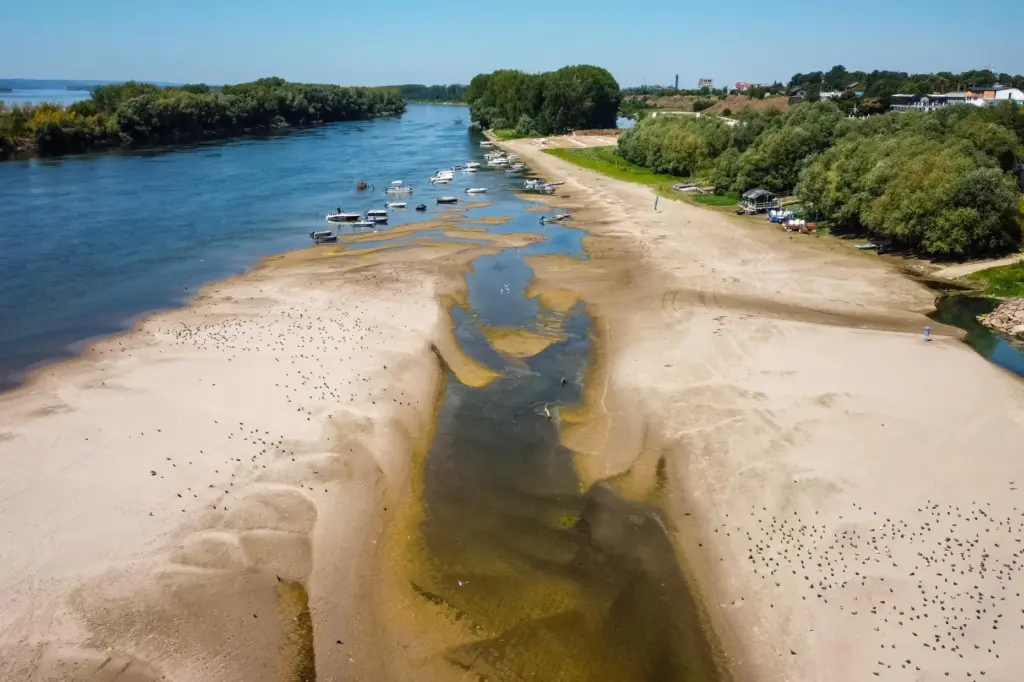 FILE – A usually submerged patch of land rises from the surface of the Danube River due to low levels of the water following an extended period of drought in Corabia, Romania, July 29, 2026. (AP Photo/ Nicolae Dumitrache, File)
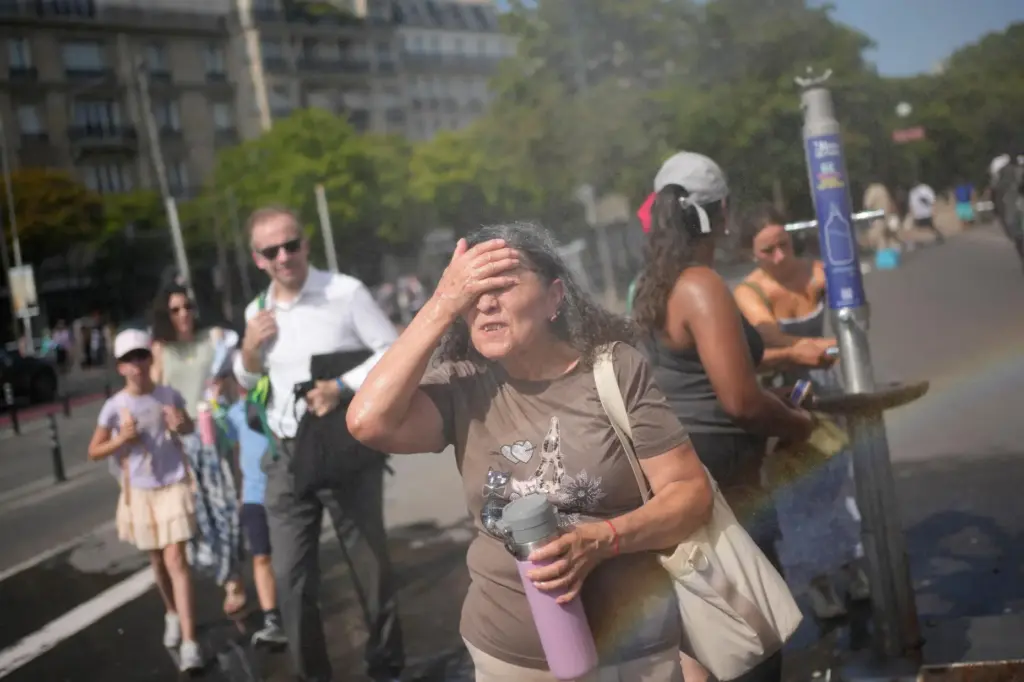 FILE – Tourists cool off at a public water fountain in Paris, June 26, 2026. (AP Photo/Christophe Ena, File)
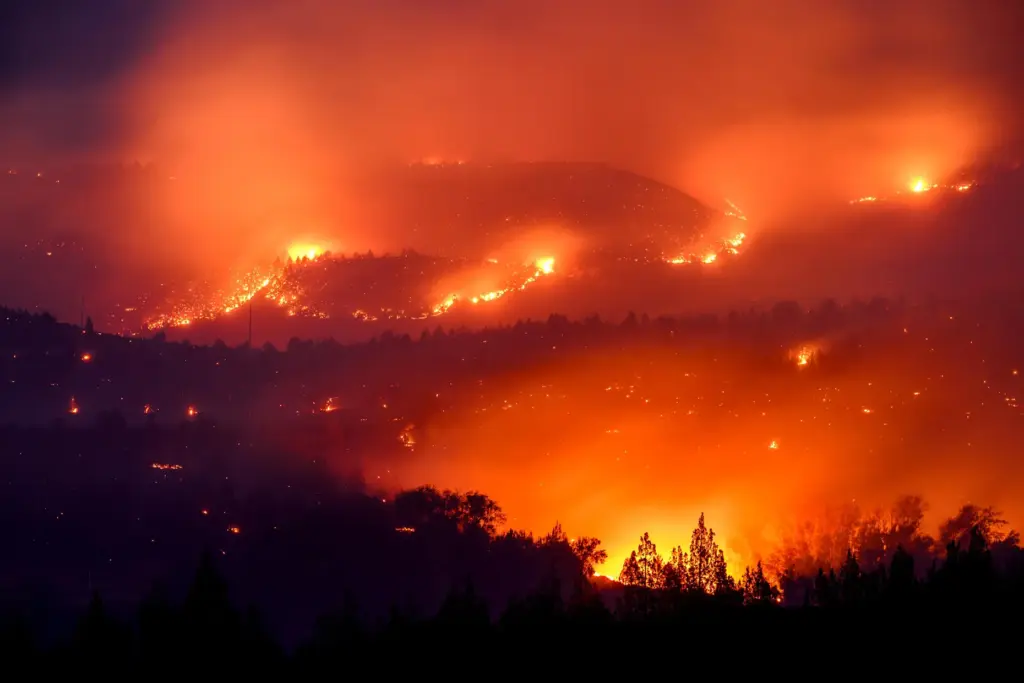 FILE – In this photo made with a long exposure, the Bench Fire burns above the Pelton Reservoir in Jefferson County, Ore., July 25, 2026. (AP Photo/Noah Berger, File)
Chaotic extremes in rain, drought and unheard of heat coming
It’s still early in the nearly yearlong life of a typical El Nino to see many direct effects yet, but they are coming, scientists said, agreeing with Guterres’ warnings. El Nino’s effects will combine with the long-term global warming from the burning of coal, oil and gas.
“We’re seeing something that is the warmest July ever recorded for that specific region,” used as an El Nino indicator, Columbia University climate scientist Jeffrey Shaman said. “A year from now, it’s going to be very hot in the Northern Hemisphere. And we’re going to possibly have a summer like we’ve never experienced globally.”
But before then, the strong El Nino is likely to cause changes in rainfall patterns that will bring chaotic extremes to different parts of the world in fall and winter. There’s a strong chance of drought and wildfires in Indonesia, India and other parts of Asia, south and east Australia, chunks of South America and southern regions in Africa, the WMO warned. Other areas, including much of the United States and fire-struck Southern Europe will get above average rain.
Read more What to know about the conflict in Mali and the world’s most terrorized region
“This El Nino, developing against the backdrop of unprecedented ocean heat and rising temperatures, provides governments and communities with a window of opportunity to anticipate risks and act before impacts unfold,” said WMO Secretary-General Celeste Saulo.
El Nino amplifies human-caused warming
While El Nino and climate change are separate phenomena, their effects create a harmful combination — and people aren’t taking the connection seriously enough, Guterres said.
“We hear much about record heat, drought and wildfires — but not enough about the real change that is driving these events: the accelerating climate crisis powered by fossil fuels,” Guterres said.
Much of the heat from the burning of fossil fuels gets trapped in the oceans, but “during an El Nino the ocean in some sense gets to return some of the heated buildups of global warming back to the atmosphere,” Shaman said. Even though this El Nino will end, the released heat sticks around in the air, along with the higher temperatures, which will jump up again the next El Nino, he added.
Guterres called for more early warning systems and cooling systems to handle extreme heat. He said industry and governments need to make work safer, highlighting the garment industry, which has 90 million workers, most of them women. In 17 of the 23 biggest clothing making hubs, dangerously hot days jumped by more than 10% in the past 20 years, “yet most global brands set no heat standard for the factories that supply them.”
But mostly, Guterres said, “the world must stop fueling the crisis…. More coal, oil and gas will lead to a more combustible future.”
Borenstein reported from Washington.
The Associated Press’ climate and environmental coverage receives financial support from multiple private foundations. AP is solely responsible for all content. Find AP’s standards for working with philanthropies, a list of supporters and funded coverage areas at AP.org.