
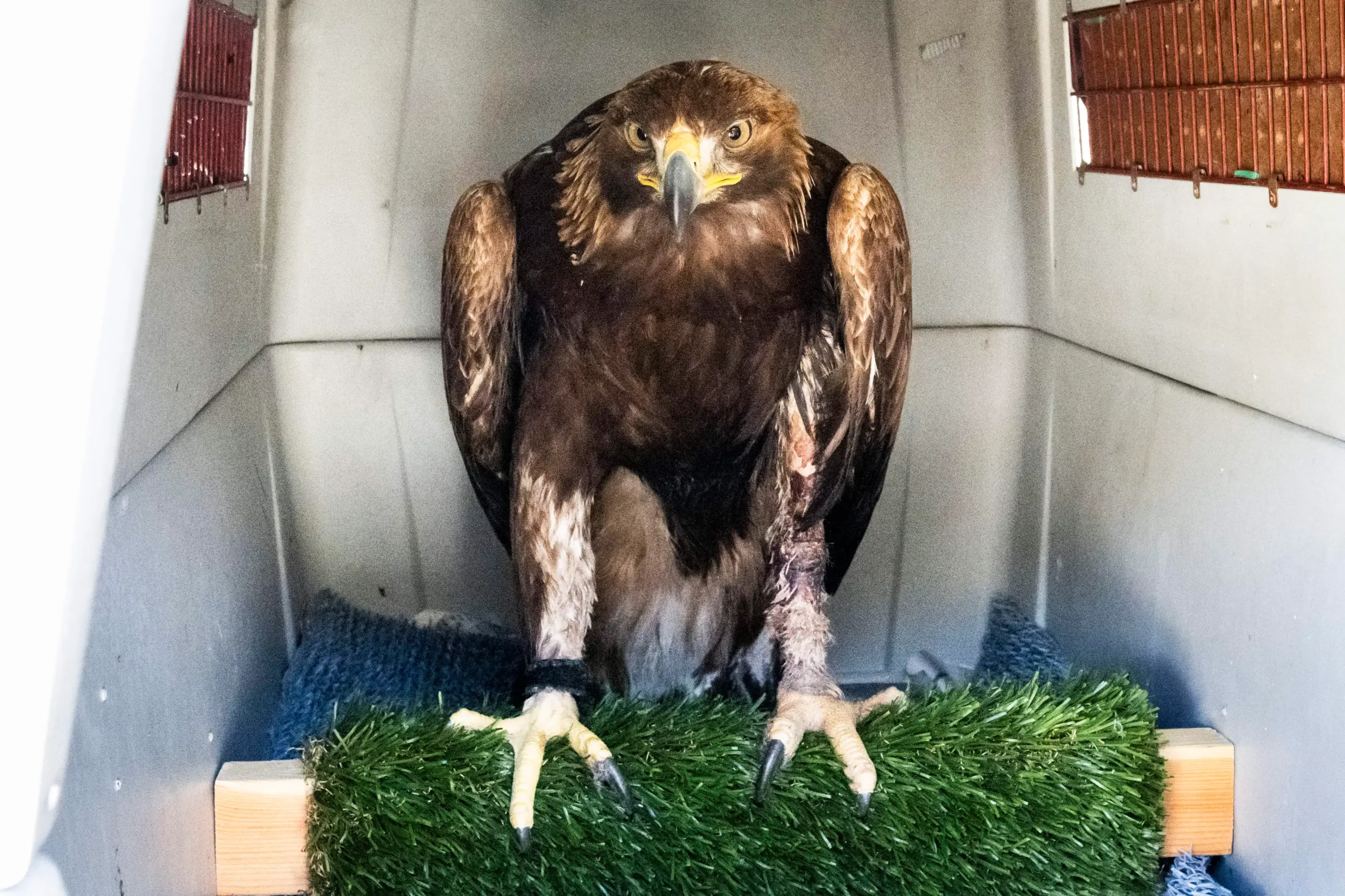
Local raptors
The Big Bear bald eagles Jackie and Shadow have become household names in the U.S., but since October is Raptor Month, we thought you should know a little about some of the other not-so-famous birds of prey in our area.
Here’s a breakdown of some of our local raptors from University of California, Riverside Department of Evolution, Ecology and Organismal Biology professor Christopher Clark.
Local hawks and hawk relatives
Red-tailed hawks are perhaps the most common species, they are generally pretty wary of people, tend to eat rats, squirrels, rabbits and the like. They perch in the open on the tops of telephone poles, etc. so people will see them a lot.
There are red-shouldered hawks, basically a slightly smaller hawk that also eats rats and mice. They are somewhat less shy of people and will sometimes nest in a person’s backyard.
Cooper’s hawks are smallish hawks with a long tail and long legs and a beady red eye. They eat a lot of birds, especially doves. They will lurk in the shady underside of a tree, then burst out, trying to surprise a little bird to eat. The doves can actually out-fly them: on the level, the doves simply fly faster than the hawks to escape.
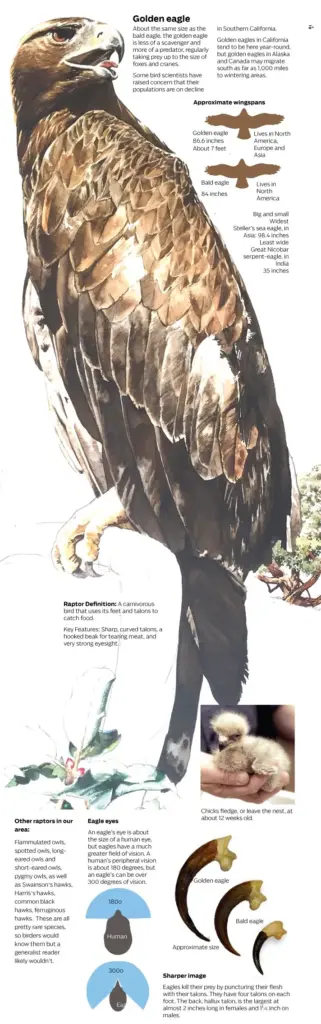
In wetlands, we have northern harriers. Harriers are like owls: they find their prey by listening for them, and float just above the reeds of wetlands when they hunt ducks, coots and voles.
Finally, for hawks we have the white-tailed kite. These guys are ghosts: they float over grassy fields, hovering and looking down for prey. We don’t know why their numbers are declining so much in California.
Falcon family
Merlins are a tiny falcon that dart around, and eat a lot of dragonflies in the winter.
American kestrels, which are small falcons that eat a lot of lizards, mice and insects.
Falcons were once thought to be closely related to hawks, but it turns out they are in a completely different part of the bird tree, closer to parrots. So now ornithologists sometimes call them “murder parrots.”
The largest falcons we have are peregrine falcon, which like to nest on cliffs and sometimes treat human buildings as cliffs, i.e. they sometimes nest in downtown areas or on campuses (such as on a bell tower). Unfortunately their numbers are down due to West Nile Virus. Their cousin, prairie falcon, is similar but found in our grasslands and deserts.
Read more OCTA declares emergency for rail protection so able to act fast on sand replenishment, projects
The owl family
We have several in SoCal: Great horned owls named after their ear tufts on their head. They are everywhere, and eat a ton of rats and gophers, skunks and other owls. They will kill and eat anything up to about 2 pounds. I do not know if they actually do eat small dogs, but I would never take a puppy near one, or leave a small dog alone in the yard at night. They are the owls people hear hooting at night.
Barn owls are a nearly all-white owl that eat almost exclusively gophers, rats and other rodents. You see them floating over open fields, and unfortunately because they fly low, they are often hit by vehicles.
We also have a lot of western screech owls. These guys don’t screech (that’s barn owls, confusingly), and they love to eat mice and insects. Many of your readers will have them in their back yard and never know it! They are amazingly good at hiding during the day.
Another fun owl are Saw-whet owls, they are tiny and eat a ton of rodents. In Southern California, you only see them up in the forests on the mountains, they are forest specialists.
Burrowing owls: These little guys are daytime owls. They live inside abandoned ground squirrel burrows. Their babies have an amazing defense. If a predator comes near a burrow they hiss and it sounds exactly like the rattle of a very angry rattlesnake! That would make a predator think twice about trying to stick a hand down there. It’s a trick, they are 100% harmless.
Ospreys and vultures: Ospreys are a hawk that only eats fish. They have fish-gripping pads on their toes that help them hold onto slippery prey.
Turkey vultures are named for their bright red head (like a turkey’s head). Vultures are technically related to hawks (and so they are technically a raptor) but they have weak feet because they almost never have to grab their food, unlike a regular raptor. Their stomachs can handle bacteria loads that would sicken or kill most other animals. Turkey vultures have a natural defense: if they get worried about a potential predator (such as raptor biologist), they vomit! Their horrible-smelling, fetid, rotten stomach contents are enough to put off most potential predators. And raptor biologists. It takes a special kind of person to want to study a vulture.
Other raptors in our area:
Flammulated owls, spotted owls, long- eared owls and short-eared owls, pygmy owls, as well as Swainson’s hawks, Harris’s hawks, common black hawks, ferruginous hawks. These are all pretty rare species, so birders would know them but a generalist reader likely wouldn’t.
Sources: Christopher Clark University of Riverside, U.S. Fish & Wildlife Service; California Department of Fish and Wildlife, birdcount.org, Audubon.org, Illustrations by SCNG artists
Read more Protesters walk 96 miles – from desert to L.A. – to denounce ICE