
To say there’s a calm before the storm implies there’s a calm.
Rather than enjoy an election eve lull, workers at the Riverside County Registrar of Voters had lots to do Monday, June 1, a day before the statewide primary election — all while dealing with a criminal investigation from its own sheriff that adds even more scrutiny to its inner workings.
Read more Orange County boys athlete of the week: Benjamin Harris, Servite
Outside the two-story complex in eastern Riverside, workers in orange and bright yellow safety vests guided a steady stream of cars along a roped-off route to hand over mail-in ballots in 85-degree heat to staff in bucket hats, shorts and sunglasses.
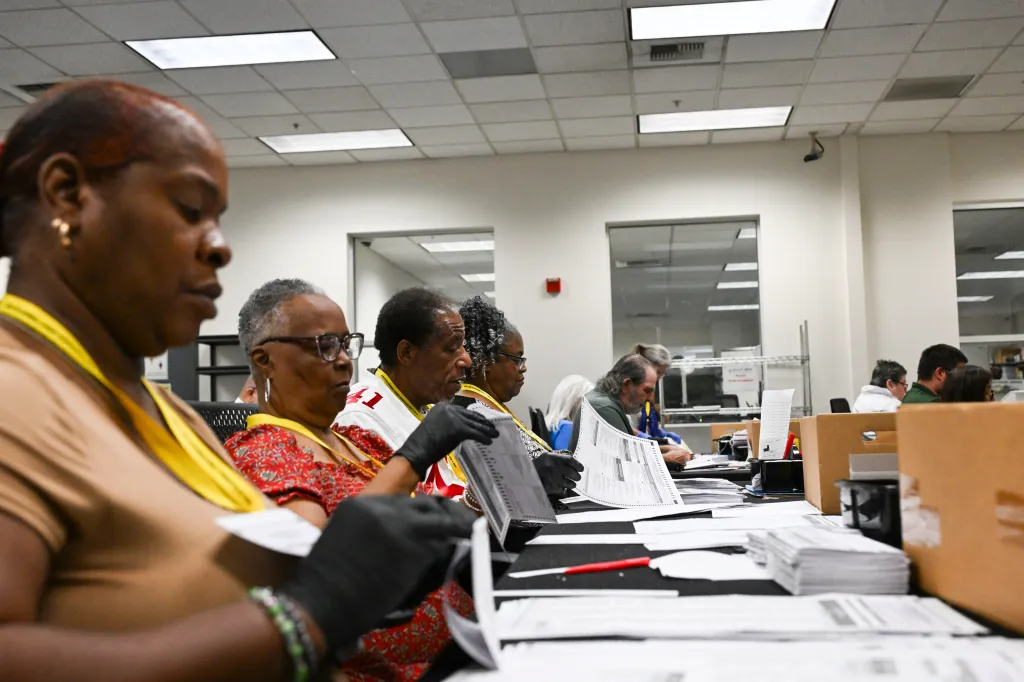
Inside, stacks of ballots went through a gauntlet of technology and tables, where workers took them from envelopes for inspection. Other employees played detective, discerning who voters meant to pick on ballots where the markings were not filled out properly.
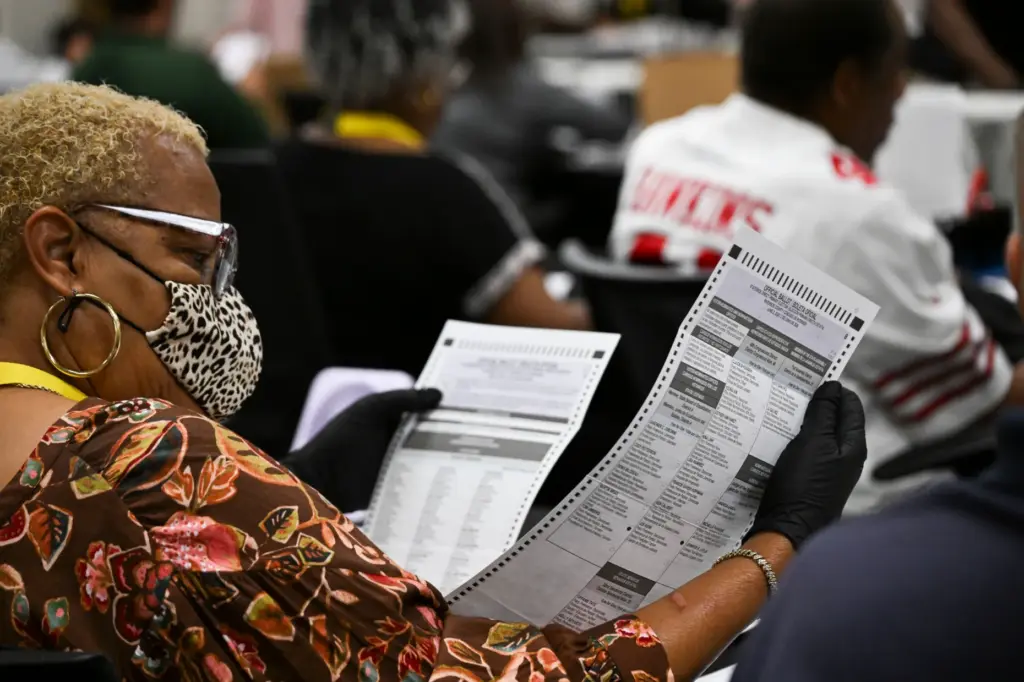 Temporary election assistants process vote-by-mail ballots Monday, June 1, 2026, at the Riverside County Registrar of Voters office in Riverside on the day before Election Day. (Photo by Anjali Sharif-Paul, The Sun/SCNG)
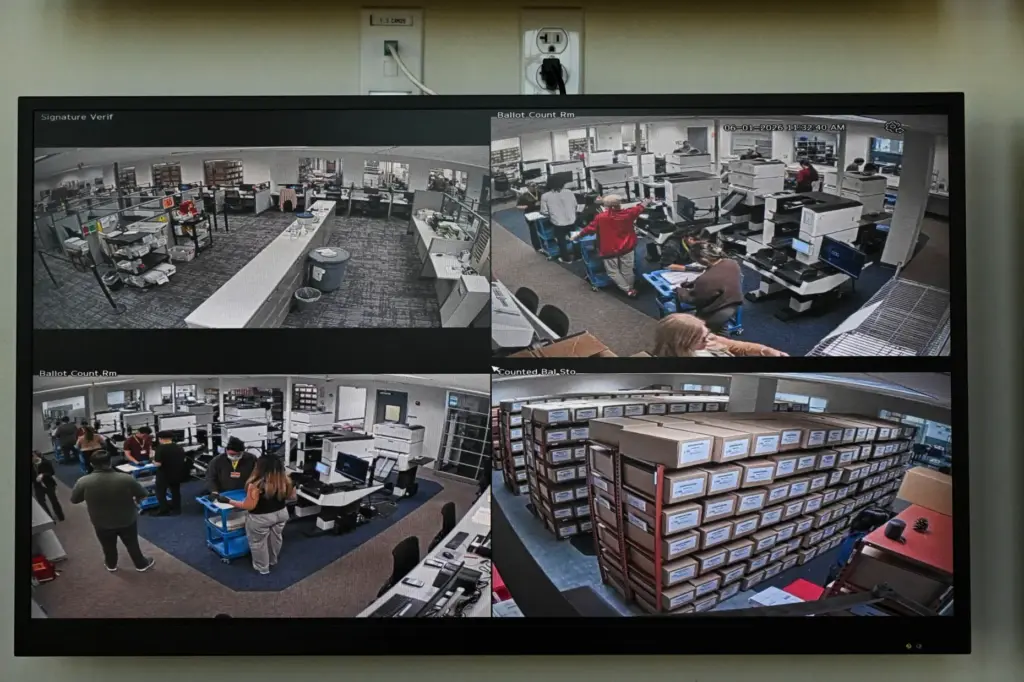 A live-streamed video feed on Monday, June 1, 2026, provides the public with a look at ballot processing at the Riverside County Registrar of Voters office in Riverside. (Photo by Anjali Sharif-Paul, The Sun/SCNG)
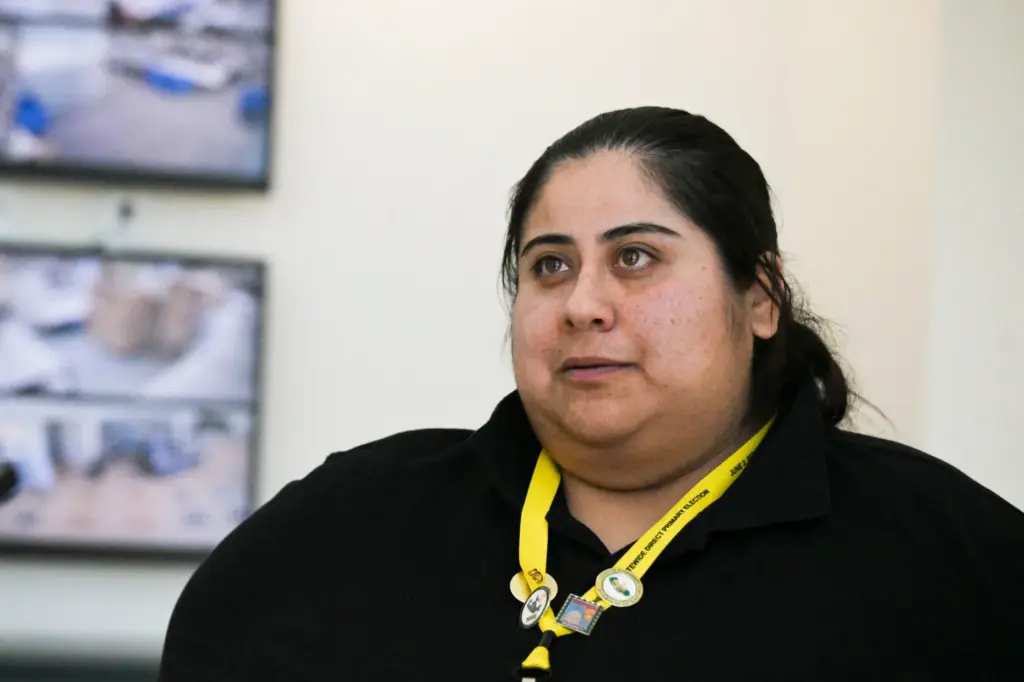 Michelle Calzada, of the Riverside County Registrar of Voters, in discusses office procedures Monday, June 1, 2026. (Photo by Anjali Sharif-Paul, The Sun/SCNG)
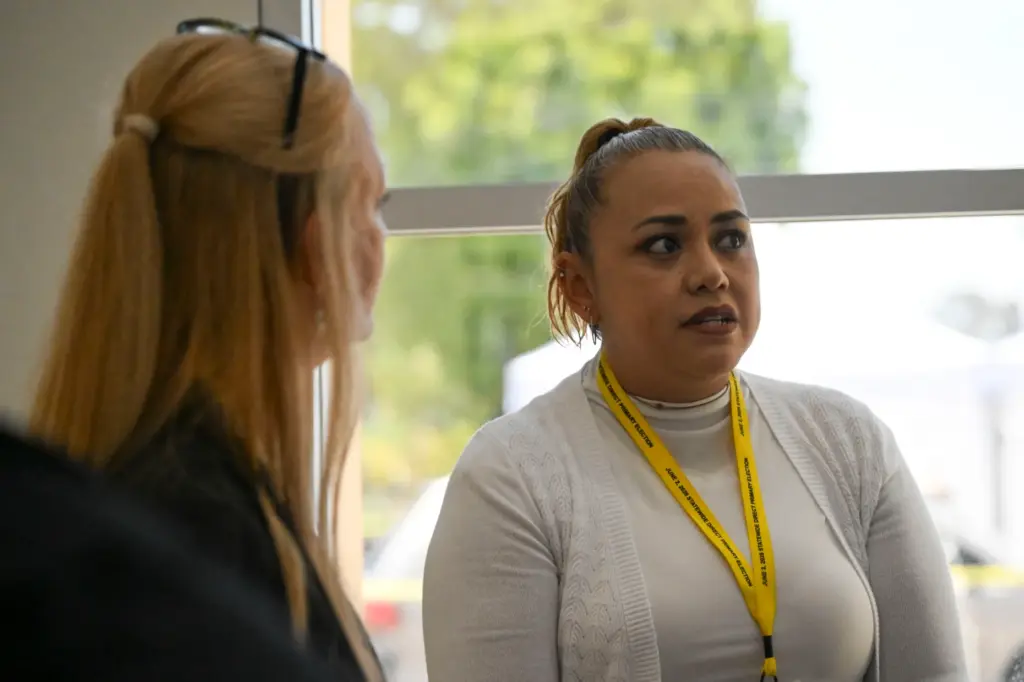 Francis Hernandez, of the Riverside County Registrar of Voters, discusses the office’s procedures Monday, June 1, 2026. (Photo by Anjali Sharif-Paul, The Sun/SCNG)
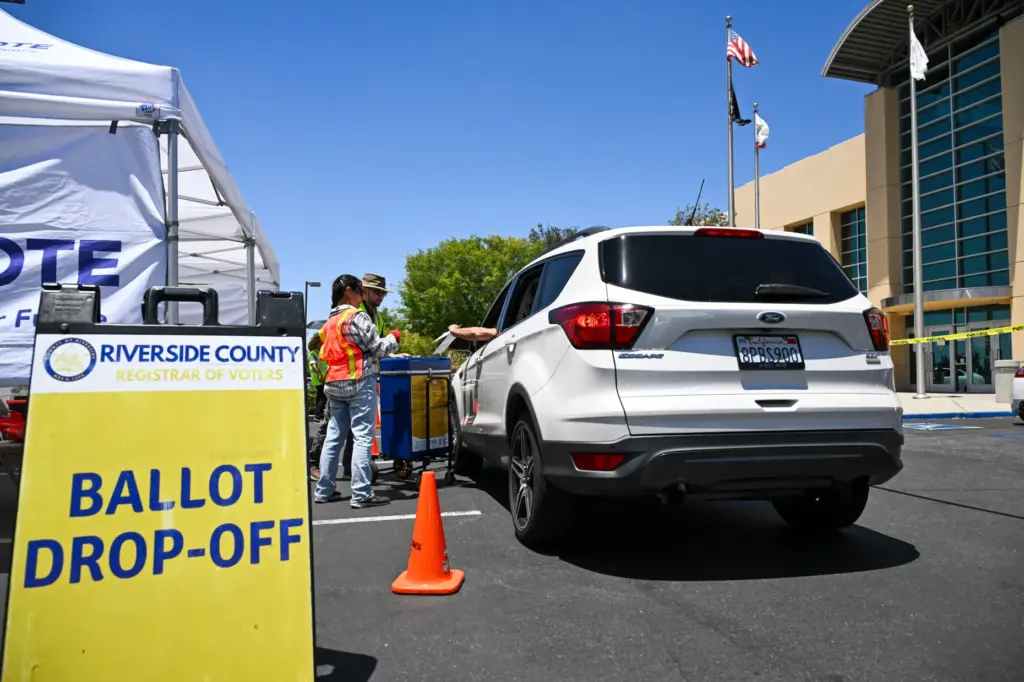 A drive-through ballot drop-off station is set up Monday, June 1, 2026, outside the Riverside County Registrar of Voters office in Riverside. (Photo by Anjali Sharif-Paul, The Sun/SCNG)
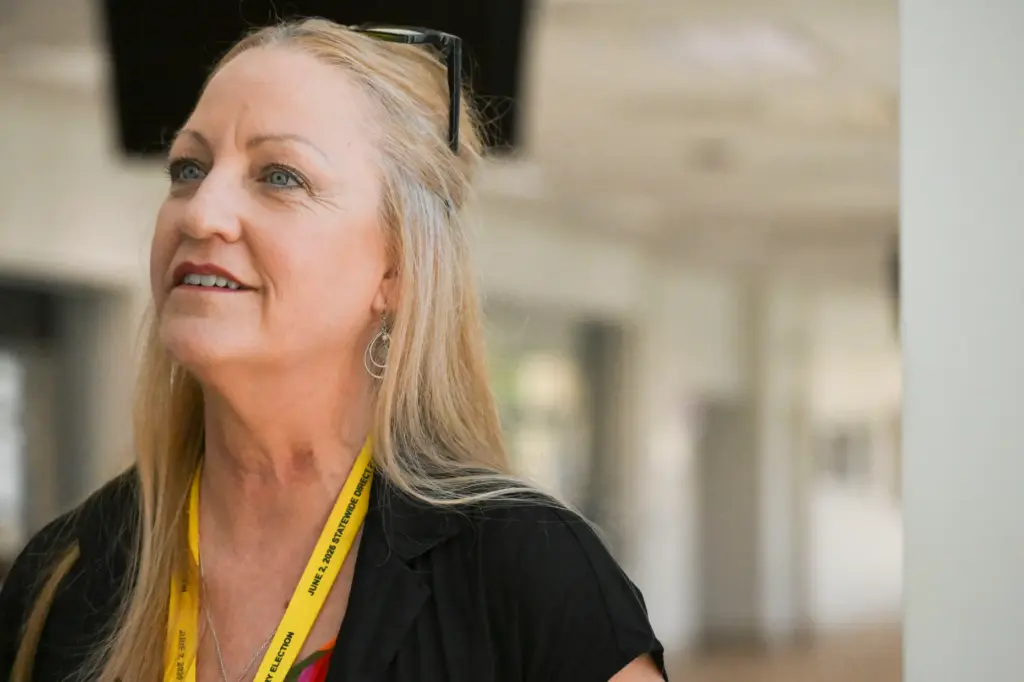 Kai Chubb, of the Riverside County Registrar of Voters, discusses office procedures Monday, June 1, 2026. (Photo by Anjali Sharif-Paul, The Sun/SCNG)
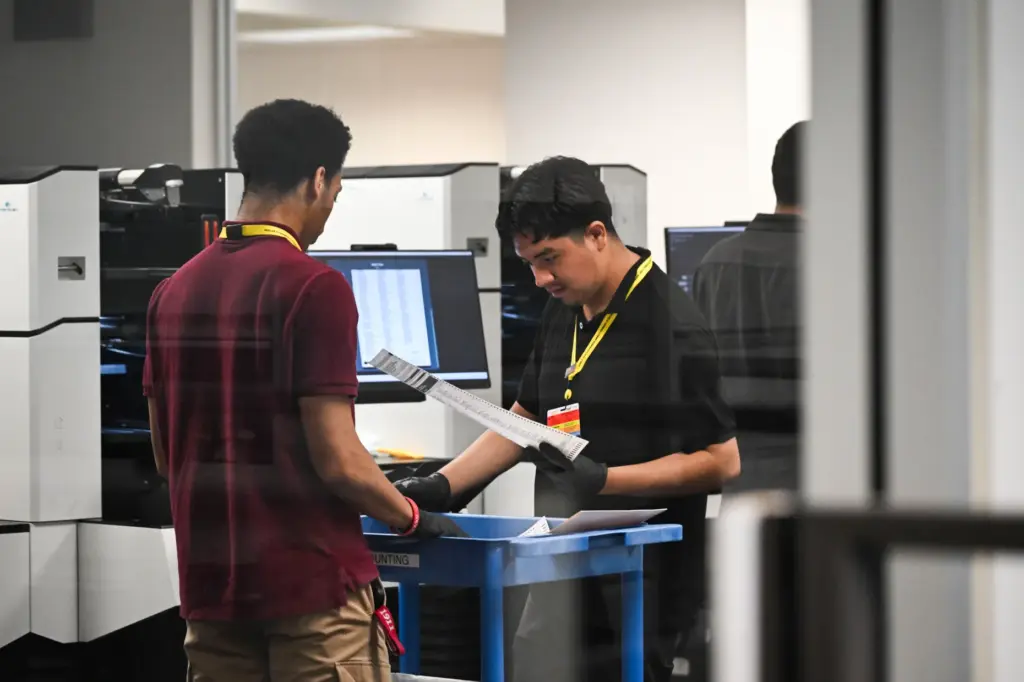 Temporary election assistants monitor and count ballots as they pass through a tabulation machine at the Riverside County Registrar of Voters office in Riverside on Monday, June 1, 2026. (Photo by Anjali Sharif-Paul, The Sun/SCNG)
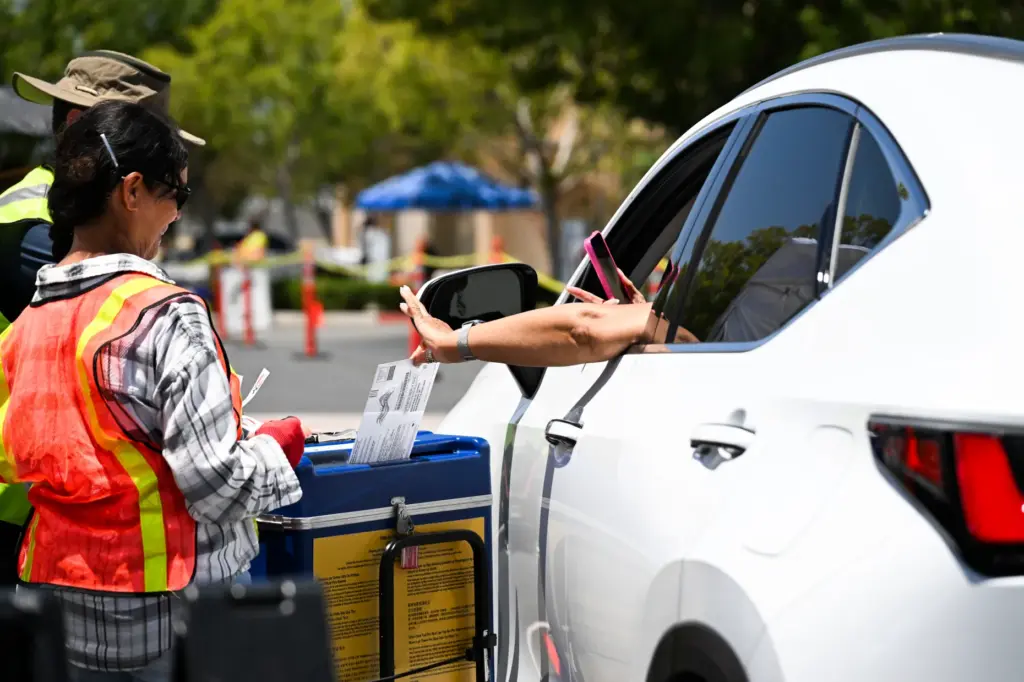 A drive-through ballot drop-off station is set up Monday, June 1, 2026, outside the Riverside County Registrar of Voters office in Riverside. (Photo by Anjali Sharif-Paul, The Sun/SCNG)
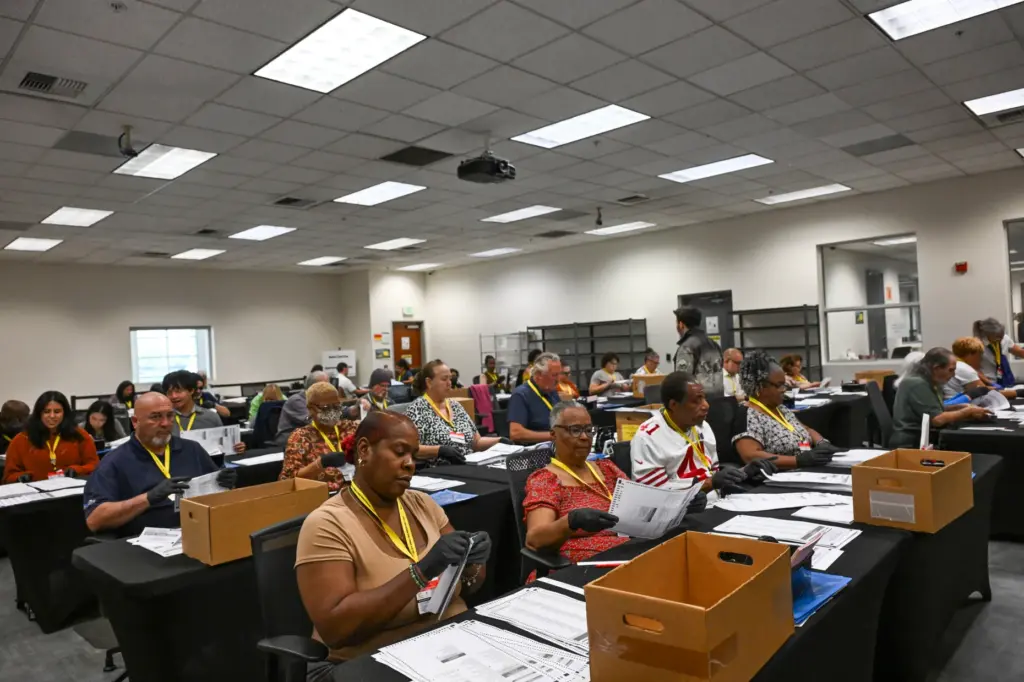 Temporary election assistants process vote-by-mail ballots Monday, June 1, 2026, at the Riverside County Registrar of Voters office in Riverside on the day before Election Day. (Photo by Anjali Sharif-Paul, The Sun/SCNG)
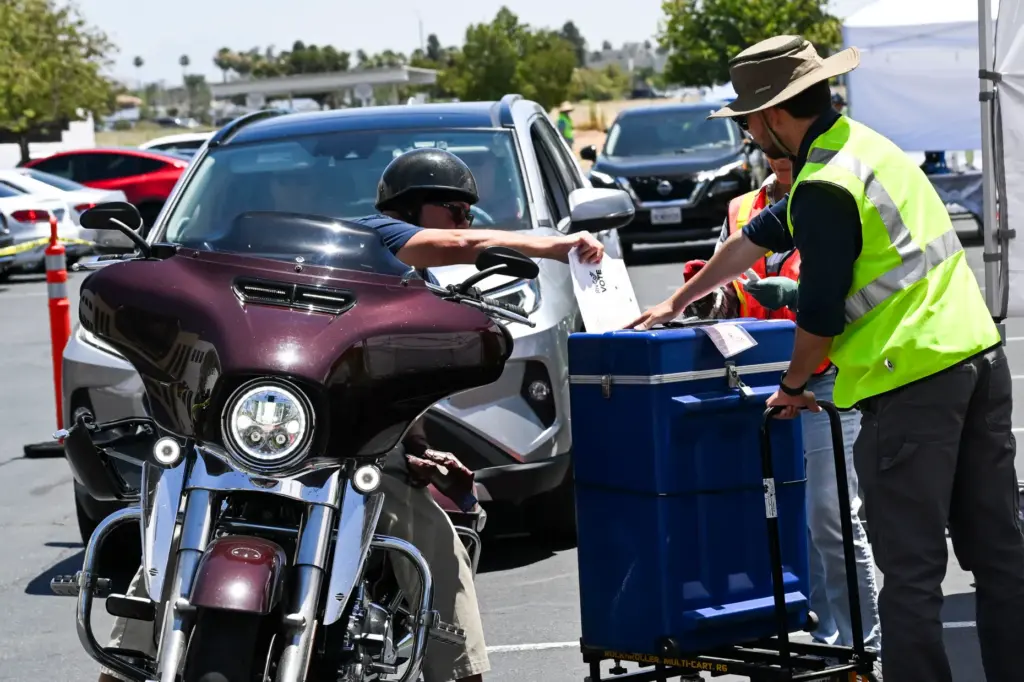 A drive-through ballot drop-off station is set up Monday, June 1, 2026, outside the Riverside County Registrar of Voters office in Riverside. (Photo by Anjali Sharif-Paul, The Sun/SCNG)
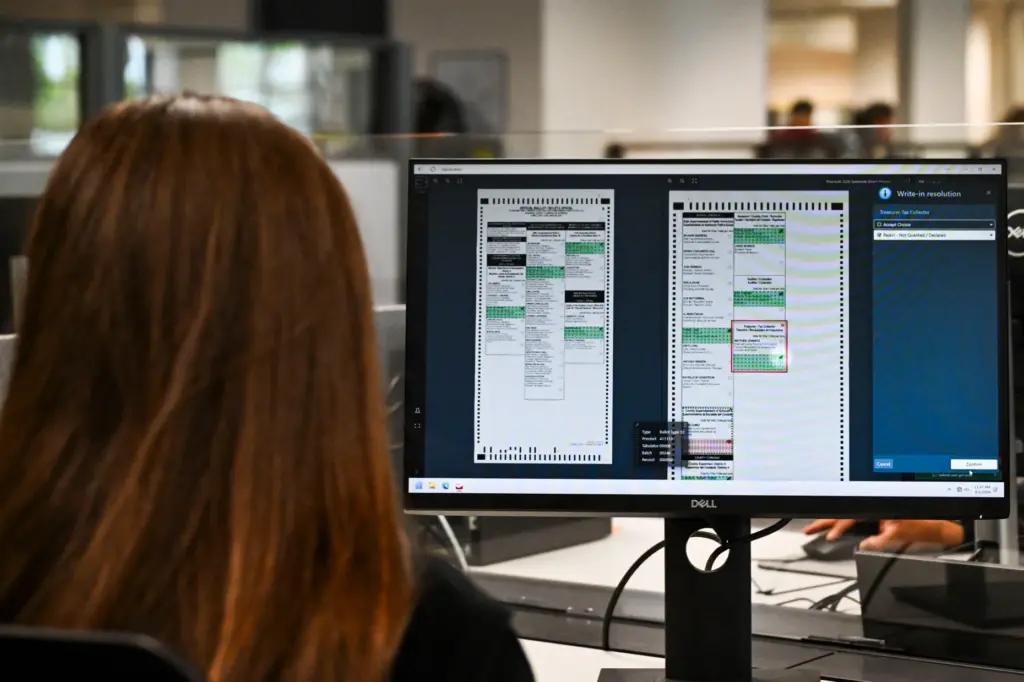 Temporary election assistants examine ballots Monday, June 1, 2026, at the Riverside County Registrar of Voters office in Riverside. (Photo by Anjali Sharif-Paul, The Sun/SCNG)
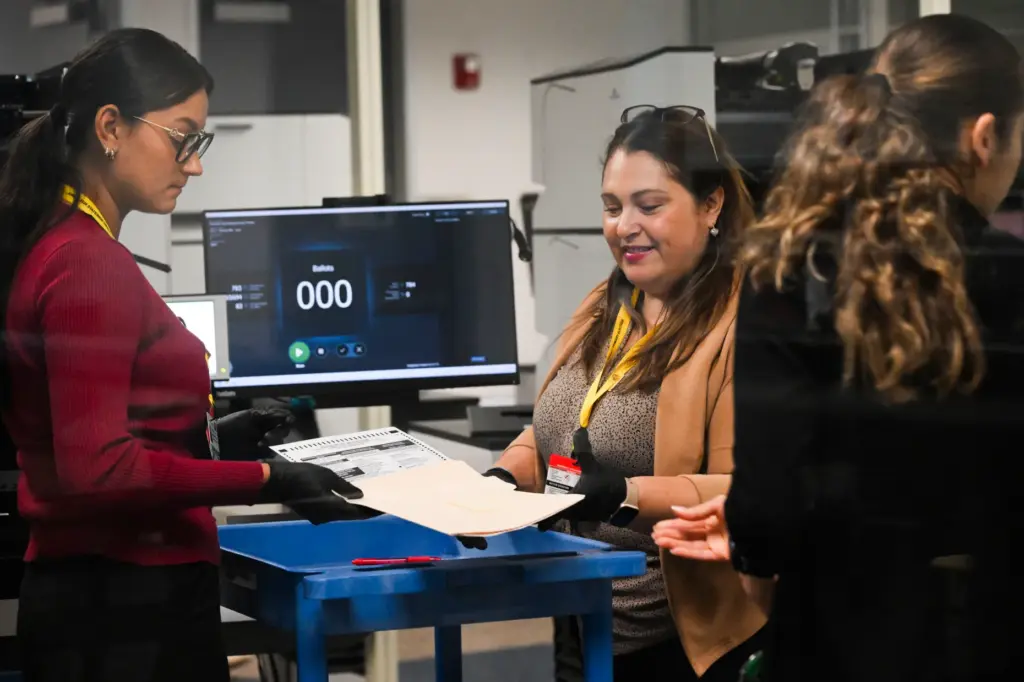 Temporary election assistants monitor and count ballots as they pass through a tabulation machine Monday, June 1, 2026, at the Riverside County Registrar of Voters office in Riverside. (Photo by Anjali Sharif-Paul, The Sun/SCNG)
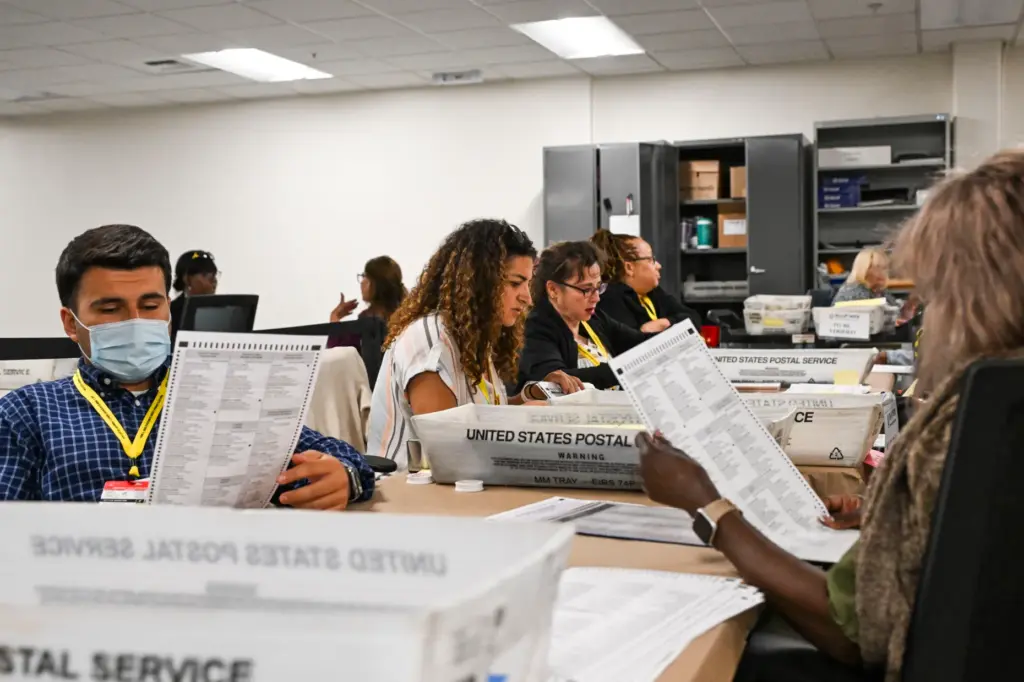 Temporary election assistants verify duplicated ballots Monday, June 1, 2026, at the Riverside County Registrar of Voters office in Riverside. (Photo by Anjali Sharif-Paul, The Sun/SCNG)
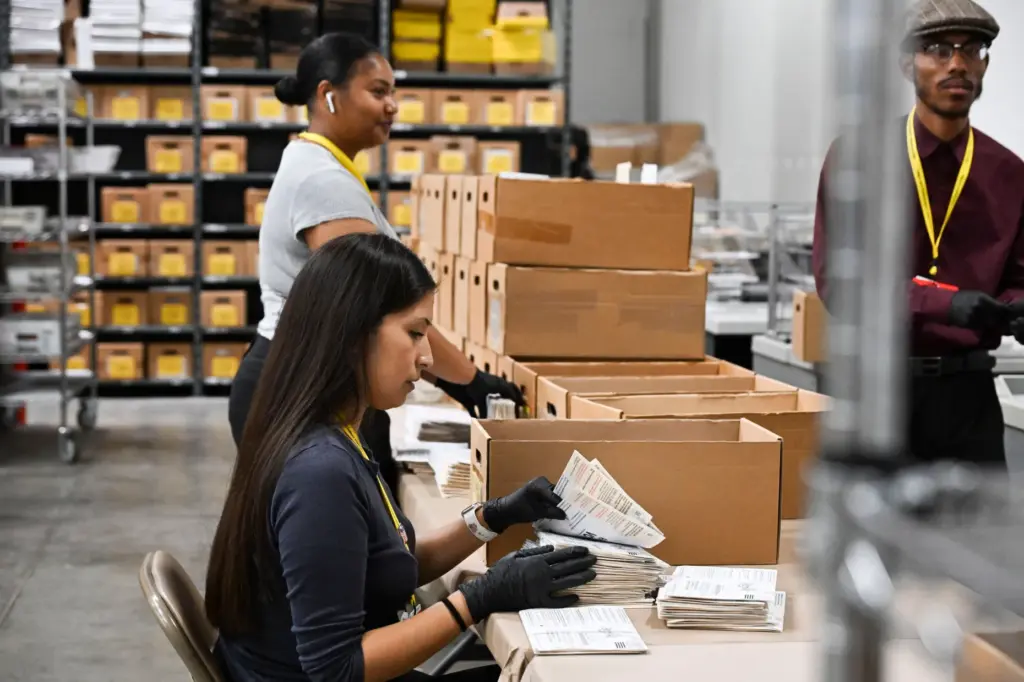 Temporary election assistants hand sort vote-by-mail ballots Monday, June 1, 2026, at the Riverside County Registrar of Voters office in Riverside. (Photo by Anjali Sharif-Paul, The Sun/SCNG)
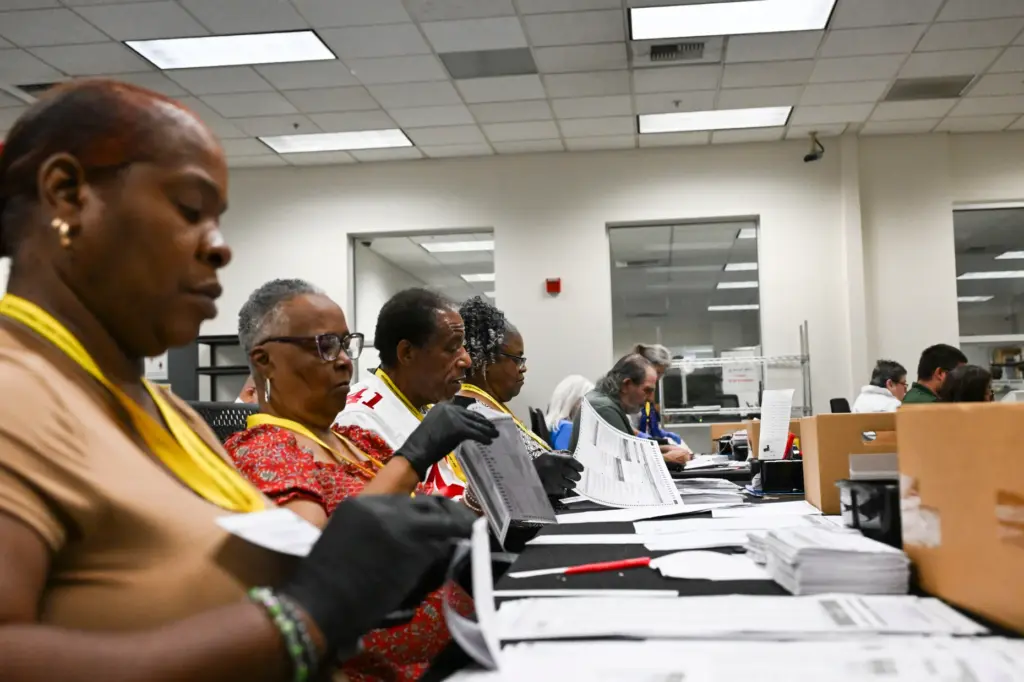 Temporary election assistants process vote-by-mail ballots Monday, June 1, 2026, at the Riverside County Registrar of Voters office in Riverside on the day before Election Day. (Photo by Anjali Sharif-Paul, The Sun/SCNG)
The process played out on TV screens in the lobby. Uniformed security and electronically locked doors filtered access to the din of democracy, one that will get busier and last into the night, early morning and days later once polls close at 8 p.m. Tuesday, June 2.
“There’s definitely a strong flow of coffee … and Monsters (energy drinks) and things of that nature,” registrar’s spokesperson Elizabeth Florer said during a Monday tour.
“But we always do make sure that we bring in something. There’s usually treats. There’s pizza.”
In Riverside County, running an election for more than 1.4 million registered voters in a county roughly the size of New Jersey is anything but a pizza party. California requires its 58 counties to mail a ballot to every voter, and many large counties like Riverside open early-vote centers weeks before Election Day.
Turnout for primary elections in California is typically low, but that doesn’t stop cars from stacking up on Election Day to drop off ballots. Florer said this year, the registrar is adding another drop-off lane to prevent traffic from backing up almost half a mile like it has before.
This year’s primary comes amid the continuing controversy over November’s special statewide election that redrew California’s congressional districts.
Earlier this year, investigators under Riverside County Sheriff Chad Bianco, who is running as a Republican for governor, seized more than 650,000 ballots cast by Riverside County voters in the Proposition 50 election.
The probe, which is on hold pending the outcome of legal proceedings, stems from an allegation by a citizen’s election watchdog group that a 45,000-vote gap exists between ballots cast and ballots received in that election.
The actual gap is 103 votes and not the result of criminal malfeasance, according to county Registrar of Voters Art Tinoco. Bianco has said he wants to count every Riverside County ballot cast in the Proposition 50 election to see if a difference exists and if so, what caused it.
Critics, including California’s secretary of state, denounced the investigation as groundless. State Attorney General Rob Bonta sued to halt the probe and Gov. Gavin Newsom recently signed a bill making it a crime to take ballots from registrars.
Florer said the investigation, which hasn’t publicly named any suspects or led to arrests, didn’t affect morale at the registrar’s office.
“(We’re) just doing our jobs as we always will,” she said.
The sheriff’s probe aside, the registrar is not alone in facing persistent and chronic doubts from critics who see shenanigans behind elections.
A nationwide survey from UC San Diego published in February found 60% of people confident their vote would be counted accurately, down from 77% in 2024.
That’s where the TV screens come in. From the registrar’s lobby or online, the public can watch ballots being counted and processed in real time. It’s not uncommon for election observers to bring chairs and camp in front of the screens, Florer said.
Skeptics can also observe the process in person. Michelle Calzada, who is among the almost 1,400 temporary employees the registrar’s office hires for elections, guides those observers.
“Once they go back and see how intricate it can be, and I think it helps calm those fears” about election integrity, she said.
Still have doubts?
“They’re always hiring,” Calzada added. “Go behind the scenes and see the process.”
Kai Chubb, another temporary worker, spent the leadup to the election on the phone answering voters’ questions and helping them replace lost ballots.
Read more Trump signs an executive order to vet top AI models for national security risks
Most of the people who call are nice, but “we do get, every now and then, an angry bird,” Chubb said. “But for the most part, it’s our job to just give them the information and deescalate if we have to.”
She added: “When the person calls and they’re confused or they need information or whatever it is, I love that I can help them to vote.”
Francis Hernandez’s job includes shooting and editing behind-the-scenes video and reaching out to voters and fighting misinformation.
“Some people can’t come all the way here. They either are in the desert or rural areas,” she said.
“We are able to go out there and help them kind of combat misinformation (and) bring out voter registration forms (and) help make that process a lot easier (and) smoother for them so their voice can be heard.”
Calzada, Chubb and Hernandez spoke outside a locked, windowed room for “adjudication,” where workers sat and looked over ballots flagged in the ballot-counting room for issues such as overvotes — picking three candidates for an office when you’re only supposed to choose two, for example.
Adjudication also is used to process the names of write-in candidates. If it’s an overvote, none of a voter’s selections for that office will go through “unless the voter clearly made an indication for a correction,” said Alberto Esquivel, voter outreach coordinator.
Another locked room with windows houses the ballot-scanning machines. Only authorized, pre-vetted staff with ID cards are allowed inside. Other employees must have an escort.
Around noon Tuesday, staff in that room loaded ballots into the counters. Those ballots will be among the first tabulated when polls close and will make up the first results posted online.
Once the ballots arrive, they aren’t just dumped into the counting room.
Two large machines automatically match voters’ signatures on mail-in ballot envelopes to what’s on file with their voter registration. If the signatures don’t match, the envelopes are pulled for further inspection.
Legally, the registrar must reach out to voters whose ballots are flagged for non-matching signatures and give them a chance to fix the problem. It’s one reason California takes weeks to count votes — others being the sheer volume of ballots cast and a requirement that mail-in ballots arriving up to seven days after an election be counted if they’re postmarked on or before Election Day.
Workers at tables next to the Automatic Signature Verification machines on Tuesday took ballots out of envelopes. In a neighboring room, rows of workers at tables unfolded and flattened the ballots and checked them for damage or other issues.
Damaged ballots or ones with certain problems — those filled out in red ink, for example — were sent to yet another room, where staff in teams of two determined the voter’s intent while recreating each ballot. The reconstructed ballots are then subject to further vetting to ensure the voter’s will is reflected.
It’s a symphony of activity that will build to a crescendo before gradually subsiding. Despite the stress, it’s a tune — and a sense of civic duty — that keeps many election workers coming back for more.
“It’s an interesting job. I enjoy it,” Chubb said. “That’s why I keep coming back every time.”
Other California counties have their own election dances.
On Election Day, the San Bernardino County Registrar of Voters in San Bernardino becomes one big ballot sorting and counting machine, with employees from other departments bringing in ballots cast in person, spokesperson Melissa Eickman said via email.
Staff work in staggered shifts with frequent breaks, food and drink to avoid fatigue, Eickman said.
“The building feels alive — phones ringing, ballot transport vehicles arriving, staff moving quickly between stations, supervisors confirming procedures and observers following each step,” she said.
Many of its employees and volunteers, Eickman said, “understand the pace, the precision required, and the importance of their role” and “take pride in providing accurate, timely, and transparent election processes for our community.”
Read more Trump makes changes to steel, aluminum and copper tariffs