
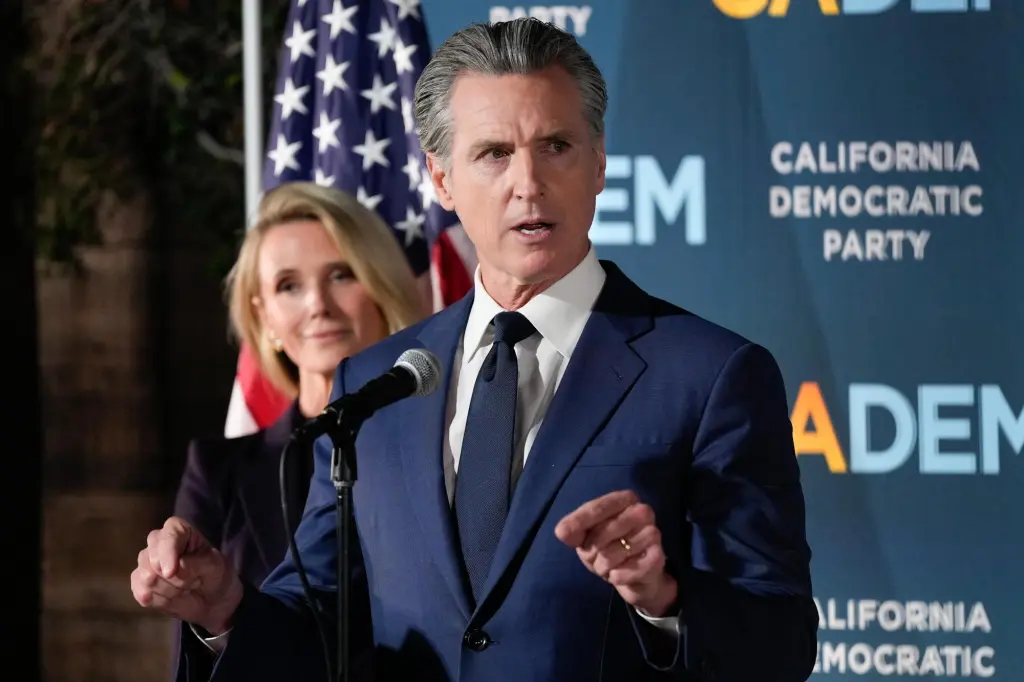
California’s powers-that-be have steered more than a half-billion dollars of other people’s money to their favorite charities and causes since 2011 — and way more than half of that haul came at the behest of Gov. Gavin Newsom.
Read more Man who died in Texas plane crash was a key figure in seeding Austin’s technology boom
That includes millions donated to nonprofits tied to Newsom’s wife, which may have something to do with the federal investigation into Newsom and “first partner” Jennifer Siebel Newsom.
These donations often come from businesses and people hoping to influence elected leaders, steer public policy, demonstrate their stellar citizenship to the masses, or perhaps a bit of all three. While state law sets caps on gifts and campaign contributions to politicians, there’s no limit on these so-called “behested payments” to politicians’ pet projects.
Critics say it’s another way for the well-heeled to curry official favor, while lawmakers say they’re simply using the power of their bully pulpits to make the world a better place. Consider:
• Total charitable contributions made at the request of all California lawmakers totaled $555.9 million over the past 15 years, according to data from the Fair Political Practices Commission.
• Total charitable contributions made at Newsom’s request totaled $347.2 million. That’s more than 62% of all behests over the time period.
• About $4.3 million of the Newsom behests went to his wife’s California Partners Project, just one of several nonprofits she’s involved with.
It’s not a good look.
“There’s no question that Newsom has used this privilege far more frequently than other elected officials,” said political strategist and academic Dan Schnur. “As long as he files the required disclosure forms and there is no evidence of an explicit quid pro quo, he is entirely within the law. But many people believe that an official should not be able to make requests such as these on behalf of organizations in which their own family members are involved.”
Sean McMorris, Transparency, Ethics and Accountability Program Manager for California Common Cause, a nonpartisan good-government watchdog, agrees.
“Behests often go to good causes, but they are ripe for abuse,” he said. “Politicians in positions of power can direct money in a way that they otherwise would not be allowed to do under campaign finance or conflict-of-interest laws. They really exploded during the pandemic and afterward, a lot of politicians realized, ‘This is a kind of an avenue I can use.’”
Read more UN food agencies warn acute hunger will worsen in 13 hot spots as famine risks rise
Which is not to say that all politicians use behests with ill or nefarious intent. A lot of this money does indeed go to good causes — Newsom’s list includes groups working on wildfire recovery, public health initiatives, housing, education and much more.
“The problem is,” McMorris said, “it’s connected to politics.
“That’s where this perception of pay-to-play becomes prevalent. The public is not stupid. There’s a reason why these politicians primarily reach out only to people, entities and special interests who typically have interests before them or need votes from them.”
Things get even stickier when the politician asks for donations to an organization where that politician, or an immediate family member, hold a position of power or receives an income. A loophole in campaign finance and conflict-of-interest laws, he said.
Clearly, there’s a game being played here. There doesn’t have to be an explicit quid pro quo. Those who want to stay in the good graces of the powerful view behests as a great opportunity to gain favor and influence.
“And it’s legal,” McMorris said. “They don’t have to try and defend themselves. A lot of the justification is, ‘The ends justify the means,’ because the money is usually going to a good cause. But the means do matter. If the ends have to justify the means, then the means are probably questionable.”
In San Francisco, voters passed a law that didn’t forbid behests outright — it simply prohibited behests from people or entities with business before the city. And politicians promptly sought to gut it, seeking “waivers” allowing them to extract donations from exactly those people or entities with businesses before the city.
Which tells you just about everything you need to know about behests. It’s not just about the good and the righteous. It’s about power.
In related news, Newsom has had some run-ins with the FPPC over late filing of behested payments, and is facing a $31,500 fine. We asked the governor’s office for its take on all this, but didn’t hear back by deadline. We’ll let you know if/when we do.
Read more Dodgers come from behind to sweep Rays despite rough start from Shohei Ohtani