
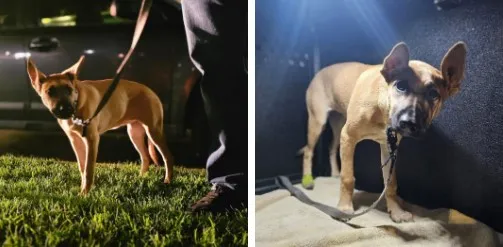
What happens to animals involved in active animal cruelty cases? California legislators are considering whether they are finding loving homes quickly enough.
Read more New report says San Andreas Fault stress at 1,000-year high
Assembly Bill 2344 — the Rehome Abused Animals Act — aims to fast-track the adoption process for animals removed from abusive situations. This bill would authorize shelters to put animals up for adoption 30 days after a defendant fails to appear in court.
And if a defendant is placed under probation, this bill would prohibit them from owning or residing with animals of any kind throughout the period of probation.
“Animal cruelty is unacceptable, and when animals are held for unnecessary periods, this puts a roadblock to their recovery,” said Assemblymember Matt Haney, D-San Francisco, who is behind the bill.
In 2025, more than 1,000 animals were brought into the Orange County Animal Care system after being seized by law enforcement, according to the Animal Welfare Data Center.
In California, these animals remain in shelters while criminal cases make their way through the court system. In some cases, defendants fail to show up to court, extending not only the court process, but the adoption process as well.
When court cases span multiple months to years, the costs of rehabilitation and care of seized animals often fall on shelters, which are already faced with overcrowding and limited resources.
“Today, shelters must continue to devote limited space and resources to caring for these animals, at a time when shelters across California are facing unprecedented overcrowding and resource challenges,” said Judie Mancuso, a Laguna Beach resident who is president of Social Compassion in Legislation, a political advocacy group that promotes animal welfare legislation in California.
Read more New-home sales unexpectedly fall, with West down 27%
The bill, which has received broad bipartisan support thus far, “will streamline that transfer process, providing a tool for courts and shelters to help animals receive earlier transfers into appropriate care,” Haney said.
According to Haney’s office, experts recommend that animal shelters maintain 70-80% capacity. In Los Angeles, a majority of government-run shelters are running at more than 100% capacity.
The average animal seized by law enforcement spends 290 days in the shelter with no opportunity to be adopted, according to Haney’s office.
AB 2344 would not only clear up necessary shelter space and save limited resources, but it would also provide abused animals with the opportunity to recover in a new, permanent home, supporters said.
“The legislation is not only good animal welfare policy; it is good public policy and good fiscal policy,” Assistant Los Angeles District Attorney Maria Ramirez said.
So far, the bill has passed unanimously on the Assembly floor and is before the Senate Committee on Public Safety.
“Animals are completely dependent on us for care and protection, and when that trust is shattered through abuse, we have a moral obligation to act,” Haney said.
Read more Man rescued after falling into vault toilet at California campground