
By Augusta Saraiva and Alicia A. Caldwell | Bloomberg
President Donald Trump’s moves to roll back Temporary Protected Status and other humanitarian programs for immigrants are pushing hundreds of thousands of previously legal foreigners into a shadow workforce, with Thursday’s Supreme Court ruling set to accelerate the shift.
Read more Nicholas Rossi, accused of faking death and fleeing US to Scotland after rape charges, has died
The court’s justices gave the Trump administration the green light to strip protections from more than 350,000 people from Haiti and Syria. Even before that, some 600,000 working adults had already lost the right to live and work in the US since last year as the White House sought to end programs for migrants from places including Venezuela, Cuba and Afghanistan, according to the pro-immigration advocacy group FWD.us. At the end of March, it estimated 3 million immigrants in the labor force could face the same fate. Some have been in the US for decades.
Policy changes are rippling through the labor system and go beyond the TPS program, affecting asylum seekers, refugees, green-card applicants, highly skilled workers on H-1B visas and recipients of humanitarian protections. The result is that, for many, the most immediate threat isn’t deportation, but losing the right to earn a paycheck while they remain here.
Many of those who lose their legal status may choose not to leave, instead staying in the US and taking off-the-books jobs that don’t match their skill set, according to Pia Orrenius, a labor economist at the Federal Reserve Bank of Dallas.
“In most cases, these people are not going to leave the country,” Orrenius said. “They’ll likely stay and swell the ranks of the undocumented immigrant population.”
FWD.us estimated that those who already lost status had been contributing more than $22 billion on average to the US economy every year, and paid more than $6 billion in taxes. The total fiscal impact could surpass $175 billion a year if other protective programs are eliminated, it found.
“It hurts economic growth overall, and it particularly hurts the places where you create these huge labor disruptions,” said FWD.us President Todd Schulte.
The Trump administration says ending or scaling back programs like TPS — something the president has tried to do since his first term — will eventually translate into better wages and job conditions for American workers. “It is a momentous victory, albeit this should have never taken 10 years,” White House adviser Stephen Miller said in an interview on Fox News, referring to the Supreme Court ruling.
Critics of TPS say the program was never intended to be anything but temporary, and that extending it for decades in some cases created a false expectation it would be permanent. TPS doesn’t offer a pathway to a so-called green card or citizenship.
The Supreme Court’s 6-3 ruling in favor of the Trump administration rejected contentions that the administration took procedural shortcuts and engaged in unconstitutional racial discrimination by stripping Haitian and Syrian migrants of TPS. In a separate decision, the court also sided with Trump in a ruling that could make it harder for some migrants to seek asylum.
Even before the latest crackdown, businesses in industries including construction, healthcare and hospitality — all of which depend heavily on immigrant labor — were reporting worker shortages. The situation has only worsened.
Goodwin Living, a nonprofit senior-care provider outside Washington, DC, has lost seven workers since Trump took office last year.
It took the organization five months to fill just one of the positions, forcing other employees to work overtime and increasing costs for the company, said Chief Executive Officer Rob Liebreich. He’s worried about dozens of other employees who have temporary work authorizations.
“We would hire probably 200 people tomorrow if they were there,” Liebreich said. “We actually have to decline patients because we don’t have the team members to serve them.”
Karydja, a 26-year-old Haitian immigrant and nurse at a Philadelphia-area hospital, is still exploring options in the wake of the Supreme Court’s ruling. She’s already spent about $13,000 to apply for asylum for herself and her mother, but she expects to soon lose her legal right to work.
Karydja, who like others interviewed for this story asked not to be identified by her full name, is now facing the possibility of returning to a country she hasn’t set foot in for more than a decade. Her parents brought her to the US shortly after the 2010 earthquake that killed more than 200,000 people, and she was later granted TPS. Conditions in Haiti have only worsened since then.
Reeling after hearing of the court’s decision, she lamented that in a few days “I have no job anymore.”
Read more Ann Blyth, teen star of ‘Mildred Pierce,’ dead at 98
Losing status
Trump has tried to scale back some legal protections for immigrants since his first term, but his efforts were repeatedly blocked by judges. This time around, the White House is acting faster and pursuing more aggressive changes. In Trump’s second term, the Homeland Security Department has moved to terminate TPS for 13 countries including Haiti, Ukraine and Venezuela — which means a big chunk of the about 1.3 million TPS holders who lived in the US as of last year have either lost their status or are on track to lose it this year.
For many immigrants, the changes making it harder to live in the US have arrived not as a single dramatic event but as a series of bureaucratic blows. Through a host of regulatory moves, the White House had made employment authorization harder to obtain and increased compliance burdens for employers.
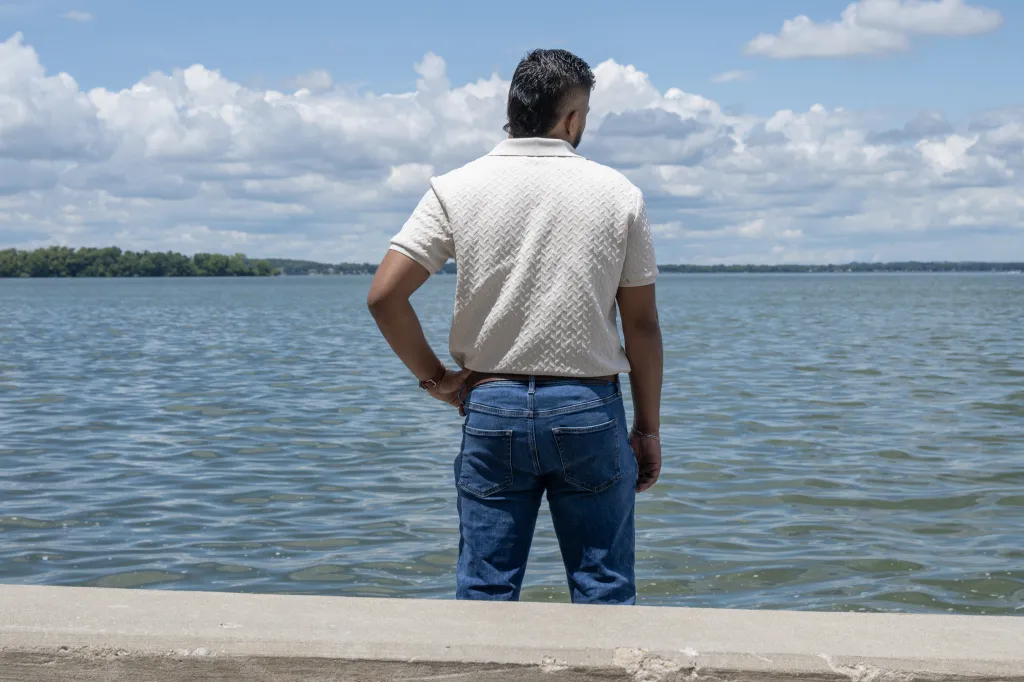
Ken, a 23-year-old accounting graduate from Venezuela, learned that the US government canceled his work permit when he failed a pre-employment background check. Freshly laid off from a $60,000-a-year job as a credit analyst, the new reality arrived as he was hunting for his next gig. He had been living and working in the US since 2024 under TPS, but the car lot where he hoped to work as a salesman said he was flagged as ineligible.
Ken now struggles to make ends meet delivering food. He left his home in Texas to split rent with his sister in Wisconsin.
“Either way, I’m going to put my best foot forward and try to achieve what I want to achieve in life,” Ken said. “But the logistics of that certainly gets turned over when these things happen.”
Ending the protections and accompanying work permissions will open a slew of jobs for Americans, according to Lora Ries, director of the Border Security and Immigration Center at the Heritage Foundation, a conservative research institute that generally advocates for restrictive immigration policies.
“It’s in the name: It’s temporary,” Ries said. “It needs to get back to the original intent and scope.”
Beyond TPS
Trump’s crackdown on legal immigration doesn’t end with TPS holders. The White House is moving to keep pending asylum applicants from legally working as they wait — oftentimes for years — for a decision. And so-called Dreamers — undocumented immigrants brought to the US as children who were awarded deportation protections under an Obama-era program — fear they could be next. That’s on top of the many student and work visa holders, as well as permanent residents, who are facing additional challenges to remaining in the US.
Angel, 36, grew up in Queens knowing he and his mother didn’t have permission to live in the US — he arrived when he was just 4 years old. But after attending college on a track-and-field scholarship, he won permission to live and work in the US through the Deferred Action for Childhood Arrivals program, known as DACA. He got a job as a bilingual physical education teacher at a public school in Brooklyn.
For 14 years, he lived in the US without any problems so long as he renewed his permission every two years and didn’t get in any legal trouble. In February, he submitted his renewal application, as he had done six times prior. But due to delays he’s never experienced before, his work permit expired and a new one has yet to be approved.
The school where he teaches put him on unpaid leave. He hopes his renewal comes through before school starts back up in the fall.
“It’s been extremely difficult,” Angel said, to lose “a steady paycheck that provides stability.”
Beyond the labor market, the recent policy changes are also likely to impact immigrants’ ability to keep spending. Since Jose Palma, a TPS holder from El Salvador, received a work authorization almost three decades ago, he went from taking on cleaning and truck driving jobs to graduating with an associate’s degree and working as a paralegal.
Palma, 49, who lives with his wife and four American children in Houston, had plans to buy a new car and renovate his home, which he has now postponed. He’s also shelved plans to throw a big party in October to celebrate his 50th birthday.
“We’re not going to spend money because we don’t know what’s going to happen,” Palma said.
Read more Small aircraft crashes into Beijing’s tallest building, according to flight tracking service
 Karydja has lived in the US for 16 years following the 2010 earthquake in Haiti. Photographer: Rachel Wisniewski/Bloomberg
 Jose Palma holds a photograph of himself when he moved to the US. Photographer: Mark Felix/Bloomberg
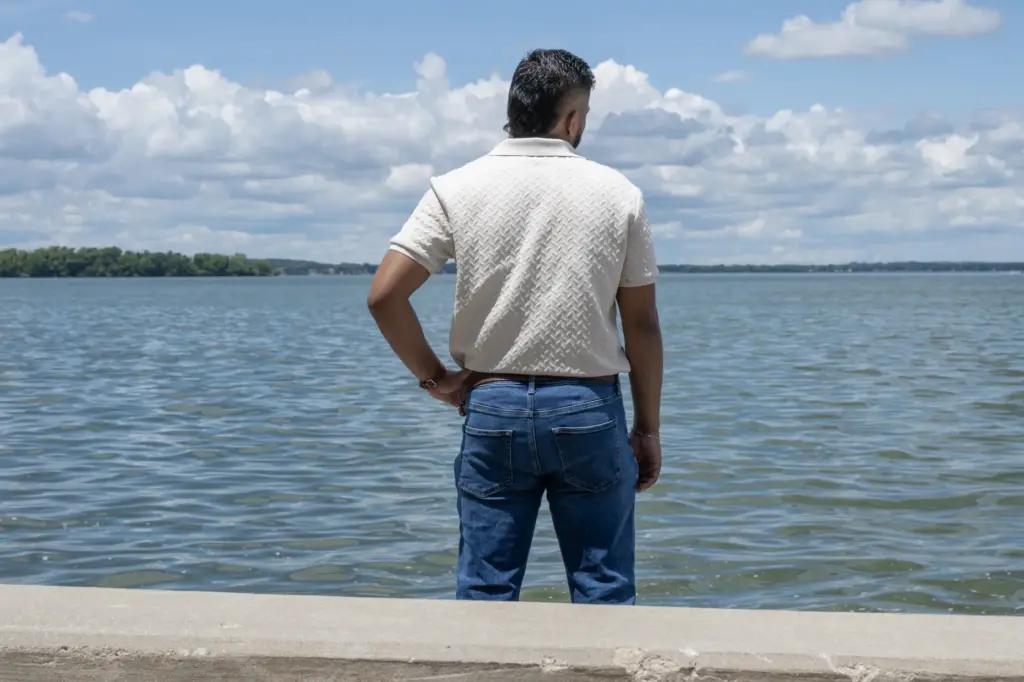 Ken, a 23-year-old accounting graduate from Venezuela. Photographer: Tanya Habjouqa/Bloomberg