
By KATHLEEN RONAYNE and JANIE HAR
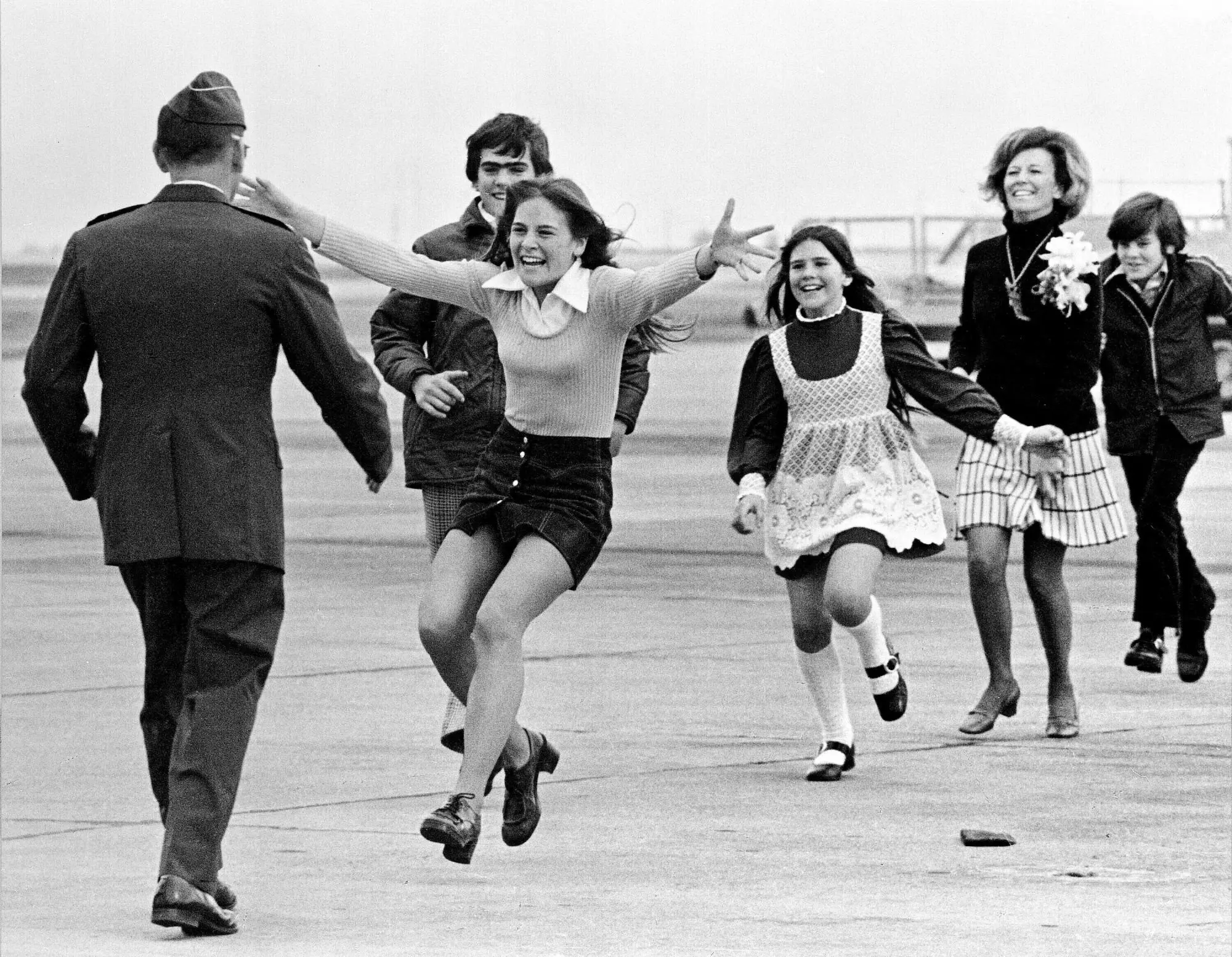
SACRAMENTO, Calif. (AP) — Pulitzer Prize winning photographer Slava ‘Sal’ Veder, best known for his picture of a U.S. Air Force lieutenant colonel joyfully reuniting with his family after five years in a prisoner of war camp in Vietnam, died Aug. 22. He was 99.
Read more Angels’ Christian Moore shows an encouraging sign with a HR on a 99 mph fastball
Veder’s family on Wednesday confirmed that the retired Associated Press photojournalist died in his sleep, just eight days shy of his 100th birthday, at his home in El Dorado County, California, outside of Sacramento.
The San Francisco Bay Area native was 46 years old in March 1973 when he was sent to Travis Air Force Base for the arrival of Lt. Col. Robert L. Stirm and other war prisoners returning from Vietnam. Veder was in a crowded bullpen jockeying for pictures with dozens of other photographers when out of the corner of his eye he spotted Stirm’s four children begin to gallop toward their father.
“You could tell, even at a distance, what they were feeling. It was all over them, their faces, the way they all broke into a run. There was a surge of emotion from the crowd, too,” Veder said in a 2015 interview with The Guardian.
Using a makeshift darkroom set up in a women’s bathroom on base, Veder cranked out six images, including “Burst of Joy,” which won the 1974 Pulitzer in feature photography. Veder noted that in the photograph, Stirm has his back to the camera, rendering him an everyman soldier returning to the undeniable joy and excitement on the faces of his children.
The photo became a symbol of the end of U.S. involvement in the Vietnam War. But for Stirm, it represented heartbreak as he had been handed a “Dear John” letter from his wife, Loretta, by a chaplain upon his release and the couple divorced a year later. Stirm died in 2025.
Slava J. Veder was born Aug. 30, 1926, in Berkeley, California, to Ivan and Anka Veder, who had left Russia and taken the names John and Ann when they settled in the U.S. He was their only child.
He worked as a sports writer and news editor at several publications and in 1961, he was hired as a staff photographer by The Associated Press at its Sacramento bureau. Later, he transferred to the San Francisco office, which is where he was based when he took the prize-winning photograph.
Read more How Disneyland can reimagine Tomorrowland
Friends and former colleagues remembered Veder as a warm and humble person who loved to ice skate and sail. He mentored younger photographers and always took time to ask the people around him how they were doing that day.
“He was the first Pulitzer Prize winner I ever met, like holy smokes,” said Brad Mangin, a freelance sports photographer in the San Francisco Bay Area. “He was just the sweetest man.”
Eric Risberg, a retired AP photographer who worked in San Francisco, said Veder was a great mentor and teacher.
“He really, really emphasized the marriage between pictures and words. He encouraged me to dive deeper, and get more into what’s really the story?” Risberg said.
Among his many assignments, Veder took photographs of the late Ronald Reagan when he was California governor, university campus protests against the war in Vietnam, the bank robbery trial of newspaper heiress Patty Hearst, and the assassinations of San Francisco Mayor George Moscone and Supervisor Harvey Milk by disgruntled former city supervisor Dan White in 1978.
Veder retired from AP in 1993.
Har, a former AP journalist, contributed reporting previously for this story. AP staffer Randy Herschaft contributed to this report.
Read more California moves closer to approving plug-in solar