
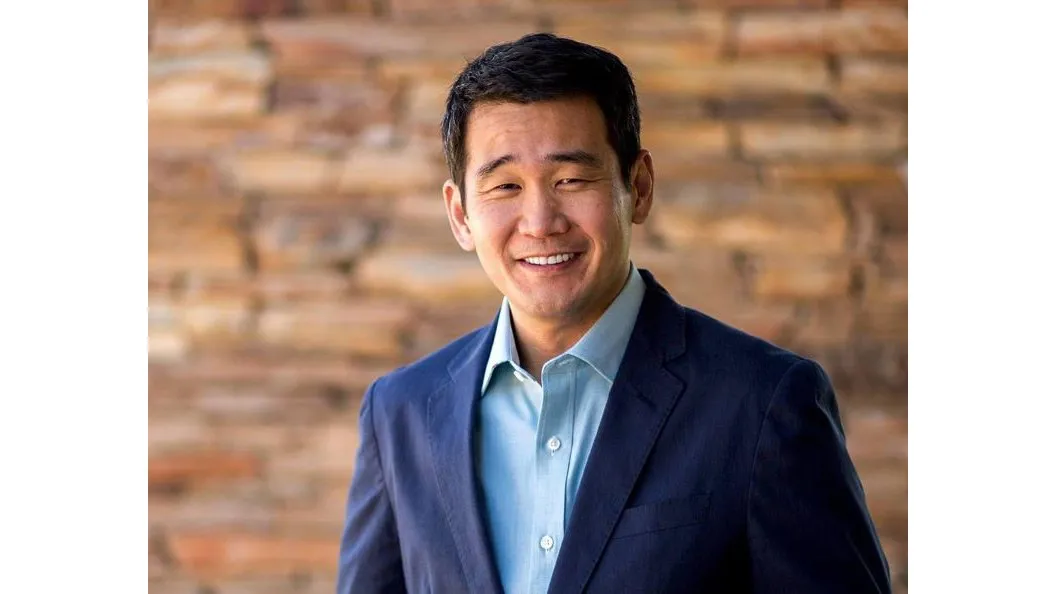
Ahead of the November general election, the Southern California News Group compiled a list of questions to pose to the candidates who wish to represent you. You can find the full questionnaire below.
Read more Armen Kurdian, CA-49 candidate, 2026 election questionnaire
Name: Dave Min
Age: 50
Current job title: Congressmember, CA-47
Political party affiliation: Democratic
Incumbent: Yes
Other political positions held: California State Senate, 2020-2024
City where you reside: Irvine
Campaign website or social media: davemin.com
What is the single most important issue this district faces, and what can Congress, realistically, do to address it? (Please answer in 200 words or less.)
In the short term, the high cost of living, and especially the high cost of housing, is the biggest problem my constituents are facing. To address this, we must reverse President Trump’s ruinous economic policies, including tariffs and the Iran War, but we must also proactively look to significantly increase public investments in affordable housing and make it easier and faster to build new housing.
In the longer run, I am becoming increasingly convinced that the biggest threat to our region and more broadly American society is the lack of good jobs with a pathway to prosperity. Too many young people I talk with are coming out of college and not able to find jobs in the fields they studied. They feel like they have no hope of getting ahead in America, and the rapid advancement of AI is exacerbating this problem. We should be looking to aggressively address the jobs issue, including providing significant funds to education and training for unemployed workers.
Housing is increasingly unaffordable and remains top of mind for many Californians. What is one federal policy you’d push to make housing more affordable? How would you measure whether that policy was actually successful? (Please answer in 200 words or less.)
I am supportive of an “all of the above approach” that includes both reducing the barriers to building more housing while also emphasizing funding and subsidies for affordable housing. Permitting reform to allow housing and the infrastructure that supports new housing to be built more quickly.
At the same time, simply increasing housing supply is not enough. Affordable housing for low- and very low-income households will not be built without federal support, and we must reinvigorate the sources of funding that help to build and maintain this particular type of housing supply. That is why I support the SUPPLY Act, which is a bipartisan bill to help homeowners break ground on backyard cottages, granny suites, or in-law suites, creating new housing opportunities. I’ve also cosponsored the HELPER Act, which provides first responders the opportunity to become first-time homeowners. And I support increasing funding for programs like the Low Income Housing Tax Credit and Section 8 vouchers, which are vital for the creation and maintenance of new affordable housing units.
Concerns about the use of surveillance technology have intensified recently, often relating to license plate readers made by Flock Safety. How can Congress balance the use of these technologies in public safety cases while limiting infringement on an individual’s right to privacy? (Please answer in 200 words or less.)
I’m proud of my strong record of standing up to invasive surveillance technology and data breaches. As a state senator, I authored and passed legislation to prevent abusers from using invasive technologies to track, surveil, and stalk their victims. When I came to Congress, I introduced and supported a number of key bills to stop the illegal misuse of your private data by DOGE and President Trump. I also voted against FISA reauthorization earlier this session because I was concerned about the misuse of information about people’s private information and online activities.
With respect to Flock and other cameras (including Ring cameras installed on people’s doorsteps), we must take strong steps to ensure that this camera footage is protected against misuse, including from potential malfeasance by federal government agencies like ICE. At a bare minimum, we should require that this data be strongly protected against breaches or hacks, and that strong privacy protections are in place to protect against abuse, including requiring judicial warrants before any government agencies are allowed to access any of this data.
What should immigration policy in the U.S. look like five years from now? (Please answer in 200 words or less.)
First and foremost, the illegal activities we have seen from ICE agents must never be allowed to happen again. Just because you have a federal badge does not mean you can conduct warrantless raids, use pepper spray on peaceful protestors as you drive by them, or punch people in the face because you don’t like the sign they are holding, as ICE agents have been taped doing.
I hope we also have airtight border security. As a reminder, congressional Democrats were on the verge of passing a massive bipartisan funding bill for border security in 2024 (this was before I was in Congress), but then-candidate Trump publicly called for congressional Republicans to kill this effort so that he could campaign on the border security issue.
Finally, we are long past due for massive immigration reform that reflects our American values. Kids should not be separated from their parents. People who have been here for 40 years with kids and a history of contributing to our society, including those who came to this country at a young age, should have a pathway to permanent residency. The cruelty and inhumanity of Trump’s immigration agenda should never be allowed to happen again.
Would you like to see any changes to Medicare, Medicaid or prescription drug policies? What specifically would you change, cut or fund? (Please answer in 200 words or less.)
We need to reverse President Trump’s devastating cuts to Medicaid and restore the Affordable Care Act tax credits that have allowed millions of families to purchase private health insurance. These cuts, which will mostly not take effect until 2027, have already resulted in higher premiums and out-of-pocket costs as medical providers and insurers start to price in the huge costs they’ll incur from uninsured patients next year and beyond. But in 2027, we will see catastrophe unless we reverse course.
In the longer run, we must do all we can to ensure that every American has access to quality healthcare. Healthcare today should be seen as a basic human right. To ensure this, we must do more to lower costs across the system without dampening the amazing innovation that has enabled us to live longer and treat diseases and conditions once viewed as untreatable. Simultaneously, we must shore up the solvency of critical programs, like Medicare, by making changes to the tax code that make the wealthiest Americans pay their fair share. It’s simply outrageous that billionaires like Mark Zuckerberg and Elon Musk pay a lower effective tax rate than the rest of us, even claiming zero income in various years.
Increasingly, we’re seeing communities push back on data centers opening in or near their neighborhoods. Environmentalists complain about the amount of water and energy that data centers need to operate. Residents complain about relentless noise pollution. And others worry about losing agricultural land to these centers. On the other hand, the tech industry emphasizes the role of data centers in supporting cloud computing and artificial intelligence. As a policymaker, how would you balance the concerns of critics with desires to ensure that the U.S. remains a leader in innovation? (Please answer in 200 words or less.)
Data centers are seen as necessary for the AI industry’s competitiveness, but they also can create huge burdens for the local communities in which they are sited. At the same time, new data centers often are fast-tracked over the objections of local residents, reinforcing the belief of too many Americans that our elected leaders are corrupt and beholden not to the people who they represent but to the highest bidders.
The AI race with other countries – especially China – is a real and urgent one. But we cannot allow Americans to get thrown by the wayside. I believe local residents must be allowed to weigh in on data centers. At a bare minimum, new data centers must be held to a “do no harm” standard, whereby they do not create new nuisances (including noise and heat) or increase the costs or decrease the availability of energy to households.
There are literally trillions of dollars in capital flowing to AI right now. If the AI industry sees data centers as critical, it should be willing to invest money into making these data centers net positives for the surrounding communities rather than net negatives.
At the same time, I believe we need some kind of “truth in AI-generated advertising” standard to ensure that anything created by AI does not mislead the public.
Read more Mike Levin, CA-49 candidate, 2026 election questionnaire
There is growing debate about whether political candidates or committees should be allowed to run ads created with the use of artificial intelligence. Recently, we’ve seen videos or images depicting a candidate’s political opponent in disparaging ways – and which some critics say falsely misrepresent their political rival. In your opinion, should there be a strict ban on AI-generated political content? If AI-generated content is permitted, should there be restrictions on its use? What should the terms be, if any? Explain your position. (Please answer in 200 words or less.)
I’m certainly not opposed to innovation, and I am sure that AI will have huge impacts on advertising, including political advertising, going forward. However, the realism of AI-generated content creates significant risks of confusing and misleading voters. Those risks are only compounded by the potential for foreign adversaries to use increasingly sophisticated AI-generated content to spread disinformation and interfere in our elections. We should not allow candidates or campaigns to create and distribute AI-generated images or videos of anyone who has not given their explicit permission for this. I believe under existing law, this is probably already illegal, but new legislation may be necessary to make this point clear.
How should the U.S. balance support for foreign allies with concerns about the country’s spending and the risk of entering “forever wars”? (Please answer in 200 words or less.)
Donald Trump bankrupted six different businesses, including a casino. It is this lack of business acumen that has caused him to abandon American “soft power,” which is cheap and provides huge financial benefits to our country, in favor of actual military conflicts that have drained our bank accounts and weakened our alliances.
Trump’s policies are hurting America and helping China. Threatening close allies like Canada and Denmark while undermining our commitments to NATO and Taiwan and South Korea has created massive risks that we will see armed conflict around the world. Imposing tariffs on our closest allies has caused many to start looking away from the United States, and cutting off funding to science and research is eroding our longstanding advantage in innovation.
It is long past time that Congress stepped up and reclaimed our powers. Trump does not have the authority to declare war, or impose taxes, or impound science funding that Congress has appropriated. These are all clearly defined in the Constitution as powers exclusively held by Congress. We must stand up and defend the Constitution, and in so doing, I think we can prevent the forever wars that have drained our resources.
The Trump administration is aggressively pushing to expand offshore oil drilling and production in California. Do you support this move? Why or why not? (Please answer in 200 words or less.)
I am 100% opposed, for three reasons. First, fossil fuels are the past, not the future. Even if you don’t believe in climate change, rapid advancements in renewable energy technologies make it clear that renewable energy will be much cheaper than oil and gas in the very near future (and in many places it already is).
Second, offshore oil poses massive risks to our economically vibrant coastal economy. We’ve seen the effects of oil spills, even “minor” ones like the 2021 Huntington Beach oil spill that shut down our beaches in the OC for a week. Just to give some context, offshore oil accounts for less than 1% of the economic activity generated by our beaches and coastal waters. That 1% should not be allowed to threaten the other 99% of our coastal economy.
Finally, offshore oil spills are inevitable due to both the economics of offshore drilling and the incentives that oil companies have right now, where they extract the revenues and then leave taxpayers to pay for the mess they created, including the costs created by spills and also the costs of dismantling those offshore rigs.
The polarization of politics in this country has only grown. If you’re the incumbent of this office, what’s an example of you bucking that trend and cooperating with colleagues you may have political or ideological differences with? And if you’re running to step into this office for the first time, what’s an issue you will work on with those across the aisle to tackle? (Please answer in 200 words or less.)
I will always partner with Republicans when I can do so without compromising my values. That’s why I’ve authored six bipartisan bills, including two passed by the House. At the same time, I will not compromise my values for the sake of trying to be more bipartisan, and I believe I am fiercely independent.
One example of where this dynamic plays out is in law enforcement. As a former federal enforcement attorney, I believe strongly in the rule of law and law enforcement. I have broken with my Democratic colleagues a number of times in voting for Republican public safety bills, and have taken a lot of criticism for those votes.
At the same time, I have been one of the loudest and most partisan voices in Congress in calling out the misconduct of ICE agents and in criticizing my Republican colleagues for failing to perform any oversight on this.
At the end of the day, I will continue to do what I think is right, regardless of whether that means I line up with Republicans or Democrats.
Tell us about a time you’ve changed your mind on a political position. What was it, and what changed your mind? (Please answer in 200 words or less.)
Over time, I have become more and more concerned about the layers of regulation that our businesses, and particularly our small businesses, face. I believe that regulation is necessary, and I support many of the types of regulation that are in place for businesses. My own experiences (I was a failed entrepreneur between college and law school as we got our funding pulled during the 2001 economic downturn) have made me sympathetic to the situation of entrepreneurs and small business owners. And since first becoming an elected official in 2020 when I was elected to the California State Senate, I have heard so many stories from business owners and executives who want to do the right thing, but feel like the many different rules and agencies they have to deal with make it so hard for them to get ahead.
I believe we can put in place strong regulations to protect worker safety, prevent environmental pollution, stop discrimination and harassment, and deal with the issues I care about, but that we can do so in a more streamlined way that is easier to comply with, particularly for smaller firms.
Bonus question: What is the best book you’ve read this year? Explain why you found it compelling.
“Strongmen” by Ruth Ben-Ghiat. “Strongmen” lays out in great detail the ways in which various strongmen, ranging from Mussolini to Gaddafi to Putin, have been able to rise to power, and how they rule. As we strive to protect our democratic institutions and our most cherished American values, I think it is so important that we understand the history that undergirds the moment we are in. Dr. Ben-Ghiat’s book is well written, easy to read, but so full of important lessons for us.
Read more 10 things you should never say to a Disney fan