
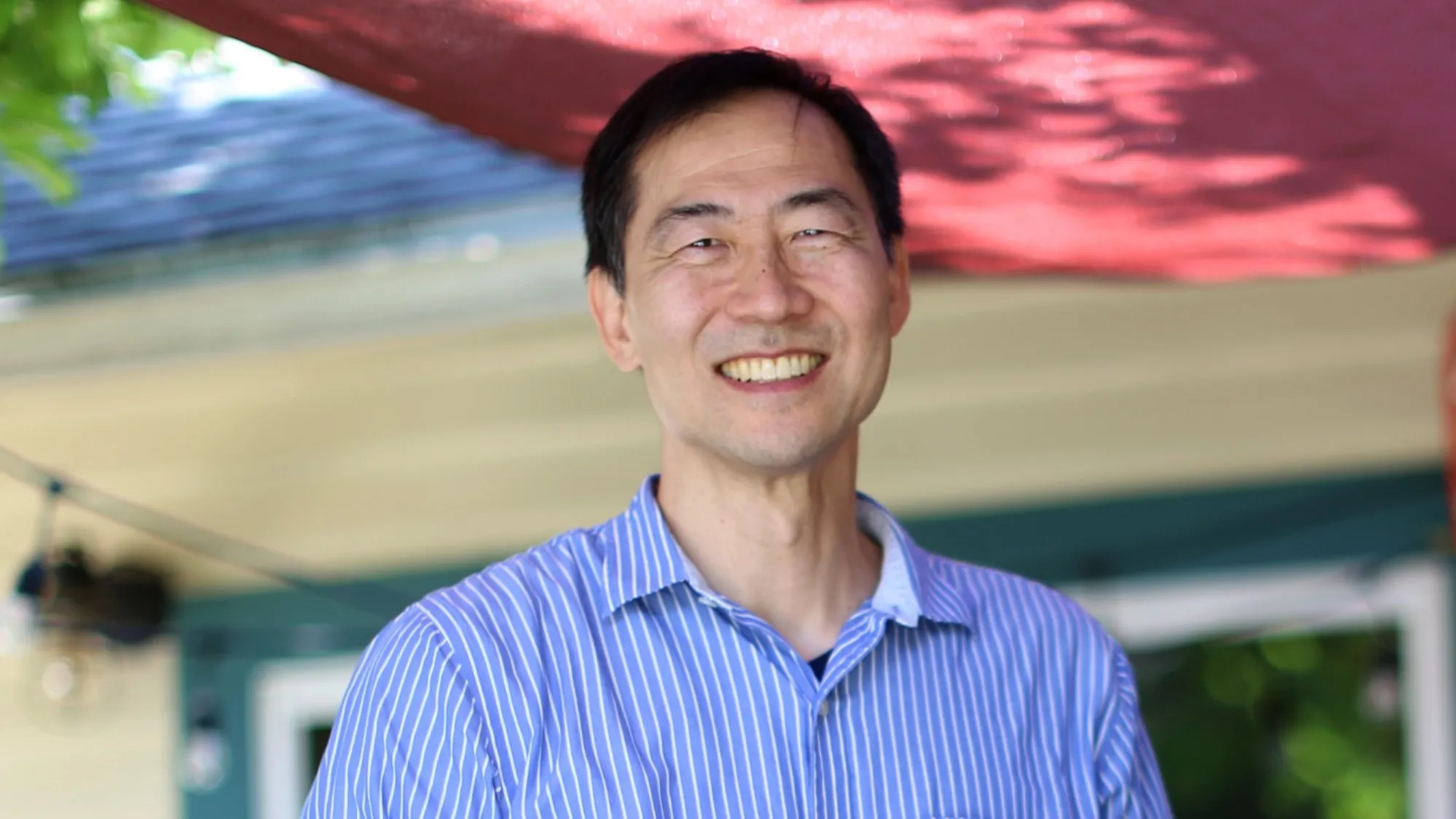
Ahead of the November general election, the Southern California News Group compiled a list of questions to pose to the candidates who wish to represent you. You can find the full questionnaire below.
Read more Jenny Rae Le Roux, CA-47 candidate, 2026 election questionnaire
Name: David Pan
Age: 62
Current job title: Professor
Political party affiliation: Republican
Incumbent: No
Other political positions held: None
City where you reside: Irvine
Campaign website or social media: DavidPanforCongress.com
What is the single most important issue this district faces, and what can Congress, realistically, do to address it? (Please answer in 200 words or less.)
The single most important issue is affordability. Congress can phase out our welfare and entitlement programs and use this money to create a universal basic income of $16,000 per year for every individual 21 and older. $1,000 per month could be direct deposited into each person’s bank account, and $4,000 per year could be paid into each person’s health savings account. We would have universal health coverage but in a completely private system.
My plan would improve affordability by putting cash directly into people’s bank accounts, reduce fraud and waste in government, and still save over $1 trillion per year over the long term. Those 37 and older would have the option of staying with their current Social Security benefits. Those under 37 would immediately start receiving $16,000 per year. Welfare programs would be closed to new applicants, and the current recipients could choose to switch to the new system. Working people would see the biggest change, since they would start receiving $16,000 per person every year that they did not have before. We would have a system that provides freedom and equal opportunity to everyone, and in which hard work leads to success.
Housing is increasingly unaffordable and remains top of mind for many Californians. What is one federal policy you’d push to make housing more affordable? How would you measure whether that policy was actually successful? (Please answer in 200 words or less.)
Reducing the national debt would bring down interest rates and make mortgages more affordable. The federal government can also increase the cap on capital gains for sellers of homes, which would encourage many empty nesters in large homes to put their homes on the market and create more supply.
Concerns about the use of surveillance technology have intensified recently, often relating to license plate readers made by Flock Safety. How can Congress balance the use of these technologies in public safety cases while limiting infringement on an individual’s right to privacy? (Please answer in 200 words or less.)
We can allow the use of surveillance technology for solving crimes while putting strict limits on its use in the same way that we have legal limits on searches and seizures.
What should immigration policy in the U.S. look like five years from now? (Please answer in 200 words or less.)
We should maintain a secure border. In addition, we should have ways for people to immigrate legally if they go through proper procedures and are vetted. We can establish a pathway to legal residence for law-abiding residents who contribute to our country.
Would you like to see any changes to Medicare, Medicaid or prescription drug policies? What specifically would you change, cut or fund? (Please answer in 200 words or less.)
I would privatize Medicare and Medicaid. At the same time, I would use the money for these programs to create a universal basic income that includes $4,000 per year that would go into each individual’s health savings account. This system would create universal health care in a totally private system. In order to boost competition in health care, I would also remove the tax deduction for employer-provided health insurance. The money saved would go toward the $16,000 per year universal basic income. All health care providers should be required to post their prices to create price transparency. In addition, health insurance companies should be required to charge a single price to all comers for any particular plan. Healthy people would be subsidizing sick people, making health care affordable for all while maintaining a diverse marketplace that encourages innovation.
Increasingly, we’re seeing communities push back on data centers opening in or near their neighborhoods. Environmentalists complain about the amount of water and energy that data centers need to operate. Residents complain about relentless noise pollution. And others worry about losing agricultural land to these centers. On the other hand, the tech industry emphasizes the role of data centers in supporting cloud computing and artificial intelligence. As a policymaker, how would you balance the concerns of critics with desires to ensure that the U.S. remains a leader in innovation? (Please answer in 200 words or less.)
I would not prevent the construction of data centers. They are important for the economy of the future, as well as the U.S.’s ability to compete economically and militarily with the rest of the world. Their effects on communities are not worse than other forms of industry that we want to support, and they bring high-paying jobs to communities. In allowing them to operate, I would require data centers to mitigate the effects of their facilities on noise pollution, water use, and energy use.
Read more Dave Min, CA-47 candidate, 2026 election questionnaire
There is growing debate about whether political candidates or committees should be allowed to run ads created with the use of artificial intelligence. Recently, we’ve seen videos or images depicting a candidate’s political opponent in disparaging ways – and which some critics say falsely misrepresent their political rival. In your opinion, should there be a strict ban on AI-generated political content? If AI-generated content is permitted, should there be restrictions on its use? What should the terms be, if any? Explain your position. (Please answer in 200 words or less.)
I would not support any ban on AI-generated political content, which would be difficult to enforce. Such content should be subject to the same restrictions on libel and slander as other content.
How should the U.S. balance support for foreign allies with concerns about the country’s spending and the risk of entering “forever wars”? (Please answer in 200 words or less.)
Support for allies should be conditioned on the willingness of those allies to shoulder the primary burdens of defense spending and military action. At the same time, the U.S. should cultivate relationships with allies to oppose the major disrupters of world order, such as China, Russia, Iran, and North Korea.
The Trump administration is aggressively pushing to expand offshore oil drilling and production in California. Do you support this move? Why or why not? (Please answer in 200 words or less.)
I support the expansion of offshore oil drilling as long as companies think that it would be economically productive. California can and should become energy-independent, and as long as oil is still a comparably efficient resource that helps to maintain the stability of our energy and transportation networks, its production should not be suppressed. At the same time, drilling must include safeguards for protecting the environment. In general, we need to transition our energy production gradually and through innovation that provides cheap, clean energy for all as the main goal. I support the expansion of all forms of energy that are economically efficient and can diversify our energy production. I oppose subsidies that would try to favor one form of energy over another. Such subsidies only increase government spending without helping the environment. Climate policy should instead focus on carbon taxes, which would generate government revenue and have a real environmental effect. Such taxes would not favor one solution over the other. Instead, they would encourage the innovation that would make clean energy cheaper and more reliable than fossil fuels.
The polarization of politics in this country has only grown. If you’re the incumbent of this office, what’s an example of you bucking that trend and cooperating with colleagues you may have political or ideological differences with? And if you’re running to step into this office for the first time, what’s an issue you will work on with those across the aisle to tackle? (Please answer in 200 words or less.)
I will work on affordability with all who are willing to contribute to real solutions. My plan to phase out welfare and entitlements to fund a universal basic income combines the Republican goal of reducing the size and scope of government with the Democratic goal of maintaining a social safety net. I would be grateful to any politicians who would be willing to engage with me to develop a bipartisan solution to the problems of affordability and our national debt.
Tell us about a time you’ve changed your mind on a political position. What was it, and what changed your mind? (Please answer in 200 words or less.)
I switched from the Democratic Party to the Republican Party in 2023. I had previously been part of the Democratic Party because I thought that they supported equal opportunity for all. However, their policies about racial preferences and the expansion of government have undermined the principle of equal opportunity. While my plan for phasing out welfare and entitlements to create a universal basic income combines Republican and Democratic ideas, I believe that the plan’s focus on reducing the size and scope of government aligns better with Republican priorities.
Bonus question: What is the best book you’ve read this year? Explain why you found it compelling.
Yasheng Huang’s “The Rise and Fall of the EAST: How Exams, Autocracy, Stability, and Technology Brought China Success, and Why They Might Lead to Its Decline” provides an excellent account of how the Chinese Communist Party’s policies are an extreme form of the top-down form of government that has dominated China since the 7th century. Back then, they set up an examination system that was used to choose government officials. The exam emphasized rote learning, and anyone who could pass the exam would receive a government job. The system drew all intellectual activity into government service, and the system has always had the effect of suppressing economic and social activity that is separate from the state. Today, no organization in China can exist without the direct supervision of the Chinese Communist Party, and this totalitarian system not only suppresses freedom within China but threatens freedom all over the world.
Read more Armen Kurdian, CA-49 candidate, 2026 election questionnaire