
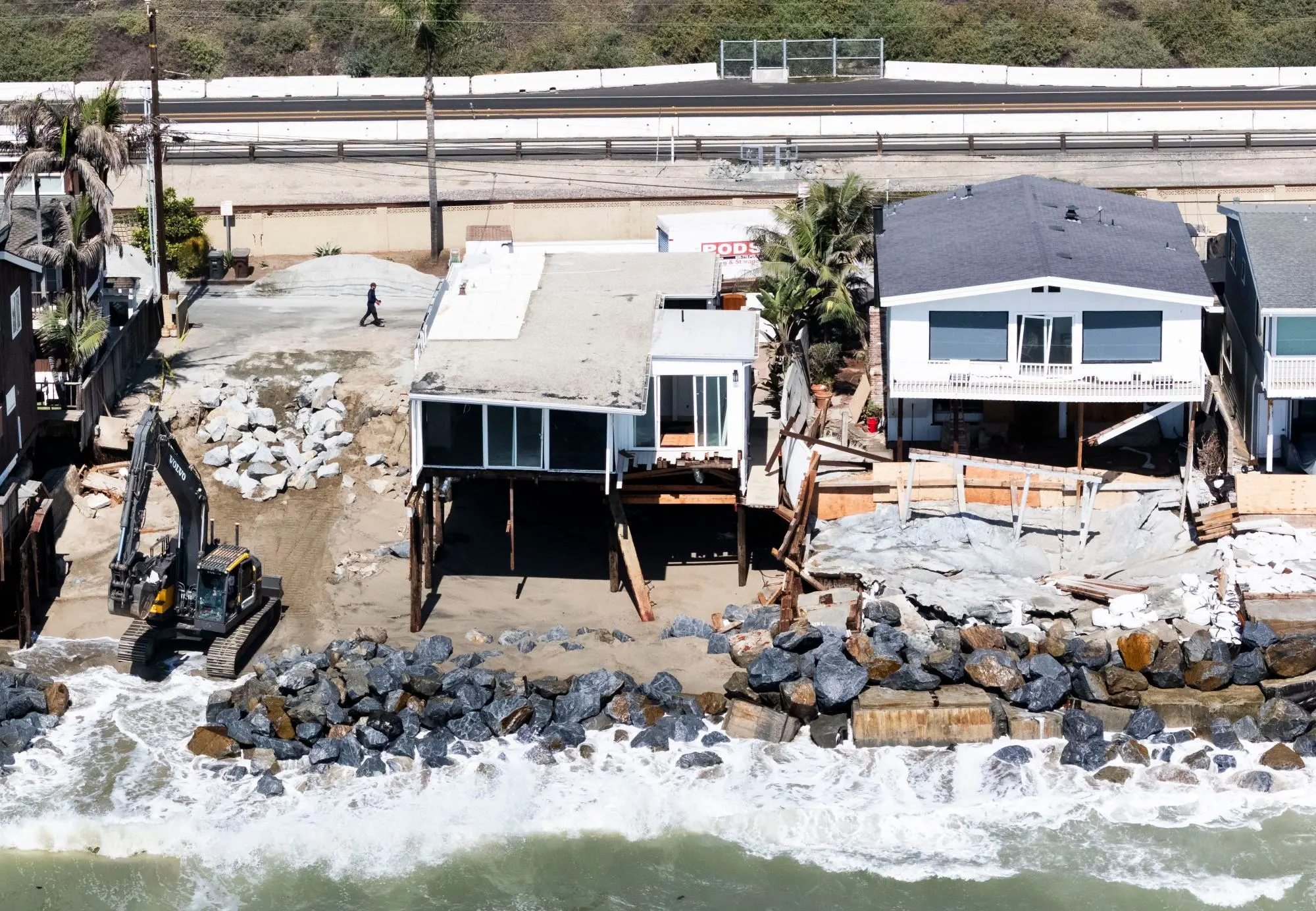
For decades, homeowners in a row of oceanfront properties along a stretch of coast wedged between San Clemente and Dana Point were living the California dream, lapping waves and sandy beaches doubling as their front yard.
Read more Is No. 12 USC football’s Big Ten opener at Rutgers a trap game?
But for several of the homeowners on Beach Road, their dreams of coastal living are now a living nightmare.
Over the Labor Day holiday, a hurricane swell coincided with a mega high tide, causing the ocean to crash into homes with walls of water decimating decks and flooding living spaces — a scenario many have worried was just a matter of time.
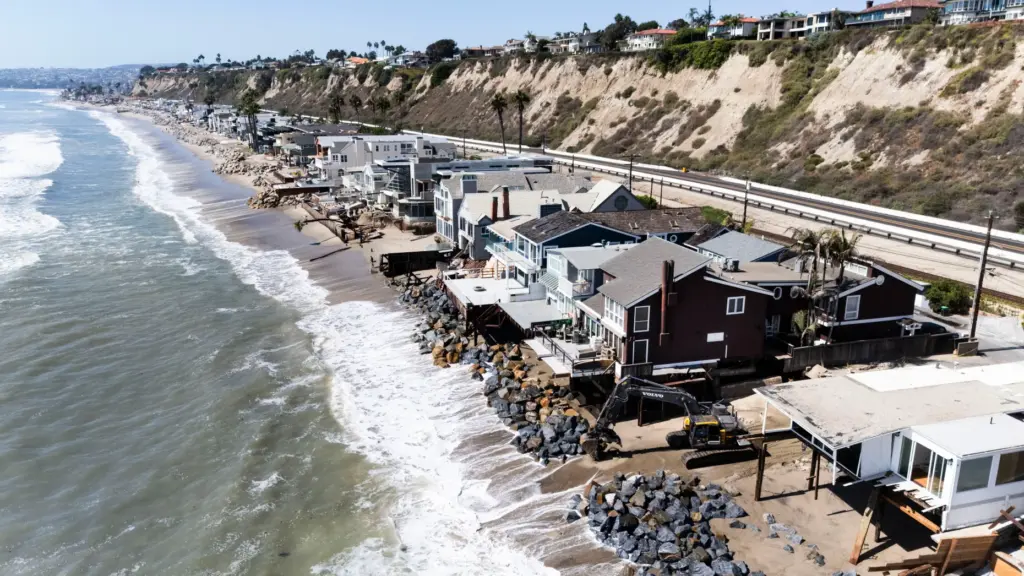 Heavy equipment moves boulders into place to protect homes along Beach Road in Dana Point on Thursday, September 10, 2026. Several homes were red- or yellow-tagged after high tides and heavy surf hit the strip of homes between Coast Highway and the ocean. (Photo by Paul Bersebach, Orange County Register/SCNG)
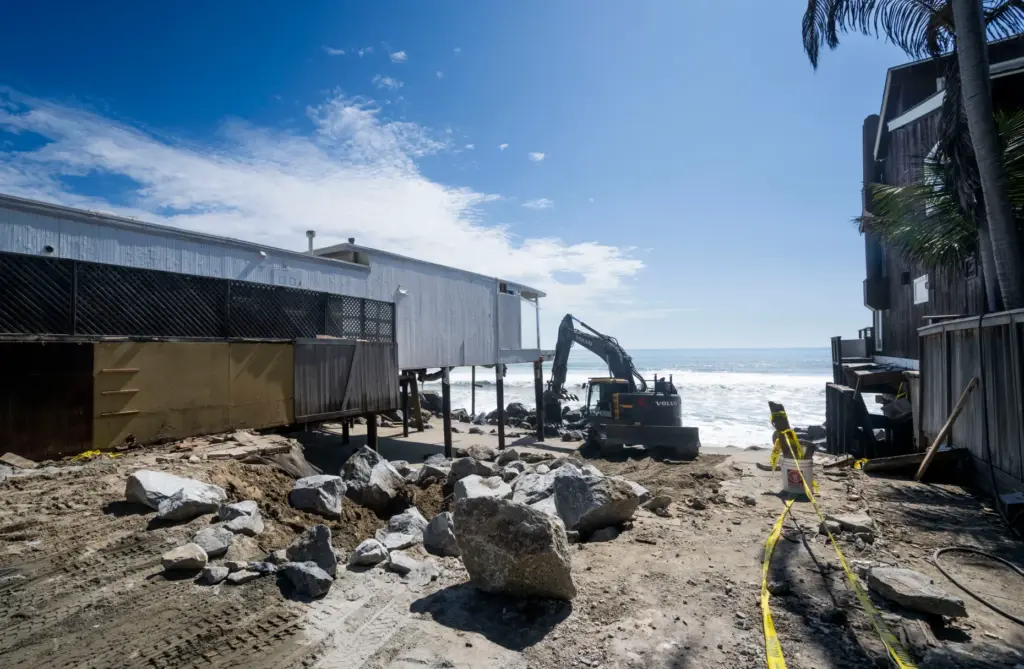 Heavy equipment moves boulders into place to protect homes along Beach Road in Dana Point on Thursday, September 10, 2026. Several homes were red- or yellow-tagged after high tides and heavy surf hit the strip of homes between Coast Highway and the ocean. (Photo by Paul Bersebach, Orange County Register/SCNG)
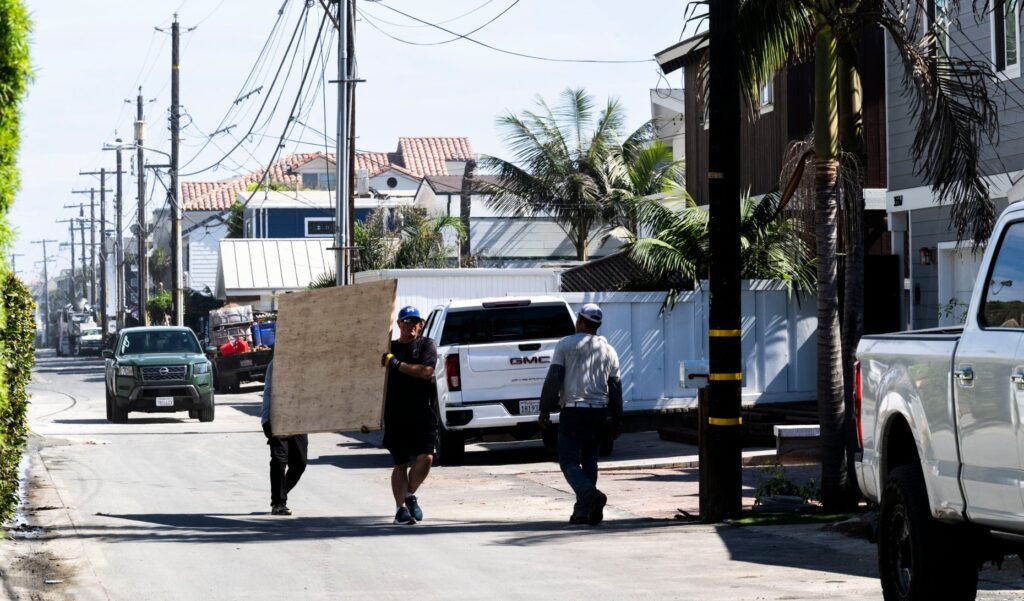 Work continues along Beach Road in Dana Point on Thursday, September 10, 2026. Several homes were red- or yellow-tagged after high tides and heavy surf hit the strip of homes between Coast Highway and the ocean. (Photo by Paul Bersebach, Orange County Register/SCNG)
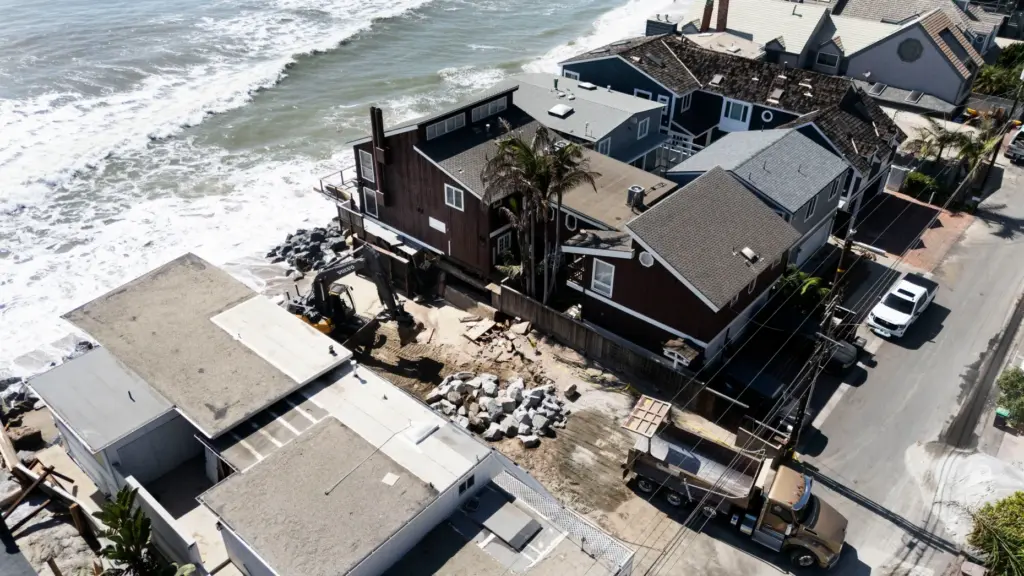 Heavy equipment moves boulders into place to protect homes along Beach Road in Dana Point on Thursday, September 10, 2026. Several homes were red- or yellow-tagged after high tides and heavy surf hit the strip of homes between Coast Highway and the ocean. (Photo by Paul Bersebach, Orange County Register/SCNG)
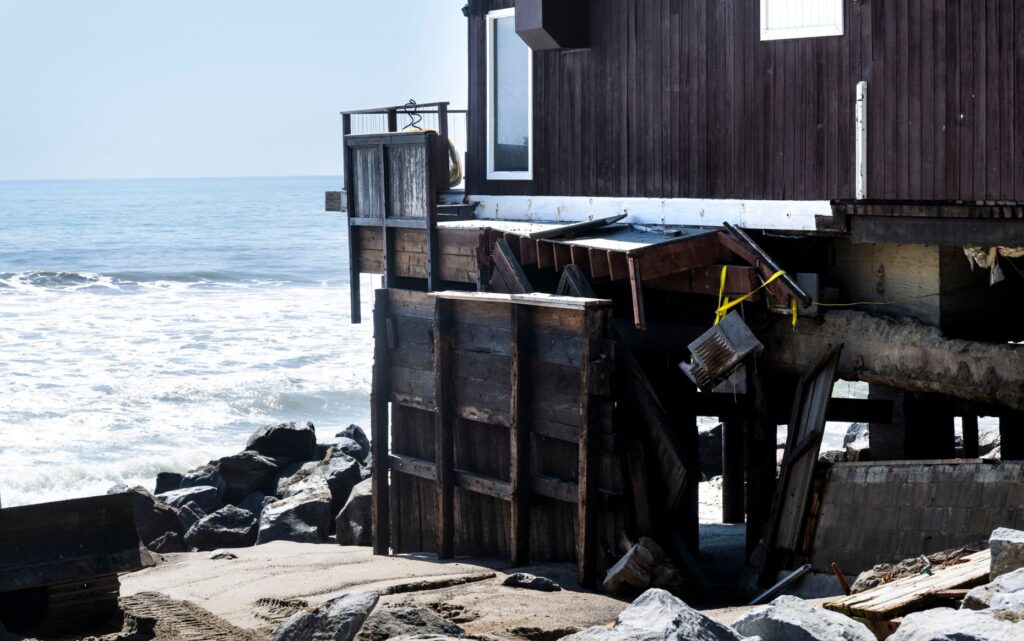 Boulders were being moved into place to protect homes along Beach Road in Dana Point on Thursday, September 10, 2026. Several homes were red- or yellow-tagged after high tides and heavy surf hit the strip of homes between Coast Highway and the ocean. (Photo by Paul Bersebach, Orange County Register/SCNG)
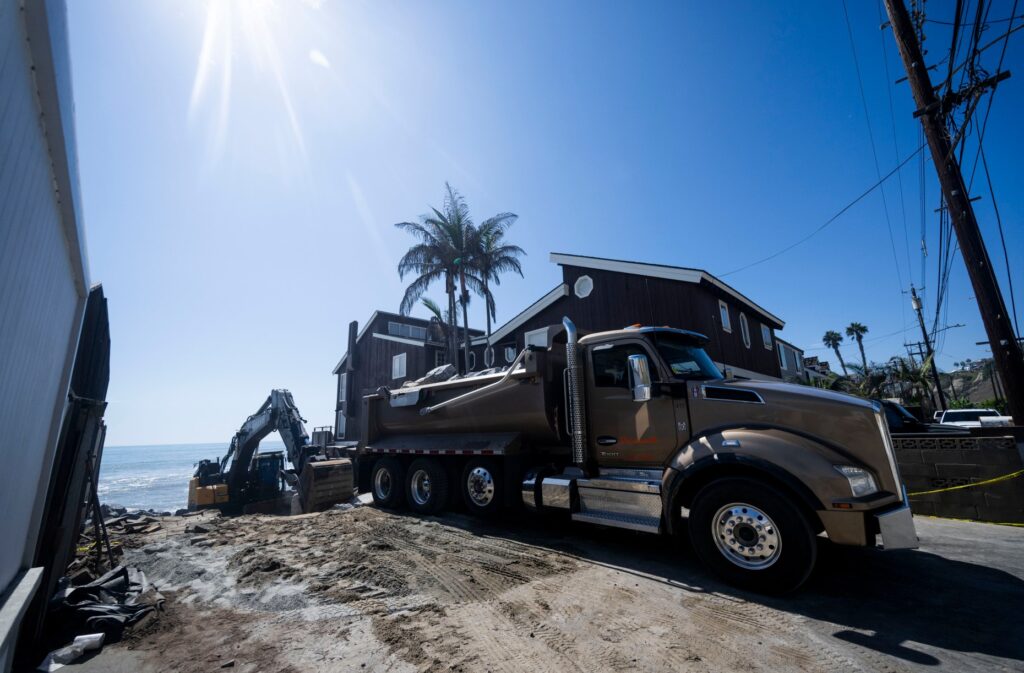 Heavy equipment moves boulders into place to protect homes along Beach Road in Dana Point on Thursday, September 10, 2026. Several homes were red- or yellow-tagged after high tides and heavy surf hit the strip of homes between Coast Highway and the ocean. (Photo by Paul Bersebach, Orange County Register/SCNG)
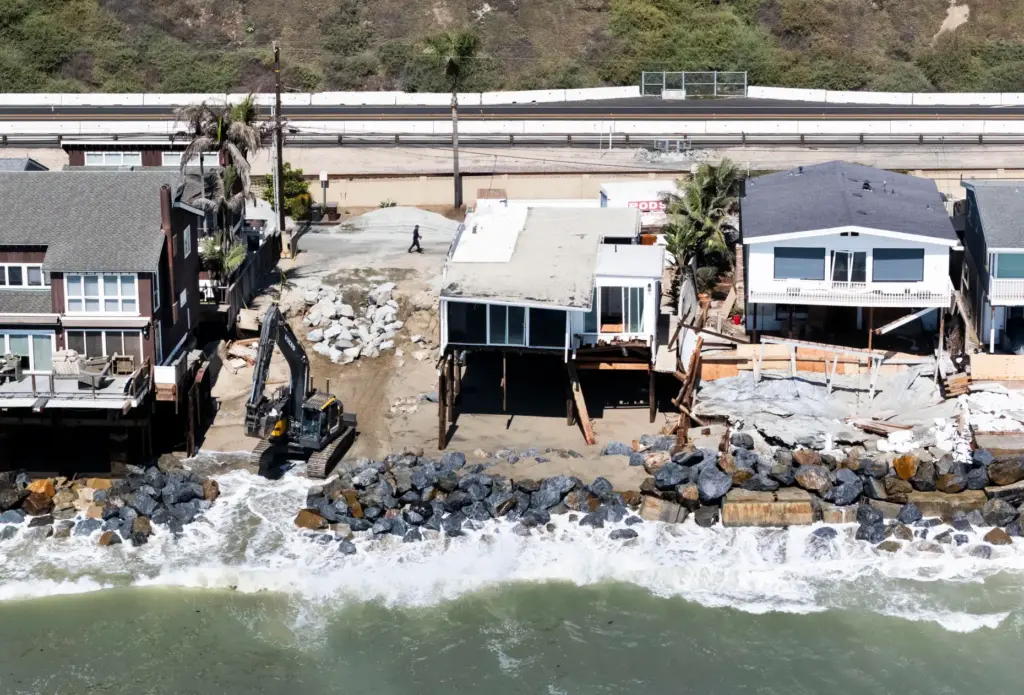 Heavy equipment moves boulders into place to protect homes along Beach Road in Dana Point on Thursday, September 10, 2026. Several homes were red- or yellow-tagged after high tides and heavy surf hit the strip of homes between Coast Highway and the ocean. (Photo by Paul Bersebach, Orange County Register/SCNG)
Ten homes have since been red-tagged and are considered uninhabitable, and seven more are yellow-tagged with restricted use as they sit on a watch list.
In the last week, as the waves shrank back down and the immediate threat to homes passed, impromptu seawalls made out of boulders are being placed to protect damaged homes.
The California Coastal Commission is approving the emergency work, but typically has resisted construction along beaches that could further impede the public’s access to the shrinking shoreline.
Waves crashing on revetments built of boulders can speed up sand erosion, further complicating efforts to protect beachfront infrastructure such as homes, roads and parking lots and maintain sandy beaches for recreation, experts say.
One thing is apparent: Sections of California’s iconic coastline are changing, from soft sandy beaches to a hard, rocky landscape.
That is why coastal advocates say they are worried about emergency repairs underway, because the projects add to a growing list of reactionary hard armoring aimed at protecting homes and infrastructure, without investment in long-term solutions also being made to restore beaches, despite evidence that sea level rise and coastal erosion are having lasting impacts.
“This is our new normal, and we have to meet it with urgency, planning and action,” Coastal Commission Executive Director Kate Hucklebridge said at a meeting last week following the news of the recent damage in Dana Point as well as Long Beach and Malibu. “One way we can do that is to prioritize sea level adaptation and planning implementation for all coastal communities.
“This work needs funding and it needs focus,” Hucklebridge said. “It is the best path to protect our coastal communities to ensure there will still be beaches left to pass on to our children.”
A pocket of paradise
The first advertisement for lots at Capistrano Beach’s three miles of “bathing beach” appeared on May 9, 1925: Beach lots for sale for as little as $400.
“Can you want more than the ocean’s roar right at your door? Dip In,” the advertisement reads, documented in former resident Joe Dunn’s 110-page book, “A Pocket of Paradise.”
The financial downfall of the Great Depression slowed the launch of the community, but by the 1940s and ’50s, word was spreading about the paradise on the sand.
By 1955, there were 106 homes on Beach Road.
“My overriding sense of the decade of the 1950s is one of belonging to a community made up of individuals who wished to experience the free-and-easy lifestyle associated with Southern California beach living,” Dunn wrote.
Wayne Schafer, a real estate broker who had become one of the region’s standout surfers, would have regular parties at his home and eventually sold nine lots to friends, including Hobie Alter, who changed surfing by modernizing foam-core boards and invented the Hobie Cat in the ocean in front of his home, surf filmmaker Bruce Brown of “The Endless Summer” fame, and surfwear innovator Walter Hoffman, whose stepdaughter Joyce Hoffman grew up on the beach and became a world champion surfer.
Jeff Alter, Hobie’s son, spent much of his childhood on the sand and in the surf along Beach Road. He remembers the seawall in front of their house at times being a foot above the sand level, other times a 10-foot drop.
“The sand would come and go,” Alter said. “There was just a ton of sand at that point in time, apparently from the harbor (construction) in 1968.”
He’s not sure what changed through the years to deplete the sand, but the altered landscape is undeniable, he said.
“It’s gone from big lots of sand, incredible beach to just rocks and no sand. It’s quite a change,” said Alter, whose dad sold the family home about 35 years ago. “It’s pretty sad. … It’s not what it was.”
Former Beach Road resident Matt Larmand also spent his childhood in the surf, fishing from shore.
Larmand’s grandfather, Jim Gilloon, was one of the salesmen for Hobie Surfboards and his grandmother did the bookkeeping for the Hobie shops.
“They would surf and hang out and fish and live the dream,” Larmand said.
Last week, the house his grandmother built in 1955, where he called home up until a few years ago, was swallowed up by the sea.
“It had been in my family forever,” Larmand said. “Just to see it crumble like that into the ocean is heartbreaking.”
Larmand said he knew the stretch of sand was in trouble when eight years ago a series of storms wiped out the basketball courts, a restroom, parking spots and a wooden walkway at Capistrano Beach to the north — once one of the sandiest beaches along the local coast.
Larmand figured it was only a matter of time before the Beach Road homes suffered the same fate.
“I remember a couple times as a kid we would have to board up the window,” Larmand said of winter storms that hit, but back then, the sand would return later, he added.
It was washing down the creeks and channels when it rained, supplying the beach with new material that would build up in front of the homes.
“But the sand doesn’t come back anymore; there’s no more sand replenishment,” Larmand said, noting that all the channels are now lined in concrete and inland developments have locked sand supply in place.
There are about 200 homes that today make up the Beach Road community — a few original beach bungalows made of wood that date back more than 70 years, mixed with remodeled, modern designs that stand several stories tall. More recent builds have designs keeping sea level rise in mind.
Those who can’t rebuild have sought to defend as best they could with large rocks and wood barriers in front of their homes to deter the sea — the California Coastal Commission has yet to fine any of the homeowners for the illegitimate defenses.
No one tries going through the California Coastal Commission because of the onerous process, said Donal Russell, general manager of the Capistrano Bay District community that includes Beach Road.
“This situation probably could have been reduced,” he said, ”had we been successful in being able to get armoring permits in the last several years.”
“And now we’re playing chase. Over several years, we’ve tried to be proactive and get ahead of this,” Russell said. “It’s a tough one.”
Instead, the Coastal Commission has spent years urging the community to find other ways to protect their homes, proposing ideas such as native dune habitats or sand replenishment projects as solutions.
A new home built recently was approved, with unpermitted rocks required to be removed because the plan had engineering in place to ensure the home wouldn’t end up underwater, Joshua Smith, Coastal Commission spokesman, said.
“We’ve spent years informing the community about the extreme risks to older development, encouraging the adoption of more holistic solutions to better protect homes,” said Smith.
Commission staff has sent numerous letters to homeowners and stakeholders, asking they come in with new applications for options that both protect houses and the public beach.
Homeowners could apply to remodel homes with required designs that are more erosion- and flood-resistant to protect against severe coastal hazards, such as setting the home back away from the ocean or lifting the home up on caissons, ensuring livable space is not on the ground level, Smith said.
Sandbags can be used instead of rocks as a solution. Doing a one-time beach replenishment would be a medium-term option, while long-term, building up the beach and raising up their homes above the wave action is advised, Willis said.
Read more Scientists hope deeper-rooted soybeans can withstand climate extremes and store more carbon
Because the area is private, projects are up to the homeowners and the community association, not necessarily the city or county.
“Many damaged structures had aging, wooden seawalls that were not designed for the level of fierce wave action and severe beach erosion that we saw over the weekend,” Smith said.
Amber Dobson, the commission’s district supervisor for Dana Point, said when homeowners look to rebuild, the city has development standards in place now that ensure new beach homes have taken the flooding and vulnerability into account.
But some of the older homes have foundations directly on the sand, or sit on wooden pylons into the sand.
“Neither of those options were designed to withstand the forces we are seeing now, that’s why we require newer and robust foundations,” she said.
New builds are warned that if the sea does threaten the home, boulders or sea walls can not be used to protect it.
Emergency after emergency
The commission has received 15 emergency applications to put in a large revetment in front of 17 properties, Dobson said.
“We’re treating this as an emergency right now, we feel a lot of compassion for the homeowners, that’s why we’ve been reaching out to the homeowners for years. There’s a lot of unpermitted rip rap and it did not stop the damage,” Andrew Willis, enforcement manager at the California Coastal Commission, said. “We want to find the best path forward. We know too much rip rap on the beach creates erosion and scouring.”
In recent years, the Coastal Commission has also approved a series of emergency permits for building up revetments with boulders alongside the nearby rail line that runs oceanfront through parts of Dana Point and San Clemente.
Where the sand has eroded away, leaving no beach buffer, the tracks have been taking a beating from heavy surf similar to the damage the Beach Road homes have experienced.
At nearby Capo Beach, to the north of Beach Road, big rocks have been dumped to try to salvage what’s left of the parking lot, and similar rock revetments a few years ago were put down at San Onofre State Beach’s entrance when the road was on the brink of collapse.
Plans for a “living shoreline” to repair the area, a mix of natural dunes and sand replenishment, have been in the planning process for eight years. Permits are approved, but federal funding the county was hoping for was pulled, leaving no funds for the project.
Permits take years, even decades, for nature-based solutions. And even if they get through “green tape,” finding millions in funding can stall projects.
In 1971, only 2.5% of California’s coastline was armored. Today that figure is nearly 14% statewide and near 40% along Southern California’s shore, said Surfrider Foundation Executive Director Chad Nelsen.
And the forecasts for the upcoming fall and winter call for destructive El Niño conditions.
Odds for a “very strong” event this fall and winter are greater than 90%, the National Oceanic and Atmospheric Administration’s Climate Prediction Center has forecasted, and there is a 69% chance conditions exceed the strength of every El Niño on record since 1950.
Nelsen anticipates there will be a lot more requests for emergency measures to protect homes and infrastructure by the time the El Niño comes and goes.
But wave damage is a predictable event and shouldn’t qualify as an emergency, Nelsen argues. “We can see it coming.”
Wave energy along California’s shore can run 50% above average and sea levels climb half a foot to a full foot during a typical El Niño, pushing the ocean inland and flooding coastal homes, roads and infrastructure, Nelsen said.
These are not anomalies, rather predictable climate patterns as the planet warms, he said. “In many ways, this has been happening for decades.”
“And yet, every time these super-charged waves come, we reach for rocks and concrete,” Nelsen said. “Storms arrive, properties erode, homeowners panic and emergency permit requests flood regulatory agencies.”
The coast is being permanently reshaped and reformed, advocates argue, because of the emergency reaction to use hard armoring.
Seawalls may protect development, but they kill beaches, Nelsen argued.
Rock revetments block public access and convert natural shorelines into bouldered landscapes, he added, causing a coastal squeeze with streets and homes built just beyond the beach.
“With nowhere to go, the beach narrows and disappears,” Nelsen said.
Advocates have been challenging the emergency permitting, arguing that sand replenishment projects and nature-based solutions should be prioritized — especially in the periods before the emergencies happen.
The Orange County Transportation Authority has had funding in place — $300 million in state and federal funding — to replace lost sand in front of its rail line, along with installing more rock revetments, not long after an eroded beach allowed the ocean to damage the tracks for the first time in 2022 and again several times since.
But delayed permitting for sand continues, so anytime the tracks are damaged, rail cars with boulders are used under an emergency permit, OC Third District Supervisor and OCTA board member Katrina Foley said.
A failed bureaucratic process is costing us our rail corridor, impacting our economy and costing residents their homes, said Foley, who announced Thursday the County has declared a State of Emergency ahead of this year’s storms.
“That’s the worst part, the plans are there, the money is there (for the OCTA), we know where to get the sand, and we can’t do it because we don’t have the permits,” she said. “Now that we are in a crisis, apparently you can now get a permit for boulders. But you can’t get a permit for sand.”
There’s sand available from several sources, including heaps behind the Prado Dam, to help struggling South Orange County beach communities, she added. But federal permitting remains a challenge, as does the cost of transportation in some cases.
“It was unnecessary for us to have this much damage. I’m not trying to say it wouldn’t have come, you can’t really anticipate the impacts of a hurricane on our Orange County beaches,” Foley said. “If we had those wide sandy beaches we’ve all been talking about, we would be in a less dire situation here. We wouldn’t be doing emergency declarations.”
The more frequent tropical storms this summer and the upcoming winter are going to be a “wake-up call,” Nelsen said.
In 2024, California passed a law requiring all coastal communities to complete adaptation plans by 2034.
Every coastal community should have one, developed in advance and not drafted in the aftermath of a disaster, Nelsen said.
The Coastal Commission has provided two grants totaling $245,000 to the city of Dana Point for still-in-progress, long-term planning, Smith noted. The commission had also been working with the city to update its Local Coastal Program, a community’s development roadmap to address sea level rise.
Community and local government awareness about the need to take action is increasing, said Madeline Cavalieri, chief deputy director at the California Coastal Commission.
“There are a lot of challenges, most primarily the availability of funding. These are really expensive projects that have to move forward,” Cavalieri said, noting that the Coastal Commission is working with local governments on coastal resilience.
“Sea-level rise is this slow-moving emergency,” Cavalieri said. “Storm events are where things really pop up and the need becomes clear.”
It’s not just this sliver of homes on the beach in Dana Point that need to worry.
“We’re going to see more and more of this,” Cavalieri said. “This is a large number of homes in significantly vulnerable areas, and we have a lot like this up and down the state. As sea-level rises, there will be more and more locations like this. Now is the time to start acting with urgency.”
Read more One thing that hasn’t changed in 250 years: Americans’ willingness to get suckered