
By Shirsho Dasgupta, Miami Herald
When two Massachusetts Institute of Technology students distributed $100 in bitcoins for free to undergraduates in 2014, it was the start of what is now considered to be a landmark study in how early users adopt a new digital currency.
Read more Heading to Ohana Festival 2026? Here’s what to know before you go
For years during his time as a bitcoin pioneer, one of the two students — Jeremy Rubin — corresponded with a person who had secretly been spending millions of dollars to ingratiate himself in scientific circles: Jeffrey Epstein.
Epstein shared his thoughts about cryptocurrencies, offered Rubin advice and kept abreast of the workings of the MIT Digital Currency Initiative, which the university founded in 2015 to advance decentralized currencies.
Despite at various times describing virtual currencies as the “LSD of finance” that was “clearly illegal” and a “Ponzi scheme,” Epstein didn’t stop there.
He attended meetings in 2014 with the U.S. Treasury Department officials to gain insight into the Obama administration’s position on virtual currencies and in the next three years attempted to convince the Kremlin and the rulers of Saudi Arabia and Qatar to issue state-run cryptocurrencies.
Epstein’s connections with figures in the digital currency world also spanned the political spectrum.
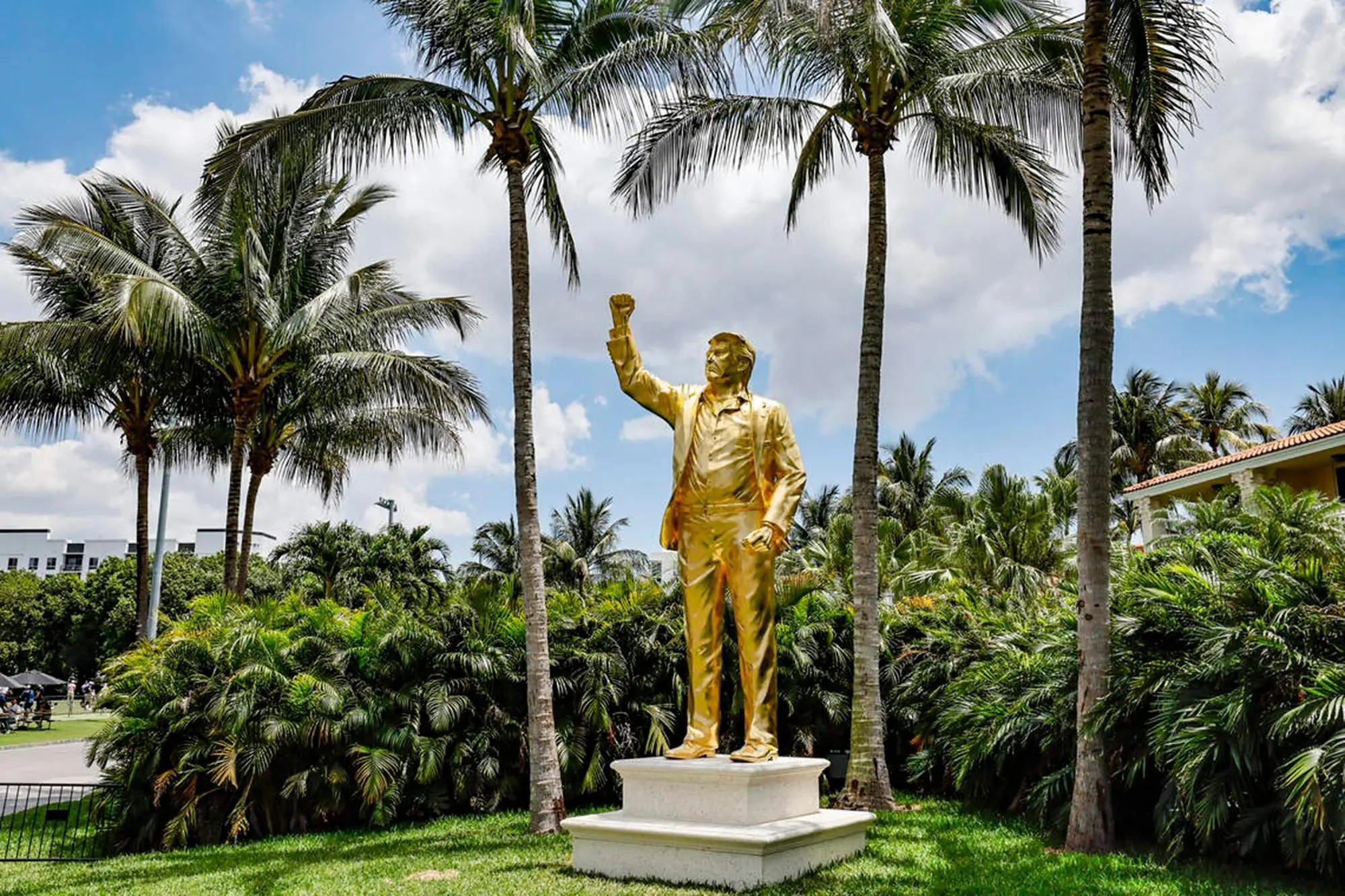
He aligned early with Brock Pierce, co-founder of virtual currency Tether and an ally of President Donald Trump, with whom Epstein corresponded about business ventures and sometimes women. Pierce recently unveiled a golden statue of the president at the Trump National Doral Golf Club.
Epstein also corresponded with Amir Taaki, a British-Iranian anarchist and hacker. Taaki was an early bitcoin pioneer and in 2015 fought for a socialist militia group battling the Islamic State in Syria.
In the months leading up to his arrest in New Jersey in 2019 on federal sex trafficking charges, Epstein was discussing a virtual currency venture in Puerto Rico with a bank founded by a flamboyant businessman who describes himself as a descendant of the Medicis of Florence – the Renaissance-era Italian family who financed the construction of Saint Peter’s Basilica in the Vatican and were art patrons to Donatello, Botticelli, Leonardo da Vinci and Michelangelo.
The Miami Herald’s reporting is based on the millions of pages of records released by the U.S. Justice Department earlier this year to comply with the Epstein Files Transparency Act, which Congress passed in 2025.
‘Mindshift’ summit and Coinbase
By 2011, Epstein’s reputation was in tatters.
He had been registered as a sex offender after pleading guilty in Palm Beach County in 2008 to two counts of soliciting prostitution, including a minor. Headlines blared about his illicit sexual activities and he was in the midst of settling multiple civil lawsuits brought against him by alleged victims.
The financier undertook a campaign to launder his reputation, spending millions — especially donating to scientific research projects — to rehabilitate his image.
One of his many initiatives was a conference he hosted in January 2011 on Little Saint James, his private island in the U.S. Virgin Islands. Called “Mindshift,” the conference brought together an eclectic group of participants ranging from software engineers to scientists.
Among them was Brock Pierce.
Pierce, 45, a former child actor who played a young Gordon Bombay in the Disney film, “The Mighty Ducks,” is now a Puerto Rico-based entrepreneur. He was involved in online gaming ventures before moving on to digital currencies.
More recently, Pierce inaugurated “Don Colossus,” a 22-foot gold-leafed statue depicting Trump with his fist raised in the air after the 2024 assassination attempt on him in Butler, Pennsylvania. Pierce and others used the image of the statue to promote a memecoin — a type of cryptocurrency, typically based on a viral joke or meme — whose worth is only as much as people are willing to speculate and pay.
An early advocate of bitcoin, Pierce gave a presentation on virtual currencies at Epstein’s 2011 summit.
Three years later in late 2014, Pierce presented Epstein with a deal to invest in Coinbase, a crypto exchange platform.
“Is this a deal you’d like to participate in?” he asked Epstein in an email on Nov. 17, 2014. “If so, I need your permission to let the founder know who you are, which would not be disclosed beyond that.”
Epstein agreed. The next month he invested $3 million through a U.S. Virgin Islands firm that he owned.
According to a 2018 valuation of his assets, Epstein sold half his Coinbase stake — that he bought at $1.5 million — that year at 10 times what he paid for that share.
Pierce did not respond to the Herald’s request for comment.
How Epstein saved Bitcoin
In late August 2014, Epstein had a meeting with the U.S. Treasury Department, according to an email he later sent to Joichi Ito, Japanese entrepreneur and then director of the MIT Media Lab.
“(N)ot very bright, very opinionated,” Epstein wrote about his impression of the agency’s officials. “(N)ot worried about ponzi or pump and dump. (W)orried about nuclear proliferation payments, drug cartel transfer, arms shipments.”
In October that year, Epstein was scheduled, along with Ito, to have another meeting with Treasury officials on MIT’s Bitcoin Project and how virtual currencies could evolve over time.
A Treasury Department spokesperson declined to comment on the meetings stating that the agency cannot provide information on what happened under a prior administration.
Less than a year later, bitcoin’s development was in trouble.
The Bitcoin Foundation, the nonprofit that had been paying three of the five core developers, went bankrupt.
Ito and the MIT Media Lab came to the rescue, snapping up the developers.
“This is a big win for us,” Ito wrote in an April 2015 email to the university’s marketing department. “MIT’s famed Media Lab has become the principal home and funding source for the small team of developers responsible for maintaining and improving bitcoin’s core software.”
That same evening he forwarded the message to Epstein, who had poured hundreds of thousands of dollars underwriting many of the Media Lab’s projects.
“Used gift funds to underwrite this which allowed us to move quickly and win this round,” Ito wrote, thanking the financier.
Ito had also introduced Epstein to Rubin, the student who had kickstarted the bitcoin experiment in the university’s campus.
Read more FBI investigates apparent breach of its jobs website. Hackers claim to have sensitive employee data
Rubin was aware of Epstein’s reputation. In 2009, Epstein had been released from the Palm Beach County Stockade after serving less than 13 months of his 18-month sentence on the prostitute solicitation charges.
“Some people don’t like certain associations, deservedly or not. Is your name good with the CFTC (Commodity Futures Trading Commission)?” he asked Epstein in a 2016 email proposing an investment in bitcoin options exchange LedgerX.
Two years later, Epstein and Rubin discussed ways to get the financier on a due diligence call regarding bitcoin infrastructure company Layer1 without revealing Epstein’s identity.
“I’m concerned otherwise potential investments googling your name might get spooked,” Rubin wrote in an email with the subject line “Fund Optics.” They planned on Epstein using a pseudonym or identifying himself as just “Jeff.”
The records do not reveal whether Epstein invested in either LedgerX or Layer1.
Rubin did not respond to the Herald’s requests for comment. He had previously posted on X (formerly, Twitter) acknowledging his engagement with Epstein and wishing that the victims received justice.
The Herald was not able to find contact information for Joichi Ito. He recently stepped down from his public positions, including that of the MIT Media Lab. He apologized for associating with Epstein but denied knowing about the financier’s crimes.
Moscow to the Middle East
In 2014, Epstein started pitching a new idea to his political connections: state-issued digital currencies.
Their first mention in the released records dates back to January 2014 in an email to Thorbjørn Jagland, former prime minister of Norway.
“(Y)ou can explain to (P)utin, that there should be a sophisticated (R)ussian version of bitcoin,” Epstein wrote to Jagland, days before the Norwegian was scheduled to meet with the Russian president.
Later that same year, in a message to Sergei Belyakov, a graduate of the academy for Russian intelligence officers and then the country’s Deputy Minister of Economic Development, Epstein made another pitch for the Kremlin to start its own virtual currency.
He suggested the Russians create a bank modeled after the World Bank but lend nine times its reserves. (The World Bank typically lends up to roughly five times its reserves and the capital contributed by each member-nation.)
It is unclear whether Jagland or Belyakov discussed Epstein’s plan with Putin or any member of the Kremlin’s inner circle. The Herald sent questions to Jagland’s attorneys but did not receive a response. Russia does not have a state-issued digital currency.
In the fall of 2017, Epstein pitched the idea of a “Sharia compliant” virtual currency for Muslim countries and worked his Qatari contacts to secure meetings with scholars of Islamic law to hear their opinions about his idea.
That year, Epstein also pitched the idea of a Sharia-compliant cryptocurrency to the Saudis and sought to discuss it with Crown Prince Mohammad Bin Salman, popularly known as MBS.
“The (M)uslim world will rejoice and its uses will be for the future,” Epstein wrote in a letter that he wanted to send the Saudi royal to mark a year since he had traveled to the country and met with him.
He pitched the same idea to his longtime friend Sultan Ahmed bin Sulayem, the then head of the Dubai-based multinational logistics company, DP World.
“(D)ubai should back the digital currency and beat the rest of the world,” Epstein wrote in a July 2017 missive to the Emirati businessman.
Bin Sulayem was enthusiastic, saying he “totally agreed” and asked Epstein for more information that he could relay to Sheikh Hamdan bin Mohammed Al-Maktoum, the crown prince of Dubai.
Bin Sulayem did not respond to the Herald’s request for comment.
Saudi Arabia does not have a digital currency.
Qatar and the UAE’s versions of virtual currencies are still in their nascent stages. It is unclear whether Epstein’s pitches to their ruling monarchs had any influence on their decisions to issue sovereign cryptocurrencies.
Renaissance in Puerto Rico
In the weeks leading up to his 2019 arrest in New York, Epstein was in discussions about an investment in Medici Bank, a San Juan financial institution. Lorenzo de Medici founded the bank in 2016; he describes himself on his website as a prince and a descendant of the Medicis of Florence.
The records indicate that Medici Bank was raising funds at the time and its main aim was to serve as the bankers for crypto companies.
The bank is registered in the U.S. territory as an “International Financial Entity,” licensing records the Herald obtained from Puerto Rico show. The specialized institutions typically offer favorable tax incentives but are not allowed to have customers in the territories in which they are established, effectively making them offshore banks on U.S. soil.
Epstein had experience with this kind of financial entity. He owned one of them — likely the first in the U.S. Virgin Islands — through which he moved around $20 million at the same time he was in discussions with Medici Bank.
Epstein had at least one meeting with Medici’s leadership, the records suggest, but was left unimpressed with Lorenzo de Medici.
“(S)illy, he is an artist, knows zero about money,” Epstein wrote in a text message about de Medici on May 19, 2019. De Medici said in a statement to the Herald that he had only corresponded with the financier a few times about an art purchase but did not proceed with any deal.
Federal agents arrested Epstein on sex trafficking charges of minors on July 6, 2019. The financier was found dead in federal custody on Aug. 10, 2019.
©2026 Miami Herald. Visit miamiherald.com. Distributed by Tribune Content Agency, LLC.
Read more Russia pounds Kyiv with drones, killing 2 and wounding 41 before Zelenskyy’s UN address